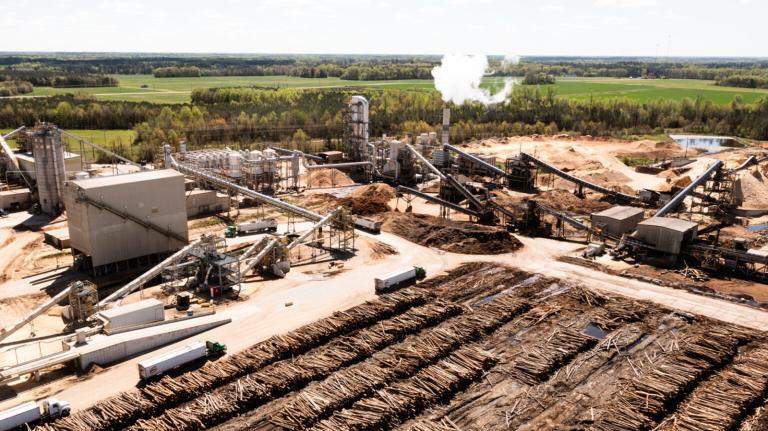
Any environmentalists out there who think biofuels cannot follow the same path as the petrochemical industry are deluding themselves. Biofuels have just as much, possibly more, potential to destroy our ecosytems than today’s oil industry. A large percentage of biofuels being produced today are being grown on lands (the Amazon, Africa, Indonesia, Malaysia) that were rainforest carbon sinks just a few decades ago. In contrast, petroleum is pumped out of holes in the ground. The ecological damage caused by oil spills, and of course global warming, are well documented, and finding ways to stop pumping greenhouse gases into the air have to be found, but think a minute.
Exactly what is Kyoto trying to do? Is it trying to stop global warming or is it trying to stop ecological devastation? To be precise: It is trying to stop ecological devastation by stopping global warming. So, logically, any scheme to reduce CO2 that causes ecological degradation is self-defeating and should be made illegal. From the Epoch Times:
In the dim yet recent past Malaysia and Indonesia joined the Kyoto Protocol buoyed by their massive carbon credits in lieu of rainforest. The special waiver in the deal is that if palm oil forests replace rainforest, their Kyoto obligations remain the same.
In other words, it is acceptable under Kyoto to destroy rainforests to grow biofuels.
Deforestation and extinction events aside, palm oil plantations are also producing their share of good old-fashioned pollution. Last month, thousands of freshwater fish were found floating on the Segama river in Malaysia. Investigations showed that many palm oil plantations along this river did not have oxidation ponds to detoxify palm oil residue before discharging it. The problem is bad enough to have affected the livelihoods of fishermen on this river and on the Silabukan, Sabahan, and other rivers as well. According to the Malaysian fisheries department this is not the first time it’s happened. I’ll bet my right arm it won’t be the last.
Petrobras, a Brazilian oil company, just agreed to purchase 17 million gallons of biodiesel a year from producers. If this were a private oil company, the next logical step would be to buy out these producers, thus eliminating the middleman. They are also planning a huge pipeline to transport over a billion gallons of biofuels a year:
Petrobras has ambitious plans to step up ethanol exports …. It has confirmed shipments totaling 65 million gallons to Venezuela and Nigeria, and is in talks with China, South Korea, India and the United States.
What got them so excited?
In his state of the union address Tuesday, U.S. President George W. Bush said he wants to substitute a large part of gasoline consumption with alternative fuels by 2025 … Brazilian (ethanol) producers [because they make if from sugarcane], are much more competitive than U.S. producers who produce from corn … which is more expensive.
And, how is this going to reduce our dependence on foreign oil?
If things keep going the way they are, Borneo will soon be transformed into a giant refinerey:
The Malaysian state of Sabah has embarked on a 10-year plan aimed at transforming itself into the hub of the Asia’s palm oil industry. It will also house the country’s first palm oil-dedicated port as well as logistics facilities and services … Still heavily dependent on forestry and agriculture, Sabah is now banking on palm oil downstream activities to be the cornerstone of its push to become a fully industrialized economy … Better known globally for its orangutans, mountain ranges and diving spots, Sabah has, in recent times, emerged as Malaysia’s biggest palm oil producing state, thanks to the rapid growth of its plantations sector … Indonesia, the second largest palm oil producer in the world, recently unveiled plans to develop a massive oil palm plantation in Kalimantan as it bids to overtake its northern neighbor … “We’re looking at a tremendous amount of oil that will be coming into Sabah and going into refineries, oleochemicals, biodiesel and then being shipped out,” Pang said. Although still at a very early stage, the response from investors has been encouraging, with interest coming from South Korea, the U.K., China, Australia and Singapore …
On the other hand, not all oil companies are created equal:
BP on Thursday said it will fund a $9.4 million project in India to see if biodiesel can be produced from a non-edible oil bearing crop … The project by The Energy and Resources Institute in the southern state of Andhra Pradesh will study the feasibility of producing biodiesel from the crop Jatropha Curcas …The 10-year project will cultivate around 8,000 hectares of wasteland with the crop.