The U.S. EPA has failed to integrate environmental justice research into the development of its policies, says a report [PDF] released on Monday by the EPA’s inspector general (IG), who operates an independent office within the agency.
Play at your own risk.
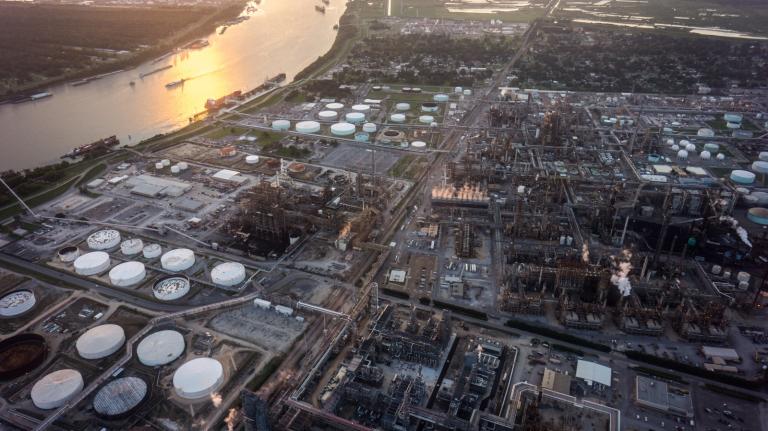
Photo: Environmental Defense.
More troubling still, the EPA under President Bush seems to have watered down the very definition of environmental justice to the point of emptiness.
The IG’s report — neatly summed up by its title, “The EPA Needs to Consistently Implement the Intent of the Executive Order on Environmental Justice” — was written in response to a request by the nonprofit group Public Employees for Environmental Responsibility, which suggested that market-trading plans for air pollutants might be a bad deal for minority and low-income communities.
At issue is an executive order on environmental justice issued by President Clinton in 1994, intended to ensure that environmental hazards don’t disproportionately affect minority and low-income populations.
Under the Bush administration, “the [EPA] changed the focus of the environmental justice program by deemphasizing minority and low-income populations and emphasizing the concept of environmental justice for everyone,” says the report.
While environmental justice for everyone is a noble goal, if it means anything at all it is simply a statement of the EPA’s mission since its founding. Clinton’s executive order was obviously intended as more than a pat on the back for the agency; it was meant to protect less politically powerful communities, which have too often borne the brunt of pollution and toxic exposures.
The IG’s report recommended, among other steps, that the EPA reaffirm that the executive order is supposed to benefit minority and low-income population, train staff accordingly, and “develop a systematic approach to gathering information related to environmental justice.”
The EPA replied that the IG’s assertions were based on a “mistaken interpretation” of the executive order. In other words: It was too a pat on the back.
While Bush’s EPA may not be concerned about the heavy impacts of pollution on disadvantaged communities, plenty of citizens are, as evidenced by turnout last week at public hearings on the administration’s controversial pollution-trading plan for mercury emissions from coal-fired power plants.
The plan would let dirty power plants buy mercury-emission rights from plants that have cleaned up; with mercury pollution believed to concentrate in “hot spots” near emission points, this approach could be bad news for communities around heavily polluting plants. And, with power plants often located in or near minority or low-income neighborhoods, it’s pretty clear who would get the short end of the stick from this deal.
At hearings in Chicago, Philadelphia, and Research Triangle Park in North Carolina, residents of low-income neighborhoods worried aloud that Bush’s plan could lead to high levels of mercury pollution in their communities — pollution known to negatively affect children’s brains and developmental capacities.
After the hearings, The Philadelphia Inquirer published an editorial citing a testimonial from Mable Mallard of South Philadelphia, a resident “who gauges when to venture outside based on which way the wind is blowing the pollution belching from seven nearby smokestacks.”
How many industry barons and fat-cat lobbyists have to check the weather before leaving home? Mallard isn’t the only one who knows which way the wind is blowing.