What work do you do?
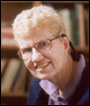
I’m a 62-year-old retired French teacher and tennis coach who has been spending six to eight hours a day for the last 20 months trying to get 34 million Americans to donate at least one dollar to the United Nations Population Fund (UNFPA). I do this because the Bush administration refused to release the $34 million Congress had approved. The organization is 34 Million Friends of UNFPA and my job title might be “Totally Dedicated Grassroot.”
What would constitute “mission accomplished” for your organization?
The short-term goal would be a list of 34 million Americans on the website who have reached out to the world’s women with a small gift. The long-term goal would be for me to play a part in encouraging a worldwide constituency of people who, by small gifts to UNFPA every year, announce to their governments and to the world that equality for women and girls, reproductive health in its myriad connotations, and choices about family size should be the world’s very first priority. Nothing else will save more human beings and help sustain the planet.
What is UNFPA?
It is an agency of the United Nations that receives allocations from member countries to assure safe childbirth and family planning to the poorest, most vulnerable women in the world — and their families. It does its work in more than 144 countries. It is part of UNAIDS and educates people against early marriage and female genital mutilation. It emphasizes the needs of the 1.2 billion adolescents on the planet for informed choices. You should read about its Fistula Initiative.
What do you really do, on a day-to-day basis?
I try to communicate with as many groups, individuals, and organizations as possible. I am currently traveling extensively around the country talking about 34 Million Friends. I write op-eds and letters to editors. I have written a poem about 34 Million Friends which has been turned into a song and recorded by Odetta. It will be out soon and I think it will sweep the world.
What organizations do you belong to?
More than I did 20 months ago, that’s for sure! In order to ask, it’s better to be a member. So, I’m a member of the Sierra Club, the National Audubon Society, the National Wildlife Federation, Planned Parenthood, the Feminist Majority, NOW, League of Women Voters, American Association of University Women, Population Connection, Population Institute, Population Coalition, and on and on. I’ve belonged for years to several, but a few are fairly new.
What long and winding road led you to your current position?
My life, like many other women’s lives, has been one of a time for this and a time for that. I was a ranked junior tennis player when young, an M.A. in French at 23, and married at 24. I taught French and played tennis until adopting a boy at age 33 and experiencing a “surprise” pregnancy at age 35, resulting in a baby girl. I did lots of part-time work until my kids were in high school, and then I taught and coached in high school from 1990 to 1998. Population, international reproductive health, and family planning were the areas I wanted to devote myself to in retirement. I never dreamed this would happen, though.
How many emails are currently in your inbox?
I probably get close to 25 emails a day, excluding spam. This effort would be impossible without the Internet. The most interesting are PlanetWire clips (about five per day), articles in newspapers and transcripts of TV and radio news programs concerning population, reproductive health, and reproductive health politics. 34 Million Friends is a fairly frequent subject of these clips. Based on these clips I write letters to editors. I also have a daily exchange of emails with the two people in Boulder, Colo., who work for the U.N. Foundation and the U.S. Committee for UNFPA, coordinating this idealistic effort. It got way too big for Lois Abraham and me to do it all. Lois Abraham, by the way, is the “other woman” who had this same “brilliant” idea. We are partners in this all the way.
What have been the highlights of your campaign?
That’s easy. One was my trip to Senegal and Mali in February 2003 to see UNFPA work on site. How would you like to give birth with nothing but a sterile plastic sheet, a bar of soap, a razor blade to cut the umbilical cord, and string to tie it off? Well, this is the “Safe Birth Kit” that UNFPA distributes in remote areas of poor countries. It saves lives by the ton every year. Another highlight of this trip was finding a children’s writing booklet at an elementary school funded by the Ministry of Education of Senegal and the UNFPA. It says on the front, “Little girls deserve as much food, education, and health care as little boys.” Another highlight was our trip to Brussels in May of 2003 to launch 34 Million Friends in the E.U.
Every week I write about 10 thank-you notes to grassroots people who send their dollar — last week to a grandfather who sends $5 a month for his five grandchildren, and to a 16-year-old girl who sent a dollar after reading about 34 Million Friends in Glamour magazine. Two women organized a Bark for Women Dog Walk in Central Park, too. What fun!
Who are your environmental heroes?
People who would understand the link between population, the environment, consumption, peace and stability, and women’s health and choices. They are all inextricably linked.
Who is your environmental nightmare?
Ralph (Ego-Trip) Nader.
How do you get around?
A ’95 Eagle Vision (similar to a Dodge Intrepid), which has gone 148,000 miles but runs well. Our next car will be a hybrid — next year perhaps.
Who’s the biggest pain in your tookus?
Our president. With his “pro-life” policies, which deprive women of contraception and reproductive health services, he has caused enormous misery, countless abortions, and maternal and infant deaths.
What are you reading right now?
Middlesex, by Jeffrey Eugenides. A great book.
Where were you born? Where do you live now?
I was born in San Diego, Calif., in 1941 and since 1964 have lived in Redlands, Calif., with about four years spent in France at various times.
If you could have every InterActivist reader do one thing, what would it be?
That’s easy too. Send your dollar and spread the word. This can only work if you all use your imagination and intelligence to get the word out. It is a marvelous message to send to the world from the American people. Contribute on the web or send a tax-deductible dollar to: U.S. Committee for UNFPA, 3800 Arapahoe Ave., Suite 210, Boulder, CO 80303. Thanks to outside support for administrative costs, the money does go directly to UNFPA’s humanitarian programs. Let’s make 34 Million Friends a national undertaking. It is definitely doable! We hope to hear from you!
You didn’t give many details about how 34 Million Friends took off. What’s the story? — Raj Sundaram, Los Angeles, Calif.
Jane Roberts, 34 Million Friends of UNFPA
I just started emailing a list of population activist friends I knew around the country, then reached out to environmental groups, women’s groups, human-rights groups, health groups, ad infinitum! I devoted probably six to seven hours per day for 20 months.
Who has the responsibility to make sure these funds are allocated correctly? — Jerry Broadbent, Bucoda, Wash.
At our website you can see what the money has gone for. The U.N. Population Fund (UNFPA) makes the final decisions, but with foundations paying the huge bulk of administrative costs, all the money we collect goes to programs on safe motherhood, family planning, emergency obstetrical supplies, transportation and communications equipment, and training midwives and doctors. Some $500,000 has gone to repair obstetric fistula, a tear between the birth canal and rectum or bladder that occurs when very young girls give birth with no assistance and have long, long labor.
Why do you think that Bush is so bad on so many women’s health issues? — Tamara Hale, Hurst, Texas
On reproductive health and family planning, the Bush administration is over the fence in right field. With its ideological views and religious fanaticism, it is harming the women of the world in untold ways. It has altered government websites — for instance, withdrawing the conclusion of scientists that there was no link between abortion and breast cancer. There was such an outcry over that, they reinstated the scientific conclusions.
Have you joined with Rotary International in their worldwide population and female-education campaign? — Dan Murchison, Birmingham, Ala.
I am in close touch with the Rotary International program. In fact, right now I am with the Population Institute at its meeting in Washington, D.C., on the 10-year anniversary of the Cairo Conference on Population and Development. Werner Fornos, the head of the Population Institute, was one of the founders of the Rotary program. I have also spoken at several local Rotary clubs in California. We all need to talk about population and reproductive health issues and support the women of the world, the families of the world, in choosing the number and spacing of their children.
Why is Ralph Nader so bad? — Amanda Hollingworth, Toronto, Canada
We need a president in this country who supports women’s rights and health without putting artificial barriers in the way, like gag rules and not funding UNFPA. Ralph Nader may well take away votes from a man who is very, very supportive of women’s rights and health.
Would you consider population your primary environmental concern? — Ruth Brenhurg, Bismarck, N.D.
Population, the environment, and consumption are so closely linked that to separate them is hard. The availability of fresh, clean water for people and the planet is probably my primary environmental concern. But for me, women are the key, their education and rights. When the world takes care of women, women take care of the world.
I would like to know if you feel that men should have the same reproductive rights as women. — Stephen Knox, Albany, N.H.
The whole thrust of reproductive rights is to include men. All over the world, women have no good choices, because family planning is not available. There is a huge worldwide shortage of condoms. I want choices available — and responsibility from both women and men.
What do you think about the recent Sierra Club board elections and the focus of some board candidates on population and immigration issues? — Fritz Dyentra, Martha’s Vineyard, Mass.
I voted for the Sierra Club slate but for the former governor of Colorado [Richard Lamm] too because I thought there should be a voice talking about these issues. But basically, a human being is a human being, no matter where they live. So I am not anti-immigrant in any sense.
What do you think of VHEMT and similar groups? — Justin Volta, Arcata, Calif.
Actually, I was on a panel with the guy who started the Voluntary Human Extinction movement. I thought he was very provocative and interesting. We stay in touch.
Tell us more about the specifics of Bush’s “pro-life” policies and how they are depriving women of reproductive-health choices. — Jen Desmond, Salt Lake City, Utah
The “gag rule” is blackmail. If organizations want the United States’ money, they cannot give women information of their legal rights. “Abstinence only” money is also blackmail — if organizations accept U.S. money they can say nothing of contraceptives.
What do you see in the future (of America, of the world) for reproductive health and rights? — Sharon Smolinski, Littleton, Colo.
I see a tough struggle. One of the most important things to do is educate ordinary citizens as to what is at stake.
How far are you now toward the monetary goal you’ve set? Have the funds you’ve received so far gone to the U.N. already? What was their response? — Jamie Limbach, San Francisco, Calif.
The UNFPA is elated with the nearly $2 million we have raised. With this money we/they are saving lives and lessening misery each day. This campaign is sending a wonderful message to the people of the world from the American people. All the money goes to the UNFPA as it is received. The bulk of our administrative costs are covered by grants.
A message from
Your support keeps our climate news free.
Grist is the only award-winning newsroom focused on exploring equitable solutions to climate change. It’s vital reporting made entirely possible by loyal readers like you.
At Grist, we don’t believe in paywalls. Instead, we rely on our readers to pitch in what they can so that we can continue bringing you our solution-based climate news. Donate today to keep our site free.