|
|
||
Thursday, 24 Oct 2002
The Personal Is PoliticalNever mind corporate responsibility, or government responsibility; let's talk about personal responsibility. That's the gist of Canada's new plan for fighting global warming. The proposal, which is being released today, entails convincing every last Canuck to reduce her or his own contribution to greenhouse gas emissions by one metric ton annually (or about 20 percent). Translation: cooler showers, lower thermostat settings, less private automobile use, and other lifestyle changes for Canadians. If successful, the effort would yield a total annual emissions reduction of 31 million metric tons. The government says the plan is sensible because a significant amount of Canada's greenhouse gases stem from fossil fuels burned to heat homes and power cars. It plans to offer financial incentives for energy-efficiency upgrades in private homes and increased use of public transit.We've Got MailSome of you are busy reading; the rest of you, it seems, are busy writing. In our Letters to the Editor section, Grist readers offer their two cents (and then some) on the trouble with biodiesel, real reasons to conserve water, and why changing U.S. farming practices isn't enough to make agriculture sustainable in today's global economy. Plus, readers question whether Grist has gotten too gory (seems that turtle picture was a bit much for some) or too gloomy. (Who us? Never! Why, didja hear the one about the spotted owl that walked into a bar ... ?) See what your fellow readers have to say, only on the Grist Magazine website.
only in Grist: Grow for it -- Grist readers discuss the effects of globalization on U.S. agriculture and write other letters to the editor
Fight the PowerAfrican Americans are more likely than white Americans to live near power plants and suffer negative health consequences as a result, according to a report released yesterday by civil and environmental rights activists. The report found that 68 percent of African Americans live within 30 miles of a coal-fired power plant, as opposed to 56 percent of whites. The most serious health impacts of power plants are felt by those living within a 30-mile radius, according to the study. In addition, the report found, 71 percent of African Americans live in counties that don't meet federal air pollution standards, as compared with 58 percent of whites. The findings could help explain why hospitalization rates and death rates from asthma are three times as high and twice as high, respectively, among African Americans as among whites. Yvonne Scruggs-Leftwich, executive director of the Black Leadership Forum, one of the groups that released the report, said the study points to the need not only to clean up power plants, but also to provide African Americans with better access to medical care, education, and economic opportunities.
only in Grist: Dispatches from the Second National People of Color Environmental Leadership Summit in Washington, D.C. -- filed by Na'Taki Osborne, National Wildlife Federation
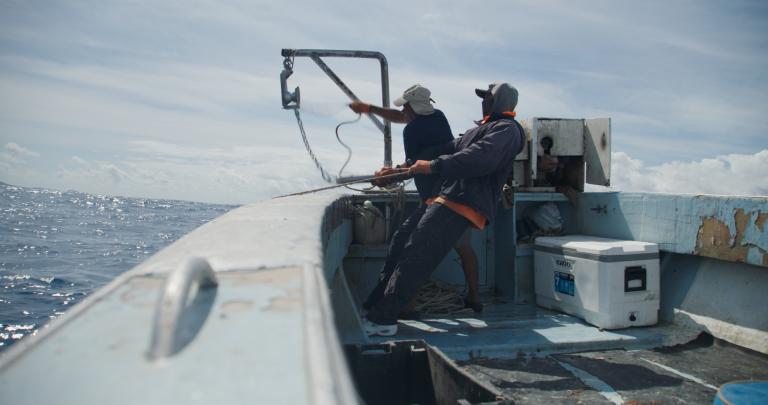
Fantasy IslandsCalifornia has permanently banned fishing in 175 square miles of ocean around the Channel Islands, creating a network of marine reserves that will enable a wide range of species to recover from decades of overfishing. In the next year or two, the U.S. government will decide whether to expand the network of reserves into federal waters, which begin three miles off shore; under such an expansion, the network could grow to 426 square miles, making it the largest protected marine area in the continental U.S. Only about 1 percent of the world's oceans and less than 0.02 percent of California's are now off-limits to fishing. Nonetheless, fishers were angry about the decision, calling it a threat to their livelihoods. But state Fish and Game Commissioner Bob Hattoy said, "California once again is in the vanguard of environmental protection. This is good for the fish, good for the fishermen and good for future generations." |
||