|
|
|
|
In BriefSnippets from the newsPosted at 5:26 PM on 10 Oct 2008
• Forest disappearance hurts economy more than banking crisis, says study.
• Americans still driving less despite cheaper gas. • Bailout bill includes tax break for bikers. • Pollock declines could affect biggest North American fishery. • Papua being cleared for palm oil. • Climate change sends tropical species uphill. • Beijing will ban half its cars in times of heavy pollution. Cruel and Unflushable PunishmentCalifornia prison system introduces conservation measuresPosted at 2:26 PM on 10 Oct 2008
Woe to California inmates whose lunches don't agree with them: As part of a conservation program in the state-prison system, at least one prison has introduced a water-saving measure that makes toilets temporarily unflushable if they're flushed three times in five minutes. As for what else the prisons are doo-ing: A partnership with the state's public utilities will see energy retrofits at 16 facilities, and is expected to save $3.2 million annually. "We're trying in the prisons to be smart on crime," said Matthew Cate of the California Department of Corrections and Rehabilitation. "This is an example to be smart fiscally and [on] the environment as well." Gov. Arnold "That's Kindergarten Cop to You" Schwarzenegger hailed the agency, which runs the largest state-prison system in the U.S.: "This environmental initiative sets an example for the rest of the country. I applaud CDCR for their ... groundbreaking action on climate change and energy efficiency."
sources: Marketwatch, Central Valley Business Times, KGET If You Bilge It, They Will ComeOceangoing ships face strict new pollution rulesPosted at 1:21 PM on 10 Oct 2008 Observers hoping for an epic pirate battle at the latest meeting of the International Maritime Organization were disappointed yesterday, when the group quietly and without controversy passed landmark restrictions on pollution emitted by oceangoing vessels. By July 2010, the 300,000 ships that travel the world's seas must cut the sulfur content of the fuel they use in coastal areas by 63 percent, chugging toward 95 percent cuts by January 2015. Because ship-spewed airborne emissions contribute to as many as 60,000 premature deaths a year, environmental groups and local governments have pushed for a sea change in port pollution. In fact, it turns out there's some hope for fans of salty swordplay after all: Since each country must set a coastal boundary within which the new restrictions apply, advocates of human and planetary health are preparing to face off with the shipping industry over the size of the rule-prone areas. Avast!source: The New York Times Unwimp My RideToyota may develop "Prius on steroids"Posted at 12:18 PM on 10 Oct 2008
Thanks to the persistent popularity of the Prius among American drivers, who buy 65 to 70 percent of all Toyota hybrids sold worldwide, the company is considering developing a bigger, badder version of the gas-sipper. James E. Lentz III, the head of Toyota Motor Sales USA, says he has proposed creating a separate Prius brand akin to the auto giant's Scion spin-off. The new line, which would be sold in regular Toyota dealerships and available only in the U.S., could include various sizes -- including, said Lentz, "one on steroids." Sa-weet! Company officials, who recently announced the long-term possibility of converting their entire high-end Lexus line to hybrid models, are said to be mulling over the idea. "We're catching the wind on this," Lentz said. Or is that the breeze from a thousand F150 owners laughing?
sources: The New York Times, Reuters Link and Discuss (1 Comment)
Up Against the Wall StreetWorld economic crisis puts climate agreement, CO2 cuts in jeopardyPosted at 7:10 AM on 10 Oct 2008
Worldwide financial turmoil is seriously damaging the chances of the world's biggest polluters agreeing on a new international climate treaty to succeed the Kyoto Protocol. U.N. officials and climate experts have said for months now that the world needs to agree on, at the very least, specific emission targets for a new climate treaty by 2009 in order to have a decent chance of avoiding the most damaging effects of climate change. However, the 2009 timeline was somewhat ambitious even before the economic crisis blew up, since the United States and China keep using each other as excuses to avoid binding emissions cuts. But now such an agreement is even less likely given the dearth of global capital available to help developing nations fund clean-energy projects and adapt to climate change's effects -- both seen as crucial incentives to draw poorer nations to the negotiating table. The financial chaos is already prompting the European Union to reconsider its own emissions-cutting plans. Officials have hinted they will likely not require the power sector and other heavily polluting industries to purchase permits to pollute -- a major component of the E.U.'s plan to slash emissions 20 percent by 2020.
sources: Associated Press, Reuters, The Guardian Link and Discuss (1 Comment)
Where the Wind Comes Sweeping Down the PlainsSome Native American tribes see better financial future in wind farmsPosted at 4:53 AM on 10 Oct 2008
Some Native American tribes, particularly those on extremely windy reservations, have been pursuing deals lately with wind-power developers, seeing the projects as potentially large and steady sources of income. Overall, Indian reservations are some of the poorest areas in the United States, but federal energy officials and others hope that a boom in wind power projects on Native land will become, like casinos, a big, reliable source of income for areas that sorely need the funds. So far, only one large wind project has been completed on tribal land -- a 50-megawatt wind farm on Campo land near San Diego -- but other farms are on the way. The Lower Brule Sioux tribe recently signed a deal with a Spanish utility for a 225-megawatt wind farm on their reservation land in South Dakota. And another nearby Sioux tribe, the Rosebud Sioux, has already erected one turbine to power its casino and is about to sign a deal with wind developer Distributed Generation Systems to build a 30-megawatt wind farm on 50 acres of their reservation land -- an arrangement that's expected to bring in about $5 million over 20 years.
source: The New York Times see also, in Grist: Q&A with Winona LaDuke about wind power on Native land, and more In BriefSnippets from the newsPosted at 5:17 PM on 09 Oct 2008
• Will the economic crisis cause E.U. countries to ditch climate commitments?
• "Superworms" can eat toxic waste. • Could more renewable energy mean lower power prices? • Defense lawyers threaten to stop Ivory Coast pollution trial. • Prince Charles skeptical of green buildings. For Peat's SakeDeal reached to halt deforestation on SumatraPosted at 4:51 PM on 09 Oct 2008
sources: Mongabay, BBC News, Bloomberg, World Wildlife Fund Link and Discuss (1 Comment)
Going So Yasuni?No cash yet offered to save Ecuador rainforest as deadline loomsPosted at 12:05 PM on 09 Oct 2008
In June 2007, Ecuador offered to avoid oil development in a tract of biodiverse rainforest if other nations and green groups were able to pony up $350 million a year for a decade. Reaction to the pay-to-protect idea was positive, but a twice-bumped-back deadline is coming up in Dec. 2008, and still no funding is in place. The oil field in question lies within Yasuni National Park, home to many endangered flora and fauna, and is officially designated as an "untouchable zone" that is supposed to be a safe haven for reclusive indigenous tribes. Says Huaorani tribe member Penti Baihua, "If the oil companies destroy all of the Yasuni, where will we live?"
source: The Guardian Link and Discuss (1 Comment)
Hold Me Closer, Tiny CancerBisphenol A may reduce effectiveness of chemotherapyPosted at 10:32 AM on 09 Oct 2008
Oh, bisphenol A, what can't you do? The ubiquitous chemical, present in polycarbonate plastic and most can linings, may reduce the effectiveness of chemotherapy, says new research published in Environmental Health Perspectives. Researchers subjected human breast cancer cells to low levels of BPA. "It's actually acting by protecting existing cancer cells from dying in response to anti-cancer drugs," says researcher Nira Ben-Jonathan. As the study authors note, "These data provide considerable support to the accumulating evidence that BPA is hazardous to human health." Other studies have linked BPA to heart disease, diabetes, cancer, behavioral disorders, reproductive problems, and obesity. Lest we need to remind you, a 2003-4 study by the Centers for Disease Control and Prevention found BPA detectable in the urine of 93 percent of the 2,500 participants.
sources: The New York Times, ScienceDaily, CBC News Another Time, Another DisplaceEnvironmental problems to displace millions, experts sayPosted at 7:22 AM on 09 Oct 2008
By 2050, some 200 million people will be displaced by environmental problems, including climate change, experts warned at this week's Environment, Forced Migration, and Social Vulnerability conference in Germany. "All indicators show that we are dealing with a major emerging global problem," said Janos Bogardi of the Institute on the Environment and Human Security. "The issue of migration represents the most profound expression of the inter-linkage between the environment and human security." Demographers predict that most environmental migrants will differ from typical economic migrants who are usually young men able to work and send money home; instead, environmental migrants are likely to be much poorer people and whole families, including women, children, and elderly folks. Tracking the movements of environmental refugees can also be more difficult since they won't always be forced to cross international borders. "Environmental problems may not force anyone to cross an international border, but no one can deny the terrible similarities between those running from the threat of guns and those fleeing creeping desertification, water shortages, floods, or hurricanes," said Konrad Osterwalder of the United Nations.
sources: Reuters, United Nations University Fortunate SonarU.S. Supreme Court hears arguments in Navy sonar casePosted at 5:54 AM on 09 Oct 2008
The U.S. Supreme Court heard oral arguments Wednesday in the long-running dispute over the Navy's use of mid-frequency active sonar off the coast of Southern California. Environmentalists and wildlife advocates argued that restrictions on the Navy's use of sonar imposed by lower-court judges should be upheld -- at least until the Navy conducts its required environmental impact statement -- citing sonar's track record of seriously messing with whales and other marine mammals. Predictably, the Navy argues that halting or restricting sonar training exercises in any way harms national security. If the judges' comments are any indication, the court is likely to rule in the Navy's favor this spring. Justice Samuel Alito wondered aloud how a lone judge could ever restrict anything the Navy does, Justice Antonin Scalia characterized the required-but-still-not-done environmental impact statement as "procedural," Chief Justice John Roberts said that if the Navy didn't train with active sonar, another Pearl Harbor-type attack would likely happen, and even Justice Stephen Breyer said, "The whole point of the armed forces is to hurt the environment. You go on a bombing mission -- do they have to prepare an environmental impact statement first?"
sources: Los Angeles Times, The New York Times, Seattle Post-Intelligencer, Associated Press In BriefSnippets from the newsPosted at 5:15 PM on 08 Oct 2008
• Penguins will take a hit from climate change.
• GAO investigating quick approvals of oil and gas drilling projects in Utah. • Salmon shortage threatens killer whales. • United Nations bashes biofuel subsidies. • These days, cleantech is where the venture capital is. • Forestry companies, green groups, and indigenous groups reach rainforest agreement. Sochi So FarSome venues relocated to minimize eco-impact of Russia's 2014 OlympicsPosted at 4:01 PM on 08 Oct 2008
sources: RIA Novosti, Reuters, Associated Press, GamesBids.com, Financial Times Nautical By NatureShips must slow down where right whales hang out, says NOAAPosted at 1:26 PM on 08 Oct 2008
sources: Associated Press, International Fund for Animal Welfare Go For the Boobies, Stay ... No, Don't StayOverrun by humans, Galapagos Islands crack downPosted at 12:08 PM on 08 Oct 2008
The Galapagos Islands are totally hot right now. To tourists, the island chain 600 miles off the coast of Ecuador offers stunning biodiversity (blue-footed boobies!) that infamously inspired Charles Darwin to write The Origin of Species. To residents, the tourism-driven economy offers high wages, top-notch public schools, and a dearth of violent crime. But as more and more humans show up -- the resident population has nearly doubled in the past decade to 30,000, while 180,000 tourists are expected to visit this year -- they bring with them alien species and increased pollution. In response to a 2007 United Nations listing of the Galapagos as a World Heritage Site in Danger, the government has taken some steps to regulate tourism, but has resisted a hard cap on visitors. It is, however, cracking down on citizens: This year, 1,000 folks without residency and work permits have been kicked off the islands, while 2,000 others have in effect been told they must leave within a year.
sources: Los Angeles Times, ABC News see also, in Grist: Ecuador approves new constitution granting inalienable rights to nature Link and Discuss (4 Comments)
Bloc PartyE.U. Parliament votes on proposals to cut emissions 20 percent by 2020Posted at 5:16 AM on 08 Oct 2008
On Tuesday, the European Parliament's environment committee voted on a range of proposals intended to help achieve the European Union's ambitious goal of cutting its greenhouse-gas emissions 20 percent by 2020. The committee voted to force E.U. utilities to buy all their pollution permits by 2013 and to enact strict carbon caps on power plants by 2015 that would essentially prohibit coal plants that don't use carbon capture and storage (CCS) technology, which so far doesn't exist on a commercial scale. In a complimentary measure, members also voted to fund a $13 billion program to test CCS technology. However, in a concession to other heavily polluting industries that face more international competition, such as steel and cement manufacturing, the committee said they should not be required to buy all their pollution permits until 2020; since E.U. emissions trading began in 2005, industry has received most of its pollution permits for free. The green measures will come up for a final vote by the full Parliament in December where they face opposition from a coalition of coal-reliant countries, led by Poland.
sources: Reuters, The Times, Agence France-Presse, The New York Times Link and Discuss (1 Comment)
In BriefSnippets from the newsPosted at 4:48 PM on 07 Oct 2008
• Are falling oil prices a blessing or a curse for automakers?
• Some envision offshore wind farms in the Great Lakes. • Credit crisis threatens energy projects in West. • Are Houston's petrochemicals safe from hurricanes? • Army looks to build world's strongest solar array. • Climate change makes for stormier Arctic. Under the WeatherClimate change will further spread of wildlife-to-human diseases, says reportPosted at 2:50 PM on 07 Oct 2008
sources: National Geographic News, Reuters, ScienceDaily, Agence France-Presse, BBC News Link and Discuss (2 Comments)
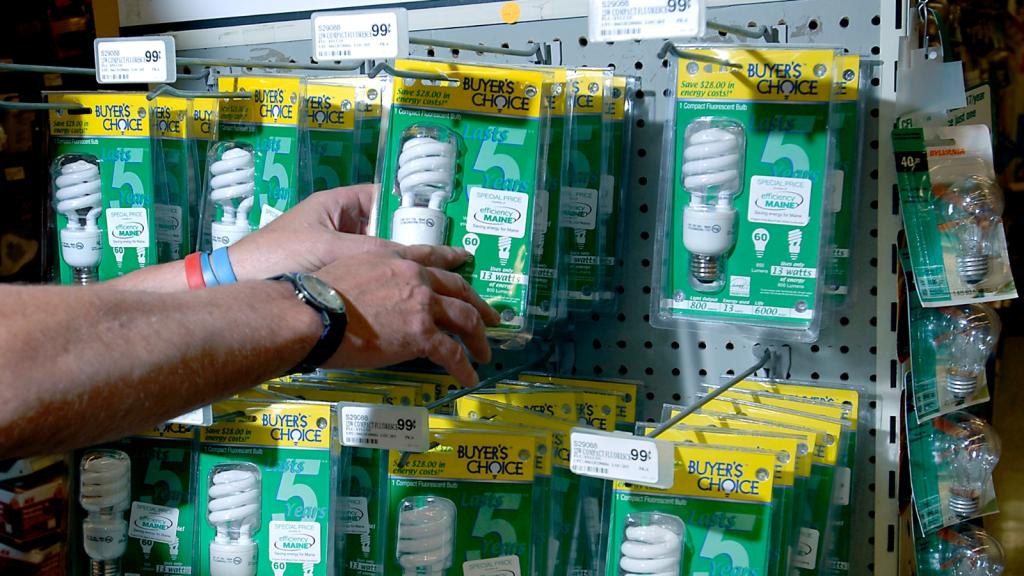
In EfficiencyStates ranked on energy efficiency, Grist provides drinking gamePosted at 1:02 PM on 07 Oct 2008
sources: Associated Press, American Council for an Energy-Efficient Economy straight to the report: The 2008 State Energy Efficiency Scorecard [PDF] |
The Week's Most Popular
|
|