Support Grist
Support nonprofit, independent environmental journalism.
Donate to Grist.

In the News

Tools: print | email | write to the editor | subscribe | RSS

The Consent of the Governors

Midwestern governors sign greenhouse-gas reduction pact

Posted at 6:51 AM on 15 Nov 2007

The governors of six Midwestern states and the premier of Manitoba signed on to the Midwestern Greenhouse Gas Reduction Accord yesterday, the first such multistate program in the U.S. Midwest. For those of you keeping track at home, along with the Regional Greenhouse Gas Initiative in the Northeast and an agreement among West Coast governors, about 48 percent of the U.S. population is now represented in some form of regional GHG reduction program. The Midwest agreement commits Illinois, Iowa, Kansas, Minnesota, Michigan, Wisconsin, and Manitoba to setting up a regional cap-and-trade system for trading emission credits. Credit trading would begin in 2010, but no reduction goal has been established yet. Indiana, Ohio, and South Dakota also signed on, but only as observers. At the same conference, 12 Midwestern governors agreed to various other goals, such as aiming to have 30 percent of the region's electricity come from renewable sources by 2030, and working to increase the use of biofuels.
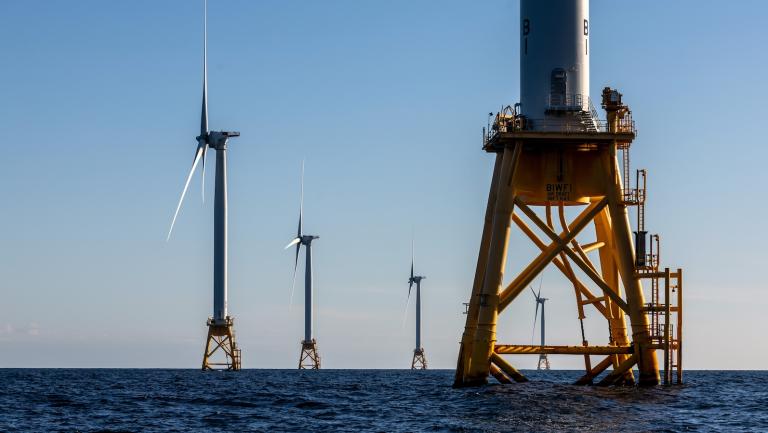
source:  Milwaukee Journal Sentinel
straight to the agreements:  Midwestern Greenhouse Gas Reduction Accord [PDF], Energy Security and Climate Stewardship Platform for the Midwest [PDF]

< Previous | Next >


Comments: (6 comments)

You are not logged in. Thus, you cannot post a comment. If you have a Gristmill account, log in below. If you don't have a Gristmill account, well, by all means go make one! Meet you back here in five.

Username: Password:

Forgot your password? Enter your username and click:

Seeing the Money

Reading the agreement confirms a sense I've had that to get regions to move on climate change they have to see the economic benefits for their region.  It notes that "regional cooperation will help the Midwest respond to and prosper in a carbon-constrained world and maximize the region's comparative energy advantages . . "  Rapidly growing wind and solar sectors, biofuels, coal reserves and geologies that facilitate sequestration.  This is not to get into a debate about biofuels or sequestration, which on this blog could easily generate dozens of posts.  It is to make the point that climate policy needs an economic grounding to make it politically feasible, and so if you have objections to specific areas, like biofuels or sequestration, you need to offer economic alternatives.  I wish we could pass climate policy with carbon caps just because it is morally right and ecologically necessary.  But realistically it will take people seeing the money to get things moving.


Patrick Mazza
The Consent of the Governors

 " and working to increase the use of biofuels."

Perhaps biofuels is not the answer!

Converting Food into Biofuel a 'Crime Against Humanity'  

http://www.un.org/radio/news/html/14891.html

Dennis Baker
dennisbaker2003@hotmail.com

because I think what you are doing is very essential for the survival of the planet, and anybody who is hindering that needs to be pushed aside.

Are Regional Pacts a Distraction?

The bigger the bureaucracy, the less that's done? It's useful to look at RGGI (the regional greenhouse gas initiative) that was put in place in the North East. While as a political move, RGGI was groundbreaking, moving the discussion about a federal cap and trade system forward, it has not worked as effectively as hoped.

The Western states are already accomplishing a great deal individually. Would it be better for them to focus on efforts in their states - demonstrating, for example, the viability of a green jobs corps in California - and wait for a federal regulatory system? Or is this the right move?

Either way, the new pact will only be a success if it doesn't distract from the real work that is being done on the ground.

Just a distraction?

The bigger the bureaucracy, the less that's done? It's useful to look at RGGI (the regional greenhouse gas initiative) that was put in place in the North East. While as a political move, RGGI was groundbreaking, moving the discussion about a federal cap and trade system forward, it has not worked as effectively as hoped.

The Western states are already accomplishing a great deal individually. Would it be better for them to focus on efforts in their states - demonstrating, for example, the viability of a green jobs corps in California - and wait for a federal regulatory system? Or is this the right move?

Either way, the new pact will only be a success if it doesn't distract from the real work that is being done on the ground.

Maybe yes, maybe no

There is no "the answer" and there are responsible answers to Ziegler.  But my point is not to open yet another debate on biofuels or sequestration, even though that is the temptation.  Let's try this another way - For the sake of discussion, let's just go ahead and toss out biofuels and "clean coal" and envision an economic agenda for the Midwest that reduces greenhouse gases while it ensures regional prosperity within these parameters. What can we agree on?

Patrick Mazza
Sigh,

The problem is that they may very well end up enacting policies that will actually increase net greenhouse gases because they are basing many of their decisions on erroneous, but politically convenient information. Can that be possible? Can our elected officials make such decisions on erroneous information?

One would be naïve to think otherwise. They voted to commit us to a trillion-dollar war on erroneous information and erroneously assumed it would be quick and easy.

An independent body of scientists should get the job of determining if their policies will result in a net increase or decrease in global warming. Without something like that, ideas like this will just squander resources and run us in circles. This is primarily a way to pump up their agricultural industries. The studies suggesting that biofuels probably create more greenhouse gases than fossil fuels will be (are being) ignored.


In the end, it all comes down to biodiversity. Poison Darts--Protecting the biodiversity of our world

You are not logged in. Thus, you cannot post a comment. If you have a Gristmill account, log in below. If you don't have a Gristmill account, well, by all means go make one! Meet you back here in five.

Username: Password:

Forgot your password? Enter your username and click:

The comments of Grist users reflect the opinions of those individuals only, and do not necessarily reflect the viewpoints of Grist, its staff, its board members, their psychotherapists, or their aestheticians. Got it?


ADVERTISING POLICY


About Grist | Support Grist | Jobs Board | Archives | Grist by Email | RSS | Podcasts
Gristmill Blog | In the News | Ask Umbra® | Muckraker | Victual Reality | 'Tis the Season | The Grist List | The Bottom Line


Grist: Environmental News and Commentary
a beacon in the smog (tm) ©2007. Grist Magazine, Inc. All rights reserved. Gloom and doom with a sense of humor®.
Webmaster | Privacy Policy | Terms of Service | Trademarks