amazingdrx

author

The Basics

I’m Also On

amazingdrx’s Recent Comments

  • Click here to view comment in original post

    Alert! Attention UF: Clothesline war in Pennsylvania. A woman is facing opposition from neighbors to her underwear "airing" in public. She vows to fight for her right to eco-friendly clotheslining. Could interesting pictures of underwear on clotheslines become a Grist staple? You have the fans who would apreciate this topic. http://www.grist.org/article/umbra-ecrush Hehehey.On Ask Umbra on shower caps, computers, and junk mail posted 8 hours, 23 minutes ago 11 Responses
  • Click here to view comment in original post

    Good point Alida, if most of us got our protien from veggies, wild fish populations and other endangered delicious animals might have a chance. Then the ocasional sushi treat or salmon would be aok. I think there is a way to have clean healthy ocean aquaculture as well as pond fish farming on land. The commercial profit motive is there already, and like Erik and others have noted it is creating more eco-problems and actually making it harder on wild species in most cases. Meanwhile giant factory ships net wild fish to be ground up into chicken feed. When chickens could eat worms for protien, worms grown on organic waste biomass. Human industry is making a dying mess of the biosphere. Too bad because it would seem all the technology exists to have prosperity and symbiotic eco-friendly industry and ag.On So long and thanks for all the fish posted 9 hours, 9 minutes ago 44 Responses
  • Click here to view comment in original post

    Bob, Ron here's my model. It involves extreme sacrifice, low power electricty only and even lower emergency power with battery storage (new Oasis lead acid battery, 1500 cycle life, no maintenance) and biogas backup. Heat and cold storage built into the building (an insulated tent), air and water pressure stored for washing, solar and biogas cooking, composting toilet, solar cogeneration (electricty and heat), small scale wind (vertical rotor), ground source heating/cooling, wood burning backup for heating, cooking, and electricty (with a thermocouple). These individual dwellings would be interconnected with a grid that is also connected to a few larger buildings with more solar panels and batteries, bigger biogas systems, and bigger wind machines. One of the main factors is how much sacrifice people will be comfortable with. A local system like this with say 20 of the smaller dwellings and three larger shop/greenhouse, library/kitchen, and meeting hall like structures, ought to be able to produce a surplus at times that could not all be stored. By that time maybe my local utility would let me connect that local grid with theirs. It would tend to smooth out low power situations, so emergency power would only be needed in storms. And allow the surplus to get onto the grid. This is the sort of scenario to start out with i think, in real life for me, and in a computer simulation. It would show how the smart grid could be built up layer after layer. Eventually connecting factories, farms, waste processing stations, and large buildings with their own distributed cogeneration backup systems. Maybe these kind of simple demonstrations are a way to get the powers that be to authorize more detailed supercomputer models. My suspiscion is that fractal distributed computing will eventually take over, each smart grid device part of a hive-mind of distributed computers responding to very organic human needs for heat, light, electricty, information and so forth. The smart grid like a living creature with electricty for blood and an internet nervous system that responds to factors like the weather, wind, sun, heating/cooling load, all the internal and external demands put upon it, and even stores electricty, pressure (air/water), and heat/cold. I still wonder what residents of boulder think of their experience with the smart grid. Is it smart yet? Hehey.On Solar's rapid evolution makes energy planners rethink the grid posted 17 hours, 28 minutes ago 17 Responses
  • Click here to view comment in original post

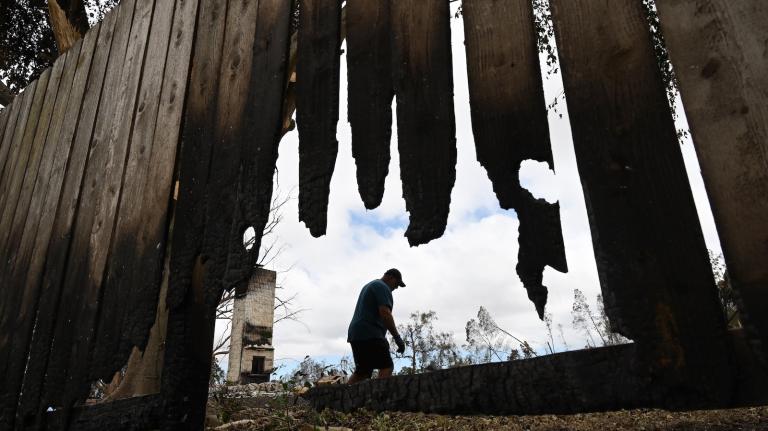
    Firestorms!! Humans can't put them out, the tornadic winds created by the chimney effect suck in fuel and air until it rains or all the fuel is gone. On the bright side, if enough particulate matter gets thrown up into the atmosphere, a "nuclear winter" effect might cool the planet down for a few years. Off course firestorms also release huge amounts of GHG into the atmosphere, stop sequestration of GHG out of the atmosphere due to dead trees and grass, and provide a dark surface that absorbs even more solar energy.On Top 25 reasons to give a damn about climate change posted 18 hours, 26 minutes ago 13 Responses
  • Click here to view comment in original post

    Firestorms!! Humans can't put them out, the tornadic winds created by the chimney effect suck in fuel and air until it rains or all the fuel is gone. On the bright side, if enough particulate matter gets thrown up into the atmosphere, a "nuclear winter" effect might cool the planet down for a few years. Off course firestorms also release huge amounts of GHG into the atmosphere, stop sequestration of GHG out of the atmosphere due to dead trees and grass, and provide a dark surface that absorbs even more solar energy.On Top 25 reasons to give a damn about climate change posted 18 hours, 41 minutes ago 13 Responses
View All
Advertisment
Advertisment