Vinod Khosla 
More About Me
Khosla is a technology innovator and venture capitalist based in Silicon Valley.
Vinod Khosla’s Posts
Clarifying my position on lithium ion batteries
The limits of today's electric car technology 18
Posted 3 months agoWe will likely ship a billion new cars worldwide in the next 15 or so years. The key question is not whether hybrid or EV cars/batteries will be successful financially (they probably will), but rather what it will take to get 80% of these billion cars to be low-carbon cars.
How biofuels are like drugs
Not all biofuels are the same; we can do biofuel well or poorly 27
Posted 1 year, 4 months agoTo my surprise, recently I found myself the subject of an editorial by the Wall Street Journal which characterized me as a strong advocate of subsidies for food-based ethanol, and as a recipient of "federal dole" who ought to "take a vow of embarrassed silence."
I have not advocated subsidies for food-based ethanol. In fact, I strongly believe any nascent technology that cannot exist without subsidies beyond an introductory period will not gain market penetration, and is not worth supporting.
I do look forward to the WSJ's complaints about oil's subsidy bonanza, from tax breaks for drilling, loopholes that… Read More
Biofictions
Wall Street Journal editorial mischaracterizes both my position and biofuels 15
Posted 1 year, 5 months agoTo my surprise, on Tuesday I found myself cited by the Wall Street Journal as a strong advocate of subsidies for food-based ethanol, and as a recipient of "federal dole" who ought to "take a vow of embarrassed silence." While I appreciate the Journal's foray into fiction writing (and I'd love to discuss my status on the dole with my accountant, who recently filed my taxes), I would like to clarify a few facts and offer a more rounded view of biofuels and ethanol in general.
A few facts:
Biomass, part III
The most critical assumption on cellulosic biofuels: yields 14
Posted 1 year, 9 months agoMy most critical assumption with cellulosic biofuels is on land efficiency: tons of biomass per acre, and hence gallons of fuel produced per acre, and more accurately, miles driven per acre. I believe biomass yields per acre will multiply by two to four times from today's norms.
The lack of genetic optimization and research on cultural practices, harvesting, storage, and transport with would-be energy crops -- miscanthus, sorghum, switchgrass, and others -- means that there is significant potential for improvement. The application of advanced breeding methods like genetic engineering and marker-assisted breeding, limiting water usage through drought resistant crops, and… Read More
Biomass, part II
Better agronomy for energy crops 14
Posted 1 year, 9 months agoI believe improved crop practices are a vital aspect in meeting our cellulosic feedstock needs. There are a few areas that offer significant potential:
- crop rotation,
- the use of polyculture plantations,
- perennials as energy crops, and
- better agronomic practices.
We address all four issues here. Though none of these have been extensively studied, early studies and knowledgeable speculation point to their likely utility. Further study of these techniques is urgently needed, especially the use of grasses or other biomass-optimized winter cover crops.
Crop rotation
I have proposed the usage of… Read More
Vinod Khosla’s Recent Comments
Click here to view comment in original post
My thoughts
Some of you have raised some legitimate questions, which I wanted to try
and answer here:- Brazilian Ethanol: I tend to agree that Brazilian, sugar-based ethanol
has significant advantages over corn ethanol, and I support eliminating
the tariff on it. However, I don't believe its a solution by itself. It
is a starting point but we need more land efficiency or more gallons of
fuel produced per acre (ideally more miles driven per acre with fuels
beyond ethanol) and cellulosic can do that much better than food crops.- Cover Crops: One can leave enough of a cover to avoid top soil loss,
and one leaves the root system in the soil where the microbial
communities are. One also prevents nitrogen runoff into our streams and
leaves it in the soil for the next summer food crop. This approach
leaves some of the extra carbon captured as CO2 by the cover crop in the
soil and takes some for fuel as biomass, still far better than what is
done today - which leaves the soil barren and results in nitrogen and
top soil loss. One can mix in legumes to fix additional nitrogen in the
soil as biomass crops for fuel don't need a "pure" crop so polyculture
cover crops would do just fine. One can in this scheme reduce the amount
of nitrogen during the summer crop cycle (and reduce nitrous oxide)
while harvesting biomass.- Transporting Biomass / Effect on Food Prices, If you look at our
papers, we've consistently advocated for local plants - in fact, I've
specifically noted that feedstock transportation beyond a 50-100 mile
range is not economically realistic. Infrastructure means a lot more
than old ethanol plants. Its pumping stations, storage facilities all
over the country for distribution and blending of ethanol which now
exist, and most of all flex-fuel cars. The cellulosic ethanol produced
in Georgia or Florida or Washington or New England or Canada will share
much of this. Winter cover crops in places like Texas , Maryland,
Alabama, and North Caroline will be part of the mix along with waste
wood form forest operations in Washington or the North east.As for the idea that displacing corn is going to increase food prices
significantly, we've had many different versions of this complaint;
firstly, the argument was that corn ethanol is responsible for high food
prices (USDA Chief Economist Joe Glauber noted that "On the
international level, the President's Council of Economic Advisors
estimates that only 3 percent of the more than 40 percent increase we
have seen in world food prices this year is due to the increased demand
on corn for ethanol." The USDA also noted previously: "Given that foods
using corn as an ingredient make up less than a third of retail food
spending, overall retail food prices would rise less than 1 percentage
point per year above the normal rate of food price inflation when corn
prices increase by 50 percent."), and now you're suggesting that
removing this corn is going to raise food prices? Moreover, look at the
impact biofuels have had on our energy costs already - "According to the
International Energy Agency, the biofuels production that has been
available to the United States and European markets over the last three
years has cut the consumption of crude oil by one million barrels a day.
At today's prices, that's a savings of more than $120 million per day."- All biofuels are bad: Some biofuels are awful, yes but painting them
all with a broad brush is just illogical. Study after study has shown
the environmental benefits of cellulosic biofuels, from NREL to the DOE
to multiple university studies. As to the idea of consuming less energy
- sure, but are we magically going to get people to stop driving, or
turn off their cars? There is a difference between blue sky, achieve
nothing idealist and pragmentalists (I consider myself one). Efficiency
is certainly a part of the solution (and we have over 15 investments in
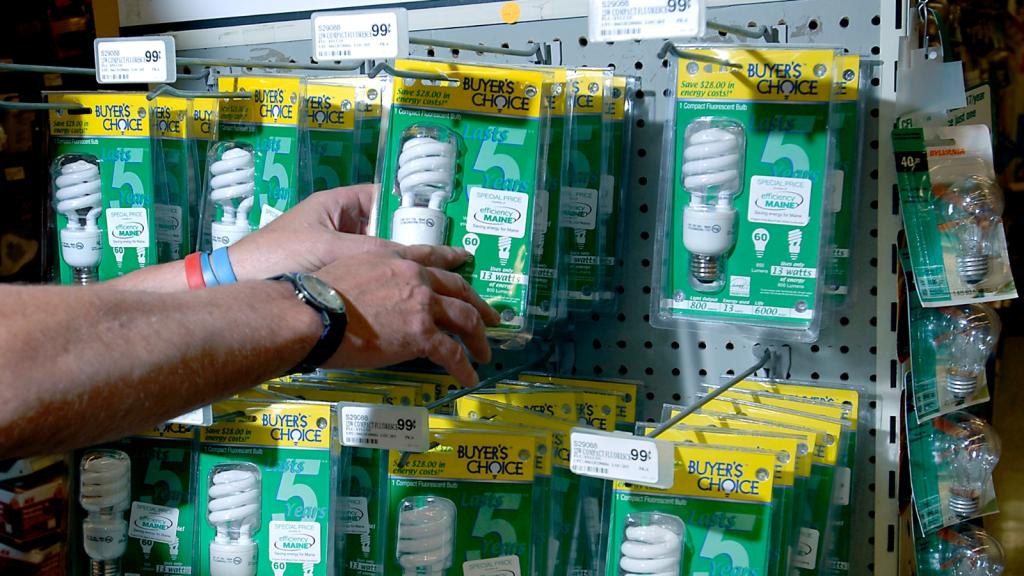
efficiency of every type form lighting to engines to appliances), but
its not the solution by itself. We can't change consumer preferences by
lecturing at them - you have to provide people with alternatives they
want while trying to influence their "wants" by education (not rants!).- Other fuels: butanol, other cellulosic fuels, and biodiesel: For what
its worth, we have invested in companies that are attempting to jump
start ethanol, and go to butanol or other future fuels (Gevo, Amyris,
LS9, Kior, to name a few). I've also said before that RFS shouldn't
designate a winner (ie, one particular cellulosic fuels)- rather, it
ought to suggest that fuels that can meet the required "full life cycle"
environmental thresholds be eligible. That leaves the job of picking the
best technology to the market. We also have many investments (Transonic,
Ecomotors, Tula for engines and Seeo, Firefly and others in batteries)
attempting to cut oil consumption in half through better efficiency.
Biodiesel is a great idea made from cellulosic feedstocks but food crop
based biodiesel is the wrong thing and will not achieve either cost
effectiveness (ability to compete without subsides) or land efficiency
(gallons of gasoline equivalent per acre). Jatropha and algae may go
part way their but unlikely they will be as cheap as cellulosic fuels.Criticism of biofuels is certainly fair game, and I think its important
to have these debates, but I see biofuels (done right) as the best and
only realistic, scalable solution in the near future.regards,
Vinod
On Not all biofuels are the same; we can do biofuel well or poorly posted 1 year, 4 months ago 27 ResponsesClick here to view comment in original post
Response to A. Siegel
Assuming a Corrolla at $14.4K + $5,000 (for a "hybrid premium) and getting 40MPG.
2010 Gasoline: 273 grams per mile, $464 per month
2017 Gasoline: 273 grams per mile, $464 per month
2017 gasoline - 50% efficiency increase in ICE: 182 grams per mile, $439 per monthBy the way, changing the coal powered grid to renewable is atleast 30-50 years even if we were all willing to pay more for electricity. See "the future" in Part III tomorrow.
And no, I don't respond to people who think all consumers should be made to spend all their money of inefficiency or drive Nano's. I don't have any idea how to change consumer behavior except through policy and I do favor much higher CAFE standards, high carbon prices, and public transportation if we could get people to use it. I suspect the grams of carbon per mile on the underutilized San Jose, Ca public transit system is also very high! Anybody calculate total public transit passenger miles divided by their carbon emissions? On Hybrid emissions: Facts and numbers posted 1 year, 9 months ago 34 ResponsesClick here to view comment in original post
Biomass, Soil Carbon, Biodiversity, Land and more
To see my answers on the question "Where will biomass come from" and "what will it do to water, biodiversity and soil carbon" please come back next week. We will propose ways to improve biodiversity, reduce fertilizer input (when growing row crops in rotation with biomass crops), actually increase soil carbon content on strictly rainfed crops. Range and Coskata have already reduced water use to 75% below that of corn ethanol. The four criteria for a good fuel are "CLAW"
C- cost below gasoline
L- low to no land use; use of degraded lands to restore their biodiversity and carbon/microorganism ecosystem.
A- Air quality or carbon emissions
W- Water useHope fully I can answer all three next week in a three part series.On Hybrid emissions: Facts and numbers posted 1 year, 9 months ago 34 Responses
Click here to view comment in original post
Numbers Matter Here: Support your statements
First, bloggers jump the gun without understanding the details of what one is saying. My paper on Biofuels Pathways (www.khoslaventures.com/resources.html ) explaisn the details. The key question is how many people will pay $5000 more for a basic hybrid car that reduces carbon emissions by 25% (about the same as corn ethanol by the way) versus a flex-fuel car that costs no more and can reduce emissions by 75% or more when run on cellulosic biofuels? A plug-in hybrid would cost $15000 more for the average buy and may reduce carbon emissions by a larger percentage today depending upon the location and source of your electricity (how much fossil fuel is used in your power grid). That might reach 100% reduction when we have all renewable power in a region and all cars are fully plug-in, but when might that happen? Even if we could get 50% of the cars in the US to be hybrids, reducing emissions by an immaterial 10-15%, could we get people in India and China, the fastest growing car markets, to ante up this much additional money when the biggest thrust in volume cars in India is to reduce the cost of the whole car to $2500? When can we get enough cars on the road? Battery costs will decline and performance increase but once one gets inside the technology one understands that the upside with known chemistries is limited to maybe 2-4x change in cost/performance - not nearly enough to change the hybrid or plug-in hybrid cost dynamic. Having said that we are investing in batteries to try and enable breakthroughs that might change this. Other technologists are doing the same but the outcomes look very uncertain. We will need 50-80% of the car buyers to pay for these new technology automobiles to make a material difference. When will that happen and at what cost point in the US? In the world? Add 10-15 years after new car sales to reach these percentages and you have a "low carbon fleet"! long term I still believe we can reach this laudable goals but probably not in the next decade or even two! On Venture-capital star ain't no clean-tech expert posted 1 year, 10 months ago 54 Responses