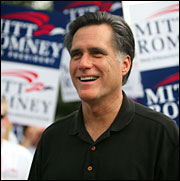
Update: Mitt Romney dropped out of the presidential race on Feb. 7, 2008.
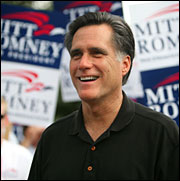
Key PointsRepublican presidential candidate Mitt Romney isn’t convinced humans are a big contributor to climate change, but he supports efforts that would cut greenhouse-gas emissions while pushing America toward energy independence. As governor of Massachusetts from January 2003 to January 2007, he got off to a promising start on a green issues, but then repeatedly angered the state’s environmental community [PDF].
- Acknowledges that climate change seems to be happening, but says it’s unclear how much humans have contributed to the problem. Calls for policies that would boost energy independence and, as a byproduct, cut greenhouse-gas emissions.
- Says any international climate treaty would have to see all nations cutting emissions, unlike the Kyoto Protocol.
- Supports coal-to-liquid technology and calls it “clean.” Ditto with coal gasification.
- Supports expansion of nuclear power.
- Supports increased oil drilling offshore in U.S. waters.
- Supports oil drilling in the Arctic National Wildlife Refuge.
- Calls for more ethanol, biodiesel, and other biofuels.
- Calls for more energy efficiency and conservation.
Video & Audio
Watch Romney talk about energy independence and climate change on CNBC on Feb. 8, 2007:
[vodpod id=Video.16251130&w=425&h=350&fv=%26rel%3D0%26border%3D0%26]
Watch Romney answer a question about mandatory caps on carbon emissions at a town hall meeting in Iowa on May 31, 2007:
[vodpod id=Video.16251135&w=425&h=350&fv=%26rel%3D0%26border%3D0%26]
A message from
Your support keeps our climate news free.
Grist is the only award-winning newsroom focused on exploring equitable solutions to climate change. It’s vital reporting made entirely possible by loyal readers like you.
At Grist, we don’t believe in paywalls. Instead, we rely on our readers to pitch in what they can so that we can continue bringing you our solution-based climate news. Donate today to keep our site free. All donations DOUBLED for a limited time.