Talk about a double whammy. It’s challenging enough to be green when you’re solo, and then pregnancy comes along and gives you twice the eco-angst (not to mention more hormones than you know what to do with).
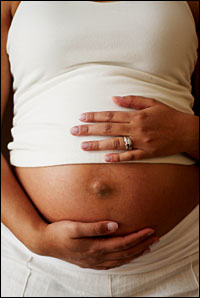
Photo: iStockphoto
The cause for alarm is real: pregnancy is the most critical time for establishing your baby’s well being. It’s also the time when you’re vulnerable to the alphabet stew of harmful chemicals in the world, which are increasingly making their way into women’s bodies, wombs, and breast milk. But there is good news: Simple measures like eating organic, nutrient-rich foods before and during pregnancy can help safeguard you and your child while being kinder to the planet. And today it’s easier than ever to find products that promote healthy pregnancies and peace of mind.
Start by taking a few of the 10 steps below — along with that all-important vow to seek eco-progress, not perfection. It’s a great beginning.
1. Say yes to organic food
Organic foods reduce your exposure to pesticides, hormones, antibiotics, nitrites, and a host of other bad actors. Going natural also provides more of the super-nutrients that can reduce cancer risks and boost overall health. And babies in utero develop a fondness for the things you eat during pregnancy — so add organics to your diet and your child is likely to crave those foods after she’s born, setting her up for a healthy future.
The downside: a totally organic lifestyle can get pricy. To snag the biggest bang for your eco-buck, buy organic versions of the foods you eat most; use organic low-fat dairy products; and buy organic varieties of the produce with the highest loads of insecticides: peaches, apples, sweet bell peppers, celery, nectarines, strawberries, cherries, lettuce, imported grapes, pears, spinach, and potatoes. Finally, use (surprise!) organic ketchup and get the benefits of its ultra-healthful antioxidant, lycopene.
Five-cent solution: Each time you go to the grocery store, replace one item on your list with the organic version.
2. Get pretty without chemicals
Use natural or organic personal-care products, including shampoos and conditioners, soaps, deodorants, perfumes, makeup, moisturizers, and other potions and lotions. Conventional brands of cosmetics and other items often contain noxious chemicals like phthalates, which have been linked to birth defects. A simple way to avoid phthalate exposure: shun products that list “fragrance” as an ingredient.
Take care in the hair and nail department, too: avoid hair dyes and nail polishes with toxic components like coal tar or formaldehyde. Instead, choose green products at your natural-food store, or buy online at Aubrey Organics, Burt’s Bees, Terressentials, Jason Natural, and other similar sites. For more information, see the Green Guide personal-care issue.
Five-cent solution: Instead of slathering on the makeup, take advantage of that mother-to-be glow.
3. Cotton to organic cotton
By some estimates, conventional cotton accounts for 10 percent of the world’s pesticide use and 25 percent of insecticide use, making it one of the most toxic crops on earth. Help weave a healthier world — before and during pregnancy, and beyond — by buying organic cotton linens, mattress pads, encasements, and mattresses themselves. Remember, your newborn will be sleeping about 12 hours of the day (albeit in no particular order).
Find green bedding at The Organic Mattress Store, The Natural Sleep Store, Good Night Naturals, and others.)
Five-cent solution: Can’t afford to make all your sheets organic? Wash conventional linens in non-toxic laundry products to help protect the family (and the groundwater too).
4. Furnish wisely
If you’re shopping for new mattresses and furniture, buy products sans Teflon- and Scotchgard-type water-and-stain repellents, which contain harmful chemicals. Also try to avoid furnishings with polyurethane foam, a product that’s often treated with toxic fire retardants called PBDEs (polybrominated diphenyl ethers). And take a pass on those cute foam chairs for children, too: as foam ages, it breaks down and releases PBDEs into the air; the chemical eventually winds up in our bodies and in breast milk.
Five-cent solution: Shop at secondhand stores — the prices are lower, and most of the products will have had time to offgas many of their nastiest fumes.
5. Meet the new rules (kinda the same as the old rules)
Don’t smoke cigarettes, drink alcohol, use illicit drugs, guzzle caffeinated drinks — or clean the kitty litter. Cat feces can contain an organism called toxoplasma that is particularly hazardous for pregnant women. In rare cases, fetuses exposed to it can develop brain damage or other problems. Avoid touching hands to face while gardening and make sure to wash up afterward, just in case cats are also dirtying the dirt.
Five-cent solution: If you can’t sucker someone else into cleaning the cat box, wear rubber gloves.
6. Shun mercury
This one’s a must: Avoid eating fish that is high in mercury, a particularly potent neurotoxin that can cause a host of developmental and health problems for fetuses and children under the age of 6. High-mercury fish include king mackerel, marlin, orange roughy, shark, swordfish, tilefish, and tuna (the big-eye or ahi variety). Limit your intake of bluefish, grouper, Spanish and gulf mackerel, Chilean sea bass, canned albacore tuna, and yellowfin tuna. (Here’s a complete list of mercury in fish.) And watch out for sushi: it’s murky in the mercury area, too.
Five-cent solution: Fish contains beneficial protein and omega-3 fatty acids, so don’t give it up entirely. Aim for safer options like shrimp, salmon, pollock, and catfish.
7. Let bugs and weeds be
Pregnancy is no time to use pesticides or insecticides, which have been linked to cancer, reproductive problems, and a host of other health and environmental issues. Pesticides like organochlorines (OCs) accumulate in the food chain; some, like DDT, are largely banned in the U.S. but remain in the environment for decades.
Five-cent solution: If you get the urge for killing, use natural alternatives: fly paper! fly swatters! hand-digging out those dandelions!
8. Pick your pans
Teflon pans are easy to clean, but they’re manufactured with chemicals like perfluorooctanoic acid (PFOA), a water contaminant and suspected carcinogen that may also cause birth defects. Use non-Teflon pans with a splash of olive oil instead.
Five-cent solution: Shop secondhand for cast iron, glass, or stainless steel pans.
9. Renovate later
Pregnancy may seem like a fine time to fix the house. But it’s really the worst time for all the ripping, scraping, gluing, sanding, and painting that renovations entail. Remodeling can be particularly toxic in homes built before 1978 or so, when paints contained lead, a substance that can affect nearly every aspect of fetal development. (To test for lead, buy a kit from the local hardware store.) Older houses are also prime territory for asbestos, a fire retardant widely used in everything from ceilings and plumbing to insulation and flooring. And today’s conventional paints contain volatile organic compounds (VOCs), another health hazard. So if you must putter, use green, natural products.
Five-cent solution: Resist the redo and relax. Your baby won’t arrive criticizing the wall color.
10. If it stinks, it stinks
When something smells terrible, it often is terrible for you. Listen to your nose and stay as far away as possible from cigarette and cigar smoke, bleaches, conventional household cleansers, refinery smoke, solvents, paints, paint thinners, glues, oven cleaners, air fresheners, vinyl shower curtains, and even new carpets (that “new carpet smell” isn’t exactly a sign of goodness). If you see a warning label on a product, leave it alone.
Five-cent solution: Pregnancy is the perfect time to reject the noxious and unnatural things in life. So feel free to be unapologetically picky. You’ll be doing the future a favor.