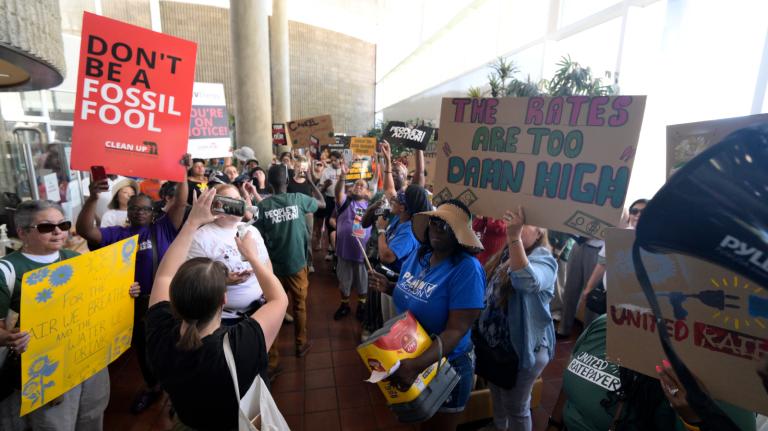
A Czech friend of mine sent me an email during the recent NATO summit in Prague as American fighter jets stood by and riot police filled the streets. “Sometimes,” she wrote, “I feel as though the world has gone mad.” Her words spoke my own thoughts so clearly it was as though I were reading a message I’d sent to myself.
Quiet riot police.
Do you sense it too — the recklessness of this moment?
How can people talk this way — as though deep Earth penetrating nuclear weapons, unmanned drones, and stockpiles of smallpox virus are any more of a solution to global crises than people exploding themselves on crowded street corners?
As though the acid rain falling onto our forests and carbon dioxide warming our planet are only abstractly related to our lives?
As though it is the price of progress that our breast milk contains PCBs?
As though nothing precious is vulnerable. And yet we all bleed and break.
Another day, another secret dance of rock and ocean.
Whatever it is you love, it rises out of the secret dances of rock and ocean and microbes. It depends on the paths that clouds take as they float over the land. It depends on the life expectancy of honeybees, the fish that lay eggs in marsh grass, the quiet creation of soil.
We are all made of lungs and livers, nerve fibers and muscle. So much that matters — music, Sunday dinner, a baby’s grin — depends upon factors that are largely beyond our control: the molecules of our body doing the right thing, in the right place, at the right time. Five fingers extending off an embryonic arm. Heart valves being sculpted just so. A certain number of cell divisions and no more. It all has to work perfectly before music, or sonnets, or even a grin can happen. For all the dazzle of biotechnology, we are nowhere close to understanding, let alone replicating, the mysteries of life. But we do know enough to see that our bodies are not prepared for some of the chemicals we’ve created — the ones that damage DNA, the ones that confuse hormone receptors. We are vulnerable in the face of this new chemistry of our own creation.
With missiles that can send devastating weapons hurtling across oceans and viruses that can be released on the subway, we face another vulnerability, of course — the chance that someone crazy or desperate will launch something flaming or crushing or infectious in our direction.
I don’t expect a world without tragedy and loss. But unlike the natural vulnerability all living things must face and accept, the warfare, the toxins, and the changing climate are not inevitable, not out of our control. They are not like a tornado or grandmother’s inoperable cancer. They are like the house falling in because you didn’t patch the roof, or grandmother growing frail because there is no one to cook her supper. It’s not a matter of destiny; it’s a matter of will.
We need the Earth’s climate to stay more or less constant. Well, there are things human beings can do to increase the chances of this. We know what these things are: switching from coal and oil to solar and wind power. Investing in public transportation.
Our bodies can’t handle heavy metals or dioxin. We know that to be true, and we can reshape our chemistry in nature’s style, using instead the fibers, proteins, sugars, polymers, and dyes that life has already “invented.”
Blooms’ day.
None of us are safe while governments and factions use violence as a tool. We don’t have to be trapped in escalating violence as more and more powerful weapons end up in the hands of more and more volatile leaders. We could shift our priorities, invest in peacekeepers, negotiations, and the enforcement of international law.
We are vulnerable, but we are not without options. Seeing both the vulnerability and the possibility of our times — that’s what causes the anguish, isn’t it? If you understand what is at stake and can see at least a few steps ahead toward safer ground, it’s hard to watch the people around you standing still or even moving in the opposite direction. It’s hard not to wonder if the world has gone mad.
But if you are willing to look at our vulnerability, you also get to see the miracles. You understand the fine line we walk. You hear it in the perfect heart valve pumping away when you press your ear on your daughter’s chest. You see it in the spring when the same gentle warming wakes up the pollinators and opens the apple blossoms. Knowing that climate change could disorient the apples or the bumble bees helps you see the wonder of their partnership in the first place.
If you are willing to believe that we could live in different ways, you have the chance to discover them, little by little. You get to have butternut squash baked in a solar cooker on your doorstep. You get to teach your children how to light a fire in the woodstove with logs they helped you to stack. You get to try, in your own relationships, to resolve conflicts the way you would like to see them resolved across the world.
Butternut squash and apple blossoms don’t sound as though they will change the world. But in my mind they stand for our only hope — people who can look straight at our vulnerability and still see our power.