Solutions to sustainability challenges come in various forms, colors, and strengths. Some are compliance-driven and done grudgingly. Some are citizenship-led and done at a slight distance from an organization’s core business. And some are truly innovative and entrepreneurial. Now this third category is on the verge of taking off like a rocket, involving new breeds of social and environmental entrepreneurs — but also driven and encouraged by innovative, entrepreneurial folk in the business and government mainstreams.
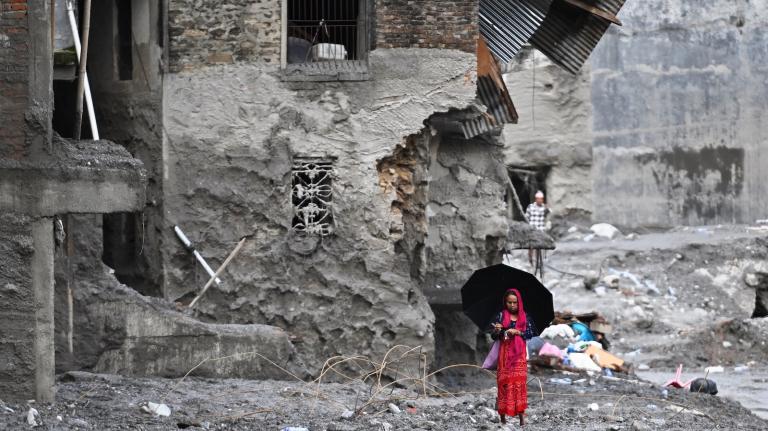
Much of the work that we do at SustainAbility aims to help corporations that aspire to behave — and be recognized — as good citizens. All well and good. In some cases, too, as in the aftermath of the 2004 tsunami, some corporations have gone to extraordinary lengths to help out those in distress. But there is a growing sense that, even with the best will in the world, current approaches to corporate citizenship are not going to save the world from poverty, hunger, and disease, let alone from environmental challenges like the collapse of major fisheries, the loss of tropical forests, and climate change. What’s needed are creative solutions that are easy to replicate on a large scale — and a fair few of today’s citizenship-driven approaches, to put it bluntly, may fail to make the cut.
None of this means that we are about to abandon our work with large corporations, but we do believe that the time has come for mainstream businesspeople to take an urgent, close look at what social and environmental entrepreneurs are up to. Happily, there are a growing number of opportunities to do so. Fast Company (which prefers the term “social capitalists”), the Schwab Foundation, and the World Economic Forum [PDF] all will be hosting major events on the theme in January, for example, while the Skoll Foundation’s World Forum on Social Entrepreneurship is slated for March. If you can’t get in, book early for next year.
The entrepreneurs spotlighted by these events are setting new benchmarks in the field. Indeed, the extraordinary potential of the work such people do has become increasingly evident, for example with Kenya’s Wangari Maathai of the Green Belt Movement winning the 2004 Nobel Peace Prize for her work on reforestation, and now Muhammad Yunus winning the 2006 prize for his attempts to make poverty history. The world, it seems, is beginning to sit up and notice things that have been building — like Yunus’s microfinance organization, the Grameen Bank — for at least three decades.
The Grameen Bank, formed in 1983, has helped to rescue huge numbers of Bangladeshis from poverty by extending loans of as little as $30 to people ignored by traditional financial institutions — poor, rural women, for the most part, who use the money to start up cottage businesses and have proved remarkably reliable in paying back their debts. It also spawned daughter companies that spread renewable energy, mobile telecommunications, and other goods and services to underserved communities. Its basic business model has been replicated by social entrepreneurs around the world. Yunus, as a result, is the social entrepreneur’s social entrepreneur, and the Grameen movement he catalyzed is the glittering tip of a surging global wave of social entrepreneurship.
Significantly, too, the microfinance models Yunus and his colleagues have pioneered are inspiring a wide range of parallel projects not only by other social entrepreneurs but by major international companies like financial-services giant Citigroup, Brazilian bank ABN Amro Real, and mobile-phone company Sony Ericsson. And these new market approaches are now bubbling up into the world of the global power elite. So, for example, “scalable sustainability solutions” will be central to the agenda at next year’s World Economic Forum meeting in Davos, Switzerland.
We sense a remarkable and accelerating convergence between what mainstream companies will want to do and what social and environmental entrepreneurs are already working on, with a growing potential for fruitful cross-fertilization. This is something we take a look at in a new SustainAbility business primer, “Scalable Solutions” [PDF], which explores potential lessons to be learned from the growing success of social entrepreneurship; it’s an early product of the evolving three-year, Skoll Foundation-funded expedition we’re making into social-enterprise territory.
Happily, the natives are turning out to be friendly — and keen to know how they can bridge across to thoughtful companies and financial institutions. At the same time, we have been struck by the way some of our clients are beginning to wake up to the opportunities here. Still, if we’re honest, even many leading corporate citizens lag behind leading social entrepreneurs — and the foundations that fund them — in terms of understanding how to build and capture social and environmental return on investment.
We clearly have much work still to do to convince businessfolk that the growing focus on entrepreneurial solutions to sustainability challenges could easily outstrip the corporate citizenship movement within a few short years — but we’re anxious to take on the challenge.
One key reason is that we think our clients — and business more broadly — have a lot to learn. Companies can find out about potentially rich new markets where social and environmental entrepreneurs are experimenting with new business models, services, and products. They can learn from the creativity and innovation that such entrepreneurs bring to the world’s most pressing sustainability challenges. And they can potentially click and drag some of the social-progress metrics that these people and their supporters are developing.
The potential of social and environmental entrepreneurship is huge. As Yunus wrote a few years back, “We have created a slavery-free world, a polio-free world, an apartheid-free world. Creating a poverty-free world would be greater than all these accomplishments while at the same time reinforcing them. This would be a world that we could all be proud to live in.” Coming up with a dream scenario is one thing, however; making it happen is quite another. But the point is that successful social entrepreneurs are delivering the goods — and services — needed by the poorest of the poor.
Yunus and Maathai richly deserve their prizes, even if the original Nobel funding came from patents on explosives like dynamite. They are key agents of the waves of creative destruction that the world now needs to blow away the old, unsustainable economic and business models, opening up opportunity spaces for more sustainable and equitable ventures, business models, and livelihoods.