What’s next in the global warming discussion 13

If you want to see the conservative punditariat's most ignorant, flat-footed, intellectually irresponsible position on climate change, you can't do better than Jonah Goldberg's insipid column in the L.A. Times. But it's just a collection of smears and discredited half-truths collected from right-wing blogs, so I won't encourage you to waste your time on it.

A far more intelligent conservative, and a far more eloquent statement of the conservative position on climate change, can be found in this post from Ross Douthat. Ultimately, though, it doesn't hold up to scrutiny either.

(Incidentally, both posts focus their ire on Al Gore. We can expect more of that. Particularly on issues on which the merits weigh against them, conservatives love to personalize and demonize, and they made an art form of doing it to Gore back in 2000. Laura Turner makes the point well here.)

Once you strip away the cruft, Douthat's position is basically this: Global warming may be devastating in the long term, but "the kind of economic reforms necessary to do anything significant about the accumulation of carbon dioxide would be immediately and decisively disastrous." And "very, very few governments are inclined to accept an immediate economic calamity in order to forestall a longer-range crisis that may or may not be worse."

The problems with this position are fairly obvious. As Ezra Klein puts it, "if there's a sick patient on your table and you decide surgery might kill 'em, that doesn't erase the fact that there's a sick patient on your table." Douthat offers no alternative proposal. If we take him seriously, what he offers is basically nihilism: It's going to happen, we'll never do anything to stop it, and Al Gore is a butthead. That's not exactly a winning position, substantively or politically.

This is where Douthat -- and conservatives generally -- leave off, but it's where the meaty argument actually begins.

Ezra more or less concedes Douthat's (unsupported) assertion that cutting emissions would be "disastrous." At that point, Ezra's colleague Matt piped in to say, no, cutting emissions wouldn't be that hard at all. He quotes John Quiggin saying that reducing CO2 emissions by 60% (what scientists recommend to stabilize climate) would cost us "between 1.5 per cent and 3 per cent of GDP." No problem, right?

Ezra responded by saying, yeah, maybe cutting the requisite emissions in the U.S. is possible, but there's no way we'll get China and India to do it.

Look what's happening: Here you have some of the web's brightest policy wonks tossing around diametrically opposed assertions on what may be the single most significant question of our time, casually. Oh, cuts would be devastating? OK. Oh, wait, they'd be relatively painless? OK.

Far, far too much time has been spent arguing about whether global warming is happening. The group of people who still think that's a live question is shrinking and is already basically insignificant.

These are the two questions that need answering:

  • How bad will the effects of climate change be?
  • How much will it cost to cut global GHG emissions by 60%?

Balancing those two will determine our response to global warming. I happen to think that the effects will be awful, and reducing global emissions would be a net economic positive. But I'll admit I don't have anything close to an airtight case for either of those (closer for the former than the latter). I don't have much more than what 90% of people have -- assertion. A gut feeling. An educated guess.

These questions will determine how attractive clean coal or nuclear power or biofuels are. They will determine the urgency of land-use reform. They will tell us how likely resource wars and mass refugee flows are. They are the key policy questions of our generation.

The mere existence of global warming gets us nowhere. It only begins the debate. We need to move on to the meatier, more difficult questions it raises.
David Roberts is staff writer for Grist. You can follow his Twitter feed at twitter.com/drgrist.

Advertisement
Advertisement
  1. Cougar Posted 12:57 pm
    21 Apr 2006

    Federal concern for global warmingUntil we get a good old fashioned clean sweep in the federal government, I wouldn't expect much emphasis on acknowledging that global warming is a problem.  Here's one small perspective -- It's difficult to believe that programs for clean coal would get any federal support since the federal agency that regulates coal dismantled its own recycling program in 2001.  Multiply that by all the other ways that the current leadership rapes the environment each day, and you will see the direction that we are going.
  2. Stentor Posted 6:25 pm
    21 Apr 2006

    demonizingconservatives love to personalize and demonize

    This is hardly a failing unique to conservatives. Just mention "Karl Rove" to any liberal.
  3. caniscandida Posted 8:01 pm
    21 Apr 2006

    moralizing muddleJonah Goldberg writes:
    "Moreover, the greens' proposed solutions to global warming are even more otherworldly. Reducing global carbon dioxide emissions to 60% of 1990 levels before 2050, while China, India and (hopefully) Africa modernize, is inconceivable, ill-conceived and also immoral because it would consign generations to poverty."
    This is wonderful rhetoric, but deplorable ethics.  The contrary of "generations in poverty" is really "getting by a bit better in the short term; in the slightly longer term, suicide."  And "suicide" includes a nasty stage called "oligarchic polygenocide."  Presumably Mr. Goldberg thinks he is on the side of the oligarchs; in the long run, though, not even the oligarchs escape.
    If Goldberg were a true friend of the poor, he would renounce his idolatrous worship of "modernization."

  4. amazingdrx's avatar

    amazingdrx Posted 10:31 pm
    21 Apr 2006

    Bush bunkers"...not even the oligarchs escape."
    The mars escape plan is not working out. I'm figuring they have in mind a Strangelovian future of wonderful nuclear powered mineshaft living.
    These will be known as "Bush bunkers" in honor of the man who made them necessary.  Remember the complaints of underground blasting from neighbors who live near the vice presidential residence shortly after Cheney took office?
    Yep, the first Bush bunker, even before 911.


    http://amazngdrx.blogharbor.com/blog
  5. Kit Stolz's avatar

    Kit Stolz Posted 3:35 am
    22 Apr 2006

    What's Next in Global WarmingThanks for catching us up on this important debate. Two points:
    1)Although the reality of global warming is now inescapable (and, according to recent polls, accepted by an overwhelming number of Americans) still heavyweights in government (the V-P and P) and the media (the WSJ) try to fudge our contribution to the problem...emissions.
    We cannot hope to reduce or reverse emissions until we have baked our contribution to the problem into the consensus. So those of us who believe in action still must insist on this point when the debate comes up.
    2)It's also important to mention that cap-and-trade programs that use the market to bring varying industries and user-groups in line (similar to those that dramatically reduced the problem of acid rain, and CFC emissions, and smog in Los Angeles) do work, and that, as economist Eban Goodstein points out in a study surveying emission regulation issues over two debates, it ALWAYS turns out to be easier and cheaper to prevent a mess than it does to clean it up.
    A big part of this debate will be about facing facts. Once we've done that, we can start making choices and asserting our principles. But we have to start with the world as it is. "A physical fact is as sacred as a moral principle..." (Emerson)
  6. Cougar Posted 9:14 am
    22 Apr 2006

    The first bunker, even before 9/11As though it were planned.
  7. amazingdrx's avatar

    amazingdrx Posted 3:35 pm
    22 Apr 2006

    Ahhh...Yep.  Extrapolating from "The Project for a New American Century", it seems it was inevitable all along.

    http://amazngdrx.blogharbor.com/blog
  8. David Foley Posted 10:59 pm
    23 Apr 2006

    Don't fight the straw manIf by chance, someone from the Flat Earth Society were able to publish an op-ed in a major newspaper, few would waste their energy arguing with the poor fool.
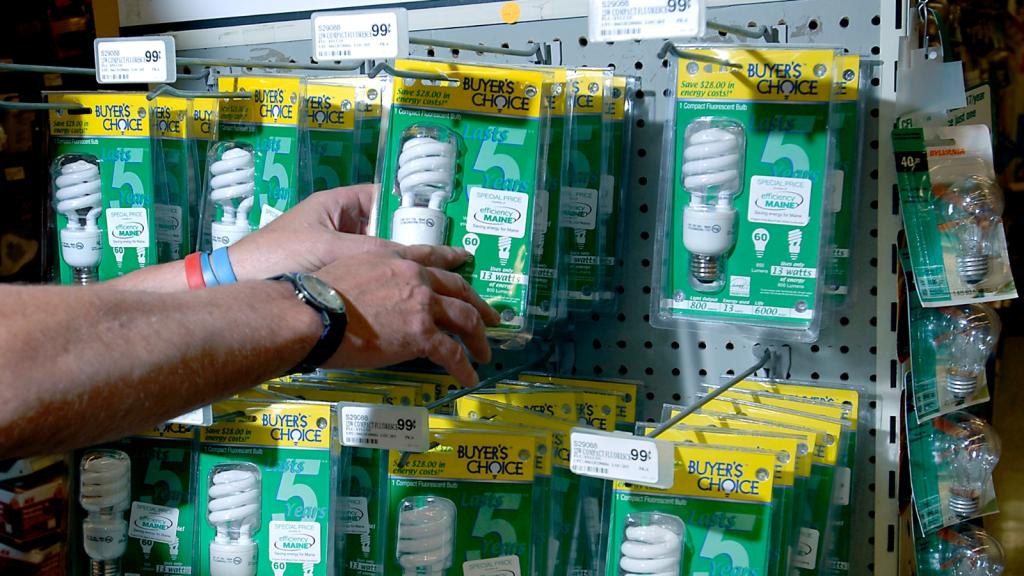
    Don't waste time and energy on reactionaries.  Find the people who want to help solve this problem.  They're everywhere.  Today, you could change every light bulb in your house to a compact fluorescent.  Tomorrow, you could convince your neighbor to do the same, maybe work together to form a little neighbor light-bulb-buying coop.
    Or whatever.  The point of these conservative essays is not just to sow confusion - another aim is to pull your strings, make you dance to their tune by reacting to them.  Don't fall for it.
  9. kmp Posted 1:54 am
    24 Apr 2006

    Half-baked environmental jihad?What is half-baked about promoting energy efficiency?  Where is the jihad in supporting renewable, non-fossil fuel energy?  Even if we were to suddenly, tomorrow, commit trillions of dollars to development of alternative, renewable energy production (oh, to live in such a world!) how could this ever be construed as a waste?  Even if we are completely wrong... say, after 20 years of serious commitment to renewable energy, energy efficiency, local food production, a revolution in personal transportation - say we DO reduce global greenhouse gases to pre-1990 levels. And say the Earth is still warming - goes up another degree in that 20 years.  Well, there would be a lot of right-wingers saying "We told you so," but other than that annoyance, wherein lies the tragedy?  Have we really imposed undue economic harm on 'working families?' Would it not be a good thing to eliminate our need for foreign energy imports?  Are not clear air, water, open land free of landfill, diverse wildlife, worth making changes for?
    Frankly, my vote for "most hackneyed environmental phrase of the year" would be "global warming."  I'm sick to death of hearing about it and I voluntarily read this site every day.  It has become nothing more than the one issue that both sides can latch onto in order to polarize debate - something that everyone who feels that he/she is on a side loves to do.
    As usual I find myself uncomfortably in the middle.  Riding bitch, as it were. I don't agree that the sky-is-falling fear-mongering approach of many evironmentalists will motivate people to seek real change.  I certainly don't believe that the ostrich-head-in-the-sand approach of the skeptics is a viable option.  Where is the scrappy, pull-up-your-bootstraps and get down to it optimism of the World Wars?  Where is the post-9/11 America, when blood banks and phone lines were flooded with people wanting to pitch in, do something, anything to help.  Have we become so inured to tragedy that we sit dumbly, watching the flickering lights of the TV, and do nothing? Can it really be so very difficult to motivate people to preserve our forests, our oceans, our cute and fuzzy animals, our damn mountains majesty and waving fields of grain???
    Harumph.  Rainy Monday syndrome I guess but I am feeling particularly bleak about the Earth's prospects today.  Anyone have a ray of sunshine with which to penetrate my gloom?
  10. sunflower's avatar

    sunflower Posted 3:58 am
    24 Apr 2006

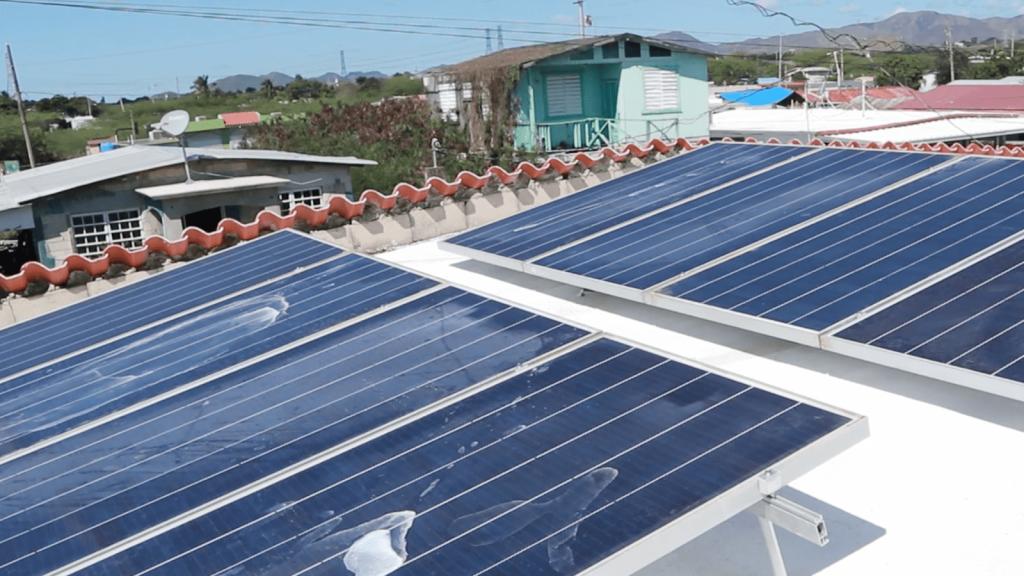
    The Good NewsA recent CNN blog poll showed 17% consume less oil for the environment and 83% to save money.  The good news is that solar energy is several times less expensive than oil, and less expensive than coal (not counting carbon credits).  These State secrets will eventually leak out.  Stay true to the least cost path for energy.  The sun will shine tomorrow.
  11. FrankfromBoston Posted 3:34 am
    17 May 2006

    Deal with the source of the problem & musingsSince this is my first posting here I am going to be a bit wide ranging:
    1) you state:
    ...but other than that annoyance, wherein lies the tragedy? (of having spent billions to reduce greenhouse gases)
    The tradegy is that there are millions of people on earth today that could use that money you want to send lowering greenhouse gases to better there lives. Why is it morally superior to "save the future" then to save the millions dying in the third world today? We cannot do everything, we need to decide where to spend resources..


    I agree that it is settled science that the earth is warming and has been for hundreds of years. As one writer points out, what isn't settled is whether or not humans are responsible for this warming, and if so, what % of the warming is caused by humans.
    Finally I wonder why we are so consumed with reducing human production of greenhouse gases. By most scientists accounts, humans (mostly through theburning of fossil fuels) are responsible for less than 10% of annual output of greenhouse gases. Speaking strictly as an engineer, it seems to me it would make much more sense to try to slow the Natural occurence rather then those attributable to mankind. Why work on 10% of the problem when you can work on 90% of it? And yet, I don't hear ANYONE discussing how we might slow the natural occurences of green house gases.....


    I look forward to your replies and theensuing discussion.
  12. atreyger Posted 7:34 am
    17 May 2006

    Reply to Frank1) I agree, but it winds up being a values judgement question if we should help now or in the future. But let me put it this way: there are diminishing returns to every investment. As you put more money into the same solution for a problem, the per unit output efficiency is reduced. Happens with everything.
    If we put in millions of dollars to subsidize poor in other countries this year, next year we will do the same and then the next year, and then... well you get the idea. If you develop a system by which the poor could do it themselves, even if we may initially invest more, the return will be greater over the long term.
    If we spend a lot of money right now to prevent global warming, then we will not have to spend a ton more to counteract the effects over the next centuries (and we might have to keep on subsidizing those poor anyway, since they will be affected the most).


    There is a fair level of agreement between scientists on the level of anthropogenic inputs into the atmosphere (pretty much all of the new CO2, CH4 and N2O, but that is starting to change as positive feedback loops will increase natural decomposition and bacterial activity such as N mineralization, nitrification and dentrification). The question becomes how much of our greenhouse gas output will cause the global climate change vs. how much of the mean temperature change is caused by natural variation, and in many ways it is becoming academic rather than practical, since I am not sure if it will ever be feasible to come to a conclusion. Same idea with diminishing returns: if we put in more money to try to figure it out, we might only be able to pinpoint variations for each year vs. that year's GHGs output... Is that really an interesting solution?
    That 90% is responsible for inhabitable earth. The ten percent is responsible for climate change.

  13. atreyger Posted 7:46 am
    17 May 2006

    correctionSame idea with diminishing returns: if we put in more money to try to figure it out, we might only be able to pinpoint variations for each year vs. that year's GHGs output... Is that really an interesting solution?
    I was thinking of fine-scale prediction models that are asymptotically attempting to reach a solution and trying to figure out a model that is successful at a level significant beyond 0.05.
    I guess it might be an interesting solution to some, but it will not help us to specifically address changing levels of sustainability of our global support systems, when that money could be spent on averting the causes for the change.
    Kind of a side note:

    I have a dialogue going on in my head right now about creating a new discipline: something like scientomics, where there is a calculation made based on the diminishing returns to further discoveries in a discipline and how these further increase our ability to increase understanding about the big 'problem', whatever it is. For me, it seems to be the sustainability of our global support system.

Add a Comment

You are not logged in. Thus, you cannot post a comment. If you have an account, log in. If you don't have an account, well, by all means go make one! Meet you back here in five.

Hello, Visitor!    Why not register?

Advertisement