Gray Water's Anatomy

Umbra on channeling gray water to the garden 8

Dear Umbra,

As part of my water-conservation strategy, I'd like to reuse the rinse water from my laundry machine to water the native plants, many of them edible, in my yard. I've heard concerns about the soap (biodegradable) damaging the plants. There are also potentially some regulatory hurdles involved. Can you shed some light on this?

Thanks,

Wendy
Gray All the Way
Seattle, Wash.

Dearest Gray All the Way,

Congratulations on having a water-conservation strategy. All praise to those with a plan, and all praise to gray-water recycling.

Gray water, other dear readers, is all the wastewater from your home excepting the toilet wastewater. The sink, shower, tub, dishwasher, and clothes washer are all gray-water sources. With a little filtering, this precious resource can be used on the landscape and returned to the water cycle without entering the public sewer first. I am not going to discuss bringing it back into the home today; that's a whole other bucket of worms.

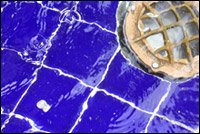
Could this drain lead to the garden?

Photo: Justin Ficklin.

Gray-water "contaminants" range from food waste to soap residue to dead skin. These are mainly great nutrients for plants, especially when filtered through mulch, but you will need to filter or eliminate the non-great ones. Soap and detergent ingredients to avoid are sodium, chlorine, and boron (which is, alas, a major ingredient in the handy cleanser Borax). These are either immediately harmful to plants or will become so over time, as they accumulate in the soil. Hence, you'll need to avoid cleaning products that contain them, or install a diverter valve in your system so that when you use any of these harmful products, the water will run into the sewer system, not into your yard.

Gray-water systems basically involve adjusting your plumbing so that water travels through a filtration system and into your yard or a holding tank, instead of into the sewer pipe. The more drain contaminants, the more filtering you need, in the form of screens, plants, rocks, mulch, and the like. Every source I've read recommends starting a gray-water project with the easiest drains -- the bathroom sink and tub, with their skin, hair, and soap flotsam -- then moving on to the more contaminated drain of the clothes washer (lint!), and finally to the kitchen-sink water, which will be filled with grease.

Gotta pass the buck on regulations. These vary across the country and around the world, so to get specifics, please contact your health and building-code authorities. However, there are ways to collect gray water that don't alter a building's plumbing or involve the building code. Hauling buckets of water from the tub or clothes-washer drainage sink or hooking up a hose and siphon to your cooled-down bathwater are legitimate methods, and quite handy for renters. Your plan to divert the washer water could be a bit more complicated, but if it currently drains into a sink you won't need to divert the house's sewage drain pipe.

I'll go into specific systems in the future, because I heart gray water right now, but the widely accepted resource is Create an Oasis with Greywater, by Art Ludwig. The corresponding website is extensive, too. Happy plumbing.

Pipely,
Umbra

Yours is to wonder why, hers is to answer (or try). Send your green-living questions to Umbra.

Umbra Fisk is Grist Research Associate II, Hardcover and Periodicals Unit, floors 2B-4B.

Advertisement
Advertisement
  1. doriannegray Posted 7:37 am
    04 May 2005

    Summer sun showersFor a quick water-conservation move this summer for those without edible gardens and those with a garden hose and a penchant for bathing outdoors:  lay out the hose so it warms the water and then enjoy a short warm shower followed by a cool spritz-off in the yard. Choosing an eco-friendly (and preferably non-animal-tested) shampoo/soap will do little to no harm to grass and shrubs and may thrill your neighbours too!
  2. wilee Posted 8:56 am
    04 May 2005

    Septic Systems - the groundwater recharge methodI live in an area without (thankfully) public sewers and have a septic system.  The water goes through a settlement and leaching phase before it goes back into the groundwater.  The result is that the groundwater stays in the same area that it comes from - my well!  
    That doesn't mean that I don't have grey water and rainwater usage techniques in place at the house.  I have slowly been adding water barrels for summer watering and channeling the run off into dry wells for immediate recharge.  
    Little changes make a big difference.
  3. jdhlax Posted 4:55 pm
    04 May 2005

    Eliminate Unnecessary Toxic ProductsUmbra pointed out that chemicals like chlorine and boron can't included in water used for watering plants.  Instead of telling how to separate these poisons, she should have advocated their elimination from use.  Additionally, use the most natural soaps you can find, including shampoos and toothpastes.  Your garden and the Earth will thank you (in their own language and on their own terms).
  4. billvon Posted 4:50 am
    05 May 2005

    Not hardWe have a greywater system set up at our house in San Diego.  We have a 35 gallon tank next to our washing machine; the machine drains directly into the tank then slowly drains out an external hose bib.  We move the hose once a day.
    We also use the water from our shower.  This is a bit more difficult since our house is built on a slab and we can't easily get to the drain.  To get around this we use a bilge pump connected to a drain on the wall.  Works OK, although you have to leave water in the tub until the pump empties it.
    We use biodegradable laundry soap and regular products in the shower.  We water roses and citrus trees with it; they seem to be fine with the soapy water.  The hose is long enough to let the water cool down before it gets to the plants.  We don't do any filtering, and have had only one clog (in the hose outside) after 2 years of usage.
  5. bvmisa Posted 11:51 am
    08 May 2005

    Herbal SoapHere in the Philippines, we have a great product called Victoria. It's laundry detergent, comes in powder and a bar, and is 100% herbal! You can use the wastewater for your plants. I know my plants love it. It also takes stains out really well and smells awesome.
  6. robi Posted 7:43 am
    10 May 2005

    the least you can doIn our house we use buckets to catch the gallon or two of cool water that preceeds the hot water in our plumbing.  Often this water will never leave the bathroom as it is used to flush the toilet.  We also use a sink basin to save the rinse water from handwashing dishes.  using these two methods we divert seven to ten gallons a day from a wasteful drain.
  7. jay4sea Posted 11:24 pm
    10 May 2005

    Please go deeper Umbra!Umbra has made an valiant effort to address the question put forth by the reader, but can we please take the question to the next level?
    In the original question posted to Umbra, the reader mentioned that some of the native plants in the grey-water path were edible.  Hello!?  
    The question isn't whether or not greywater can be used or whether to filter it or not...at least I don't have any questions about that.  The real unsolved mystery is what happens to the microscopic particles that are saturated in the aquis greywater solutions.  
    Filters can get out the big precipitate sediments, but lots of soluble stuff will still find their way to the roots of the targeted plants.  The xylem will then transfer the water and any soluble particle (such as nutrients) from the roots up to the plant tissues.
    So...the question still remains unanswered...how does grey water affect the plant tissues of plants which may be potentially consumed?  Would we be eating our detergent...biodegradable or not?
    p.s. I don't use grey-water for anything edible, but the issue needs to be addressed as the greywater scene is so hot in the enviro movement.
  8. Go Green Tiger Posted 1:54 am
    13 Nov 2008

    Finding helpmy question is whether or not there are companies/plumber who will help you put one of these into a home. my College is hoping to build an Eco-house and greywater recycling was the first thing I thought of to put in it, but alas, college students have little knowledge of plumbing or time to do it ourselves.

Add a Comment

You are not logged in. Thus, you cannot post a comment. If you have an account, log in. If you don't have an account, well, by all means go make one! Meet you back here in five.

Hello, Visitor!    Why not register?

Advertisement