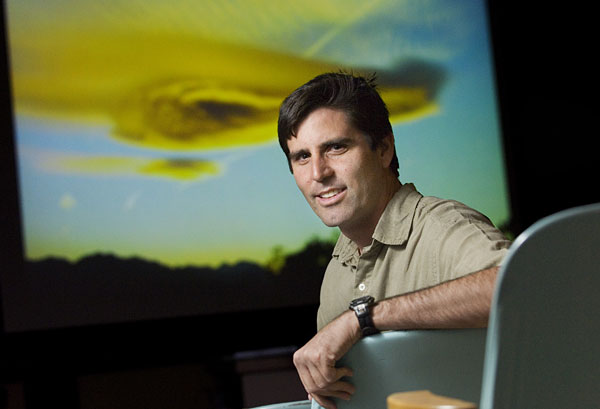
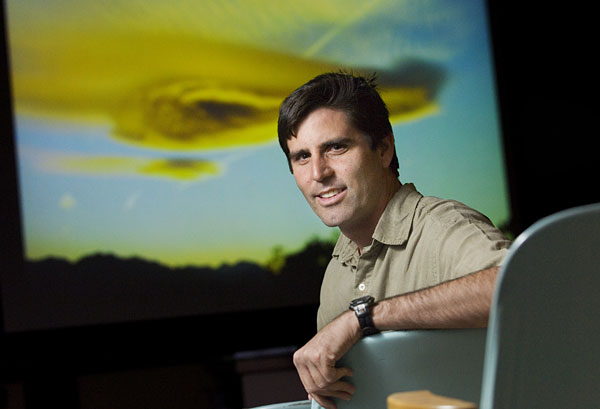
 Jacobson the power-ful.stanford.eduI was disappointed when I discovered that the list of experts at last week’s Clean Energy Summit would not include Stanford University’s Mark Jacobson. Of course, no individual is indispensable at such a summit. But as the day went by I felt his absence more and more keenly.
That’s because Jacobson is one of the few scientists looking at energy’s Big Picture. How big?
In an article published in the journal Energy & Environmental Science earlier this year, Jacobson reported the first quantitative, scientific study evaluating the top energy sources based on:
- Potential for delivering adequate power for electricity and vehicles
- Impacts on global warming
- Air pollution mortality
- Energy security
- Water supply
- Land use
- Wildlife
- Water chemical pollution
- Thermal pollution
- Nuclear proliferation
- Undernutrition
By using each of these factors to assess ten major energy sources, Jacobson produced a list that should be the starting point in any discussion about our energy future. Here’s what he found:
The top electrical generating energy sources are (from best to worst):
- Wind
- Concentrated Solar Power (CSP)
- Geothermal power
- Tidal power
- Solar photovoltaics (PV)
- Wave power
- Hydroelectric power
- Nuclear power
- Coal (even with Carbon Capture and Sequestration, CCS)
Nuclear and coal actually tied for last place.
For powering vehicles, Jacobson produced a second list. Again going from best to worst:
- Wind BEV (Battery Electric Vehicles)
- Wind HFCV (Hydrogen Fuel Cell Vehicles)
- Solar CSP-BEV
- Geothermal BEV
- Tidal BEV
- Solar PV-BEV
- Wave BEV
- Hydroelectric BEV
- Nuclear BEV
- Coal CCS-BEV (tied with #9)
- Corn ethanol
- Cellulosic ethanol
Jacobson’s findings are a surprising blow to backers of ethanol-based biofuels. He also had harsh words for politicians who are pouring money into this area. “Biofuels are the most damaging choice we could make in our efforts to move away from using fossil fuels,” Jacobson told a reporter. “We should be spending to promote energy technologies that cause significant reductions in carbon emissions and air-pollution mortality, not technologies that have either marginal benefits or no benefits at all.”
Jacobson highlights the need to fund wind energy in particular. He says that the entire U.S. fleet of vehicles could be powered by as many as 144,000 five-MW wind turbines. That’s a large number. But the country has met higher production goals in the past. In WWII, Jacobson says, America built 300,000 airplanes — a far larger and more difficult job than building wind turbines.
Such a program would be a positive way to stimulate and grow our economy as well, he adds.
“There is a lot of talk among politicians that we need a massive jobs program to pull the economy out of the current recession,” Jacobson says. “Well, putting people to work building wind turbines, solar plants, geothermal plants, electric vehicles, and transmission lines would not only create jobs but would also reduce costs due to health care, crop damage, and climate damage from current vehicle and electric power pollution, as well as provide the world with a truly unlimited supply of clean power.”
The entire article is available here.
[This post was originally published in a slightly different form at The Phoenix Sun.]