The birth of blue

Adam Werbach calls for a new movement of a billion consumers 73

Adam Werbach
Adam Werbach.

On April 10, Adam Werbach gave a speech in San Francisco calling for a new "blue" movement of consumers pushing for sustainability (previewed in this post). Here's the full text of the speech for your reading pleasure. (Watch video here.)

The Birth of Blue: A speech to the Commonwealth Club by Adam Werbach

In 2004 I came here to the Commonwealth Club and performed a eulogy for environmentalism. Eulogies by their nature are the last word on the subject. But I made a promise on that cold December day to come back in the spring and share a set of solutions. It took me a few more years than I thought, and the world has changed a fair bit since that time, but I'm back.

Let me quote from that speech:

A reasonable case [could] be made that environmentalism needed to package seal pups, redwoods, clean air, Yosemite, clean water, and toxic waste under the brand of "environmentalism" in order to pass a raft of environmental laws in the 1970s. But for at least 20 years and maybe longer, the basic categorical assumptions that underlie environmentalism have inhibited the environmental movement's ability to consider opportunities outside environmental boundaries.

It is at moments like these that we need to take a hard look in the mirror.

We must not trade our fear of what will come next for our affection for environmentalism.

I remember shaking as I spoke, knowing full well that the reaction would be swift and harsh. No one likes to be called dead when they perceive themselves to be alive.

I remember long conversations with my wife, Lyn, as she tried to make me feel better about myself and about the accountability I felt for my own failures. I was unable to sleep, staring at repeats of cable news shows.

Little did I know that the speech was being circulated in places I would never have expected: among senior leaders at Wal-Mart, as they were beginning -- with Paul Hawken's help -- to consider sustainability as a core part of their business.

It wasn't until 2006, when I started helping Wal-Mart implement this sustainability program, that the outside attacks really started flying. A widely circulated piece critiquing my decision to work with Wal-Mart was entitled "The Death of Integrity."

Another one, published just this week, has a more visceral title: "Adam Werbach makes me puke." A blogger named Cliff Schector wrote a piece called, "Adam Werbach: Wal-Mart's New Fraud Salesman."

What Werbach needs to realize is that Wal-Mart is beyond improvement and yes, beyond redemption. Those who really are forward-thinking need to stop working with this man, certainly stop paying him and I would daresay, if you really believe in what you say you do, stop returning his phone calls.

He has chosen to sell out. It doesn't mean we all have to join him in Wonderland.

Tonight I invite you to join me in Wonderland. I ask you to consider joining me in building a movement that goes beyond the political to the personal, that views the existential threat of global warming as a chance to change the way we treat ourselves and the planet, that aspires to have one billion active participants across the earth. Tonight I'll contend that we need to invest more time in making a difference through our routine activities and the things we buy every day. To achieve this we need a broader platform than green.

Since giving that speech in 2004, I've traveled the world to find the next trends; I've seen and will share with you tonight the tragedy of forest destruction for soybeans in the Amazon. I've seen the birth of a new sustainability movement in the rapidly growing economy of Poland. I've seen the inspiring echoes of the two million citizen activist groups around the world chronicled in Blessed Unrest[1]. I've seen the twinkling of the next phase of environmental thought -- true BLUE -- bursting onto billboards and lifestyles in the mature green environment of Switzerland.

In all of those places, I've seen people seeking something broader than a green or environmentalist solution to the myriad problems they face in their lives. Yes, they believe climate change is happening, but they also want to feel good about the way they look in the mirror and the way their kids look at them at the dinner table. They want to be part of something larger than themselves without having to sacrifice their identity. They want joy, not guilt, and a little money in their pocket so that they don't have to trade down on yet one more thing in their life.

Building this new movement will require a commitment to the mainstream that we are unaccustomed to in San Francisco. It's not enough to have a revolution that consists only of Mac users. It's not enough to have a revolution that exists only in coastal states and college towns. It's not enough to attack China as the home of lead-painted toys and neglect the aspirations of the hundreds of millions of people who have been brought out of abject poverty because we've bought those toys.

Something is happening now; progress seems at hand. We don't know what to call it. For now let us call it the sustainability revolution -- we are beginning to understand how human culture will harmonize its relationship with the living world.

But let's not forget that the word sustainability has little meaning in the world. My daughter, Mila, asked me what the definition of sustainability was. I explained it and she asked me, "Daddy, do we have to take a plane to get there?"

I've come to believe that changing the way people look at the world is more important in the long run than focusing only on the marginal ecological impact of the individual actions they take.

Eating organic food should be only one small articulation of the way you take care of yourself, your community and the planet. You can eat local, co-op grown, organic heirloom tomatoes and still be a bad person.

Green is good, but it frequently breaks down as a strategy when it hits the marketplace. The common green definition of sustainability, or "environmental sustainability," is mainly concerned with the fate of the planet and how that affects our lives. For me, sustainability has four integrated streams: social, cultural, economic and environmental. All must exist in balance.

That's why tonight I'm speaking about the birth of a new mass movement to complement and expand our existing political efforts. A movement not just for professionals or experts or people who can explain photosynthesis and lifecycle analysis. A movement we can call BLUE. This movement will have many faces, but at its heart it's a lifestyle movement, a way to live a successful life. Many of us already have a regular practice that can reinforce our values. While political activism is at best a bi-annual pursuit, shopping is a regular activity for most people on the planet, and if trends continue, it will be for virtually everyone. We can either cede this field to the profit-driven marketeers, or we can share it. Now, before you attack me for sounding like President

Bush, who seemed to say after 9/11 that we could "shop our way out of it," let me be clear. I'm not calling for you to get off the farm and into the mall. But how do we bring our aspirations for the world into what we buy? This is the billion-person question.

Then vs. Now

The problems are worse than we feared. Between 1990 and 2003, American CO2 emissions increased 16 percent[2]. That wasn't just America's record; that was my record as a professional accountable for results. Even Europe's emissions grew at about twice the rate of US emissions during the first five years of the decade.

  • Half the world's tropical and temperate forests are gone.
  • 90 percent of the large predator fish are gone[3].
  • 75 percent of marine fisheries are overfished or fished to capacity[4].
  • Species are disappearing at rate about a thousand times faster than normal[5].
  • A recently study found that there are 287 chemicals in the cord blood from babies in the U.S.[6].
  • America now has 2 million people in prison and about 960,000 farmers[7].
  • An estimated 35 percent of cancer deaths are directly attributable to diet[8].
  • CDC estimates that 50 percent of today's health care costs are attributable to health risks that can be modified by lifestyle behaviors[9].
  • The U.N. says 826 million people are hungry; however, a much larger number, roughly 1.6 billion, are overnourished and overweight[10].

Consider that fact for a moment. Twice as many people on the planet are dealing with the problems of too much food as are dealing with the problems of too little.

We can't diminish the need to make sure that everyone has enough to eat, but today's world requires that we have a solution for people who have too much as well.

Birth of BLUE

Since 2004, some things have changed. We've seen awareness of the problems we face skyrocket. At no time in my career has the public thirst for change been so strong. The covers of Newsweek, Time and Vanity Fair are all festooned with images of our planet's peril. Perhaps it was the catalytic effect of the Inconvenient Truth, or maybe it was the doubling of gas prices, or maybe it was an unpopular war of choice, or maybe it was the loss of a great American city to the sea. But today the ideas of an Apollo Project for clean energy, a major national investment in clean energy technology which I spoke about in 2004, are mainstream. Everyone seems to be talking about green jobs. If this makes you feel optimistic, good. It makes me optimistic as well.

Regardless of why public sentiment has changed, it has, and it's now time to take delivery on that desire. But just as in 2004 I told you that we were ill equipped to foment a movement or to exercise power, today we remain narrowly focused on policy changes as a means for change.

We need solutions as big as the problems we face. Despite all of this attention most people are not engaged. Policy change is critical, but it's not enough. As Jib Ellison told me when I was trying to decide whether to work with Wal-Mart, "You can choose not to work with corporations, but then what's your solution?"

We need to unleash the creativity and imagination of the global public. I have no patience for people who want to preserve what environmentalism was at the cost of our effectiveness.

In December of 2004, I performed an autopsy on environmentalism. Today, I'm here to acknowledge the birth of a BLUE movement. As vast and common as the ocean, BLUE is a platform for sustainability that goes beyond the deep, beautiful green of environmentalism. Green puts the planet at the center of the dialogue. BLUE puts people at the center.

I'm not asking you to give up on green -- far from it. Green is the beating heart of the emerging BLUE movement. Green represents the simple and inarguable wisdom of ecology: that all things are connected. BLUE brings together a broader set of human concerns, from practice to price, from nature to society. BLUE integrates all four streams of sustainability: social, cultural, economic and environmental. BLUE puts the way we treat ourselves and each other at the center of our focus.

In Michael Pollan's book In Defense of Food, he offers a set of rules for eating: "Eat Food, Not Too Much, Mostly Plants," and "Don't eat anything with a health claim." Also, "Don't eat anything your grandmother wouldn't recognize." He writes,

What other animal needs professional help in deciding what it should eat? Yet for most of human history, humans have navigated the question without expert advice. To guide us, we had, instead, culture, which, at least when it comes to food, is really just a fancy word for your mother[11].

Pollan's book is a call for us to defend what we innately know about food -- whole foods, less processed, eaten in modest amounts, are a healthy path.

We are people who shop as well as people who eat. Shopping is the only other activity, besides sleeping and watching TV, that consumes our time as thoroughly as eating. Yet when it comes to shopping, we have few cultural rules and signposts to follow in the way that we have with eating. As flawed as they may be, Americans know the concepts of fat, calories, cholesterol, and sodium. But what do we know about the sodium lauryl sulfate in our toothpaste, or the phthalates in a baby bottle, or the embedded energy cost in a cable box, or the provenance of the parabins in cosmetics? It's enough to make your head spin.

Women across the world lead the shopping budgets for families. The average American woman spends an hour per day shopping[12]. She is expert at finding price and value for herself and her family, and increasingly, she's looking to make a difference when she does. To date the only social change movement that speaks to her says one thing: stop. Stop shopping, start making your own household chemicals, grinding your own detergent, packing homemade lunch for your children and hanging your clothes out on a laundry line.

While these are noble ends, everything that we've learned about behavior change is that it happens small step by small step, so it's unlikely that a mom will switch from Cheez Whiz to tofu. Our challenge is to inspire people to make better choices.

Do not underestimate the power of the shopper. Private consumption expenditures in the United States represent about 70 percent of the GDP. In the words of Andy Ruben, a Vice-President at Wal-Mart, "We live in a consumer-driven economy. We can either deny it or try to leverage it. Denying isn't hasn't gotten us very far."

Engaging people as consumers, as people who shop, allows us the possibility of building a billion-person movement. To be a part of it, people don't need to join a listserv or pay a membership fee. They won't get a newsletter or a membership card that they need to stuff into their wallet. And no wall calendars. Imagine with me what this movement could do.

Green vs. BLUE

Put most simply, to many people, "green" means choosing the environment, nature, and the atmosphere over all things. BLUE means you don't have to choose.

Not surprisingly, there's a sense of green fatigue facing many consumers, largely because it's being promoted as a panacea in ways on which it doesn't deliver. "Organic American Sprit Cigarettes" still cause lung cancer and low birth weight babies. They may be better for the environment, but this is the sort of near-sightedness that the green "fetish" for organic creates. Organic is simply one step toward being BLUE, even though it's the gold-standard for being green. The real battle among consumers is not between the conventional carrot and the organic carrot; it's between the carrot and the Twinkie. The wholesome food vs. the overprocessed food. That's the battle that moms are facing every day at snack time and it's a place for us to start our service to her.

We want to keep the parts of green that have brought us change and innovation, but let go of the narrowness. BLUE builds on the foundation that green has laid, but lets go of its baggage.

In Moving from Limits to Possibilities

Let's step back a bit and talk about the roots for a BLUE movement. In my speech on the death of environmentalism, I traced back the roots of the American conservation movement: from Henry David Thoreau to John Muir, to Rachel Carson, to my mentor David Brower. All of these transformational figures were trying to protect nature or humanity from harm. To change our orientation from limits to possibilities, we need to know what we're for and not strictly what we're against. The field of psychology went through a similar challenge almost a decade ago, when Dr. Martin Seligman became the President of the American Psychological Association.

Seligman pointed out that the entire history of psychology was based on finding treatments for dysfunction and disease. Psychological research was focused on depression, mania, and hysteria, and on what to do for people who suffered these maladies. His solution was to create the field of positive psychology, which focused on creating positive interventions for our lives that would proactively make us happy rather than treat us when we are sad. They found quite simply that once material needs are met, there are four factors that can help increase one's happiness.

  1. Being of service to something larger than yourself
  2. Experiencing "flow," or full engagement, on a regular basis
  3. Showing your gratitude to the people in your life
  4. Having at least three people emotionally close enough to share your life with.

Similar to traditional psychology, environmentalism, which is the political arm of the green movement, is focused on executing ameliorating actions for the planet: slowing the release of CO2, removing glycols from household cleaners, or protecting farmland from being destroyed. While these are absolutely essential political activities that we should continue, they are not the basis for a lifestyle movement. A lifestyle movement requires the construction of a set of practices that make up the way we wish to live our lives. Slowing global warming and protecting our last wild places is a necessity, but it's not the whole end.

If we see our goal as moving beyond just ameliorating harm and towards creating the future that we want to share, what can the logic of nature, the green movement, and the best parts of the environmental movement teach us?

To help you understand this, I want to share with you my experience with what might be the largest sustainability engagement campaign in the history of the planet: our efforts to engage the almost two million Associates, or hourly employees, who work at Wal-Mart.

Personal Sustainability

How many people here have been to a Wal-Mart in the last two weeks? If it's less than 2/3 of the room, you have to acknowledge that you're strange, since 200 million Americans shop at Wal-Mart regularly, and 89% of Americans shop there at least once a year.

When I was first approached about working with Wal-Mart I refused, confident that the only reason they could want to work with me was for their PR needs. As it became clear to me that they wanted to lead, and not just go through the motions, the enormity of the task began to become clear to me. They set out three goals:

  1. Produce zero waste
  2. Be powered by renewable energy
  3. Sell only green products

For the largest corporation the world has ever known to set these goals for itself was no small matter. I was still staying close to home in the wake of my speech here, watching too much cable news, when I received the call from Wal-Mart, and I began to imagine what working with Wal-Mart could mean.

While there's a certain activist romance in the David vs. Goliath story, I began to get more comfortable with the odds of working with Goliath in the spirit of a David.

I remember my first trip down to Bentonville, Arkansas, arriving in the meeting hall as they began to do the Wal-Mart cheer. Who here knows the Wal-Mart cheer? I didn't know whether to clap or to sit with my arms crossed in protest. I clapped meekly, hoping no one would notice.

I started working with the people who work at Wal-Mart -- almost two million of them globally -- figuring that if we could learn how to make them care about sustainability, then we could make it stick to the 200 million people who shop there regularly in America. Working with associates, we created the Personal Sustainability Project.

The project was designed with Associates in Plainfield, Indiana, Broomfield Colorado, and Tampa, Florida. At the heart of the project was a simple voluntary commitment that we called a PSP, or a personal sustainability practice.

What are the qualities of a PSP? It:

  • Sustains the planet,
  • Makes you happy,
  • Affects the community,
  • Repeatable,
  • Takes visible action

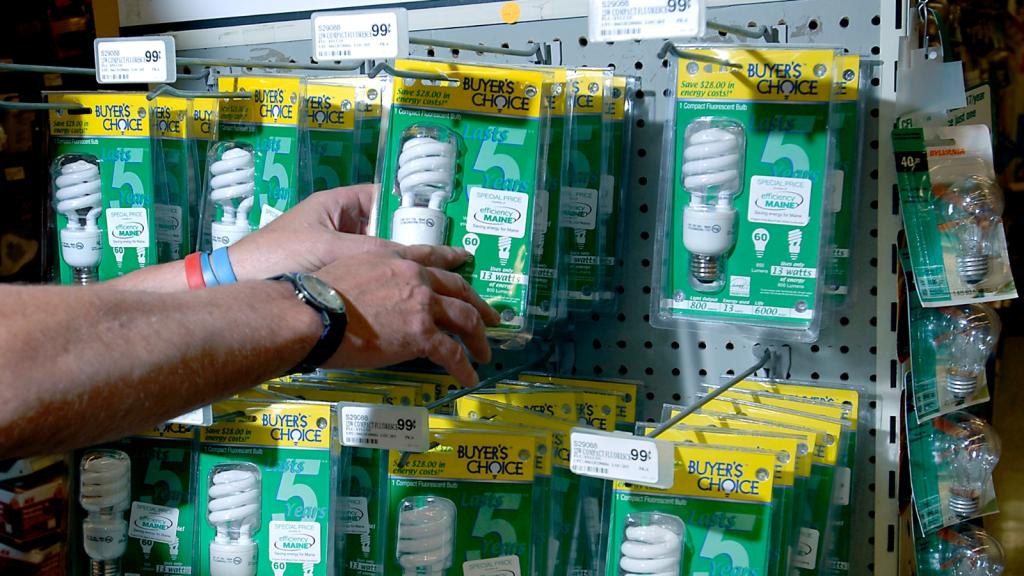
Examples: Bike to work. Park in the spot that's farthest from where you're going. Change your lights bulbs to CFLs. Care for a park. My PSP is to make healthy breakfasts for my kids every morning and to learn something new from them every day. My wife Lyn's is to increase our composting. Lee Scott's PSP was recycling and now it's getting in shape for the spring.

The Associates at Wal-Mart made creating a BLUE movement their mission. They formed teams and plans, and soon there were 10 sustainability captains in every Wal-Mart store, each working with the roughly 500 associates inside to develop their practices. This grass-roots-driven, voluntary movement spread to over 4,500 Wal-Mart's and Sam's Clubs across America in the period of about six months. Over 500,000 Wal-Mart Associates adopted and maintained a PSP in the first year of the project.

The behavioral idea behind PSP is a simple one we call nano-practices. Nano-practices are the thousands of tiny things you do each day that make up your lifestyle. How you tie your shoes, the type of shoes you wear, your choice of socks, how you fold your socks, and whether you wear your shoes indoors. Instead of trying to change the big things about someone's identity -- whether they're a Democrat or Republican, for example -- we start by finding daily or recurring practices that can express his or her values. A personal sustainability practice, at its most basic level, is something that's a repeated action that's good for you, your community, and the planet.

Initially, we focused on strictly environmental PSPs, but we quickly learned that the environment was only an entrance point.

Jan Bennett

I first met Jan Bennett in Broomfield, Colorado. She is a spiritual woman, quick with a smile. Her thinking, more than anyone else's, formed the ideas I'm sharing with you tonight. She's a Wal-Mart Associate. Originally from Mississippi, she's a life-long learner, and was as excited as anyone about learning how sustainability works, what exactly is going on with our atmosphere, and how recycling can be a business driver. She volunteered to become a PSP captain and soon had almost everyone in the Broomfield store involved in the project.

But when I really talked to Jan I understood that her PSP -- learning how to recycle -- was the touchstone of a transformational change she was hoping to make in her life. Jan wanted to lose about 75 pounds, and she wanted to get control of her Type 2 Diabetes. More than anything else she wanted to find a way to connect to her daughter, who had been growing more and more distant every year, and had recently told her that she had decided that she didn't want to have children because of the state of the world.

Jan's first PSP was recycling, and encouraging her friends to recycle. After recycling, her next PSP was to lose weight. Her PSP became the mechanism to tackle those broader issues in her life. After trying to lose weight a number of times, this time the diet worked: she lost 75 pounds over the year. And with all of that weight off, she started getting control of her diabetes. Today she's been able to go off her medication. And most importantly, her daughter thought what she was doing was cool, and it's been a way for them to start getting closer.

I remember the conversation with Jan when she told me that her new PSP was a diet. "Really?" I asked, obviously disappointed that this born leader had chosen to go with something so ... ordinary.

"What do you mean, 'Really?'" she snapped back. "Well, I just figured that sustainability" -- I said it slowly this time -- "has to have something to do with protecting the earth." Jan gave me a kind sigh. "Where do you think all that food is coming from?" She paused. "And what about sustaining me, so I can sustain my family?" She then smiled. "You'll figure it out."

A few months later, Jan was invited by some folks at Wal-Mart to come along to a small, exclusive clean energy investment conference at the Aspen Institute, attended by people like Vice President Al Gore and New York Times Columnist Tom Friedman. At some point in the proceedings a senior official from the Bush administration stood up and said that he thought climate issues were too complex for average Americans, implying that climate change needs to be solved by experts, not the people. Jan couldn't hold her tongue even though it wasn't her turn to speak.

She summoned her courage, stood up and said: "Discount me, and the South rise will rise up in me; inspire me and I will move any mountain you put in front of me."

Silence. This humble hourly worker had just corrected one of the President's men, a renowned expert in clean energy policy. Why was she even in Aspen, she wondered? And then Vice President Gore started to clap. And pretty soon everyone else was applauding Jan as well. And it's not just Wal-Mart Associates who have gotten involved with PSP. Amanda Adler's mom Ruth works at Wal-Mart in Vancouver, Washington.

As Ruth got more and more excited about PSP and what she could do, her daughter Amanda started getting curious and created her own PSP: recycling. Amanda is 11 years old and loves to play softball. They live in Battleground, Washington, a town with a population of about 13,000 people.

A few weeks ago Amanda was finishing up drinking out of a plastic bottle and went to put it in her backpack to recycle it. As she did, her teacher asked her what she was doing. "I'm recycling this."

"Throw it away, Amanda," he said.

"No, I'm recycling this, because that's my PSP."

The teacher was so infuriated that he sent her to the principal's office and she got detention. When Ruth got home she couldn't believe it. Amanda is a straight-A student. When she heard what happened she and Amanda set up some chairs on their lawn and waited for the Mayor, who happens to live down the block and walks his dog every evening by their house, to come by. When he did, they told him their story, and he agreed to help.

He had lunch with the superintendent of schools the next day. Within a week they had recycling programs at the two middle schools and the high school in the community. And they dropped her detention.

And the Adlers are just getting started. At dinner they make sure that there's no TV, and they use it as family time. At the softball league they got rid of the deep fryer and are now serving up organic vegetables.

Ruth says, "I started in Battleground, and I'm going to Vancouver next."

Augmenting Political Activism With Consumer Activism

We must rapidly begin the shift from a thing-oriented society to a person-oriented society. When machines and computers, profit motives and property rights are considered more important than people, the giant triplets of racism, militarism and economic exploitation are incapable of being conquered. A nation can flounder as readily in the face of moral and spiritual bankruptcy as it can through financial bankruptcy. -- Dr. Martin Luther King, 4 April, 1967

There are three desired outcomes for the BLUE movement. First, to measurably improve the quality of life of people who join. Second, to engage as many people as possible in the effort, and third, to increase the effectiveness of their activism. The primary tactic is getting one billion people to create their own personal sustainability practices. Today there are two major forms of activism to combat problems ranging from climate change to child poverty: structural change activism and direct-outcome activism. When you volunteer at a school, you are engaging in direct-outcome activism. When you lobby the school board to improve the textbooks, you're engaging in structural change activism.

My critique of environmentalism in the United States is largely with the effectiveness of the structural activism that it has undertaken over the past thirty years. Few laws have been passed, few regulations have been changed, and certainly none of them has been up to the scale of climate change. The movement has also ignored the critical role of government investment in clean technology, which will be required to reduce our emissions to 80 percent below 1990 levels.

As my colleagues Michael Shellenberger and Ted Nordhaus have attested, investment in research and development will be required in order to combat climate change. A recent article in the scientific journal Nature, entitled "Dangerous Assumptions," argues that the United Nations Intergovernmental Panel on Climate Change has significantly underestimated the amount of emissions reductions required to stabilize the amount of carbon in the atmosphere. The technological challenge is at least twice as large as the world has come to believe. In other words, we're going to need massive investments -- investments similar to the those that helped us build highways and railroads, guarantee the market for micro-chips and fund the creation of the internet -- in order to get enough new clean energy sources online fast enough to make a difference. The movement of which I speak can lower energy demand somewhat and create public demand, but it can't make the investments required by governments worldwide.

As David Brower liked to say, it's not a choice of either/or, it's both/and. I'll say it again: do not confuse my advocacy of personal actions and using the platform of consumerism as a rejection of political action or a lack of commitment to strategic investments from the public and private sector. I've spent my entire life working on those, and we need to continue them. But if you believe it's important to engage an audience as large as one billion people, we need to speak in words and encourage practices that solve the everyday problems that people face. There are only a few institutions on the planet that have a billion-person reach -- not the US, not the UN, and not even Wal-Mart. Who reaches a billion people? The nation of China, the nation of India, Procter & Gamble, and McDonald's. Why do you rob banks? Because that's where the money is, as Willie Sutton said. Why do you work with corporations and India and China? Because that's where the people are.

Let me share a story that shows why I believe that we have only begun to tap the power of this vein of activism. I went to the Amazon on a fact-finding mission as a member of the international board of Greenpeace to go to the roots of a shoppers' campaign that has done more to stop climate change than any other single action in the last five years -- the moratorium on cutting new forest for soybean plantations.

For the last decade, the cutting of the Amazon forest has rapidly increased. I had thought that our activism in the early 1990's had irreversibly slowed the cutting, but the great soy expansion brought it back in full force at the beginning of the century.

While China and the US battle to be the world's largest CO2 emitter, if you count deforestation, Brazil is the fourth largest emitter. 70 percent of Brazil's emissions come from deforestation, and that deforestation is largely happening in the Amazon[13]. And the largest contributor to deforestation in the last five years has been the clearing of land to grow soybeans.

The years 2004, 2005 and 2006 were particularly hard on the forest, as the global demand for soy increased.

Soy didn't arrive in Brazil until the 1980's, and it took off like heroin. Farmers make less than $200 per hectare for cattle, and can make up to $1,200 per hectare of soy. It's no small business. Soy is more than 10 percent of Brazilian exports; about $30 billion a year. Most of the trade is in the hands of a few companies: ADM, Cargill, and Bungee. The soy is used for animal feed, cooking oil, and increasingly often as a biofuel ingredient.

Ivete

The head of the local workers cooperative is Ivete. She lives near San Pedro, not far from the confluence of the Amazon and Tapajos Rivers. She speaks rapidly, her hands moving whenever she speaks. "I'm happy you've come to understand our reality," she says when we arrive.

"We face some serious challenges here." "After Cargill came in 2003 we faced huge pressure to sell our lands." 90 percent of families don't have official title on their lands, and many were kicked off after 2003. The government has been slow at land reform and settling the disputes. "The big landowners get their papers first," she says, "even though the new constitution gave us our land." Soon after the large landowners received their papers, the police came and told them that the land was not theirs. Entire communities disappeared. "The process was violent," she says, shaking her head.

There have been 1,534 workers assassinated in the last 15 years[14].

In one town I visited, Genipapo, a farmer named Casagrand claims all of the land as his. There were 45 families here with a new church and a new water system. They were almost finished with a rural electrification project. Casagrand led the efforts to frighten people from their homes and today there are only 12 families left. You can see the charred remains of the houses of families that resisted. The smell of smoke is still fresh and the weeds are growing up quickly through the old thatch. The school is now closed, and it's difficult for the remaining families to stay. Everywhere I travel I bring a few of the soybeans that Casagrand grows in the fields that are now encroaching on Genipapa. It's a reminder of what cost the people of Amazon are paying for the way I live. But this is one story with what could be a happy ending. In the last year the cutting has almost stopped. The major soy producers have enacted a voluntary ban on buying soybeans from newly logged forest. It came about through a European consumer campaign led by Greenpeace to put pressure on McDonald's to stop buying chickens for Chicken McNuggets that were produced with soy from the Amazon. McDonald's investigated and then put pressure on its soy producers. The soy moratorium has protected millions of acres so far.

And I'm very happy to announce that last week, the soy producers tentatively committed to keeping the moratorium indefinitely. This is an incredible achievement for consumer activists.

If activists could change the world through chicken McNuggets, imagine what we could do with a coordinated movement.

Why a Consumer Revolution?

In developing the thinking behind BLUE, there has been nothing more controversial than the idea of a consumer-led movement. But I think that our understanding of the power of consumerism can change. Recall that a hundred years ago the word "consumption" was a way of describing tuberculosis. We are no longer an agrarian society, and it's time that our cultural understanding of shopping -- gathering the things we need to live and thrive -- matures.

I recently shared the vision for a billion-person consumer movement with the head of one of the largest environmental organizations and he scowled, "a billion person consumer movement? I want a billion person anti-consumer movement." It's a nice line, and a wonderful sentiment, and I hope he goes out and builds that movement, but what I'm proposing is that we meet most people where they're at today: as busy, complex humans looking to do the best thing for their family and themselves.

Throughout history, consumer movements have been central to revolutions. The French Revolution was a call for bread, which Marie Antoinette famously and fatefully responded to by saying "Let them eat cake." On February 1, 1960, four African American students -- Jibreel Khazan, David Richmond, Joseph McNeil, and Franklin McCain -- sat at a segregated lunch counter at a North Carolina Woolworth's store in the seats reserved for white customers. And Gandhi rallied a nation against imperial British rule with the simple and radical call for a march to the sea to make salt.

Today, our response to shoppers as a social movement is much like our response to corporations who wish to be leaders, which is, "I'd rather you just didn't consume." Or, in the case of corporations, "I'd rather you didn't exist." We don't have time for this preciousness. Corporations and consumerism can be vehicles for change. The question is what type of change that will be.

Let me give you one example of what happens when consumers are not involved: 7-Up. 7-Up is a soft drink made by Cadbury Schweppes. The drink's target market audience is moms who are looking to create healthier alternatives for their families. Their brand proposition is now "All-Natural," and they have wonderfully executed ads that show farmers picking 7-Up cans in fields as if they were the blossom of a new day. Of course, 7-Up is not really "all-natural," but the statement is technically true based on current food regulations. This is just one example of how the hyper-focus on one green claim -- "All-natural" -- can obscure the true health effects of the product. Also, 7-Up has tested different packaging versions to figure out that if you add 15 percent more yellow to the green on the package, people report a taste experience that has a lot more lemon than lime.

A frequent reaction to manipulations of this sort is to recoil in horror and to fall into a rant against marketing in general. Stare into the dark and learn how we're being manipulated in order to manipulate the system back. For most of my activist career we have been trying to get an issue into the mainstream and our tactics are conflict-oriented since conflict raises awareness. But now that people know that global warming is an issue, our challenge is to figure out how to activate them.

Generally, when we talk about affecting consumer culture, we start by looking at the media Americans consume.

I'd like to offer instead that we need to work on ground-level media as the platform for moving "makea-difference" activities into consumerism. "Shopper marketing," along with digitalization, has been one of the two fastest growing segments of marketing in the last few years. Shopper marketing is the effort to reach people in shopping mode, the time when they're at a store online or offline and searching to buy a product. Unless you know how shoppers shop you can't hope to help them use that shopping to change to world. As someone who has spent his life in grassroots organizing, I've found that "shopper marketing" is the translation of ground-level organizing to the marketing sphere.

Shopper Marketing

70 percent of all purchase decisions are made in-store. 68 percent of in-store purchases are made on impulse[15].

Shopper marketing is rapidly becoming a science. For example, marketers now know:

How many men who take jeans into the fitting room will buy them compared to women: 65 percent to 25 percent[16].

How many browsers buy computers Saturday before noon (4 percent) as opposed to after 5 p.m. (21 percent)[17].

When given bigger baskets, shoppers buy more things. 74 percent of shoppers with baskets make a purchase, compared to 34 percent of shoppers without baskets[18].

The Shopping Cycle

Since I spoke here last, my company, Act Now, grew to a staff of 45 people and we decided to merge into the global advertising firm Saatchi & Saatchi. Saatchi was an obvious choice, since it launched perhaps the most inspirational consumer product, the Prius, and it represents the world's largest consumer products company and advertiser, Procter & Gamble.

The reason was simple. Saatchi's CEO Kevin Roberts convinced me that this would be his life's work: transforming one of the world's great advertising companies, with 7,000 employees in 84 countries, into the world's most powerful sustainability advocate. First, by making Saatchi the "Bluest" agency on the planet, and then by helping all of its clients transform their businesses, their products and their communications to improve people's lives, build the BLUE movement, and radically dematerialize and de-carbonize the products they sell.

Saatchi's shopper marketing division, Saatchi & Saatchi X, uses a technique they call the 'Shopping Cycle' to understand how shopping works.

Which item is more likely to prompt a trip to a store? Running out of Diet Coke, or running out of toilet paper? Diet Coke. Diet Coke is not substitutable, whereas toilet paper has a substitute.

How many people here create a list before they go shopping? The dream of every company is to get the name of its product on your list, as opposed to just a generic name. "SunChips," not "Chips." "Tide Coldwater," not "Laundry detergent." My dream is that BLUE becomes a meta-brand, so that our billion advocates will buy as long as it's BLUE, the way a small number of people today will only buy a product as along as it's green.

Once you've got your list, you enter the store, the automatic doors opening as if you were entering a spaceship, and something strange comes over you. Your identity changes to "shopper," a cross between a game show contestant and James Bond, as you searching for the things you need.

"If it's two for one, is one half the price of two?" you ask. "Which is more important, the price per ounce or the price per use?"

It's during this phase that the rapid process of deselection begins; this is often a pre-conscious process. Many sustainable products are left out in this process almost instantly before you even have a chance to evaluate them. Maybe you haven't heard of the brands, or they are too expensive, or maybe the color palette is unfamiliar.

I share these details because as we build out the BLUE lifestyle movement, we need to empower shoppers to demand sustainability in every step of the process. For those of us who wish to be professionally engaged in helping shoppers get the right products to improve their lives and serve to make a difference for our world, we need to create products that fulfill shopping needs at this level.

BLUE Plans

We've discussed why we need a movement that's broader than a green movement. We've shown how consumers actually shop through the shopping cycle. Now we need to get to the hard work of how we take these needs and form them into a BLUE movement.

Let's review. Our purpose is nothing short of building a world full of happy people contributing to a healthy planet.

There are three outcomes for the BLUE movement. First, to measurably improve the quality of life of people who join. Second, to engage as many people as possible in the effort, and third, to increase the effectiveness of their activism.

In the next five years, we need to build a billion-person movement, representing over $1 trillion in consumer buyer power -- consumers who are maintaining their PSPs and acting on them when they shop.

To create a world full of happy people, we need to go far beyond reducing our individual carbon imprints. Happiness requires that the material, Maslovian needs of the nine billion people projected to be living on the planet by the end of the century are met, so we need enough resources for all of them.

No greater scion of capitalism, John Maynard Keynes, once quipped, "in the long run, we'll all be dead." We all know that once we're gone, someone else will inherit the earth we're leaving. This sort of long-term thinking is hard for the capital markets, and that's one reason that we need shoppers to lead the companies from the bottom as emerging regulations press them from the top.

To create this pressure, we're going to have to move beyond the four Ps -- Price, Product, Place and Promotion -- taught in every marketing class. I want to suggest three Ps that I hope marketing professors will start to teach their new students and that BLUE folks will use to drive their shopping habits: Price, Process and Purpose.

PRICE: First, we need to democratize sustainability and make it available to everyone. You shouldn't have to be rich to be sustainable.

PURPOSE: What's the purpose of what you're buying? First, do you need it? Does it fit into the healthy practices in your life?

PROCESS: What was the process to make the product? Was it energy intensive? Did it use pesticides or petroleum? Were the workers paid a fair wage? How will it be disposed of?

These three Ps are a step towards building cultural rules for shopping. Your mother may have taught you how to find a bargain; you need to teach yourself how to make a difference through the things you buy.

This will eventually come naturally to all of us. We live on a planet that's 2/3 water and we don't have gills; we live on a planet full of consumer choices and we don't yet have the faculties to choose well.

BLUE needs you to invent it. No one owns it; it's a platform. Everyone is welcome to catalyze action around it, as long as it improves life at a personal, community and planetary level. And start now.

Start by setting your own PSP if you don't have one already. The process of personal improvement is never-ending, and if you already have a practice, recommit to it or begin another. Once you have your PSP, share it with a friend. The possibilities for PSPs are endless.

Start placing plants next to light switches, since people conserve more when they see nature. If you travel a lot, get your company to declare a no-fly week once a year. Start buying concentrated detergent and washing your laundry in cold water. Eat one less meat meal a week. Write a thank you letter to someone you haven't spoken to in a while. Each individual personal sustainability practice does matter.

President Bush just sent out a $150 billion stimulus package to boost the American economy. How are you going to spend your $600?

If just the Americans in the movement bought cars with the same fuel economy as the Prius, we would save over 3 million barrels of oil each day; (that's more oil than the USA currently imports from the Persian Gulf) and save us more than $45 billion each year at the gas pump[19].

If half of the time we bought cotton it was organic, we could stop as much as a billion pounds of toxic, oil based pesticides and fertilizers from being exposed to farmers, their communities, and the end customer -- every year.

If each time we plugged something in, it only drew power when it was needed, we in the USA alone would save $5.8 billion annually on power bills and prevent the greenhouse gas equivalent of taking seven million cars off the road for a year.

If every time we turned on a light it was a compact fluorescent, the savings would be equivalent to taking 50 million cars off the road for a year.

If every time we bought a gallon of milk it was organic, we would save 200 million pounds of pesticides a year.

If every time we washed laundry it was in cold water, we would save 75 billion kwh of energy.

If every time we drank water it was from a reusable bottle and water filter, we would save $600 million a year.

This is only the beginning. But it doesn't start without your commitment to your own practice and your asking someone else to start as well.

And then I hope you'll join me in asking the smallest and the largest institutions on the planet to encourage the people in their universes to start as well. I've been working with the Centers for Disease Control and Prevention, who will be launching a campaign after November based on principles similar to BLUE's, called "A Healthiest Nation." Wal-Mart will only accelerate its focus on sustainability as they move from their two million Associates to their 200 million shoppers. And, perhaps most importantly, I believe that Amanda Adler's softball team in Battleground, Washington will all have PSPs by the end of spring. We need websites, we need shelf-talkers, we need writing, we need songs, we need great food, and we need you. If you tell me that we can't get to one billion people, I'll tell you that with the people in this room, the people listening to the radio and the people reading these words, we're on our way there. I'm done convincing people that the world is going to end. This is the how the world is going to begin again.

When you look at the planet earth from space, you don't see social problems, you don't see economic problems. But you do see a little bit of green. And a whole lot of BLUE.

-----

[1] Hawken, Paul. Blessed Unrest: How the Largest Movement in the World Came into Being and Why No One Saw It Coming
[2] Mckibben, Bill. "Reversal of Fortune." Mother Jones
[3] Speth, James Gustav. The Bridge at the End of the World, p. 2
[4] Speth, James Gustav. The Bridge at the End of the World, p. 2
[5] Speth, James Gustav. The Bridge at the End of the World, p. 2
[6] EWG/Commonweal Study, "Industrial chemicals and pesticides in cord blood"
[7] The PEW Center on the States, "One in 100: Behind Bars in America 2008"
[8] Center for Disease Control (CDC)
[9] Center for Disease Control (CDC)
[10] UN Food and Agriculture Organization (FAO): "Obesity and Overweight"
[11] Pollan, Michael. In Defense of Food, p. 3
[12] Saatchi & Saatchi X, proprietary data
[13] Greenpeace, "Eating up the Amazon," p. 5
[14] Adam Werbach's personal interviews with Ivete
[15] Underhill, Paco. Why We Buy: The Science Of Shopping
[16] Underhill, Paco. Why We Buy: The Science Of Shopping
[17] Underhill, Paco. Why We Buy: The Science Of Shopping
[18] Underhill, Paco. Why We Buy: The Science Of Shopping
[19] Sierra Club, "The Biggest Single Step the United States Can Take to Curb Global Warming and Save Oil is to Raise the Fuel Economy of Our Cars and Light Trucks."

Advertisement
Advertisement
  1. Jon Rynn's avatar

    Jon Rynn Posted 4:57 am
    12 Apr 2008

    on process

    Adam --

    You said on a different post that Grist readers wrote serious comments, so I will repress the desire to go on about Walmart, etc., and instead offer some "deep" thoughts:

    Process:  I think that educating people on "process", as you call it, is very important, because ironically it can help lead to a more complete self-view (self-realization) of the shopper, as not being just a shopper, but also, a producer.  Part of the alienation of modern life, I feel, is the alienation from the actual work of producing the things that we use.

    Now, we hopefully won't need to produce everything we use, unless there is a James Howard Kunstler-type "Long Emergency", but I think it is critical that people understand how the industrial system works (I've tried to explain this here, here, and here, for instance).

    So speaking of small steps, if people start to understand enough about the manufacturing process to be able to differentiate greener processes from dirtier ones, then they may start to become interested in the manufacturing/industrial system as a whole, and then we can move toward "industrial literacy".  With an industrially literate population, we can then have more sophisticated conversations about how to reorient the entire industrial system toward sustainability, and people will also understand why this transformation will be better for the economy than business-as-usual.

    I can't resist one Walmart question -- are they aware of peak oil?  Because it seems to me that the model of global production chains will become very stressed and then collapse as oil becomes more and more expensive.  

  2. amazingdrx Posted 5:15 am
    12 Apr 2008

    Thanks again Adam

    For actually responding to our comments.  Most do not.

    Mine was posted to your initial response here:

    http://gristmill.grist.org/story/2008/4/9/191617/9751/#co ...

     More on this article later, I'll let the trail work on it.  Going skiing now, longest ski season in memory here in northern Wisconsin!  A relief from previous year's snow drought.  Thanks mother earth!

    http://amazngdrx.blogharbor.com/blog

  3. Jon Rynn's avatar

    Jon Rynn Posted 5:42 am
    12 Apr 2008

    and emphasize "it's both/and"

    It seems that part of the vitriol against Nordhaus and Shellenberger's "breakthrough" argument is that they frame it as "either/or".  They and Romm actually agree that R&D money should be increased; Romm (and I) strongly believe that the current technologies should be rolled out as quickly as possible.

    If a "lifestyle" movement can achieve the goals you've set, that would be great.  The mistake would be to think that a BLUE movement would be sufficient; Gore has recently commented that such is not the case.  

    The BLUE idea is similar to Al Gore's $300 million dollar ad campaign in that it's directed at marketing/demand. There should be synchronicities between both the "lifestyle" aspect, and the "policy" movement, that is, the large-scale efforts that will be necessary to transform the infrastructure of the society (i.e, the transportation/energy/urban/manufacturing systems).


  4. Pangolin's avatar

    Pangolin Posted 7:51 am
    12 Apr 2008

    It's not "Greenwashing"

    It's "BLUE"-where you get to buy all the same crap and feel good about it.

    Don't y'all get it?

    I don't either. I'm not a religious man but I'll join any religion that reserves a special level of hell for guys like Adam that use their former association with (token) environmental groups to sell pollution. You really have to wonder how the guy sleeps; in a wooden box filled with dirt from a mass grave? Can he see himself in mirrors? What's it like to go to the dark side young Anakin Adam?

    Let's just be absolutely clear; if Adam and the people he represents "win" you can kiss the ecosystem as we know it goodbye. WalMart is the very core of the enemy camp from their big box store model that causes more car trips, to the debasement of their own labor force, to the coal-powered, plasticized, cheap crap that they import from the vast pollution that China has become.

    There just isn't any solution set that includes "shopping for sustainability" unless you define that set as deliberately purchasing less goods than you previously did and those goods are chosen for maximum longevity, utility, ability to repair or re-use or just old-fashioned value. An example is the one pair of hemp jeans that replace ten pairs of cotton jeans over the course of a decade. Notice WalMart will never, every, ever, sell hemp jeans or socks because they would LAST. There's no return sales factor.

    I am very, very lucky to live in a town that has a small, active core of people that rejects the WalMart philosophy and maintains a core of culture. I just came back from my local farmers market that happens every saturday. Our downtown is still thriving unlike most downtowns within 20 miles of a WalMart. People still try to take care of each other and give a hand to the planet. We just kicked one planned WalMart out of town and we're going to beat down the expansion of the existing abomination.

    In other towns nearby the WalMart has essentially killed local business and with it civic life. Show me a town with two WalMart Supercenters and I'll show you a town with a serious meth problem. That's methamphetamine, as in nasty chemicals dumped in ravines and entire families destroyed. As in the chemical refuge of people whose future living in a community has been transformed into a future of working in a box and ruled by unseen corporate masters. WalMart and meth are like peas in a pod.

    Here's a clue Adam; cheap labor costs the planet as well as the working people. Those nice walkable neighborhoods in San Francisco and next door to Brown University (yes I've been there) are there because there are hundreds of little shops that serve niches and create community. WalMart effectively sterilizes the cultural landscape as well as it's suppliers in China sterilize the physical landscape. So that what happens is people don't form community relationships and therefore are unable to form emotional attachments.  Attachments to things like neighborhood trees, and vines and flowers and critters and their children. They definately don't give a crap about some stranger on the street.

    How's that working out for everybody here in the great prison that america has become? Is "BLUE" labeled crap going to replace the social relationships fostered in little, inefficient neighborhood shops?

    So whatever your new mcmansion lifestyle is, Adam, please understand that it won't ever, ever, make up for the degraded planet you promote. It's one thing to be helpless or overwhelmed in the face of the problem but to promote the destroyers is flat evil.

    May your karma find you "faster than expected."

    Put the Carbon Back

  5. Chad L Posted 11:37 am
    12 Apr 2008

    Hmmm.

    Pangolin,

    Your post is just plain hysterical and unhelpful. Though it is nice to see that you have mastered the Ad Hominem attack.

    Sure, it's nice that every Saturday you and your eco-warrior buddies can go out and buy some organic produce at a Farmer's Market that you have defended from the terrible fate of being annihilated by Wal-Mart. Many people are not so fortunate. Many people pretty much get to shop just at Wally World and nowhere else.

    Yes, Wal-Mart's corporate practices did much to get these communities to this bad place. Yes, their Green plans are a little bit like shooting someone and then offering to keep pressure on the wound, but would you rather the shooter let the victim bleed out, or be allowed to change their mind and keep the victim from dying?

    We are all familiar with what Wal-Mart has done. We need to be more familiar with what they are planning to do. Whining about people being sellouts and whatnot is totally useless. It's like getting into Black Flag in the nineties and then complaining that punk rock is dead and everyone on MTV is a sellout. It changes nothing, everyone already knows it, and it already happened.

    As for Adam, I'm not that familiar with him beyond this Blue thing and a handful of his writings appearing on Grist, but I'm willing to bet if you look at the work he has done, next to the average farmer's market yahoo (I work every weekend at a farmer's market, so I feel comfortable saying this) his work has probably had a much larger global impact on sustainability.

    Look at it this way. If only ten percent of Wal-Mart employees adopt sustainable practices (however you define them) that population will have far more impact than the handful of Cascadian wannabes driving their shitty old diesel trucks to the market every weekend.

    As for the Hemp products, I have tried just about every type of eco-pant and sock possible and have found that nothing lasts as long as my Ben Davis pants, which were purchased at Wal-Mart.

    -Chad L

  6. LGT Posted 2:58 pm
    12 Apr 2008

    Whichever way you spin it . . .

    ... and whatever color you paint it, you can't make an exponential growth economy sustainable!

    In case anyone missed this:
    http://msrb.wordpress.com/2008/04/11/whats-wrong-with-thi ...

  7. holywow Posted 2:59 pm
    12 Apr 2008

    I used to work for Adam Werbach...

    when it was just Act Now Productions. He's definitely changed a lot, for the worse.  

    Blue is terrifying and clearly outlines a modern form of not-so-insidious corporate marketing and the art of selling BS. Everything is literally for sale!

    Adam, you need to get off your high (paying) horse.
    You're rude, conceited, righteous and just plain wrong a lot of times.  What goes up must come down and I think you just sealed your fate with this huge sham.  

    Glad you found some similar company...

  8. David Roberts's avatar

    David Roberts Posted 3:52 pm
    12 Apr 2008

    Pangolin,

    You really have to wonder how the guy sleeps; in a wooden box filled with dirt from a mass grave?

    This is witless and insulting. Dial it back. I'd like this conversation to remain civil.

    grist.org

  9. Pangolin's avatar

    Pangolin Posted 4:21 pm
    12 Apr 2008

    Was that a defense?

    Because calling me "hysterical and unhelpful" and then following up with "you have mastered the Ad Hominem attack." drops it right out of the sphere of logic.  Which is perfectly acceptable to me since the OP didn't appeal to logic at all but was rather a personality promoting his new marketing campaign. Marketing, last time I checked, is all about the emotional appeal used to direct the emotions towards a purchase decision. Purchase decisions being what Adam's bankroll, WalMart, is all about we're all sweet and consistent here.

    Let's take this in two parts, Adam, accused of being an eco-traitor, is promoting his new meme, and WalMart is the pond that Adam is using to demonstrate his meme with.

    Adam Werbach is a professional personality. His entire claim to fame rests upon him a) marketing himself to the top of the Sierra Club's social pile and b) selling out and cashing in while still claiming some sort of authentic green cred. It's pretty much total crap and he's not worth the dirt on the boots of true eco-warriors like these most of whom have been getting their hands dirty on the ground since Adam was in his Ninja Turtle underoos. He's a paper tiger and if I tried I'm sure I could find support for that. This "BLUE" meme seems only to exist in the speeches and writings of Mr. Werbach and doesn't appear to have any evidence of on-the-ground support or existence that I can find. It's astroturf marketing at it's finest.

    You can't address Adam's peer-reviewed publications or his history of on the ground environmentalism because there is none. If the guy ever broke a fingernail or got a splinter working a creek bank you'd think the marketing genius would have it on Youtube. Since there's no claim to evidence Ad Hominem is all that's left. Checking with Wiki......

    "........ad hominem arguments are rarely presented as formal syllogisms, and their assessment lies in the domain of informal logic and the theory of evidence.[1] The theory of evidence depends to a large degree on assessments of the credibility of witnesses, including eyewitness evidence and expert witness evidence. Evidence that a purported eyewitness is unreliable, or has a motive for lying, or that a purported expert witness lacks the claimed expertise can play a major role in making judgements from evidence." - http://en.wikipedia.org/wiki/Ad_hominem

    We find some meat. The claims of his meme's effectiveness are entirely founded in his eyewitness statements regarding a cause and effect relationship. Meanwhile, Adam's primary source of income, WalMart is currently engaged in a greenwashing advertising campaign. I would say that a conflict of interest taints the veracity of Adam's claims. So, yep, I'm quite comfortable in attaching moral weight to his statements. No charts, papers, samples, graphs or secondary reports makes this pure Adam Werbach.

    WalMart is nothing less than a civic, social and environmental disaster. You admit as much yourself:

    Sure, it's nice that every Saturday you and your eco-warrior buddies can go out and buy some organic produce at a Farmer's Market that you have defended from the terrible fate of being annihilated by Wal-Mart. Many people are not so fortunate. Many people pretty much get to shop just at Wally World and nowhere else.

    Yes, Wal-Mart's corporate practices did much to get these communities to this bad place. Yes, their Green plans are a little bit like shooting someone and then offering to keep pressure on the wound, but would you rather the shooter let the victim bleed out, or be allowed to change their mind and keep the victim from dying?

    We are all familiar with what Wal-Mart has done. We need to be more familiar with what they are planning to do.Sure, it's nice that every Saturday you and your eco-warrior buddies can go out and buy some organic produce at a Farmer's Market that you have defended from the terrible fate of being annihilated by Wal-Mart. Many people are not so fortunate. Many people pretty much get to shop just at Wally World and nowhere else.

    Yes, Wal-Mart's corporate practices did much to get these communities to this bad place. Yes, their Green plans are a little bit like shooting someone and then offering to keep pressure on the wound, but would you rather the shooter let the victim bleed out, or be allowed to change their mind and keep the victim from dying?

    We are all familiar with what Wal-Mart has done. We need to be more familiar with what they are planning to do.

    Just entering the search string "greenwashing walmart" in google gets us 42,900 hits including many from Grist right there on the first page.  Here I can do no better than to simply quote:

    Wal-Mart's New Greenwashing Report
     By  Sarah Anderson,  AlterNet. Posted November 20, 2007.

    <snip>The bulk of the report argues that Wal-Mart will never be a sustainable company as long as it is a major contributor to sprawl, relies on sourcing products from the other side of the globe, and pursues a business model based on slashing costs to the bone.

    The report points out, for example, that the company's global warming goals leave many sources of greenhouse gases off the table, including all the pollution spewed by the company's tens of thousands of supplier factories and the ships that haul all the stuff from China. In total, Wal-Mart is responsible for greenhouse gases that are the equivalent of nearly half the amount produced by the entire country of France,(emphasis mine-Pangolin) according to analysis by Friends of the Earth and the Institute for Policy Studies.

    Wal-Mart also ignores the environmental costs of all the car traffic associated with consumer travel to its stores. Supercenters on town outskirts are accessible mainly by driving, resulting in increased traffic and customers having to travel longer distances for their shopping. The carbon dioxide produced by customers driving to Wal-Mart stores is more than all of its other U.S. greenhouse gas emissions combined, according to the Institute for Local Self-Reliance.

    CEO Scott has said, "We need to be sustainable companies and countries made up of people who live sustainable lives." In reality, the company has done little to improve the lives of its workers the world over.

    So, as WalMart consists of big-box stores located on the outskirts of town, reachable only by cars, and sourcing products from third world sweatshops they can't be green. That's like saying that an elephant is a mouse except that it's much larger and relatively hairless. If you live in an area where Wallyworld is the only shopping choice and gas hits $10 a gallon you're SOL bubba. The now nonexistent local competition and farmers market isn't going to feed you on a moments notice.

    Oh, your Ben Davis pants are 50% polyester; wear those outside in 105 degree heat like we get here and you won't wear pants at all the next day. I won't even talk about the hazards of wearing plastic pants when working with open flames; just don't go there.  

    Put the Carbon Back

  10. Pangolin's avatar

    Pangolin Posted 4:58 pm
    12 Apr 2008

    DR-apologies.

    Emotions run high when dealing with the largest employer in the U.S. and the multitude of sins attributed to said corporation.

    Please strike:You really have to wonder how the guy sleeps; in a wooden box filled with dirt from a mass grave? Can he see himself in mirrors? What's it like to go to the dark side young Anakin Adam? as an insulting and unneeded flourish.

    You might as well take:It's pretty much total crap and he's not worth the dirt on the boots of true eco-warriors like these most of whom have been getting their hands dirty on the ground since Adam was in his Ninja Turtle underoos. from my next post also.

    To be honest I'm related to one of those listed eco-warriors, he's my brother in law, and what he might have to say about the author of the OP probably couldn't be printed anywhere.

    The real world out there isn't a ladies lecture at tea. These issues are blood, pain, death, and treasure to real people on the ground. These are boots on the ground issues for my family. I have time to do this because I'm literally too sick to do much else; some people are getting paid.

    I'll keep your preferences in mind and behave accordingly in the future.

    Put the Carbon Back

  11. caniscandida Posted 5:15 pm
    12 Apr 2008

    Is AW's anthropology OK?

    Yes, Pangolin old pal, that was a bit too low-pH.

    I do not know enough to criticize AW on anything specific in his project, but the rhetoric with which he presents it is questionable.

    He says:
    <<
    Green puts the planet at the center of the dialogue. BLUE puts people at the center.
    >>

    Do we really understand what that means?  "Green" certainly does NOT imply that human beings should either refrain from meaningful action, or refuse to acknowledge that human beings are among the beneficiaries of green action.  "Putting people at the center" looks like a sneaky apologetics for anthropocentrism.

    <<
    I'm not asking you to give up on green -- far from it. Green is the beating heart of the emerging BLUE movement.
    >>

    Oooh, block that metaphor.  If "green" is supposed to mean one's commitment to environmentalism, then there is something even more inwardly cordial and cardiac than that.

    <<
    Green represents the simple and inarguable wisdom of ecology: that all things are connected.
    >>

    OK; it represents a sense of responsibility too.  But why is the wisdom "inarguable"?  It seems there are many intelligent people who have no time for environmentalist ethics.

    <<
    BLUE brings together a broader set of human concerns, from practice to price, from nature to society. BLUE integrates all four streams of sustainability: social, cultural, economic and environmental. BLUE puts the way we treat ourselves and each other at the center of our focus.
    >>

    In principle, this sounds fine.  But what in the world does "streams of sustainability" mean?

    Everyone who uses "sustainability" seriously should be required to define it, as well as to argue why the ability to sustain any particular activity or condition is itself desirable.

    Going ahead, we must beware what AW includes in "ourselves and each other."  Does he have a truly generous and humane idea of what sorts of things "we" are, and what sorts of things our relationships with one another are?

    [In the next bit, by way of digression, I have more a quibble with Michael Pollan, whom AW quotes, than with AW himself:

    <<
    In Michael Pollan's book In Defense of Food, he offers a set of rules for eating: "Eat Food, Not Too Much, Mostly Plants," and "Don't eat anything with a health claim." Also, "Don't eat anything your grandmother wouldn't recognize." He writes,

    "What other animal needs professional help in deciding what it should eat?"
    >>

    In fact, many animals in captivity do not reject the food that is given them to eat, which food is not healthful.  And in the wild, bad and ignorant people leave out poisoned meat, for wolves and coyotes and other mistrusted predators to eat; the animals often enough eat that meat, and then die painful deaths.  So, it is NOT true that animals automatically can choose to eat food that is good for them.

    Sorry, that is a digression, having nothing to do with AW's address.]

    To return to AW:
    <<
    We are people who shop as well as people who eat. Shopping is the only other activity, besides sleeping and watching TV, that consumes our time as thoroughly as eating.
    >>

    This is grotesque.  It would be cynical too, if AW should indicate that he actually disapproves of this degraded state of human existence.

    <<
    While these are noble ends, everything that we've learned about behavior change is that it happens small step by small step, so it's unlikely that a mom will switch from Cheez Whiz to tofu. Our challenge is to inspire people to make better choices.
    >>

    Sure, gradually is the way to go, small step by small step.  But for inspiration to work, we need to have a truly inspiring vision, and to be able to manifest that vision to others.

    <<
    Do not underestimate the power of the shopper. Private consumption expenditures in the United States represent about 70 percent of the GDP. In the words of Andy Ruben, a Vice-President at Wal-Mart, "We live in a consumer-driven economy. We can either deny it or try to leverage it. Denying isn't hasn't gotten us very far."

    Engaging people as consumers, as people who shop, allows us the possibility of building a billion-person movement.
    >>

    This is grotesque.  People of course consume, but they ARE NOT consumers; i.e., they are not summed up and reductively identified that way.  They are far many other things too, at least as important and valuable.  I would say, much much more.

    Chickens deserve our true friendship! So do fish! So do other sentient beings! Let us learn to be kind.

  12. amazingdrx Posted 5:58 pm
    12 Apr 2008

    Well stated Canis!

    Grotesque is a very good desciption of some aspects of this.  The stimulus/response view of humanity is always disturbing, it's an advertising industry mainstay.  Viewing the world from outside a gigantic mass media skinner box.

    I'm still cogitating.  Isn't there a way to convert Adam to our way of thinking? I bet Socrates could do it.  Hehey.

    Hope springs eternal, it's spring.  We are least getting the attention of some world shakers.  They seem a stuborn bunch however.

    But a movement whose key is a color change that seems to  dilute the urgency of direct action to reform energy and ag policy.  Dilutes it with personal health, consumer, and lifestyle choices.  Isn't this exactly what Gore warned against in his video, linked to here recently?

    I'm trying to imagine a way to make this kind of integration of various concerns, in a way  that creates greater urgency for curing GHG climate disaster.  I'm not getting that from Adam's presentation.  Something's missing.

    http://amazngdrx.blogharbor.com/blog

  13. Pangolin's avatar

    Pangolin Posted 6:00 pm
    12 Apr 2008

    Chasing White Rabbits....

    Canis. brings to mind the time factor: "Sure, gradually is the way to go, small step by small step.  But for inspiration to work, we need to have a truly inspiring vision, and to be able to manifest that vision to others."

    How sure are we that we have time to ease solutions into the populations mindset before forcing factors like Siberian permafrost melting and methane release come into play?

    This isn't just one life or even one species we are playing dice with but the future biodiversity of the only planet available.

    Once the proverbial "White Rabbit" of methane release gets down the hole there isn't a whole lot that we can do because any action after that is "going to be late."

    How late is too late?

    What would your eco-labeled stuff be worth to you then? Is the OP an argument for, possibly dangerous, gradualism?

    Put the Carbon Back

  14. caniscandida Posted 6:31 pm
    12 Apr 2008

    "hope"; "dice"

    Amazing,
    well, as I wrote, I do not know enough about how to evaluate anything that AW is proposing specifically.  (IS he proposing anything specifically?  PSPs? ... ??)  But I sure am uncomfortable with what kind of beasts he thinks human beings are.

    Pangolin,
    first, please know I am highly sympathetic with your impatience with AW, and with your mistrust of him, being an ally, or accomplice, or mercenary, or stooge, or whatever, of Wal-Mart.

    Also, I know what you are saying, when you doubt we have time to wait for a large-scale cultural evolution.  Democracy is very poorly designed for getting anything good done quickly.

    A very good argument could be made, that what the world needs now is (love, sweet love -- yes, obviously, that goes without saying; but also) an enlightened, charismatic, green-loving, Earth-loving, all-loving philosopher-king (or queen, I guess), whose green decrees we would all obey promptly and joyfully.

    And who knows, maybe he/she is even now in a tedious but occasionally thrilling Master's program in Renaissance studies at Vassar ...

    Chickens deserve our true friendship! So do fish! So do other sentient beings! Let us learn to be kind.

  15. naught101 Posted 6:35 pm
    12 Apr 2008

    get out of our grist

    I whacked my way through a few assumptive paragraphs, attempting to persevere, but gave up at:
    I'm not calling for you to get off the farm and into the mall. But how do we bring our aspirations for the world into what we buy? This is the billion-person question.
    No it's not. The question is:
    But how do we bring our aspirations for the world into what we do?
    I you can't get that, you won't ever really get sustainability. Because property itself is ultimately unsustainable (in assigning "rights" to some over others, including humans over other species).

    check out http://www.envirowiki.info, the knowledge database for environmentalists and activists.

  16. caniscandida Posted 6:58 pm
    12 Apr 2008

    "Property is theft"

    So said the sign on the ever-unlocked door of the journalist John Reed, sympathizer with the Communists whom he was covering in Moscow in 1917, according to the 1981 movie "Reds" (in which Reed was played by Warren Beatty).

    Inasmuch as that is true, it is even truer that "property is not sustainable"!  Well put, Naught101!

    You are also right, that we are too loosey-goosey, and self-regarding, when it comes to distributing rights.

    The salmon of the Pacific coast of North America are in free-fall; and we still think of them only as a "resource," here for our good and nothing else, so if they all die, we are the ones who suffer, they are not the sorts of things who suffer -- according to the ignorant and thoughtless.

    Of course, the salmon have interests of their own, and rights.  And the sooner we come to understand that, the better for all of us.

    While I am not convinced that Native Americans were always perfectly wise about everything, they certainly understood rightly and clearly that Europeans and Euro-Americans were very weird, and dumb, to treat animals as mere "resources."

    Adam Werbach seems not to appreciate any of this, this sense that human beings are not alone here in this community of sentient beings, and that human beings have a special set of responsibilities to that community.  And that very old-fashioned anthropocentrism, that very antique and lazy us-first attitude, is what disturbs me most about him.

    Chickens deserve our true friendship! So do fish! So do other sentient beings! Let us learn to be kind.

  17. caniscandida Posted 7:11 pm
    12 Apr 2008

    our ancestors, our wisdom

    Let us not allow AW to get away with this offensive reductionism:

    <<
    Let's step back a bit and talk about the roots for a BLUE movement. In my speech on the death of environmentalism, I traced back the roots of the American conservation movement: from Henry David Thoreau to John Muir, to Rachel Carson, to my mentor David Brower. All of these transformational figures were trying to protect nature or humanity from harm. To change our orientation from limits to possibilities, we need to know what we're for and not strictly what we're against.
    >>

    There are countless environmentalist scholars and thinkers who are much better read in these classic writers than I; and I am confident that they feel as I do, that the moral message of these writers is being manipulated by a charming speaker who does not truly appreciate them.

    Can we honestly believe that any of these classic, heroic writers would have accepted AW's distinction between "limits" and "possibilities," and sat down passively on the "limits" bench?

    AW should be ashamed of himself for mentioning their names in this way.

    Chickens deserve our true friendship! So do fish! So do other sentient beings! Let us learn to be kind.

  18. caniscandida Posted 7:28 pm
    12 Apr 2008

    "[non]-consumer" as hero

    This guy's rhetoric is astoundingly, disgracefully good.  Here is a double manipulation, yanking the chains of all of us liberals:

    <<
    Throughout history, consumer movements have been central to revolutions. The French Revolution was a call for bread, which Marie Antoinette famously and fatefully responded to by saying "Let them eat cake." On February 1, 1960, four African American students -- Jibreel Khazan, David Richmond, Joseph McNeil, and Franklin McCain -- sat at a segregated lunch counter at a North Carolina Woolworth's store in the seats reserved for white customers. And Gandhi rallied a nation against imperial British rule with the simple and radical call for a march to the sea to make salt.

    >>

    Obviously we liberals tend to be on the side of the hungry French peasants, and the Parisian mob; on the side of the African-Americans at the segregated lunch counter; and at the side of the people of India led by Gandhi.  BUT, does it follow, that therefore we MUST be on the side of AW's super-consumerist Blue?

    The patterns of consumption are not at all analogous.  The historical cases are about people who CANNOT buy, for one reason or another.  There is nothing similar to the case of AW's contemporary American consumer, who CAN buy all sorts of things.

    It would not surprise me at all, if many close readers of AW's address at this point found this to be very offensive, and an insult to those poor helpless people in the past who suffered a great deal, and had no choice about what they could or could not "consume."

    Chickens deserve our true friendship! So do fish! So do other sentient beings! Let us learn to be kind.

  19. johnmcc793 Posted 7:58 pm
    12 Apr 2008

    How much is AW worth?

    I tried to stay with the AW piece to the end but my sense of being suckered got the best of me.

    However, I did fix on the last sentence of his piece and the whole thing came together....from out of the BLUE.

    Warbach wrapped up his sales presentation with the following:

    [When you look at the planet earth from space, you don't see social problems, you don't see economic problems. But you do see a little bit of green. And a whole lot of BLUE.]

    Well, from wherever I view our planet,  I do see social problems and economic problems...anyone got an argument with that?

    And, that whole lot of BLUE that Warbach sees:

    BLUE IS THE COLOR OF THE (HOW MANY) WALMART SIGNS SPREAD ACROSS THIS PLANET.

    Adam:  Brilliant!!!!!!!!

    John McCormick

  20. LGT Posted 12:26 am
    13 Apr 2008

    Blue? It must be red - BlOOD RED!

    judging by how ruthless this Blue "shot-gun" marketing campaign is gearing up, Wal-Mart must be seeing red - BlOOD RED! In fact, they must be desperate out of their wits to go this far. The global economy is taking a new turn, which is clearly out of Wal-Mart control!

    It's simple. If their 200 million customers decided [or could only afford] to half Wal-Mart (buy 50% less) then their profit would take a massive plunge (more than 50% down)!

    [On investment forums, people would immediately  be going short!]

    A-Werbach sez:

    there are four factors that can help increase one's happiness.

       1. Being of service to something larger than yourself
       2. Experiencing "flow," or full engagement, on a regular basis
       3. Showing your gratitude to the people in your life
       4. Having at least three people emotionally close enough ...


    These are the utterances of a "prophet" not mere words of an ordinary mortal! [Though, prophets aren't allowed to help sustain corporate profits.] He goes on to say:
    If half of the time we bought cotton ...

    If each time we plugged something in ...
    If every time we turned on a light ...
    If every time we bought a gallon of milk ...
    If every time we washed laundry ...
    If every time we drank water ...

    If Wal-Mart dissolved its current status as a for-profit corporation and re-structured itself as an NPO ... and why shouldn't it;

    If A-Werbach then volunteered the "services" of his "Blue religion" to the new not-for-profit Wal-Mart, and why shouldn't he, since he so passionately says

    1. Being of service to something larger than yourself

    I would seriously consider joining the Blue religion!

    http://edro.wordpress.com/rcm/
    http://edro.wordpress.com/rcm/rcm-image/

  21. awerbach Posted 12:46 am
    13 Apr 2008

    the shopper identity

    Thanks for the this thoughtful comment.  

    "Shopper" is a temporary identity for most people -- they just assume it when they walk in the store and start searching for the things they need.  Adding a number of new criteria to the search (Price, Purpose and Process as described in the speech) will, in my experience, help them become much more conscious about what they consume and change their patterns.

    There is also a group of folks who actually maintain that "shopping" personality 24/7 -- this second group is going to be very hard to reach, but my experience is that talking about shopping is a good way to engage them.  Have you ever seen Lucky magazine?  It's a magazine for shopping -- I find it rediculous -- but if people are looking to improve their "craft" then we have a chance to get into that dialogue.

    As for the question of peak oil and Wal-Mart -- my experience is that they are extremely focused on fuel costs and the risk of rising gas prices, for the practical reason that are strangling the income of their customers and raising the cost of their transportation.

  22. springdandelions Posted 12:52 am
    13 Apr 2008

    Enough Bickering!

    No one should be forced to defend themselves against such closed minded attacks. I feel for the author. I really do.

    I do not shop at Walmart. I used to, but once I was financially able to make ecological buying a priority, I began shopping at small businesses instead. I buy organic groceries from a coop and keep to items with very little packaging. It's a small step that my family is constantly improving upon as our finances get more stable.

    My personal impact on "making the world a better place" is very similar to what the author is suggesting. Not everyone can go all or nothing for many reasons (time, money, social limitations, accessibility, responsibilities, reality -to name a few).

    Example: My little brother is in his early twenties. He has some emotional and mental problems that limit where he can work. Thankfully, Walmart hired him. He will most likely be working there for the rest of his life, because that's the type of work he's capable of doing. If it wasn't for this job, he'd be homeless.

    Simply put -I bycott Walmart and feel good that my money is helping keep our local economy here afloat. But I also feel good that a place that my extended family depends on for survival is making changes to be more environmental.

    I'm a hippy at heart, but I'm no snob when it comes to positive changes. Whether it's supporting small businesses or encouraging large businesses to jump on the environmental wagon, it's still change for the better.

    Stop fighting to make everyone follow the same agenda, when it's the end result that's so important. A real environmentalist is one who encourages EVERYONE to help out, Walmart too.

    They may not ever get my business, but I benefit indirectly from their efforts towards "sustainability." We all do.

  23. spaceshaper's avatar

    spaceshaper Posted 1:05 am
    13 Apr 2008

    Omigod.

    This meandering obfuscating piece of self-promotion is not about re-branding environmental awareness but a shameless  attempt to CAPTURE the pseudo-ecological commercial green branding that has already emerged. Can't you imagine the marketing? "You want green? We got it, but better!" "Be greener than green at Mal-Wart - press the Big Blue Easy Button!"

    Several posters have already picked out some of the glib weirdnesses of this piece of schlock. Here's a couple of examples that caught my eye:

    But let's not forget that the word sustainability has little meaning in the world. My daughter, Mila, asked me what the definition of sustainability was. I explained it and she asked me, "Daddy, do we have to take a plane to get there?"

    Sustainability has little meaning, huh? Apparently not in Werbachworld.  Just how badly would you have to explain it that your kid would think it was a place? - and clearly, some other place, not here.

    You can eat local, co-op grown, organic heirloom tomatoes and still be a bad person.

    So we can wreck the planet, but if we're good people it's OK? I thought even the Baptists were moving away from that one.

    The OP is not in fact a blog post. It's test marketing of a book and personality cult-to-be aimed straight at the Oprah circuit. The little anecdotes are the dead giveaway. We have the obligatory working class heroine ("this humble hourly worker") whose words of simple wisdom draw an ovation from La Gore. The schoolkid punished for an act of disobedient recycling but who triumphs over evil teacher and principal in the end. And as piece de resistance, the operatic villain Casagrand (whose name, Big House, is metaphor for both the flaunting excess of the land baron and the prison where in the movie version he will no doubt eventually be flung) whose rape of the land is being thwarted by a collective of noble paisanos. "Curses - foiled again."

    As for the possibility that Mal-Wart might somehow be transformable into a true environmental leader, an organization that could actually be capable of making a positive difference in dealing with the slow disaster unfolding before our eyes, perhaps we shouldn't entirely discount it? Maybe we should allow it one tenth of one per cent of a cat's chance in hell?

    Nah.

    The true meaning of life is to plant trees, under whose shade you do not expect to sit.

  24. amazingdrx Posted 1:20 am
    13 Apr 2008

    Shopper personality

    This self made internet personality maybe better decribes what Adam is trying to get at?  A quality of life vision of shopping?

    http://www.joshspear.com/

    http://amazngdrx.blogharbor.com/blog

  25. project BLUE Posted 1:23 am
    13 Apr 2008

    Green vs. BLUE

    I dont feel that Green vs. BLUE should be a debate as both are equally valuable. Using Karate as an example, some people may prefer to use a Green Belt to exercise their level of commitment to the environment. Those with a BLUE belt are just practicing the next level of environmentalism. Both are great and valuable. At the very least we're on the same team and fighting the good fight.

    It's those with no belt that we should worry about as they probably have no interest in doing anything in contributing to the health of our planet.

    Vipe | project BLUE

  26. Pangolin's avatar

    Pangolin Posted 1:39 am
    13 Apr 2008

    Perspective distorts reality

    When you look at the planet earth from space, you don't see social problems, you don't see economic problems. But you do see a little bit of green. And a whole lot of BLUE.

    Well yeah, sure and if you looked at swimsuit model entirely through the lens of a 200x microscope you would be hard put to understand what the excitements about. It's "you can't see the slums from my house" reductio ad nauseum.

    If every WalMart in the world had net-zero energy use and grass permeable parking lots that drained into purpose built biological pollution filtration systems it would still be an environmental abomination.

    Why? Because their working model demands that customers drive to the stores which is a luxury the planet can't afford anymore. It also demands that product be made at the lowest cost exclusive of environmental, social or labor costs at the point of production. It demands that those workers that the OP tells squishy stories about don't have access to unions or living wages.

    The whole point of the OP is to greenwash the worlds biggest polluter. He gets paid very well to do this and sometimes it even works and eases the concern of wobbly environmentalists.

    It just doesn't matter.

    The thread that ties our economy together, cheap oil, is gone for good. The price of using that oil is coming home every time global warming has a negative effect anywhere in the world and the vultures are coming home to roost.

    If we make the changes needed to survive the transition from a fossil fuel economy WalMart will get dragged along or abandoned. If we don't make the changes WalMart stores will stand as empty testament to human stupidity in a wasted landscape. The status quo is no longer an option.

    Nature bats last.

    Put the Carbon Back

  27. amazingdrx Posted 1:45 am
    13 Apr 2008

    Hmmm

    "No one should be forced to defend themselves against such closed minded attacks. I feel for the author. I really do."

    Actually I believe Adam probably finds this dialectic helpfull to his effort.  This kind of feedback is necessary.  Millions checking out his message will react to it without responding.

    We represent the silent ones.  Interacting from the bottom of the consumption food chain to the top.

    Insults and personal attacks generally roll off the back of strong personalities like his.  He couldn't assemble a "focus group" like we have here anywhere else.

    http://amazngdrx.blogharbor.com/blog

  28. Jon Rynn's avatar

    Jon Rynn Posted 2:46 am
    13 Apr 2008

    peak oil, identity, and Walmart

    Adam --

    As far as I'm concerned, if you can get some more people to think about ecological issues, mazel tov, as my tribe says.  As long as it doesn't take money or energy away from other efforts -- and I don't see how it would, this is a whole different "niche", as far as I can see.  Let me put it another way -- if this is going to warp what exists of a climate change movement, so will Al Gore's ad campaign.

    The irony of this is that I think issues of production, as opposed to consumption, will more and more come to the fore, even in a BLUE campaign.  As I said before, the "process" part of the campaign deals explicitly with production, and can help lead to a broader "identity", as both a consumer and producer.  Considering yourself as a part of a system of production is an important part of moving toward a green transformation; a green transformation toward a system of production that is permanently sustainable.

    Speaking of sustainable, I have to ask another Walmart question: is there any research there into  using more local and national suppliers?  The Walmart model, it seems to me, is now in big trouble for two reasons: 1) The Chinese yuan will have to radically revalue in the long-term, and 2) the relentlessly increasing price of oil will make shipping, trucking (there is already near-revolt in the trucking ranks in all industries, I understand), and gas bills of consumers prohibitive, leading to a relocalization of production (which will be a good thing, as I argued here).

    By the way, American goods dominated the world for most of the 20th century, not because wages were low, but because our machinery, skilled workers, and organization of production was so superior that we were able to pay the highest wages while producing the highest quality and lowest price goods.  It can be done again (and by the way number two, blue also is part of "blue-collar").

  29. Pangolin's avatar

    Pangolin Posted 3:17 am
    13 Apr 2008

    More "perspective"

    Some perspective


    Gas is only the starter fluid
    As cost of driving jumps, car-buying, vacation plans take a hit

    By Stephanie I. Cohen
    Last update: 7:56 a.m. EDT April 11, 2008

    PRINCETON, N.J. (MarketWatch) -- Owning a car is more expensive than ever. Record prices at the pump for gasoline -- and its main ingredient crude oil -- will lift the cost of driving to 54 cents per mile this year or an annual average of $8,121, according to a new report from the motorist group AAA.
    "While the cost of some driving expenses declined since the start of 2007, higher gasoline prices have more than offset these savings and pushed the overall cost of vehicle ownership and operation higher this year," said John Nielson, director of AAA's Approved Auto Repair network

    But the AAA report may already be outdated since the price tag associated with driving was generated using an average fuel cost of $2.941 per gallon, the price in late 2007. This week the U.S. Energy Department reported that the average U.S. retail price of gasoline rose to $3.33 per gallon, four cents higher than the previous week and 53 cents higher than a year ago. The agency also warned that prices are set to go even higher this summer, with some regions likely to see $4 a gallon gasoline.

    Many cities struggling to fill potholes

    By DON BABWIN, Associated Press Writer Fri Apr 11, 3:12 PM ET

    East St. Louis, Ill., already desperately poor, didn't need this.
    ADVERTISEMENT

    All winter long, snow- and ice-covered streets repeatedly froze and thawed, opening up scores of cracks in the pavement. The cracks turned into potholes, and the potholes turned into gaping craters.

    Now this city and others across the nation are left with more potholes than they have seen in decades. Add the fact that asphalt is an expensive oil-based product, and the cost of those repairs is higher than ever.

    "It's been devastating," said City Manager Robert Betts. "We just don't know what to do."

    Some road departments are even delaying major construction projects because they need to spend money instead on patching potholes.

    But the Saudi's are helping out......

    Saudi cuts output

    LONDON: Saudi Arabia, the world's top oil exporter, has trimmed its output to about nine million barrels per day (bpd), a Saudi oil source said yesterday.

    The level is slightly lower than the 9.2m bpd that Saudi Arabia had been producing until now and reflects lower customer demand, the source said.

    "Saudi oil production currently is around nine million barrels per day, which reflects the demand from our customers," the Saudi oil source said.

    He reiterated the kingdom's production capacity stands at 11.3m bpd and will rise to 12.5m bpd by next year.

    At its meeting last month, Opec agreed to leave output unchanged.

    Anybody who believes that the Saudi's are facing lower demand for petroleum please raise your hand.

    Snatched from http://www.energybulletin.net/42223.html
    Published on 31 Mar 2008 by ASPO-USA. Archived on 31 Mar 2008.
    Peak Oil Review -- March 31st, 2008

    by Tom Whipple

    1. Production and Prices
    2. Basra
    3. China
    4. Food Shortages
    5. Energy Briefs

    6. Production and Prices

    Prices rose as high as $107.70 a barrel at mid-week when it was reported that a pipeline linking southern Iraqi oilfields with the export terminal at Basra had been cut. Prior to the report, concerns that a weakening US economy would cut demand had kept prices just above $100 per barrel. By Friday, however, reports that the damage had been repaired and that oil exports were back to normal led to prices closing the week at $105.62. Oil is now 65 percent higher than a year ago.

    (follow the link, it's all cheery news, really)

    Nobody? I was hoping to get a sucker.

    If you can get to a WalMart, the drive should leave you too broke to buy anything too damaging. So maybe it's all moot.

    Put the Carbon Back

  30. awerbach Posted 3:25 am
    13 Apr 2008

    Some comments


    I thank those of you who are responding to the ideas in the piece.

    There seem to be a lot of questions about my motivations for writing this.  It's not very complicated.  I will continue to do what I can to increase our effectiveness -- because the sad fact is that we're not moving far enough, fast enough. We still need societal action, but we also need to find a way to get the people who don't read blogs like this engaged.  

    I believe we need to engage companies like Wal-Mart, especially if they are saying they want to take their responsibilities seriously.  Not everyone needs to do that -- you're free to try to remove their charter if that's what you think is needed.  But if 89% of Americans shop there at least once a year, don't you think we should also have a strategy to reach them?  That's what I've tried to lay out in the speech.

  31. amazingdrx Posted 3:45 am
    13 Apr 2008

    Local production

    Distributed local production, with support for manufacturing where their products are sold.  That is a message you could send back to companies like Walmart Adam.

    Henry Ford voluntarily paid his workers double the going wage.  Why?  So they could afford to buy his cars.

    And mass production, just like they spurred in compact flourescent lights, in solar cogeneration panels (both electricty and heat).  And the smart grid devices to connect individual solar and other renewable systems into self regulating systems.

    An actual green action like this might get some blue credibility.  If you can get something from the corporate side for the climate fight, namely a commitment to profit from a whole new energy paradigm, people will see it is genuine and take to it.

    Why are boardroomies so reticent to lead a whole new economic boom?  With GE's profits plummeted 20% this last report.  Why can't corporate leaders take a chance?

    They could pressure government to institute the subsidy diversion necessary.  

    http://amazngdrx.blogharbor.com/blog

  32. caniscandida Posted 4:26 am
    13 Apr 2008

    "That's what I've tried to lay out"

    Well, Adam, the speech comes across as rather grander and more ambitious than just an attempt to reach a set of shopoholics, and their facilitators.

    But I generally agree with Jon Rynn: Mazel tov!  Or, as my ethnos would say, Buona fortuna!  If you can get people to think new Earth-loving thoughts, and value new Earth-loving values -- or better, discover in themselves the Earth-loving values they always had, but had forgotten -- , then that is a good thing.

    My friend SpaceShaper comments on your sentence, "You can eat local, ... and still be a bad person": "So we can wreck the planet, but if we're good people it's OK?!"  Ethically, that is a rather complicated exchange.

    On the one hand, it is certainly possible to perform good actions, with imperfect or even wicked intentions, and so remain essentially a "bad" person.  A big topic in the career of Martin Luther, and in the Protestant Reformation generally, turns on that possibility.

    On the other, SpaSh is right to suggest that "wrecking the planet," whether consciously or negligently, is a major no-no, and ought to count against any reckoning of our "goodness."

    Chickens deserve our true friendship! So do fish! So do other sentient beings! Let us learn to be kind.

  33. spaceshaper's avatar

    spaceshaper Posted 6:45 am
    13 Apr 2008

    Fortuna not so buona

    Using Karate as an example, some people may prefer to use a Green Belt to exercise their level of commitment to the environment. Those with a BLUE belt are just practicing the next level of environmentalism.

    Sorry not to be able to join the mazel tov chorus but if the message is going to be that the blue campaign is taking green "to the next level" then it will undoubtedly harm other efforts, including Gore's, toward climate action which is actually effective. Getting more people involved with environmentally ineffective actions like recycling disposable water bottles does not make those actions any more effective - just more numerous. A billion ineffective actions has no more benefit than a thousand or a million of them.

    This is going backwards, not forwards.

    The true meaning of life is to plant trees, under whose shade you do not expect to sit.

  34. Jon Rynn's avatar

    Jon Rynn Posted 7:11 am
    13 Apr 2008

    oy vay!

    I'm jealous of spaceshaper's prose, but that's not why I'm responding in a tentatively optimistic, or nonpessimistic mode here.  Ideally, we would want to "let 100 flowers bloom" -- I might not particularly like the BLUE campaign, or Gore's, but at this point I think we can see how these various efforts work.  There is one problem which on the previous BLUE post I identified as "cognitive dissonance", that is, you tell people the world is going to end, you say you need to shop correctly, and the implication is that really, the global warming crisis is not a crisis.  

    However, I still hope that maybe these marketing/ad efforts get somewhere, because the big bucks seem willing to try these various routes (yes, I know they think it serves their big-buck self-interest).  What is likely is that none of these ideas will work very well (and it will be important to debate what "works" means), and eventually we'll wind up with a government-led WWII type effort anyway.  But here's to hoping these schemes do some good.

    My family is dragging me away so we can go shopping for tikka sauce.  again, oy vay!

  35. Lou Posted 7:26 am
    13 Apr 2008

    See the essence

    Hi Adam

    I want to congratulate you with all my heart for your insight and your courage to share it.

    I quote Thom Hartmann:

    "Nothing but changing our way of seeing and understanding the world can produce real, meaningful, and lasting change..."

    You are seeing the big picture - this is evident.

    I ask those who have posted such stark rebuttals of your thoughts to pause for a moment. To take the time to allow your musings to sink in. To see if perhaps they allowed for a chink in their armour, some of the light you are sharing may seap in and expand their awareness.

    I won't be popular for saying this - but my true feeling is that "once the doors of perception are cleansed"... people will realise the truth in your words.

    It takes so much energy to defend rigidly held beliefs. This in itself promotes separation - the same separation that created and continues to create the divide between us and our planet, and each other.

    One point that perhaps is alluded to in your article - but not given enough weight - is the great need for the process of self awareness and self development. If we clean out our own cupboards perhaps there won't be as much projection or mud-slinging and we will all assume more personal and planetary responsibility...

    What you speak of is systems thinking in essence. There's no need to 'colour' it - in fact doing so limits it by dimension.

    I wish you continued courage to live your truth and be the change we all want to see in the world.

    Thank you.

    Lou

    The whole is greater than the sum of its parts... let's look at the big picture and not shades of green.

  36. caniscandida Posted 8:13 am
    13 Apr 2008

    "big picture"; Jon the tikkawala

    Well, there you are, Lou.  This is not a question of wearing armor with chinks in it, through which the arrows of enlightenment may penetrate, and inflict the wounds of perfect mindfulness.  I.e., not all of us have an agenda in need of defense, which we feel AW is assailing.  More simply, by his own words, AW has not persuaded me, at least, that he sees "the big picture."  The size of the picture that he sees might be OK, so far as it goes.  But there is certainly much more, of great value and importance, beyond its frame.

    SpaSh,
    I do not mind going along with Jon's expression of encouragement, in spite of my strong misgivings regarding BLUE and AW's presentation of it (such as it is).  Jon is right to be hopeful; and rather than BLUE being a superior form of Green, BLUE might be better described as the handmaid of Green, encouraging people to adopt Green values who might never have thought about Green at all.

    (I am getting a bit nauseated with this color metaphor.)

    "A billion ineffective actions" should not be viewed so cynically.  Quite true, all the sweet little PSPs in the world can only accomplish so much.  But I think it is possible to entertain a tiny hope -- while shrinking from the incredible AW-adulation of those such as Lou! : ) -- that for at least a few, the PSP might serve as a kind of praeparatio evangelica viridescens.

    Please be assured, I remain convinced by Al Gore, a much clearer writer and speaker than AW, that the most effective green action, i.e. anti-GW, is regime change.

    Chickens deserve our true friendship! So do fish! So do other sentient beings! Let us learn to be kind.

  37. wiscidea Posted 9:41 am
    13 Apr 2008

    forging BLUE steel

    "No one should be forced to defend themselves against such closed minded attacks. I feel for the author. I really do."

    But the fires of public comments and the exchange of ideas can only strengthen the new BLUE. If Adam cannot fend off the attackers here, his idea will definitely fail in the "real" world.

    Welcome to the spirited debate that SHOULD dominate the media of a true democracy, an open society where everyone has an opportunity to express their opinions and, if they're inclined to do so, make fools of themselves!

    We'll all be better off in the long run.

    The spirit of the American Revolution is not dead.

  38. Michael Hoexter Posted 1:41 pm
    13 Apr 2008

    Consumers and Workers

    Adam,
    I applaud your willingness to get out of the environmentalist ghetto and take on some of the big problems and big institutions.  I believe many of the commenters here are not sufficiently appreciative of the effort that requires.

    I do have some thoughts about "Blue"

    1)I think one of the things you are focusing on is how to present ordinary Americans with gratifying experiences related to sustainability; experiences that in some way fit into their current lifestyles.  The role that you have chosen is in part that of a teacher but you want to be a good teacher who makes learning fun.  There are dangers in trying to make learning "too fun" so nothing gets learned or being "too serious" and the students start to tune you out.  With "blue" you are trying to dissociate some of the unfun things about environmentalism associated with "green" while trying to maintain some of its essence.

    1. why can't the PSP be also about being a worker who can contribute to increasing the sustainability of their work environment?  The focus on consumption is  partial and meshes unfortunately with the predominant systems of thought that got us to where we are today.  If you haven't already seen Adam Curtis's two documentaries "Century of the Self" and "The Trap", I recommend them because they are focused on some of the cultural problems that arise in consumer society.

    2. I'm thinking that the accusations of greenwashing (or bluewashing) that come your way might in part be addressed by pairing the messages that you are sending out with an equal focus on verifying the "green"-ness or "blue"ness of your and your clients' actions.  Eco-certification is an important tool to back up claims of being better with actually being better.  The semi-greening of WalMart is part an emphasis on energy efficiency but also in part the expansion of greener products on the shelves, many of which depend on an eco-certification for their green credentials (the Organic standard primarily).
  39. Jon Rynn's avatar

    Jon Rynn Posted 2:14 pm
    13 Apr 2008

    Michael --

    Your blog looks very interesting.  Annoying question #1: you have a spreadsheet on your blog aggregating various technologies -- can you make it bigger or put it up on a public google spreadsheet?  Thanks!

  40. Colin Wright Posted 2:25 pm
    13 Apr 2008

    How about a Red +Green=? movement?

    Just got in from the Seattle Green Festival (coming to Chicago next month). Quite an event and superbly organized. Got to listen to inspiring talks by Francis Moore-Lappe, David Korten, Amy Goodman and Richard Heinberg.

    Anyway my point is is that this must-see event was made possible by "shopping". That is, the organizers, Global Exchange and Coop America were able to put together a business model that included "sustainable business" as partners. Now in this case, each business is thoroughly vetted to be "sustainable" (fair trade, ecological practices, etc.) by an exhaustive review.

    As I first walked into the convention hall I was somewhat overwhelmed by all the booths and expected to have run the gauntlet to get to the main stage. But after some time, and a few decent conversations I began to realize that the whole "shopping" experience was very different here from the usual green marketing that I try to avoid. For one, I didn't have to worry about the motivations of the sellers -- I trusted Kevin Danaher and Global Exchange's sense of social justice. For another, this actually did feel more like a community trying to build a new world. We just don't have the egalitarian cooperatives in place just yet for the utopian vision!

    Of course, I didn't buy anything! (But I did talk to a small company about a possible solar water heater.)

    My hat is off to Kevin Danaher and Medea Benjamin and the other organizers. They are out there bringing the best ideas of the left together with those of the sustainability crowd. In their new vision for San Francisco they are even trying to buy a piece of industrial land to lease to green manufacturers (who hire local youth).

    These sorts of experiments that combine social justice and sustainable businesses and manufacturing just could be the sorts of models that could work in the here-and-now with the level of social consciousness we have. And they could do very well in the post-peak oil environment!

  41. Pangolin's avatar

    Pangolin Posted 3:00 pm
    13 Apr 2008

    Re: workers

    why can't the PSP be also about being a worker who can contribute to increasing the sustainability of their work environment?  The focus on consumption is  partial and meshes unfortunately with the predominant systems of thought that got us to where we are today.  If you haven't already seen Adam Curtis's two documentaries "Century of the Self" and "The Trap", I recommend them because they are focused on some of the cultural problems that arise in consumer society.

    Workers who want to take an active role in their workplace environment do pesky things like join unions. WalMart is a notorious union-busting environment. It's a totally top-down structure. Discrimination against women, unpaid overtime, illegal firings, racial discrimination, you name it. WalMart's just bad for workers. There is even a movie that details this.

    The whole point of this "BLUE" thing is to control the ecological meme the same way that they control their workers. It's not meant to be participatory; it's meant to allow exploiters a wedge into your brains. It's claiming that "Cheerios purchased at WalMart are earth friendly," a blatant freaking lie. It's shipping a box of air around instead of a bag of flour. Not to mention that for the price of a box of Cheerios you could buy enough whole grain flour (1/3, whole wheat, 1/3 buckwheat) to make pancakes for about two weeks. It's promoting waste and calling it green.

    They're blowing smoke up your asp pack animal. If they wanted to go green they could apply the whole energy saving package to all their stores instead of just a few. They have the money and it pays off; just not as fast as speculating elsewhere.

    Those of you who claim that you are "more interested in the impact than the messenger" might wonder if you're quoting a introduced talking point to promote the meme. Isn't it always easier to get along with the guy holding the candy jar? Even if he's working for the dentist? That's what AW seems to have done.

    "Enjoy your candy, you can worry about your teeth later." It works for somebody; but who?

    Put the Carbon Back

  42. ecofriend27 Posted 9:46 am
    15 Apr 2008

    Creating Delectable Taboos

    Thank you Adam for the enlightening post.

    It seems that ecological, sustainable, or 'blue' progress will occur as a function of a social revolution. Indeed, as Adam had pointed out, Paul Hawkins documents the socially inspired changes that are presently occuring globally. What is likely to happen (hopefully sooner, rather than later) is the development of ecologically driven taboos. Indeed, an examination of relatively recent behaviors highlights the frightening fact that recycling, restraint from littering, appliance efficiency, etc. are fairly recent phenomena. Of course, we do consume more clothing and appliances, electronics, etc. than ever before, but people appear to be formulating certain eco-friendly taboos. Consider littering for example; although not entirely ameliorated, this polemic is largely frowned upon. I sincerely hope that soon, SUV purchases, suburban and exurban growth patterns, and other mindless methods of consumption with become ensnared in some healthy taboo. This will lay the requisite groundwork for cyclical and ethical consumptive patterns. Psychological and sociological sciences are instructive. They may facilitate the incorporation of social indicators (e.g. quality of life measures, volunteering behaviors) into mundane economic dialogue.

    Regards,
    Seth

  43. lorna salzman Posted 4:29 am
    16 Apr 2008

    Adam Werbach

    Let's get Rev. Billy of the Church of Stop Shopping to go head to head with Werbach, Nordhaus & Shellenberger, our new yuppie Instant Gratification  Gurus. "We're all right, folks, and so are you. Just keep buying The Right Stuff, no worries mate, Business as Usual". Werbach claims Dave Brower as his mentor but Brower would probably disavow him. I worked for and with Brower for over ten years and believe me his message was 180 degrees oppposite Werbach's. What is it about times of crisis that brings out the contrarians who want to sell us more of the same things that created the crisis in the first place? Werbach has staked out a lonely spot, where few with any brains or consciences will dare to tread. This is the spot reserved for the yuppies with bundles of cash to spare, who want to spend it like there is no tomorrow as long as they can do it without guilt or remorse. In effect Werbach is saying that he and his consumer cohorts bear no responsibility for rectifying the world's environmental problems beyond changing their brand loyalty from Coors to organically made wines. Madly waving their hands to dispel the visions of drought, flood, famine, disease and poverty that haunt the rest of us under the cloud of global warming, Pope Werbach preaches the gospel of Safe Shopping and the earth be damned. Shame upon shame, Adam, for peddling the same message and goods as our president and corporations.

  44. rrecroc Posted 9:48 am
    16 Apr 2008

    Wal-Mart

    Don't give a damn about anything except making more money. If they can somehow co-opt the idea and it results in greater sales of their "Chinee" crap, fine ........ if it threatens sales to the tune of a dollar, forget it.

    "We Have Found the Enemy and It Is Us" ... Pogo

  45. sdq Posted 3:59 pm
    16 Apr 2008

    Re: blue & green

    Adam

    Thank you for your inspirational yet pragmatic piece.  It absolutely is personal and will take the efforts of billions and to make that happen you have to meet people exactly where they are.

    I too have thought about some of what you articulated so clearly.  While I long to be queen of the world and as Captain Picard might say, to 'make it so', what I most want is for people to become more self aware.  

    So the psp program where people take responsibility for their own journey within a supportive environment so they learn exponentially, sounds very effective to me. Basically, it's been my approach with myself.   I am inspired as I learn new things from my friends or from reading.  I continually look for new ways to be more green, but hey, my favorite color is aqua, so maybe I'll mix in some blue...

    I think I need to expand my sphere of influence though.  I keep fantasizing about a nonprofit that teaches middle or high school kids about being a wise proactive consumer. Kids need to know how to research effectively and when they acquire, do so knowingly. They are out there buying mp3 players, Playstations and cellphones but have no idea what the impact of this is.  They need to know how to find out for themselves about their own carbon footprints.

    With so many billions on the planet, surely there is room for those who wish to address political issues to do so, while others can address personal action.  

    That WalMart wishes to be sustainable is a concept I struggle to accept.  If we and they are all in agreement on what the definition of sustainable is then I trust that if their intention is genuine they will either find that they can get there or they cannot.  My concern would be that their effort would be largely a pr move and not a true effort.  

    I trust your intentions because as I said I've thought about the very same things before. I always think of Gandhi saying that he was just a regular guy and heck we've got billions of those...

  46. atreyger Posted 5:16 am
    17 Apr 2008

    Pangolin,

    'Let's just be absolutely clear; if Adam and the people he represents "win" you can kiss the ecosystem as we know it goodbye.'

    Umm, I guess you didn't realize it, but the 'people who Adam represents' have already WON. It's a bit silly to think that the major oil, coal, computer, auto and other corporations are losing. Don't you think? When there are as many if not more vehicles on the road in US as there are people, when nearly every household has a computer, when nearly every US inhabitant shops or shopped at Wal-Mart, it is a losing argument to try to appeal to the 5% that are the true 'eco-warriors'. Sure, you can badmouth Wal-Mart and Adam all you want, but it won't get you and your goals anywhere.

    I don't like to be badmouthed, and when some rabid 'enviro' brands me a hypocrite or worse for making a decision about where I shop, it makes me really not want to deal with that 'movement'. It's less of a movement now, more of a religion. I think that personal choices are important, even as an illusion, but a marketing campaign is all that will change behavior and choices of the consumers. Yes, there is lots of greenwash, but when I see commercial 'green' products like Seventh Generation in a supermarket mixed with the rest of the products, I believe that a strong marketing campaign is what got it there. Even if it is a word of mouth, 'let's help the environment' campaign, it's still marketing.

    So, please, be a little less hysterical, which you are, and try to address Adam's follies in his speech. Like 'Blue', do we really need a new color to ascribe to a movement? What the hell is that all about? I thought that the word 'sustainability' was confusing enough, now we're going to stick a color to it? How about a number: 7, or a letter: E, or some other symbol? I guess that's just more marketing, oh well.

  47. Pangolin's avatar

    Pangolin Posted 6:19 am
    17 Apr 2008

    Doomers are pragmatists

    Let me be crystal clear. The current path the human race is on amounts to mass suicide of about 5 billion people. Any path that isn't an extremely radical divergence from that path just advances or delays the date of said mass death a decade here or there but doesn't change the outcome.

    Adam's proposal tracks the current path like the north rail tracks the south rail on the trans-Siberian railway. Sure it gets a little less heat from the sun but the destination is the same.

    280 ppm CO2 was the level at which the climate was relatively stable. We are currently rushing towards 400 ppm and accelerating the release of emissions. Any world economy that looks like the current one is likely to see that trans-Siberian railway enjoying the climate of Austin Texas before my children reach their 50's.

    That will make it hard for most of the world to eat anything but long pork.

    What part of overshoot aren't you getting? We stop burning carbon and start burying it or we die; no third option available in the non-fiction section of the bookstore.

    Put the Carbon Back

  48. David Roberts's avatar

    David Roberts Posted 6:32 am
    17 Apr 2008

    Pangolin,

    Let me be crystal clear. The current path the human race is on amounts to mass suicide of about 5 billion people.

    The fact that you believe this is crystal clear from the first ten million times you said it. You say it on every thread; it is your response to every subject, no matter the size or nature.

    You might think that hectoring people for whom you radiate contempt (and frequently refer to as "sheeple") is a good way to avert the outcome you fear, but I assure you it is not. When people see that discussion here is dominated by strident cries that The End Is Nigh -- and, by implication, that anything else they have on their mind reveals them to be deluded and selfish -- they run the other direction. Adam and I have both had reports of people who wanted to discuss his article but were put off by the vitriol in the comments here.

    I can't imagine that anyone who reads these boards doesn't know where you're coming from by now. If anyone's mind was going to be changed by it, it's changed. I think you should take the gentle advice offered more than once now and tone it down.

    grist.org

  49. wiscidea Posted 8:33 am
    17 Apr 2008

    Pragmatism

    Hello.

    I have to admit, while I originally disliked the "BLUE" concept, I do appreciate Adam's pragmatism. It is very important for environmentalists to find approaches to preserving nature that don't rely on dramatically changing human behavior. Rather, we should find ways of exploiting human behavior. I don't believe it will be easy to override hundreds of thousands of years of human evolution; there's not enough time.

    I've mentioned before the importance of marketing and appealing to greed, selfish behavior, competitive instinct, et cetera. For example, proper marketing might convince suburban home owners that they want the most diverse prairie garden on the block rather than the perfect patch of mowed Kentucky bluegrass. Or a guy might find status by bragging about how far he drove his car without recharging the battery. Kids might ask one another whether THEIR clothing was made from sustainably grown natural fibers.

    Here's a question for Adam... will the BLUE movement recognize that not all genetically modified plants are bad for the environment? Does his pragmatism extend that far? It seems  the BLUE movement is supposed to be a very rational approach to preserving our natural environment, an approach focused on the net results.

    What I dislike is presentation of the BLUE movement as a distinctly new approach. We could stick with the color green, stick with the gains made by  the green movement, build on the current foundation of interest in sustainability, ecology, efficiency, preservation of biodiversity. There is no need for a new movement.

  50. Backcut Posted 9:39 am
    17 Apr 2008

    Blue-green?

    I'm guessing that blues are a subset of greens but not every green can be considered blue. I kinda liked wiscidea's last paragraph. Splitting and splintering is just what the suits want. It can also lead to the dreaded "elitism" so squarely in the news today. I also think that the greens could use a little more tolerance these days. Often I'm seeing people using the same dirty tactics as the people they oppose. Many eco-laden Independent Media sites are seemingly independent of opposing viewpoints and censoring postings (from personal experience). I'd like to see the greens firmly re-taking the moral high ground, regarding the environment (and especially the forests).

    Scenic pics at http://Lhfotoware.blogspot.com

  51. Busybee Posted 10:37 pm
    17 Apr 2008

    Lets evolve

    I was impressed with some of the ideas outline by Michael Shellenberger and Ted Nordhaus in Break Through: From the Death of Environmentalism to the Politics of Possibility. As a person who would not consider themselves solely Green the emerging idea of a collective of individuals who are concerned with the holistic systems (be they Blue or Black) is in my view much more pragmatic approach and one that should be heard.

    In fact I find the "personal sustainability practice" of particular interest given the inherent power it can have. Not only does it focus individual to consider their actions by its very nature it is the beginning of turning consumers into citizens.

    I admire aspects of the Green movement but I also feel it needs to revise its position in the changing world and open its eyes to other emerging trends. In the natural scheme of things it needs to evolve and change, as is the very nature of life on this planet. Self reflection is necessary particularly when things are hotting up and lets face it, given the current situation we may need some cool blue heads to help out, for like it or not this requires a collaborative approach.  

  52. Pangolin's avatar

    Pangolin Posted 5:43 am
    18 Apr 2008

    David

    This is my 549th post on your site. Most of my posts include the promotion of some, usually demonstrated, solution set to environmental problems.

    I used the word "sheeple" exactly once, here, in response to your prior use in a thread also discussing greenwashing. My original post in that thread was suggesting cheap and green cleaning materials.

    As to the population oveshoot warning. I'm listening to Jeffery Sach's on NPR right now discuss that problem. James Lovelock, Jared Diamond, Donnela Meadows and many other's have detailed the problem with clear references. Do I have to reference each mention, delete all mentions or can I simply say billions of people are at risk?

    If there was no valid risk what are we doing here?

    Put the Carbon Back

  53. wiscidea Posted 9:57 am
    18 Apr 2008

    sheeple

    "Sheeple"... a very good and applicable term when referring to certain groups of people. Exactly why did use of this term upset someone? It is a concise way of referring to a sort of blind following of trends or supopsedly wise people. Those upset by such a close shave with reality might want to take a deep breath and pull the stick out of their... well... you know.

    If one is on the recieving end, it might be a time for some reflection and consideration of what motivates you. Do you ever behave as a "sheeple"... I don't don't know what the singular is. "Sheepson"?

    "Hypocrisy"... a very good and applicable term that applies to almost everyone who posts comments, official or unofficial, on this or any other website at some point in their life.

    "Double Standard"... an annoying habit displayed by almost everyone who posts comments, official or unofficial, on this or any other website at some point in their life.

    I would welcome such criticisms as another opportunity for reflection.

    Didn't someone once say something like, let he who has never sinned cast the first stone?

    I have no idea exactly why I'm posting this, except (1) to try to communicate that I respect Pangolin's techniques for getting his/her points across and (2) I'm weary of the expectation of blind respect for anyone who has held a postion of power, written a book, or somehow grabbed the public spotlight.

  54. Pangolin's avatar

    Pangolin Posted 7:18 pm
    18 Apr 2008

    Manners

    Wiscidea- I appreciate your defense and the points that you bring in here. One of the reasons that I post under an avatar is so that I can expose my own sins and then throw those stones.

    DR has a very valid point. I debate like a bar brawler and sometimes get a bit excited and crunch bits that are better left alone. I can also be a little bit hard on the furniture. It is his responsibility to check excess in these forums and generally he has a very loose hand. There are several places where I wonder that a firmer hand isn't present.

    Fair warning is better than many sites where disfavored comments and avatars, simply vanish.

    Global warming debate generally isn't very pretty. What we are asking people to consider is an almost complete change of economic systems. One that will check the winnings of some of the privileged and require many people to change careers. If climate remediation is to be effective whole classes of employment will simply vanish to be replaced by other classes. People are going to defend what they're most comfortable with. Strongly.

    AW has a tough gig to be sure. There are very solid arguments for zeroing out the entire big-box store model. There is a group in my town that probably aggregates over 40 hours a week just opposing WalMart with thousands of sympathizers. Plus, as a front man, he has to be a professional target. A target that will be hit as hard as people can get away with and still do credit to their goals. Just now I cracked the furniture and got checked; it's fair enough.

    Eliminate my posts and somebody else, somewhere will step up and post similar ideas. Not precisely the same but headed in the same direction. Plus I could continue posting on another site. It's that kind of game. It's best for AW that he collects the slings and arrows of outrageous fortune and examine their quality early. Run the flag up and see who burns it if you will; a lot of that happening here. It's best that DR checks the occasional dirty shot and maintain a sense of valid debate. Echo chambers lose readership and credibility.

    No worries here.

    Put the Carbon Back

  55. caniscandida Posted 9:21 pm
    18 Apr 2008

    "If there was no risk, ... "

    You are terrific, Pangolin.  And don't worry about DR: he could have interpreted his job in any number of ways, and chose to get prickly, and put on the law-enforcement hat in your case.  Don't mind, that does not matter.

    And I am glad that the excellent reader WiscIdea caught hold of some of your ideas.

    Chickens deserve our true friendship! So do fish! So do other sentient beings! Let us learn to be kind.

  56. Jon Rynn's avatar

    Jon Rynn Posted 1:18 am
    19 Apr 2008

    Well put, Pangolin

    It's very important to have different points of view, and you're constructive suggestions are very important (and thanks for putting them up on your site, it's easier to find that way!)

    I don't know that you want to be identified as being on the "environmental left", or "left", but I feel that there is a need for one.  I've often wondered why there is no "environmental left" website, but it's probably better that people (lefties?) like me are forced to be on this eclectic site.  Sometimes it seems that commenters that I would identify as "left" get the most "prickly", and sometimes I fear we'll lose somebody, but fortunately cool heads prevail, with an occassional push from DR.

  57. amazingdrx Posted 2:54 am
    19 Apr 2008

    Posting frequency

    "Adam and I have both had reports of people who wanted to discuss his article but were put off by the vitriol in the comments here."

    The stats are down here.  Sad to say, but it probably is due to aggressive leftists.  But also the right.

    The spam is mainly coming from the source we all recognize.  Some of us have tried to intervene.  

    Multiple IDs have already appeared with this particular irritant.  And as all moderators well know, multiple ID attackers can literally destroy an online venue.  As the New York Times fora were destroyed a few years back.

    Check with someone at the times DR.  They'll verify this.

    http://amazngdrx.blogharbor.com/blog

  58. amazingdrx Posted 3:03 am
    19 Apr 2008

    What I'm saying is

    Pang.

    DR and even Adam are not the enemy.

    Back off and save this bright point of illumination in the internet multi-verse.   Once the ejection and filtering starts, it's the beginning of the end.  Then we'll all be sorry.

    I know I am guilty of hectoring too.  Brand and others.  I try to apologise if possible as I did to Adam.

    Is it so hard to swallow one's pride?  Nope, it's easy.  

    Sorry Stewart, we all loved your work, up until you became a nuclear power advocate.

    http://amazngdrx.blogharbor.com/blog

  59. Jon Rynn's avatar

    Jon Rynn Posted 4:35 am
    19 Apr 2008

    I'm a little perplexed

    that people would be put off by the comments on this thread.  Compared to right-wing commenters on more political sites, I don't know if they were that overboard. And to judge by the way the Obama and Clinton people go after each other (at Huffingtonpost, for instance), it's also fairly civil.  But I do think that people's motivations should not be questioned (that's my personal feeling), because this should be a place for the exchange of idea, not personal vendattas -- and it's when motivations are questioned that the discussions become ugly.

  60. Colin Wright Posted 2:39 pm
    19 Apr 2008

    Let's keep Grist family-friendly!

    A lot of wise words here. But I'm still disturbed that the yes, vitriol would disuade new-comers from commenting. Everyone should feel welcome to participate in a safe and stimulating environment.

    I know I am guilty too of hitting the "send" button too quickly (and apologies to all I have offended!). I do appreciate DR's hands-off style of monitoring, but I think that that freedom implies a responsibility to policing not just ourselves but those of other commenters who go overboard. We need to try harder to build respect and dialog, not an easy task and one to which we should try to help each other do a better job. Really because the problems we face in the larger world are going to require new ways to democratically interact which we need to begin to model here.

    I'm also concerned that Adam's feelings may not have been taken into consideration. He has graciously commented, but I wouldn't blame him if he decided that the Grist crowd was too disrespectful to consider posting here again (which would be our loss). (I also haven't read a direct apology to him from Pangolin -- though I may have missed it).

    What are we here for, if not to help each other through this weird and wacky world in which we find ourselves, as some existential philosopher (Canis?) once said?

  61. amazingdrx Posted 3:05 pm
    19 Apr 2008

    We get thick skins Jon

    It seems like any insult merely provides a chance for a witty reply.  Which is really fun if you get a good one in.  The less vitrioloic the reply needs to be to do the job, the more effective it is.  Humor really is the best weapon in politics and rhetoric.  

    Self deprecating humor is very good.

    But many people who visit aren't aware of this, something we often take for granted.  

    We can go after each other pretty hard, then forget all about it pretty quickly.  

    Take wisci's GMO stuff for instance, most of us despise GMO.  But we get along just fine with him.  

    I think a lot of very important visitors (VIVs?), like Adam and Vinod are not used to the tough stuff here.  But Sean and Joe and others here have pretty big responsibilities in business and government, like Adam and Vinod, and they put up with our rough treatment and dish it back.

    So maybe it's us, but maybe they are a bit too sensitive also?  These are pretty important issues, an ego blow here and there is probably inevitable.  The John Adams series on HBO is really good on tyghis topic.  look at all the vitriol between the founders, it's a miracle they got along enough to start the nation.  

    Now we have to save it, and the planet.  The lowliest blogger to the CEO of GE.  We are all called, wether we realize it or not.

    People with power and responsibility (most, unlike bush, really earned them) are important in the scheme of things, it would behoove us to try and convince them to follow a better course.  The flaws with the one we are headed on now are all too obvious.  

    No matter what we think of the rule of the divine right of capital (those with the capital make the rules), it is the system we live under.  We need to work it and fast!  The ice is melting, the clock is ticking.

    http://amazngdrx.blogharbor.com/blog

  62. caniscandida Posted 5:45 pm
    19 Apr 2008

    "Adam's feelings"?

    Adam Werbach enjoys a position of some power and influence in environmentalist circles.  Does Pangolin get invited to give a speech at the Commonwealth Club?  Does Amazing?  No.  But Adam does.

    As a former president, who happens to be married to a senator from a northeastern state, was recently quoted as saying, "If you do not like getting banged about on the playing field, then do not put on a uniform."

    By going public with his BLUE-creed, Adam has stepped out onto the playing field wearing a uniform.

    Jon Rynn's observation, as per usual, is excellent: the quality of discourse in Gristmill is much better than what we find elsewhere.  In part, that is because here at least, we take the time to read one another's words, and respond to them.  Elsewhere, the frenzy is enormous, and conversations do not have a chance of taking shape.

    (It is rather like the evolution of life on Earth, I think.  Grist is the pool in which the organic molecules begin to cohere and become sustaining systems; elsewhere, in other pools, as soon as the molecules come together, something violent happens, a volcano burps, an asteroidoid falls, and they are crushed to smithereens.)

    Colin Wright raises the important issue of what our responsibility is to lurkers and to new-comers.  (And he honors me by sort of assigning to me a fine sentiment -- which I might in fact have expressed at some point; whether or not I actually said that -- and any virtue pertaining to it belongs to Colin, no doubt, not me -- , I do indeed agree, we are here to help one another get through this existence in a baffling and disquieting world.)

    Well, I do not know.  We are not doing lurkers and new-comers any good, if we are not who we are, saying things that we spontaneously feel.  By the same token, we should certainly feel a responsibility to yell at any commenter who is perceived to have crossed a line.

    Hopefully, we say what we mean.  But what about what we feel, too?  Are we not a generous enough community, that we cannot accept certain expressions of bitterness and frustration?

    In this case, of Pangolin vs. Adam (and Pangolin has snapped bitterly at me once or twice -- whether in the Obama sense or not is unclear), I do not think Pangolin owes AW any apology any more extensive than what he has already provided.

    And now that a bunch of us have been discussing this secondary topic at great length, I do not much fear that any silent observer will continue to hang back on account of our insensitivity and obtuseness!  : )

    Chickens deserve our true friendship! So do fish! So do other sentient beings! Let us learn to be kind.

  63. Backcut Posted 9:45 pm
    19 Apr 2008

    Shilly Trolls

    I often reconsider why I bother to read and post here at Grist. My posts often bring deafening silence or the occasional Grist n00b will will fling the presevationist dogma at me. The terms "shill" and "troll" come to mind as they ignore my message and roast the Forest Service messenger. They will claim that I love clearcutting and hate forests. I've been called a "tree murderer" here. (The truth is that I have "saved" probably a few million or so trees, simply by walking by them while wielding my paintgun.)

    But I persevere, and once in a while I'll see the fruits of my labor. The openminded Gristers can see the wisdom of forest management. I've seen a few here who have seen the light and pulled away from the "not one stick" attitude of forest mismanagement. The closedminded ones say, "Don't feed the trolls".

    That being said, I do know that trolls are not mythical beings in GristWorld. Trolls DO disrupt sites like Grist and are a problem in a free forum. Many of the folks here are veterans of the internet forums. I'm happy that I still have an eco-website that won't ban me outright (it's boring to preach to the choir).

    I find that I keep coming back to Grist because I'm learning valuable stuff that I can use in both my work and my life outside of work. I'm always filled with hope from learning about DrX's alternative energy options. I learn about low-impact farming techniques. I can't pretend to understand all of the collective knowledge and wisdom of the regular posters here. I applaud Grist for allowing opposing viewpoints and keeping a sense of humor in a gloomy world.

    BTW, I'm currently working in southern Mississippi and seeing what Katrina did to the forests. (Magnolias, long-leaf pines and baldcypress!!) I'm hoping that my next assignments will be forest inventory work in NYC and West Point. There's also lots of new pictures from my trip to Zion and Bryce Canyon on my photo blog.  

    Scenic pics at http://Lhfotoware.blogspot.com

  64. caniscandida Posted 9:55 pm
    19 Apr 2008

    "OOh!, Beat them with sticks!"

    Backcut,
    I would love to hear your wisdom on forestry, etc.  You are welcome here in NYC any time.

    Maybe we can go to the new-and-improved national forests exhibit at the AMNH, and you can explain what is what.

    Cheers!

    Chickens deserve our true friendship! So do fish! So do other sentient beings! Let us learn to be kind.

  65. amazingdrx Posted 11:46 pm
    19 Apr 2008

    Thanks back

    I'm seeing more slash being left on the ground here after logging operations along my favorite trails.  I guess I better write some emails about recycling that potential forest fire fuel.

    We certainly have fought over forestry.  But I think the consensus is emerging that recycling this kind of dead wood would be a good idea.

    It would be nice if other professionals like you would stick around, like some utility engineer contributors have, to give a real world view of exactly what they do.  Sean actually knows how hard it is to get policy changes in the utility world.  

    These wake up calls help idealists like me, put some perspective to work on our wacky dreams.

    Have you watched the History channel show "Axemen" back?  I'm afraid it's giving loggig a real bad image.

    http://amazngdrx.blogharbor.com/blog

  66. Pangolin's avatar

    Pangolin Posted 2:11 am
    20 Apr 2008

    Well Kum Bai Ya all around

    It's nice that we're all talking about feelings and motivations because that's what the OP was about. We're "on thread" or whatever they call that.

    To people like Adam, Vinod and Sean our kind of criticism is so much wiffleball. Just to get into the positions that they occupy they have to engage in the kind of back-stabbing, and in-house, political wrangling that only seriously arcane minds can decipher.

    I mean, the entire impact of our arguments are right there on the screen. There's no trying to eat lunch with somebody whose aides are arranging for the failure of your project at the same time. No byzantine fog of personal connections and fraternity ties to poison your proposal with the crucial senator. It's just argument. Wiffleball.

    Also, it's not personal. Adam stood up on the ramparts of WalMart, Vinod on ethanol and Sean on cap-and-trade. There was already incoming fire headed in their general direction and they just presented new and interesting targets. When working in a shooting gallery don't be the pretty, moving, target.

    So sorry guys, I have no objections to you personally but wearing those "I'm a fat target" idealogical t-shirts got my attention.

    Actually they owe all of us a big thank you. If you are trying to make a sword you are going to beat on a lump of iron. Those first hammer blows have to be measured and come from the right direction or the iron shatters. The blows get harder as your sword forms shape, not weaker until the sword moves with the hammer and springs back instead of deforming.

    At some point the general population is going to realize that global warming is serious business and then the swords will come out as slices are taken off the biggest source of political pork the world will ever see. Having a strong, sharp argument sword handy will be important.

    Welcome everybody, to the forge. Some days you're a sword, some days you play hammer but if you keep quiet you're going to be assigned to "anvil" or "fuel," you don't want that.

    Put the Carbon Back

  67. waldofo Posted 4:41 am
    21 Apr 2008

    Green Washing Versus Blue Washing

    Comments made here kind of crack me up. The Green Washing Gang versus The Blue Washing Gang. Which Group is more disingenuous?

    For example, one "poster child" of the Green Movement was Strawbale house construction. When I would ask about the EMBODIED ENERGY in Strawbale house construction - the Green Washers would say: "huh? what's embodied energy?"

    Imagine talking about so-called Green methods of house construction and not even thinking about EMBODIED ENERGY - let alone knowing what it is - and it's impact.

    Please.... save us all from the BLUE MEANIES and the GREEN MEANIES.

  68. MuddPi Posted 11:48 am
    22 Apr 2008

    Like selling fashion, BLUE is the new Green?

    While it's an impressive piece and the sentiments generally in the right place, I can't help but react with cynicism to Werbach's ideas.
    The lofty idea of such a movement is wonderful but for much of what he's espousing has already been organized.  It's called the Green Movement and the Green Party that grew out of that.

    "I ask you to consider joining me in building a movement that goes beyond the political to the personal, that views the existential threat of global warming as a chance to change the way we treat ourselves and the planet, that aspires to have one billion active participants across the earth."

    Those were our exact ideas nearly 20 years ago and including a bit more than just global warming.

    "A movement we can call BLUE. This movement will have many faces, but at its heart it's a lifestyle movement, a way to live a successful life. Many of us already have a regular practice that can reinforce our values. While political activism is at best a bi-annual pursuit, shopping is a regular activity for most people on the planet, and if trends continue, it will be for virtually everyone."

    What I'm suspecting here is the attempt to plant in the public mind the idea that the Democrats (Blue States) are synonymous with an ardent environmentalism that still allows you to be "green" but doesn't ask that you curtail your shopping bug.

    A fear on the part of corporations and the Democratic party that people are past just seeing through their smoke-machine and are going to actively seek drastic changes in their consumerism and their levels of consumption that would threaten profits and campaign contributions alike.

    Political activism a bi-annual pursuit? at best?
    oookay.  Maybe I've just gotten used to the extrapolitical activity necessary to get, keep, wrangle with,and work for reform for a political party that is always being denied ballot access in our model democracy- but even many of my non-Green friends are fairly political year round, esp in these times.

    I never did like Descartes when I studied philosophy either so I'm not sure what to think about a philosophy that puts people at the center.  I can agree though that we need an approach I liken to Muir's ideas of everything being attached to everything else, but again, that has been covered, not publicized well under this media system, but certainly one need only view the 10 Key Values to see this.  We are the only party that has bothered to put down a definitely set of values.  Having the Walmart logo stamped on them is a bit disconcerting though.

    If multiparty democracy is good enough for our troops to die for in Iraq, it's good enough for the U.S. to enact! Register, vote, respect third parties!

  69. Pangolin's avatar

    Pangolin Posted 2:57 pm
    22 Apr 2008

    Straw bale has problems?

    Do tell. The big problem I'm aware with in straw bale construction is keeping the straw dry. Once that is mastered it's not that bad.

    Out here in California rice straw is sometimes baled and left in huge stacks to rot because we can't burn it and flooding requires an extra pass with a big squisher tractor.

    So tell me how straw bales somehow embody more energy than fiberglass or styrofoam.

    Put the Carbon Back

  70. grygy Posted 8:58 am
    23 Apr 2008

    Silver buckshot and straw bales

    Gee, here I was all ready to pile on pangolin for vitriol, and he makes the same comment about straw bale that I was going to (he got there before I could log in, don't post much).  Straw bale generally has LESS embodied energy than conventional construction, try Googling it and see what I mean (here's one link, admittedly from an obvious booster - http://www.strawbale.com/strawbale-faqs/).

    As for the larger question, I'm glad that palgolin and others are "sharpening Adam's sword" and assume AW has grown back a thick enough skin to take the flack by now, but I do think that he's mostly correct - i.e. the situation is so dire that yes, ANYTHING that will get mass-consumers to start thinking and caring about the planet and other people is not only good but necessary.  

    What I'll call conventional environmentalism tends to emphasise the doom and gloom side of things, and that's not likely to motivate people unless it means immediate harm (like next 30 seconds), where fight or flight kicks in.  I myself have to take a break from my Sierra Club mag to read the more positive Nature Conservancy one, just to keep from getting burned out. (And Grist's humor helps too.)

    I personally am not optimistic about the world's future, I suspect that the 9B people here in 50 years will be on the verge of dramatic collapse due to the usual venality and greed that seems to be our lot, and by the end of the century we might well be down to 10% of that due to war, famine and disease (after having irreparably soiled the planet).  But I also know enough about psychology (my wife is a therapist, after all) to know that as a tool for change, hope will trump doom and gloom every time. AW is trying to bring hope and purpose to millions of people who wouldn't read our blog if they knew it existed, and from the belly of the beast at that. For that I applaud him.

  71. maxliboiron Posted 10:11 am
    26 Apr 2008

    Thoughts

    It seems to me that there are several issues are being addressed here that are noteworthy:

    The first is that to make "big" change, you need to get to a population that you can communicate to, and WalMart shoppers and workers do represent a significant population of people. Tactically, I think the WalMart move is a good one for accessing a significant audience. WalMart is a huge opportunity.

    Secondly, the individual person is being mobilized as a significant force of social change, and even the tiny things they do are seen to add up to a difference. I think a lot of people are having trouble with the jump in scale from one person going on a diet to global climate change. Though if you count the WalMart population, that isn't such a small number. Traditional environmentalism focuses on legislative change because it fits the scale of the problem. But 2/3 of the population of the US shopping at WalMart seems to be addressing that scale as well, though the tiny acts of changing a light bulb still seem to fall short.

    Thirdly, it is certainly against current progressive environmental thought that consumption is a good realm for environmental activism. American-style consumption patterns are one of the largest problems facing the environment/health/etc.

    So:

    If I understand the argument,  people are meant to consume what they need WELL, instead of consuming in quantity and thoughtlessly because they lack community, health, and happiness. This means consuming less in general and less unhealthy things - so maybe Twinky will go out of business and the number of cow feedlots will decrease?
    Again, this seems plausible, though I don't know about possible, and the scale seems to have shrunk again.

    It seems like this is one of the more thoughtful approaches to the question of "what to do about consumption patterns" - a very important question- because it really thinks about how to MAKE the change desirable. I think a lot of the resistance against it is that it looks a lot like green consumerism and other token, feel-good, short-term, small-scale ideas. Can someone flesh out what makes BLUE consumption significantly different from Green consumption for me? Why is it political instead of "changing things so that they can stay the same" like the adaption of capitalism to the environmental movement has done with green consumerism?

    What is the major "narrative" change? It's not just that the focus has shifted from "the planet" to "the consumer," since green consumerism has already done that - how is this participation different? How is it radical? Is it even trying to be radical? How does it really change consumptive practices on a scale that counts?
    And how does it account for the average WalMart shopper who can't stay on a diet?

  72. Flamingo Posted 5:27 am
    27 Apr 2008

    latecomer to this "dialogue"

    but I had it bookmarked to re-read for the last two weeks and to catch up on comments.

    The one thing I don't see addressed in this discussion is where any of the contrarians to Adam's view proposes any alternative for reaching "billions" like Adam is, God bless him, attempting to do here. Yes, Wal Mart has a f'ed up business model, (they attempted for years to build near my home town and my neighbors spent their own money fighting to keep them away and save the small town culture and economy) but when you're talking about an entity where even the smallest corporate decision can impact millions of people and reduce energy use and carbon dioxide release by spectacular amounts, how in the world can you dismiss that? How dare you, honestly?  What - are you going to just wait for Wal Mart to self- destruct in the face of your moral certainty or sheer number of blog posts? There's progress here with Wal-Mart. Why not take it? Seriously. I'm not saying that nobody here acts on their passions,  but on what scale?  Where are the OTHER ideas for reaching billions in the time frame that they need to be reached? THAT'S the dialogue that I want to have. It's easy to dismiss this perspective on consumerism but what's the alternative, given the world we're living in where Paris Hilton trumps melting arctic ice every time?  

    And come on, people shop and people will ALWAYS have to shop for food and clothes and places to live and for transportation.  Don't we want to give "billions" of those people better choices? Won't that work better than shaming them or making them afraid, if you even get to them at all?

    Now I certainly have questions about how this vision translates into reality. There WILL be an intersection where economic survival will conflict with sustainability of the planet, and many "green" companies peddle stuff we just don't freakin' need - I mean yeah, I can buy bamboo plates at Whole Foods, or some new organic cotton dish towels, but what's wrong with the old ones? or an old t-shirt?  It's a troubling question because people do need to make a living and have a right to do so, and it's better for them to be involved in economic activity that that is more sustainable but how many have that choice at this point?  People have a right to aspire and it's a natural instinct.  I think underneath this "movement" idea is to provide more opportunities to more and more people to  have that choice.  I don't actually see it as much different than the "green" movement and don't really see the point of differentiating.

    This can go very very right or very very wrong. I think the instinct is right - reach BILLIONS, get them to focus on sustainability, get them to aspire to it, make better choices.  The thing is to avoid that deadly intersection where the road turns towards greenwashing. Can you tell a company you don't want their business because people don't need to buy their sh*t?

  73. Flamingo Posted 5:30 am
    27 Apr 2008

    addendum

    Can you tell a company you don't want their business because people don't need to buy their sh*t, even if it is really made "green"?

Add a Comment

You are not logged in. Thus, you cannot post a comment. If you have an account, log in. If you don't have an account, well, by all means go make one! Meet you back here in five.