Take It to the Limit

Umbra on speed limits 10

Dear Umbra,

I was babbling about the '70s energy crisis, gas rationing, and the nationwide 55 mile-per-hour speed limit at work the other day, and found myself explaining to a group of younger people how you save gas if you drive slower. They had never heard such a thing! Could you refresh my memory about why 55 is the magic number for saving fuel? They need to hear it in scientificese.

Ruth
Denton, Texas

Dearest Ruth,

As you well remember, 55 mph was decreed the national speed limit in 1973. It was lifted in rural areas in 1987, but stuck around as federal law until 1995. Every single "Tips for Saving Gas" list still tells you to drive 55 mph, but very few tell you why. I'll tell you, though: physics. (Well, and politics -- a 35 mph interstate speed limit would not have met with favor.)

Does slow and steady win the race?

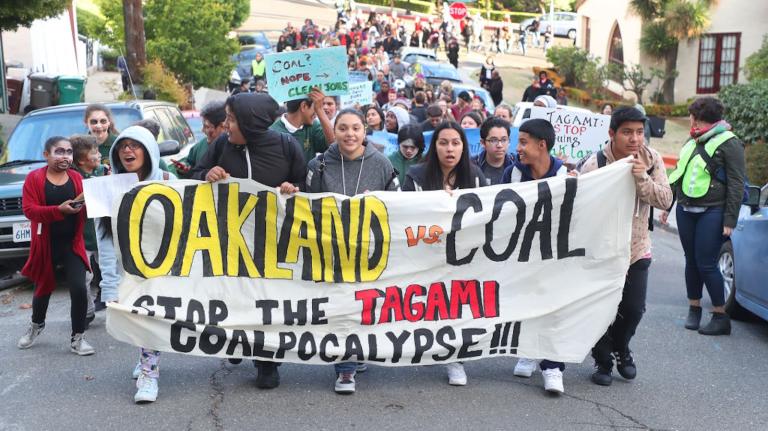
Here's the easy version of my physics lesson: driving slower means less "drag," and thus less effort by the engine. Drag is aerodynamic resistance, basically. You've felt it if you've ever walked with a banner in a parade or protest, or pushed against a heavy wind in a flapping coat. That's the same drag a car experiences as it pushes forward on the road -- it fights the air, it fights the friction of the road, it fights the urge to pull off and get a Big Mac. And instead of burning lunch to fight drag, it burns gas. The more drag, the more gas.

Now here's the scientificese. Physicists have an equation used to calculate drag on a moving object: D = Cd x r x V2/2 x A. The D is Drag, and V is velocity. You see how V is squared? The other letters (which you have my permission to ignore) stay constant as your speed increases, but the V rises. Because it is squared, it has a large impact on D -- i.e., twice as fast is four times as much drag. The faster you drive, the harder your engine has to work to maintain its speed, and the less efficiently it performs. Miles per gallon fall. (You can learn more from NASA.)

So is 55 the magic number? Well, by many estimates it's pretty darn close, though each vehicle has its own speed of maximum efficiency dependent on engines, car bodies, and driving conditions. Gas mileage decreases rapidly at speeds above 60; boosting your highway speed from 55 to 75 can raise fuel consumption by as much as 20 percent. Driving at steady, reasonable speeds will save both gas and money, and keep you safe and happy.

By the way, if the gummint truly cared about fuel economy, it would stop paying for highways that benefit the auto industry, and start paying for train tracks that benefit the mass-transit industry. Is all I'm saying.

Physically,
Umbra

Yours is to wonder why, hers is to answer (or try). Send your green-living questions to Umbra.

Umbra Fisk is Grist Research Associate II, Hardcover and Periodicals Unit, floors 2B-4B.

Advertisement
Advertisement
  1. Bethunel Posted 7:06 am
    19 Sep 2005

    My new Drive 55 sloganDrive 55 because you can...and save gas too!  Watch the world go speeding by!!
  2. fotografx Posted 9:21 am
    19 Sep 2005

    Take It To The LimitFor a 1970's automobile 55MPH may have been an optimal compromise for gas saving. In 2005 for current automobiles (excepting SUV's) the most efficient speed is probaly closer to 75.

    Current passenger cars are far more aerodynamic than they were in 1970, and they are geared for much higher speeds at which the engine is functioning most efficiently.
  3. kduble Posted 12:59 am
    20 Sep 2005

    Feelings of futilityOne thing that has broken down since the 1970s is a shared sense of sacrifice.  Back then, when I kept my subcompact at 55, I felt I was contributing to the greater good.  Now, however, with our president putting his security detail in SUVs, police departments using SUVs, housewives driving SUVs, urban stockbrokers communting to work in farm trucks and the California governor driving Hummers, I feel kind of absurd trying to keep my 3-cylinder vehicle below 55.
  4. Pandu Posted 5:50 am
    20 Sep 2005

    counterproductive...the urge to pull off and get a Big Mac.
    Suggesting I slow down while she plugs fast food hamburgers.
    ..........

    So You're an Environmentalist; Why Are You Still Eating Meat?
    Meat and the Environment
  5. rsiddall Posted 7:17 am
    20 Sep 2005

    Almost rightSorry, the laws of physics have not changed since the 1970's.  The most efficient speed of a vehicle is still around 30 to 40 MPH.  The drag coefficient of a new car may be a bit less than one from the 1970's but that doesn't affect the most efficient speed, only the overall fuel consumption.

    The most efficient speed will be the minimum it can pull the highest gear comfortably.  If you go slower you'll have to use a lower gear and the the engine will fire more often to go the same distance.  If you go faster, your drag losses will increase and so will the engine losses as the engine turns faster.  This increases the load on the engine and the carb or fuel injection meters more fuel into the engine each time it fires.

    The laws of physics aren't any different for SUVs. They use more fuel as they're larger, and so have a bigger frontal area to multiply the drag coefficient by.  They're also heavier, so they take more energy to accelerate and decelerate.
  6. DaveBrook Posted 1:40 pm
    20 Sep 2005

    75 mph most efficient speed NOTYou talk about 55 mph being an "optimal compromise" (presumably between fuel efficiency and time to get to one's destination) but at the end of the sentence refer to efficiency.  55 mph was a political compromise not some sort of engineering number.  Even though the aerodynamic slipperiness of cars has gotten much better since the behemoths of the 70s, they haven't gotten THAT much better.  I think you'll find that if you take a Honda Insight out on the highway, the most efficient speed will still be between 45-50 mph  (but haven't done it).  
    Are there any Insight (or other low "coefficient of drag" car owners out there want to tell us what their optimum speed is?  Thanks.
  7. Kira Posted 10:29 pm
    20 Sep 2005

    Formula WonThank you Umbra for not being afraid to use a formula to explain something. That's the first real explanation I've heard. I also very much doubt that 75 is most efficient for new cars. Since gas started competing with my mortgage payment, I've vowed to stick to the speed limit--which unfortunately is often over the 50-55 I'd heard was most efficient. But I recently got to Cape Cod and back (to Boston) on half a tank of gas instead of the 3/4 I expected.
  8. LauraH Posted 2:34 am
    21 Sep 2005

    drag is only half the answerIn fact you can explain it pretty well without bringing drag into it at all.  I believe rsidall has it right:

    "The most efficient speed will be the minimum it can pull the highest gear comfortably."

       The aim is to drive at the lowest possible engine RPMs (revolutions per minute), because each revolution is driven by the pistons firing, using fuel.  You also want to drive in the highest gear, because you get more distance out of each engine revolution.

       This seems obvious to me, but I drive manual transmission vehicles all the time.  I recently switched from a 90 Nissan pickup to a 94 Ranger pickup and noticed that the gearing is different - with the Nissan I shifted at 25kph, 40, 75, and 85, but with the Ranger it's 30, 50, 70, 90.  So with the Nissan, the most efficient highway speed was 85, and with the Ranger it's 90.  I haven't tested this, but I suspect that if I drove both at 100, the Ranger would be more efficient, but the Nissan at 85 should be better than the Ranger at 90.  But with speed limits going up, 85 may be too slow for safety.

        So are newer vehicles more efficient?  Depends on how you look at it.

        Anybody have tips for figuring out the speed where your automatic shifts into top gear?  That should be the speed to aim for (or enough over it to minimize downshifting).

        Now, with a continuously variable transmission (CVT) I suspect you would have to consider drag directly.  The optimum speed would presumably be some sort of tradeoff between increased drag versus decreased engine running time for the same distance travelled.

       (BTW, the pickup is for work: I need the clearance and hauling capacity.  The family car is a Geo Metro and my personal run-about is a bike.)
  9. rsiddall Posted 3:40 am
    21 Sep 2005

    Or maybe slowerI've been thinking about this and I think some vehicles will use less fuel if run at the minimum speed to pull a lower gear than top gear.  Take a car that turns over at 1500 RPM at 30 MPH in one gear and 40 MPH in top gear.  Even though the engine fires more times to do the journey at 30 MPH, because the drag force is much lower the carb or fuel injection may meter so much less fuel into the engine that the net fuel use is less than if you did the journey at 40 MPH.

    I remember being told (in the 1970's, I think) that the drag force was approximately equal to the engine loss at about 35 MPH.  Presumably now we run thinner oil, the engine loss is less in modern vehicles, so drag starts to predominate at lower speeds than that.
  10. amazingdrx Posted 6:00 am
    21 Sep 2005

    Economy driving.5 buck gas is almost here, as soon as Rita hits Galveston.
    Pulse driving is most efficient, no faster than 50 top speed.  But when cars need to pass pull over a bit and slow down at a safe passing opurtunity.
    Not much  use saving gas if it gets someone killed in traffic!
    You use moderate acceleration, say 1500 rpm, up to the speed limit, say 35, then coast to the next stop sign.  It works but does not help the flow of traffic.

Add a Comment

You are not logged in. Thus, you cannot post a comment. If you have an account, log in. If you don't have an account, well, by all means go make one! Meet you back here in five.

Hello, Visitor!    Why not register?

Advertisement