For more on Southwest cities see our full feature on sustainability initiatives underway in Phoenix.
Scan any list of “green U.S. cities” for winners from the Southwest, and you’ll find a geographical void. Sure, a liberal-leaning place like Austin or Santa Fe or Boulder might sneak onto the list, but in general, there’s a dearth of entries from this sun-drenched region. And that’s troubling, as Southwest cities tend to be among the country’s fastest-growing — and thus in direst need of careful future planning.
While it’s true that this hot corner of the country has traditionally been cool to sustainability — due in part to a strong property-rights mentality — some leaders are pushing for change. Here’s a look at a few cities where green is on the rise.
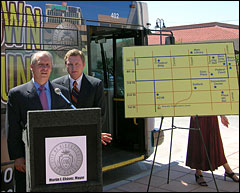
Albuquerque Mayor Martin Chavez launches a new bus route in 2006.
Albuquerque, N.M. Like many Southwestern cities, Albuquerque suffers two major sustaina-woes: too much reliance on cars, and too little water to go around. But it’s been making efforts to ameliorate those problems, if not exactly solve them. Thanks in large part to the leadership of Mayor Martin Chavez — an early signatory to the U.S. Mayors Climate Protection Agreement — the city has implemented a water conservation program and made greenhouse-gas reduction a priority. New bus routes and “bike and ride” incentives have seen public transit options increase, and city-funded construction projects must meet green-building standards; a longer-range plan aims to boost compact, mixed-use development and walkability. Chavez’s fellow mayors named Albuquerque the “greenest city in the nation” last year, but that laurel came with controversy attached. And with a 20 percent increase in vehicle miles traveled since 1990, this motor-loving metro area still has a long way to go.
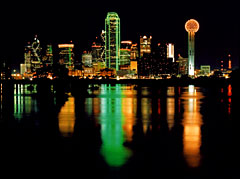
Dallas: Greening up its act?
Dallas, Texas When it comes to the Lone Star State, Austin usually hogs the smart-city spotlight. But its big brother to the north — fingered as one of the worst sprawl offenders in the U.S. — has quietly undertaken some eco-improvements of its own. Through a comprehensive planning process called Forward Dallas!, the city has tackled such thorny topics as land use, public transportation, housing, and urban design — all with input from enthusiastic citizens — and is now pursuing the creation of walkable streets; reuse of historic properties; development of affordable housing; and an increase in jobs and housing located near the city’s network of 40 planned and existing light-rail stations. The city government has adopted a Green Dallas program whose steps include purchasing 40 percent of its energy from renewable sources this year, and this spring, the city council passed a green-building ordinance mandating improvements in energy efficiency.
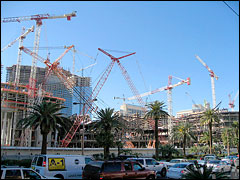
Las Vegas, Nev. Is Sin City ready to cash in on the sustainability trend? Er, not quite. In fact, it’s often held up as the least redeemable of America’s “desert oasis” cities — and it doesn’t show signs of stopping. As SustainLane puts it, “Las Vegas is undergoing a fast-forward version of the classic urban development pattern of exurban sprawl that has led other Sun Belt cities to complete dependence on the automobile.” But just as the city has worked to make itself more family-friendly in recent years, it’s also working to counter some of the questionable growth patterns of its past. (And we ain’t talking about Frankie’s hairstyles.) A 76-acre, $8 billion development called CityCenter is attempting — in a glitzy, Vegas kind of way — to bring a dash of mixed-use urban reality to the Strip, seeking LEED certification along the way. The city has implemented water and energy conservation measures, and pays residents to rip out artificial green lawns and replace them with desert landscaping. They may be small steps, but optimists are gambling that there’s hope for Las Vegas yet.