

Lately, the world news has been filled with stories of hungry people struggling to feed themselves as food prices rise dramatically. Even in the U.S. and other wealthy countries, where the situation is not as dire, people have been altering their eating and spending habits to adjust to the higher bills.
It can be hard to focus on eating greener when the very staples you need cost more than usual. Fortunately, there’s a veritable cornucopia of ways to green your grocery list while keeping your costs in check: everything from prioritizing organic purchases to cutting down on meat to buying local and growing your own food.
After all, if you are what you eat, then you also eat what you are — so eat green.
Here’s how to start.
Level One: The Baby Step
Make a list, check it twice. It may sound silly, but the first step when it comes to greening your grocery list is to actually make one. We know how the candy aisle can call to a person (oh Junior Mints, how you taunt us!), but heading to the grocery store armed with a carefully thought-out list is a great way to avoid buying more than you need, loading up on industrially produced dreck that’s harsh on the planet, and adding unnecessary costs to your tab. To keep things fresh, try setting aside some time once a week to look through cookbooks or talk with your finicky family members about what new foods they’re willing to try.
Level Two: The Next Steps
Don’t GMO there. Genetically modified foods are the test-tube kids of the farming world, and they’ve become popular in the U.S. thanks to their rich and powerful parents. Biotechnology and agribusiness companies tightly control access to GM seeds, greatly narrowing the world’s crop diversity. GM crops also have made a growing swath of the world’s farmers dependent on biotech companies, as growers are forced to purchase new seed each season, and have raised concerns about health and environmental safety. Until labeling is required, it may be tough to weed them out of your cabinets — but keep an eye out for guides that can help you avoid them. And remember, they’re not allowed in organics.
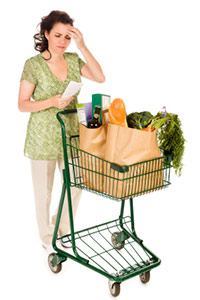
Wherefore cart thou?
Ag, you’re it. Be sure to make room on your grocery list and in your cart for all the organics you can reasonably afford. Organic ag has grown by blooms and bounds in recent years, and more organic options are showing up even at conventional grocery stores. There’s a reason they’re so popular: The USDA organic seal guarantees that the products it adorns are not genetically modified and have been grown without synthetic pesticides that can mess with farmworkers’ health, your health, and the environment. If you’re on a budget (and who’s not these days?), strive to eat organic where it matters most.
Don’t have a cow. Vegetarians have long evangelized about their eating habits, declaring that a diet of plant-based food is the best one for a small planet. Lo and behold, there’s wisdom amid the self-righteousness. Author and foodie Michael Pollan, in his own pithy way, recently distilled the vastness of his victual knowledge into seven simple words of advice: “Eat food. Not too much. Mostly plants.” And he’s got a point. Cutting down on meat consumption helps out the planet by lowering the impact of vast, polluting feedlots, freeing up food for people instead of meaty animals, and eliminating the need to raise so much greenhouse-gas-releasing livestock in the first place.
It’s a floor wax and a dessert topping. Edibles aren’t the only items on the average grocery list; most also cry out for products to clean the house. Instead of rushing for the toxic cleaner du jour, consider greening your list by seeking out biodegradable, nontoxic cleaners, cleansers, and soaps. For nearly every dirty surface, there’s an eco-cleaning product designed to fit your needs — everything from dish soap to laundry detergent. Well-known brands include Ecover and Seventh Generation, though plenty of other options abound.
For the purist — or practically anyone on a budget — hot water, vinegar, and baking soda in various concentrations can clean just about anything as well as, and often better than, the most specialized cleaners. They’re cheaper and easier than even the most beloved commercial cleaning product, and the best part is, they’re dual-use technology: You can cook with them too!
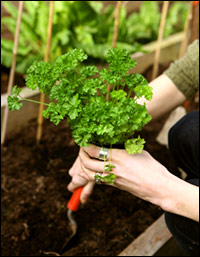
A backyard garden is parsley for the green course.
Level Three: The Big Steps
Think globally, buy locally. Most conventional food travels well over 1,000 miles from farm to plate, and often much farther. Eating locally and regionally sourced food can cut down those transport emissions enormously while keeping farms in your area alive — now that’s food security. Studies have shown that farmers market food can actually cost less — and some markets take food stamps. With preparation and practice, it’s even possible to eat locally in winter.
Grow your own. By growing some of your own food, you can cut down on trips to the store and cross off many items on your list before you even go to the market. So take a page out of the World Wars playbook and plant a victory garden, help out at a community garden project, or just plant your own herbs and spices in a windowbox. An amazing variety of veggies, herbs, and edible flowers can be grown at home and in your back or front yard depending on your space, time, and local climate. Even some common weeds are edible. With just a little sunshine, water, and love and care — and, of course, seeds — you’ll be on your way to food independence in no time. Welcome to flavor country!
Resources
General info on GMOs and organic food
Environmental Working Group Shopper’s Guide
True Food Network Shopper’s Guide
Human Genome Project GM Food Info
USDA Organic Certification Info
Ask Umbra on prioritizing organic purchases
Resources for vegetarian living
PETA Shopping Guide
VegGuide.org
TryVeg.com
Ask Umbra on meat and climate
Green cleaning products and info
Clean and Green: The Complete Guide to Non-Toxic and Environmentally Safe Housekeeping
Seventh Generation
Ecover
Green Seal
Grist reviews laundry detergents
Grist reviews dish soaps
Grist reviews tile scrubbers
Ask Umbra on making your own cleaners
How to find local food sources
Local Harvest
FoodRoutes.org
Sustainable Table
USDA Guide to Farmers Markets