What journalists and even environmentalists so often fail to do in reporting on Wal-Mart's sustainability announcements is to provide some context.
Context is everything. Consider Wal-Mart's latest announcement: It will push some of the factories that supply its stores to cut their greenhouse gas emissions. That's a good thing in and of itself, but what happens when we measure it against Wal-Mart's overall impact on the production of goods?
One of the significant consequences of Wal-Mart's rise and radical reshaping of the global economy has been a steep decline in the life span of many products. We wear out clothing, toasters, DVD players, and even furniture at a pretty rapid clip these days. It's part of the reason Americans are now creating twice as much trash as we did twenty years ago.
Faced with relentless pressure to lower costs in order to keep their wares on big-box shelves, producers have cut corners. Even storied brands like Levi's, once synonymous with durability, have been brought to their knees by Wal-Mart and forced to redesign their products to be cheap and short-lived.
So, on the one hand, you have Wal-Mart's sustainability program, which proposes to reduce the emissions associated with some of the products its sells. And, on the other hand, you have Wal-Mart's core business model, which ensures that we have to replace those products far more often.
This is where some of our most prominent environmental groups have really failed us. They've loudly cheered Wal-Mart's every green announcement, but have done little to help us understand or prod the company to confront the deep sustainability issues that are at the heart of its business model.
Wal-Mart has carefully defined the parameters of sustainability to avoid running up against the basic formula of how it operates and grows. Glaringly absent from Wal-Mart's recent sustainability report, for example, is any mention of sprawl or land use. There's no discussion of how much undeveloped, carbon-absorbing habitat its big stores consume each year, even as the nation's supply of both developed retail space and abandoned "greyfields" mushrooms to epic proportions.
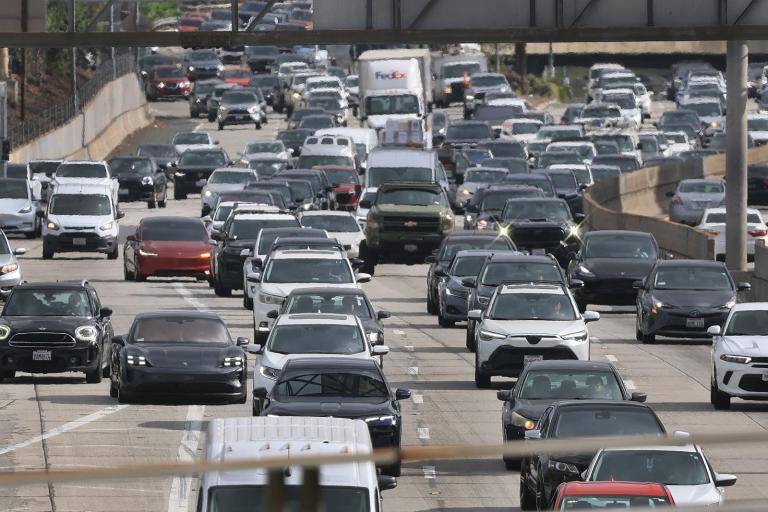
Nor is there any mention of how the big-box format that Wal-Mart pioneered has led to a sharp increase in the number of miles Americans drive for shopping. Although suburbanization accounts for some of this increase, most of it is a function of the basic geography of bigger stores. Each supercenter serves a larger area than the dozens of smaller grocers and other stores it replaces. This means picking up milk is a longer trip than it once was and federal data show that "one-stop-shopping" hasn't come anywhere close to making up the difference. Indeed, since Wal-Mart began expanding in the 1970s, the number of miles logged per household for shopping has grown more than 300 percent, while household driving overall has expanded 75 percent.
Some say that none of this really matters, because Wal-Mart is already a behemoth on the landscape and it's better to have it be somewhat less polluting. But this is to ignore how much Wal-Mart intends to grow and how, in many cases, this growth will be replacing more sustainable economic systems with a less sustainable model. Even during a severe global recession, Wal-Mart is opening about 750 new stores a year, including about 3 supercenters per week in the U.S. and another 600 stores annually around the globe.
While it's often suggested that Wal-Mart's main motivation for its sustainability initiatives is to cut costs, by far the bigger financial payoff lies in preserving the company's rapid expansion.
Just a few years ago, Wal-Mart's ability to grow both here and abroad was in serious jeopardy. Opinion polls found sizeable numbers of shoppers were determined to find alternatives, while reports issued by stock analysts showed its growth rate was plummeting as more projects ran into roadblocks of local opposition.
Since developing a greener image, Wal-Mart has had a much easier time countering local opposition and winning over city officials.
It's now working double-time to bring its inherently auto-oriented form of shopping to the rest of the world. One can only wonder at the staggering carbon impact of that transformation.
But where I find the lack of broader context and analysis most troubling of all is in the way some environmentalists have gleefully embraced Wal-Mart's sheer power. It is true that small changes can add up to big numbers at Wal-Mart's scale. But if we step back for a moment and ask ourselves why, despite popular support and compelling scientific evidence, we have been unable to address legislatively the biggest environmental challenges of our day, one has to finger concentrated power as a culprit. Large corporate interests have hijacked our government and we have failed to act as citizens to take it back.
Concentrated economic power is a threat to democracy, not only because it invariably translates into political power, but also because Wal-Mart and all the giants it is interconnected with, from Monsanto to Goldman Sachs, have rendered ours an ever less entrepreneurial society. Few Americans can lay claim to any measure of economic autonomy today. We are increasingly powerless employees and passive consumers. Having acquiesced to the Wal-Mart-run economy, where the most important decision we're allowed to make is paper or plastic, it's no wonder that we as a society seem unable to marshal the full power of our citizenship.
The real price of cheap Walmart eggs?
This New Agtivist wants to grow food in old K-Marts
How bad are the next few years going to suck? 


Comments
Post a Comment +
It is with a heavy heart that I find myself speaking well of Walmart.
The Walmart business model does not actually depend on selling low quality goods. It depends on selling. If other people sell low quality goods, then Walmart will sell them at a lower price. Simple.
The number of square feet of abandoned commercial property that was once used by Walmart is not really Walmart's fault. People in the areas harmed by Walmart have plenty of political power to change the rules in their own favor: they refuse to stand up for their own benefit.
Yes, it seems that if you close a bunch of local stores (What happens to their building sites?) and put 'em all into one big box out at the edge of town, that there will be a lot of gasoline wasted. Again, that's not Walmart's problem: ever heard of buses? It could be fixed if people in the area wanted it fixed: they do not.
My personal experience in this is limited to a certain time in a certain Southern town. I wanted to develop some film and I needed it quickly. Absolutely none of the downtown stores (there were several) would do it in fewer than several days. The Walmart just outside of town turned on their equipment an extra hour early that day just to get me on my way.
The selection of goods at the Walmart was better than downtown, the hours were more convenient. They were not paying rent to some old line property owner downtown. They weren't paying wages to people who just stood around all day waiting ...read more
Thx for your highly relevant article!
As one of the aforementioned bloggers, I am guilty as charged, and then not. Guilty because like everyone else, I tend to think that Wal-Mart is there to stay, even if I have never shopped there (except once). I also worked as a Wal-Mart supplier a few years back and can tell you that the people who work there have the best of intentions.
But, as you mentioned very rightly, the real problem is that Wal-Mart's very existence, and business model, is what journalists and bloggers should focus on. I have a blurb on this at http://www.businessecology.ca/wal-mart-is-still-walt-no-matter-what-color
Well I agree very much with the article, as I approached the last few paragraphs my only thought was "the writer has't mentioned the CONTROL inherent having that much power," the influence the one corporation has these days...and then there it was.
To give a rough analgoy, you can say the argument is no different than the McDonald's argument. Yes, McDonald's is faster and cheaper and has longer hours. But should it have the huge role in feeding people that it does today? Is this kind of food going to make us as a nation healthy or sick, and cost more or less IN THE LONG RUN? I will wait for the local bakery or coffee shop to open its doors at whatever hour its owner chooses, personally.
Not to say that there isn't room for diverse businesses...but perhaps that's the point...
-Adrian
The "McDonalds argument" is pretty much the argument I was making.
I don't consider that to be a bad thing except it should have a different name.
Corporate control is a facet of the problem whether it is Microsoft, Apple, GM, ADM or, yes, Walmart exercising that influence. Leave the name "Walmart" out of the argument except as a particularly bad example and I am fine with most of what is said.
Now, as far as the validity of the argument, you have to ask how much energy is wasted carrying goods to a lot of little stores spread out over the community vs. a few semi loads going to a concentration of big boxes. The same argument is made in favor of supermarkets vs. farmers' markets and factory farms vs. "traditional" farms.
An argument I expected was that the corporations reduce employment and change the nature of society. I say true, but is that so wrong? All those little stores need security, they need a book keeper--they are very expensive to operate. Is it better for a few people to work all day in the Walmart or for a bunch of people to be tied to their cash registers all day hoping to sell a handkerchief to their neighbors?
I say that if someone wants to make handkerchiefs as a hobby and sell them to their neighbors that's fine. But to demand that someone do that as a full time job or face homelessness is evil and should be stopped. (There's more that needs changing here than Walmart.)
McDonalds food is not bad for you unless you eat it all the ...read more
Really good piece. The overall impact of Wal-Mart has been a huge negative for the environment and society. Too many big green groups have decided to work for small incremental changes rather than the big systematic changes necessary.
Well said, Jestbill.
Absolutely right Jestbill.
Walmart is not really a force by itself. It's an artifact of forces.
Global trade agreements + subsidized transportation + Wall-E Buy'n'Large consumerism + subsidized greenfield development = Walmart.
You will never get rid of Walmart until you address the causes.
Great piece and great comments! It's a classic irony, I think, that the green media and "sustainable business" acolytes fail to see the forest for the trees when it comes to Walmart. There's no doubt that their sustainability initiatives are better than nothing, but it ain't enough. In fact, their recent good green deeds, as reported and supported by big green media/consulting/NGOs, may actually be doing more harm than good in the long run.
First, some of these initiatives won't bring benefits for a long, long time. Take the Sustainability Consortium where, for upwards of $250k, a company can gain a seat at the table alongside the likes of P&G and Monsanto. Along with some highly-regarded academics, they will seek to understand and define the essential qualities of a "green product," with results due several years down the road. Never mind the fact that there are many other initiatives in the world already developing green product standards, and that many smaller manufacturers are already setting a relatively high bar for sustainable products. This initiative is meant to gain control of the agenda and provides a convenient excuse for yet more delay, and not just by Walmart, but by every other big box and "consumer" packaged goods brand owner.
The Personal Sustainability Project is another winner. Yes, it's fantastic to help employees learn about "the language of sustainability." The PSP may even prove to be profoundly important as a "Trojan ...read more
For ten years I worked for a Canadian training company that 'partnered' with US retailers, including Sears, Kmart and Walmart. The first time I visited a distribution centre – Kmart's in Chicago in 1997, I felt like Neo waking up in his pod (except The Matrix hadn't been made yet). When I saw: that there was a whole industry just supplying them their three-storey conveyor systems; that the manufacturers supplied cartons bar-coded for the destination stores, so that much of went on between the incoming trucks and the outgoing trucks was automated; I realized why independent small town retail is now untenable. It's all riding on fossil fuels continuing to be cheap. And it's feeding climate change. It's handy to blame Walmart for being best at it, but we all want cheap stuff and that's the core thing that makes the system work. We're a continent of addicts and I can't think of anything better to do than to kick the habit and shout about it.
Lynn
http://www.10in10diet.com/
Diet for a small footprint and a small grocery bill
The temporary phenomenon that sourcing goods from halfway around the planet is affordable was bound to be exploited. Energy use aside, the mind-numbing efficiency of such distribution systems can really be admired. But distribution efficiency can be implemented in other ways (IGA comes to mind http://www.iga.com/igatoday.aspx) that are less destructive of downtowns. All the big-box stores thrive on subsidized energy costs and by transferring the final stages of distribution to the customer. Walmart, in my opinion, is unique in its ability to drive down the cost and resulting quality of goods it sources. The result is a false economy for customers when the product wears out or simply stops working. The problem is, this low quality of goods has become endemic and it's increasingly difficult to find products that offer value through longevity. Why this has proven acceptable to most consumers worldwide escapes me.