Monsanto dominates the global seed industry and churns out $1 billion a year in profit. Investors are so enamored of its market power and profitability that they’ve bid up its share price by nearly 1500 percent since 2004.
So why does Monsanto rely on farms that use child labor to cultivate its genetically modified cotton seeds in India? From Forbes Magazine:
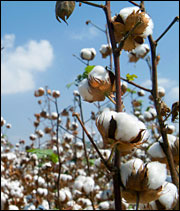
Yothi Ramulla Naga is 4 feet tall. From sunup to sundown she is hunched over in the fields of a cottonseed farm in southern India, earning 20 cents an hour. Farmers in the Uyyalawada region process high-tech cottonseeds genetically engineered to contain a natural pesticide, on behalf of U.S. agriculture giant Monsanto. To get the seeds to breed true the farmers have to cross-pollinate the plants, a laborious task that keeps a peak of a dozen workers busy for several months on just one acre. And to make a profit the farmers have to use cheap labor. That means using kids like Jyothi, who says she’s 15 but looks no older than 12.
It gets worse. To keep these monocropped cottonseed fields free of pests, farmers lean heavily on pesticides. As Forbes points out, kids’ small hands are better than adults’ at for doing tedious work with seeds; but “their bodies are no better at withstanding the poisons.” Here we go:
At least once a week … farmers spray the fields with pesticides like Nuvacron, banned by the U.S. Environmental Protection Agency, and endosulfan, methomyl and Metasystox, considered by the EPA to be highly toxic. [An NGO representative] ticks off the effects of overexposure: diarrhea, nausea, difficulty in breathing, convulsions, headaches and depression.
As is the case with chocolate — another industry wherein huge corporations rely on kid workers in pesticide-laden fields — the problem of child labor in India’s cottonseed fields comes down to price. Monsanto doesn’t want the bad publicity associated with child labor, so it pressures the farmers who grow its seeds to use only adults in the field.
But it doesn’t pay them enough to be profitable without using the cheapest, most compliant labor possible — and that means kids, Forbes reports.
The article also makes an excellent connection between what the way the GMO seed giants operate in India and the way giant poultry producers like Tyson do business here:
Monsanto’s competitors, the Swiss Syngenta and the German Bayer, also contract with farmers in India to produce seed. For all three the arrangement is like the one that governs chicken production in the U.S., with a giant corporation supplying inputs to a small farmer and then picking up the output at harvest time.
Altogether, a wonderful article. It’s great to see the business press actually cover business and the way it gets done, and not just deliver tips on how to make cash in the stock market.