Umbra,
I was wondering where the H2O from the tap comes from, and where it goes to.
Beth
Swarthmore, Pa.
Dearest Beth,
It comes from and goes back to the water cycle, which I’ve been reading a lot about in Richard Scarry’s classic work What Do People Do All Day? The book answers the “where it comes from” question, but Scarry doesn’t have so much to say about sewage. Lowly Worm does not get to travel through the toilet.
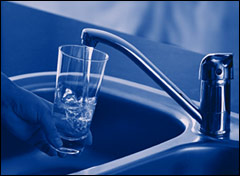
Let the knowledge flow.
Photo: iStockphoto
Tap water is drawn either from surface water, such as lakes and streams, or from groundwater. Your water supplier pumps water out of these sources, purifies it, and sends it through a series of pipes to your home. Your water supplier is required by EPA to send you a report on water quality every June, which should include a list of specific water sources. I tried to find your supplier on the web, and ended up at Aqua, a private water utility. Their latest report for the Main Division (which I think is you) says your water comes from “seven surface water sources and a number of groundwater sites,” and mentions several creeks, including the Crum, Perkiomen, and Neshaminy. For exact information, you’ll need to contact your water supplier or your state water office. The EPA’s website has a deluge of water information including a Safe Drinking Water Query Form. All these sources should provide a steady stream of information about your water sources and test results — which, as I’ve written previously, you may wish to view with a little skepticism.
After your utility pulls the water from lakes or aquifers, it removes poisons, bacteria, and sediments before it passes the water on to your home. They may use flocculation! Yay! New jargon inspires exclamation points! In the flocculation process, salts or polymers added to the water form little particles known as “floc,” which attract sediment and cause it to settle out. Filtration is also an important step, as is disinfection (this is where chlorine is often added). The feds require water to be tirelessly tested, from source to house, for the various residues and diseases which can make us ill. We do have excellent drinking water in the United States, and few of us die of typhoid, but all the filtration and testing does not stop certain contaminants from possibly floating in our water. A contaminant might bypass the system — such as various pharmaceuticals, apparently, or your delivery pipes may leach lead into the final streaming of water to your tap.
How can I work more puns into this river of information?
Any water that leaves the tap at your house will somehow make its way back to the water cycle, usually through the sewage line but maybe also through your perspiration, the evaporation of moisture from your laundry as it dries — let’s see, what else does Richard Scarry say — the lawn and garden, and the bubbling of pasta water. If water goes down your drain, and you do not have a graywater or blackwater reclamation system, it all goes into the sewage pipes. From there, it goes into a septic tank or a municipal wastewater treatment system.
In a septic, which would be more likely in a rural area, all the wastes lie about in an underground concrete bunker with Dick Cheney. The solids sink, the scum floats, the liquids hover in the middle and oft ooze out to a leach field, rejoining the groundwater. In a town wastewater treatment system, the wastes travel through pipes to a treatment plant. Solids are filtered out; this is where “flushable” chunky stuff will get removed and sent to the landfill. In the “primary treatment” stage, waste travels through a series of ponds, and more solids settle to the bottom. Perhaps the stuff goes through “secondary treatment” in aerated, bacteria-filled tanks. Tertiary treatment is also a possibility; thoroughness of treatment will depend on your area’s system.
You can see lots of lovely photos of this process at How Stuff Works. I’m sure you can also get specific information from your local sewage district. Wastewater goes back into the water cycle when it is discharged after treatment, into a stream, lake, or other body of water. A few areas in the U.S. are recycling wastewater for non-potable uses, which is great.
There you have it: where it comes from and where it goes. I hope this deluge of resources addressed your underlying reason for asking.
Faucetly,
Umbra