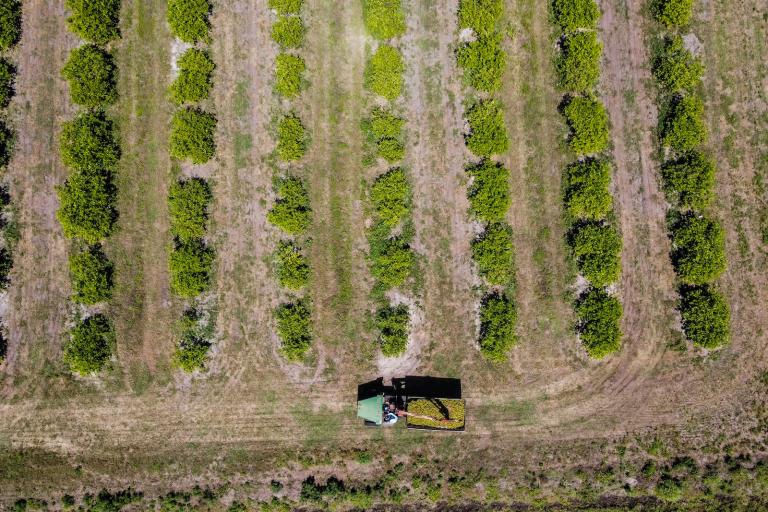
I’ve been writing for a while about industrial agriculture’s fertilizer problem — about how mass-scale food (and biofuel) production relies on finite, geopolitically problematic, and environmentally destructive resources to maintain soil fertility. (See posts here, here, and here.)
Well, that story is heating up down in Brazil, an increasingly important hub in the global industrial food system. Brazil ranks as the world’s second-largest soy producer (soon to overtake the U.S. for the top spot), third-largest corn producer, and leader in coffee, orange juice, and sugar.
According to a must-read Reuters story, Brazil policymakers and farming magnates are getting nervous about fertilizer:
Brazil imports 80 percent of its potassium and 60 percent of its phosphorus. It is also a major importer of nitrogen. Prices for all of these have skyrocketed with increased world demand for agricultural crops.
And they’re considering doing something that has often historically sent U.S. policymakers reaching for their revolvers:
Brazil may nationalize privately held mineral deposits used to make fertilizer to bring down farm production costs, Agriculture Minister Reinhold Stephanes said.
And that could infuriate some very powerful U.S. interests:
The government and the productive sector have expressed frustration over the concentration of Brazil’s fertilizer sector in a handful of companies, which include large multinational grains traders such as Bunge Ltd and Cargill.
Industrial ag looks increasingly set to become a flashpoint of what’s known in polite company as “geopolitical tension,” i.e., the naked competition among nations for control over key resources. But here’s the bit that really caught my eye:
Part of the supply problem in Brazil’s fertilizer sector stems from the risks investors face. Increased output of potassium, for example, depends on the exploration of deep underground deposits in the Amazon, where environmental red tape deters development.
Wow … “environmental red tape.” You know, that whole impulse to protect the Amazon rainforest, the globe’s greatest natural carbon sink — at a time of rapid, human-created climate change. Some of that red tape also involves defending the rights of indigenous people who have lived sustainably in the rainforest for centuries.
Brings to mind the recent pronouncements of Blairo Maggi, the powerful Brazilian politician who’s also its biggest soy grower and business partner of Cargill, Bunge, etc. I found it a bit chilling when he declared:
With the worsening of the global food crisis, the time is coming when it will be inevitable to discuss whether we preserve the environment or produce more food. There is no way to produce more food without occupying more land and taking down more trees.
It also brings to mind the recent resignation of Marina Silva as Brazil’s environment minister. Silva has been a long-time hero in the movement for environmentally and socially just rainforest management. She quit in frustration, citing increasingly limp support within the federal government for protecting the rainforest from agricultural interests.
A message from
Your support keeps our climate news free.
Grist is the only award-winning newsroom focused on exploring equitable solutions to climate change. It’s vital reporting made entirely possible by loyal readers like you.
At Grist, we don’t believe in paywalls. Instead, we rely on our readers to pitch in what they can so that we can continue bringing you our solution-based climate news. Donate today to keep our site free.