Enlightening Bolt

Umbra on organic fabric 17

Dear Umbra,

First let me say that I just discovered your column and have been happily spending most of my time reading your archives. Excellent stuff! I am a total fabric geek; I love to make my own clothes and other fabric-y items, but I worry about synthetics and chemical dyes and chemically grown fibers. I have spent countless hours on the web looking for a company that sells organic fabric by the yard suitable for wearing. Help, please!

Sara
Olympia, Wash.

Dearest Sara,

Thank you. I am not a fabric geek, so I’ve run into a little puzzle answering your question. I found online fabric for you—but is it unsuitable for wearing?

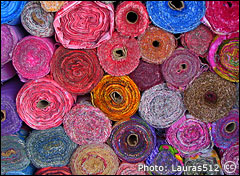
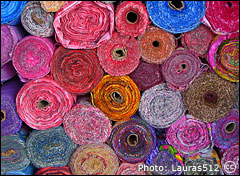
There are sew many reasons to go organic.

Photo: Lauras512

Organic cotton is expensive but clearly a good fabric to buy, especially in comparison with conventional cotton. The statistics on pesticides in conventional cotton are almost cartoonish. The USDA’s 2008 Agricultural Chemical Usage report tells us there are 10.2 million acres of cotton in 11 major cotton-producing U.S. states, and these acres received 52.25 million pounds of pesticides. Cotton uses more pesticides than any other crop, more than 10 percent of the world’s pesticides, and 25 percent of the world’s insecticides. Many of these chemicals are considered carcinogens. Organic cotton avoids conventional pesticides and the attendant water, land, air, and worker contamination problems.

Here’s what I did. I googled “organic cotton by the yard”—in fact, I mistakenly googled “... by the yeard,” and despite my typo found about 10 vendors within the first two pages. They have canvas, fleece, sheeting, terrycloth, wovens, knits, prints, solids, twill—am I repeating myself? as I said, not a fabric geek—and notions like lace, batting, bias, and thread. Many of the vendors also seem to use less-toxic dyeing procedures. Keeping in mind my near-ignorance regarding fabric, you may wish to start with a couple of pages I found interesting. Coop America had a very long list of vendors, including a nice one called Near Sea Naturals, and the various prints at Harmony Art seemed promising.

Aren’t “knits” a wearable fabric? I hope so, because if so I’ve answered your question, and if not we’re both back at square one. It also seems that a few of these folks sell wholesale to retailers, so somewhere out there are fabric stores selling organic fabric by the yard.

I hope you and other sewing readers will be able to find the right fabric for your crafty needs.

Battingly,
Umbra

 

Yours is to wonder why, hers is to answer (or try). Send your green-living questions to Umbra.

For even more green goodness, you can follow Umbra on Twitter (@AskUmbra).

Umbra Fisk is Grist Research Associate II, Hardcover and Periodicals Unit, floors 2B-4B.

Advertisement
Advertisement
  1. Harmony Posted 12:45 pm
    27 Jan 2009

    Organic fabric resourcesAssuming you are based in the United States, in addition to the fabulous NearSea Naturals, I would also recommend you try http://www.organiccottonplus.com and http://www.pmorganics.com They each offer a wide variety of by-the-yard organic fabrics that would be perfect for sewing/craft needs.
    Yes, knits are definitely a wearable fabric - think t-shirt material.  
    Thanks for the informative post and link to Harmony Art!!!  We appreciate it!
  2. john6789 Posted 1:50 am
    28 Jan 2009

    Eco FashionDenver is going to have a fashion show in April, EvoCouture, featuring all eco-friendly clothing.  I even heard a rumor that bionic yarn (recycled plastic bottles) might be there. It is an Autism benefit: http://guest.cvent.com/EVENTS/Info/Summary.aspx?e=69ef948 ...

  3. PermieWriter's avatar

    PermieWriter Posted 4:04 am
    28 Jan 2009

    Gone mainstreamI've even found organic fabric in my local JoAnne's Fabric. Way more expensive, of course, but nice quality.
    Dharma Trading Company in San Rafael has wonderful natural silks in natural colors that they sell by the yard. They also sell natural dyes so you can make the silk whatever color you like.
  4. PARice Posted 4:45 am
    28 Jan 2009

    Organic FabricIf you can't find it in your local stores, call the store and ask it to stock organic fabric. If they get enough calls, maybe they will.
    It would be particularly good to call and ask WalMart to stock organic material. I know, no one likes WalMart. But WalMart is mightily influential in the retail world, and if WalMart starts asking for more organic cotton, then more people will start to raise organic cotton.
  5. mihan's avatar

    mihan Posted 4:49 am
    28 Jan 2009

    Ditto on DharmaDharma Trading Co. is great, and close to WA. They have a great environmental "scorecard", which they update. They use recycled materials wherever possible (my last order, which hung out in my cubicle for a few days, was in a box labeled "SYRUP"---it got a number of interested glances) and make organic options available when they can: cotton, help, silk, bamboo.
    Their "natural" dyes are nice, too, though (to their credit) they do point out that often the "natural" dye is worse for the environment than a synthetic fiber-reactive dye (metals in the mordants, etc).
  6. mihan's avatar

    mihan Posted 4:50 am
    28 Jan 2009

    P.S.Thanks for the other sources... I'll have to check them out!
  7. Beccane Posted 5:41 am
    28 Jan 2009

    also--RECYCLEI know this is not as easy as working with virgin fabric but it can be fun going to goodwill, taking apart other clothing and refashioning into something new. My friend used to make wonderful stuff that way.

  8. vpearcy Posted 6:48 am
    28 Jan 2009

    Don't Forget Mod Green Pod!Great column and wonderful reader suggestions!
    Mod Green Pod now sells organic cotton prints by the yard. While mostly used for home decoration projects, our fabric has been used by creative customers to make beautiful clothes. We sport many a Mod Green Pod skirt around the office, too.  
    We invite you to check out our revamped Web site at http://www.modgreenpod.com
    Enjoy your project! It's so inspiring to see ideas from like-minded "fabric geeks"...
  9. rubiegreen Posted 11:35 am
    28 Jan 2009

    Rubie Green organic cotton!Hello all!

    It's so great to see so many people interested in eco-friendly fabrics!  I thought I'd introduce my little company as well called Rubie Green!  http://www.rubiegreen.com/ We produce 100% organic cotton that's printed here in the states with non-toxic, water based inks :)
    As for other sources I agree that Near Sea Naturals is a fantastic option, and if you're into silks then I'd also try Aurora Silk.  
    Go green!

    Michelle.
  10. anchAK Posted 4:55 pm
    28 Jan 2009

    Don't forget your threadFiberactive Organics (http://www.fiberactiveorganics.com/) makes organic cotton thread that is distributed by YLI and should be available from your local quilt shop. And here is another site that sells organic fabric by the yard: http://www.alabamachanin.com/store/index.php?q=node/433&a ... If you are interested in making quilts Quilter's Dream Cotton makes a batting from recycled soda bottles and Fairfield makes an organic cotton batting. Robert Kaufman (http://www.robertkaufman.com/green/) has a line of organic fabric that should be available from your local quilt store. Hope some of that helps.
  11. leigh van dusen Posted 3:05 am
    29 Jan 2009

    Enlightened bolt, notI am so sorry to rain on everybody's parade, but what you are all calling "organic fabric" is not; it is just a fabric made with organic fibers.  As Umbra said, the production of conventional cotton fibers is a litany of disaster.  But the fiber stage is just the beginning of the production of a fabric.  Think organic applesauce: if you take organic apples and add Red Dye #2, preservatives, emulsifiers, stabilizers, etc. - do you end up with organic applesauce?  Same holds true for fabric production. And a fabric made with organic cotton fibers - if produced conventionally - is, by weight, 25% chemicals - and chemicals you'd rather not live with(please contact me for the source data if you're interested).  By not pointing out the extraordinary difference between a true organic fabric and one just made with organic fibers you're doing a disservice to your customers, your family and to the organizations like GOTS and Oeko Tex which are working hard to point out the problems inherent in conventionally produced fabrics. The Mt. Sinai Children's Environmental Health Center was recently started to study the effects our chemical world is having on children - and the chemicals they study are almost all found in textile processing.  I could go on; please do some reading, you don't need to take my word for it.  But I'd be happy (thrilled!) to send you documents to get you started.
  12. vpearcy Posted 6:50 am
    29 Jan 2009

    "Organic Fabric" Hi Leigh Anne,
    You are quite right about the chemical content often added to organic fibers. This reality, however unknown to most consumers, is one of the main reasons many of us smaller textile companies got into business in the first place. Mod Green Pod, for example, was started when our Design Director was a new mother and could not find enough choices for chemical-free fabric that also suited her taste for bright color and sophisticated design. We work just as hard to keep harmful chemicals out of our printing and finishing process as we do for the cotton ground cloth.  
    And we are by no means alone. Harmony is a textile pioneer and one of the strongest voices in the field for certification, so we believe that Umbra was quite right to mention her line.  We are a huge fan of hers.
    There are others, too, who produce by GOTS and continue to try to educate consumers about why buying organic is worth the modest cost difference.
    It definitely is going to take passionate consumers like yourself and Sara, committed producers, dedicated voices like Umbra, and others to help identify greenwashing and make informed choices.
    Thanks for sharing your voice and information. We are thankful, though, for Umbra's piece as being part of the solution, too!
  13. human power Posted 3:29 pm
    29 Jan 2009

    ImportsSeveral years ago I came across an article that claimed U.S. customs fumigates all organic cotton as it arrives in the U.S. If correct, then the only "organic" cotton available in the U.S. would have to be grown in the U.S.
    Interestingly, in the early '90s Monsanto pretty much forced many large cotton farms to plant their Bt cotton. By design, the levels of toxin protein in Monsanto's crops was too low to kill cotton bolls, but was just right to create resistance. (B. thuringenesis is what organic cotton farmers use to treat for cotton bolls.) Result: two years ago researchers began to find Bt-resistant cotton bolls. It is entirely possible that domestic organic cotton will not be available at all in another twenty years.
  14. AmyThompson Posted 3:57 am
    30 Jan 2009

    A Truly Organic ChoiceI appreciate the discussion on this topic and thank Sara and Umbra for kicking it off.  Our company, Tenfold Organic Textiles, offers organic fabrics that are organically dyed and finished with natural plants and minerals (ALL steps of its processing) so that the resulting fabrics are indeed organic through and through.  We also have a clothing line made with these special organically-dyed and finished fabrics called "Truly Organic".
    It has been somewhat difficult to communicate our point of difference to consumers who already think they are getting a "chemical-free" product when they choose organic textiles.  I welcome your feedback and ideas on how to more effectively communicate this difference without negativity, as we recognize the value of the use of organic fibers as a first step.
    For more info, we invite you to check us out:

    http://www.tenfoldorganic.com

    http://www.truly-organic.com
    Thanks,

    Amy

    Tenfold Organic Textiles/Truly Organic Apparel

    Seattle, WA

  15. ihatebugs Posted 10:59 am
    31 Jan 2009

    tent wormsdoes anyone know if chickens will eat tent worms? this will be my first spring with them outside; so i am not certain if they will eat them ; i knda hope they will:)

    thank you

    michelle
  16. leigh van dusen Posted 11:06 am
    01 Feb 2009

    importsThe US government tries to keep the boll weavil (and other pests)out of this country, therefore raw cotton (organic or not) is prohibited entry; ginned cotton (organic or not) must be entered on an individual basis and might require fumigation.  But a fabric made of organic cotton does not require fumigation because the processing kills the boll weavils (and other pests).  
    It is sad that so much of US cotton is GMO cotton, which is prohibited by GOTS.  But then again, currently there are no mills in the United States which are certified to produce GOTS fabrics.  That means the wonderful US organic cotton which does exist is used in conventional textile production - meaning it's subjected to an onslaught of chemicals which are residual in the final product.  We certainly support organic agriculture and if the mills use organic rather than conventional cotton, that's a big step forward.  But I think US mills are missing the boat with their slow uptake on instituting environmental standards.  
  17. dzdogs Posted 7:29 pm
    04 Feb 2009

    I like your commentYou are really on to something here. Green washing is bad karma and it is time for companies to be honest about their products especially when dollars are so hard to come by these days.
    Best,

    D

Add a Comment

You are not logged in. Thus, you cannot post a comment. If you have an account, log in. If you don't have an account, well, by all means go make one! Meet you back here in five.

Hello, Visitor!    Why not register?

Advertisement