As we reported Monday morning, the Bush administration is on the verge of issuing a rule that will make it even easier for mountaintop-removal mining companies to dump toxic crap in the streams of Appalachia. (They do it now, it’s just illegal, albeit never enforced.)
You can read Jeff Biggers for more on why this atrocity needs to be vigorously fought and leave a public comment on the proposed change.
I wanted to pivot off this to make a point I’ve been meaning to make forever, ever since reading this month-old Reuters story. In it, mining companies whine that if a Va. court ruling — which said that the Army Corps of Engineers had not taken the Clean Water Act into account when issuing mining permits — is allowed to stand, the cost of Appalachian coal will soar:
Jim Thompson, editor of industry newsletter Coal & Energy Price Report, said a restrictive ruling would probably drive up costs for any miner with surface operations in Central Appalachia.
He also warned that higher coal prices could lead to increased electricity prices and a potential for brownouts.
Be afraid!
The point I want to make: coal is much more vulnerable than people think. Greens tend to think of Big Coal as an enormous, deeply rooted, heavy lobbying juggernaut. But it isn’t — it’s an industry perched precariously on a rotting foundation.
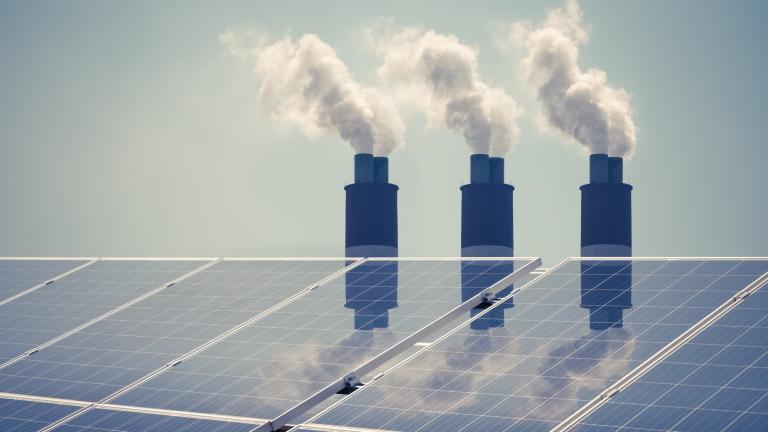
Already, new coal plants are already just barely economically competitive. Grid parity, even given the current skein of perverse subsidies and regulations, is in sight for wind and solar thermal. Here’s the difference though: virtually everything that could happen, or is likely to happen, will make coal less economical; the reverse is true for renewables.
Things that could make new coal less attractive:
- carbon regulations or cap-and-trade
- requirements that new plants be IGCC and/or IGCC+CCS
- stronger enforcement of current mining rules
- new mining rules
- strong enforcement of current waste-disposal rules
- new waste-disposal rules
- strong enforcement of current air pollution rules
- new air pollution rules
- rising construction costs
- rising transportation costs
Things that could make solar and wind more attractive:
- carbon regulations or cap-and-trade
- new tax credits or gov’t investments
- new state or national RPSs
- economies of scale
- new efficiencies in production/manufacture/installation
- technological advancements
- grid improvements
As Al Gore is fond of saying, the more coal plants we build, the more expensive they get; the more solar plants we build, the cheaper they get.
This is why Big Coal is squawking so loud lately. It is panicking. It’s in a delicate position, facing dangers on every side. Its historical moment is almost certainly ending. It is frantically putting off its own denouement.
No reason to stop fighting, but a reason to take some heart that things aren’t as bad as they can occasionally look.