Poor Taste

Why The Economist’s recent assault on “ethical food” missed the mark 16

Last month, the influential British newsweekly The Economist took the measure of the sustainable-food movement and found it wanting.

"There are good reasons to doubt the claims made about three of the most popular varieties of 'ethical food': organic food, fair-trade food, and local food," the journal declared, and proceeded to subject each to withering analysis.
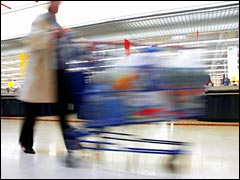
Don't put the cart before the voice.

Photo: iStockphoto

Like an uncle emboldened by wine at the holiday table, The Economist sought the role of truth-teller to the complacent and self-satisfied. "People who want to make the world a better place cannot do so by shifting their shopping habits," the magazine lectured.

The coverage sparked a mini-sensation in sustainable-food circles, peppering blogs and listservs for weeks. My inbox groaned with emails alerting me to the phenomenon. In person, some people brought it up in a tone almost of condolence. Shame about how local food doesn't really work, they said, and didn't need to say the rest: given that you've devoted your life to it.

The Economist occupies a unique niche within U.S. media. Unlike homegrown weeklies like Time and Newsweek, the venerable British journal doesn't pretend to be objective. It champions European-style liberalism: capitalism fettered only by minimal and carefully considered government intervention.

The magazine's admirable openness about its biases confers on it an authority that must be envied by its U.S. counterparts. While Time and Newsweek frantically chase relevance (and straying readers) by devoting cover after cover to celebrities and God -- the ultimate celebrity, perhaps -- The Economist has emerged as the thinking person's weekly in the U.S., read by academics, policy wonks, politicians, and corporate decision-makers across a broad political spectrum.

Thus when The Economist arrays its considerable cultural clout against one's pet movement, it pays to take note. Has the sustainable-food movement been right and well debunked? Should we stop "voting with our trolleys" (British for shopping carts) and learn to love industrial food?

As The Economist itself has put it in countless articles: not so fast.

The Other Side of the Story

The magazine opens its critique by implying that the sustainable-food movement has abandoned politics in favor of enlightened consumerism. "Voter turnout in most developed countries has fallen in recent decades, but sales of organic, fair-trade, and local food -- each with its own political agenda -- are growing fast," the magazine reveals.

This is an odd juxtaposition. Are shopping at the farmers' market and voting mutually exclusive acts? By doing the former, are you absolved from the need to do the latter? If you think so, consider your argument eviscerated. The magazine demonstrates with convincing force that consumer choice alone won't solve the environmental and social depredations of industrial food.

The problem, though, is that few in the movement hold that position. To be sure, there may be people who think they're saving the planet by piling their shopping carts high at Whole Foods. But the great thrust of the food-politics movement is, well, extremely political.

Take the Los Angeles-based Community Food Security Coalition, arguably the most effective nationwide sustainable-food group. Its annual conferences draw hundreds of people from across the country who are doing the nuts-and-bolts work of reestablishing local food networks, through inner-city farming, farmers' markets in low-income areas, and other initiatives.

At the two CFSC conferences I attended over the past five years, I heard little rhetoric about how we could shop our way out of our food problems. Instead, the farm bill -- the federal government's twice-a-decade commitment of largesse to agribusiness -- dominated discussion. The CFSC's broad coalition of food-justice advocates hardly embody the idea that "the supermarket trolley has dethroned the ballot box," as The Economist so cheekily put it.

The sustainable-food movement's very DNA is shot through with a commitment to political engagement. "Eat responsibly," declared Wendell Berry in his seminal 1990 essay "The Pleasures of Eating." By that, he didn't mean blithely hop into the SUV and head to a national supermarket chain to pick up a pricey bag of anonymously grown organic salad, as The Economist's caricature would have it.

Instead, Berry urged people to become active participants in food production. He hoped that by gaining knowledge about where food comes from, people would become more, not less, politically engaged. The feel-good consumerism skewered by The Economist has little to do with Berry's influential ethos of knowing and active participation -- an intellectual tradition that thrives today in the work of Michael Pollan and other writers.

If The Economist's overriding premise -- that the sustainable-food movement has decayed into a sort of self-congratulating shopping club -- is fundamentally ridiculous, it doesn't do much better on the particulars.

To make the case that organic farming threatens tropical rainforests, the magazine trots out Nobel laureate Norman Borlaug, perhaps industrial agriculture's greatest apologist. Borlaug, a sort of anti-Wendell Berry, spearheaded the Green Revolution movement, financed by U.S. foundations, to promote the use of hybrid seeds, pesticides, and fertilizers by farmers in the global south.

Borlaug's efforts have incited bitter controversy in agricultural and social-policy circles, but you'd never know that from The Economist, which cites him without question to support the notion that conventional farming delivers higher yields than organic. "The more intensively you farm, Mr. Borlaug contends, the more room you have left for rainforest," The Economist states, with an air of "case closed."

But is chemical-dependent farming really more productive than organic? Samuel Fromartz, author of Organic Inc., debunked that claim in a recent comment on Gristmill. Fromartz points out that chemical farming may churn out more food per acre under ideal conditions, but over the long term -- including drought periods -- the yield difference dwindles. Moreover, pummeling the soil with chemicals may eventually sap land of any productivity at all. As Fromartz points out, India -- which bought Borlaug's Green Revolution package wholesale, and is often cited as one of the effort's great successes -- is now experiencing a severe soil- and water-depletion crisis.

The Economist's scolding of consumers who strive to "buy local" is scarcely more convincing. For one, the magazine ludicrously attempts to paint such efforts as "protectionist," which implies a resort to government power. But in the United States, at least, I know of no one calling for the erection of trade barriers against foreign-produced food. The U.S. market is currently flooded with cheap garlic grown in China. Is an individual consumer being protectionist by opting to pay a premium to buy garlic from a local farmer? How so, precisely?

And on what grounds does this journal, which exists to champion free choice in free markets, denounce consumers for exercising that power?

The Root of the Problem

More fundamentally, the magazine's contention that food hauled in from long distances burns less energy than locally produced food rests on shaky ground. The piece cites a British government report, concluding that "a shift toward a local food system, and away from a supermarket-based food system, with its central distribution depots, lean supply chains, and big, full trucks, might actually increase the number of food-vehicle miles being traveled locally, because things would move around in a larger number of smaller, less efficiently packed vehicles."

True enough, no doubt, in the U.S. as much as in the U.K. But in the U.S., at least, government policy for at least 50 years has decisively favored consolidation [PDF] of the food industry. The built environment has been explicitly rigged to facilitate the long-haul transportation of food, while local food-processing infrastructure has been dismantled. So yes, as The Economist points out, people often live closer to supermarkets than to farmers' markets; but the answer needn't be to boycott farmers' markets.

Just as logically, citizens could organize to pressure local governments to invest in more farmers' markets. If energy efficiency is the goal, such efforts could be coupled with a movement to reinvest in public transportation. And in fact, reestablishing accessible, neighborhood retail points for locally grown food is a major motivating force for groups associated with the above-mentioned Community Food Security Coalition.

But that's not the sort of political organizing The Economist would prefer to see from food-justice advocates. The magazine wants us to return to the chain supermarkets and spend our energy instead on pushing politicians toward action in the form of "a global carbon tax; reform of the world trade system; and the abolition of agricultural tariffs and subsidies."

It's bizarre advice, coming from a free-market magazine: severely limit your own options and ask the government to solve your problems. And while the political goals it supports are no doubt worthy, they in no way absolve citizens from the need to wrest control of their food decisions from corporations and actively create the food system they want.


Grist food editor Tom Philpott farms and cooks at Maverick Farms, a sustainable-agriculture nonprofit and small farm in the Blue Ridge Mountains of North Carolina. Follow Tom’s Twitter feed here.

Advertisement
Advertisement
  1. farmerjon Posted 7:03 am
    03 Jan 2007

    Poor Taste or Sore Loser?

    I have not read the Economist yet (subscription required), and may not get to if for a while at the library, but it seems to me the Tom is unwilling to listen to other viewpoints - just reading the bits and pieces he quoted, it is clear that the Economist made good points in the difficulty of returning to local food sources, as well as reasonable points on the higher costs of that approach.  All Tom can do is take pot-shots at the presentation style (why so smarmy, Tom)and fail to even give a modicum of credit to the researchers who wrote the piece.

    I live in the suburbs of Denver, Colorado.  I can grow my own food on my small suburban plot, but I have a 120 frost free day summer, I have 14 inches of natural precipitation (much of it lying as snow on my garden right now), and the variety of foods I need to eat a healthy diet are just not accessible in this climate.  Does that mean I have to move?  

    Likewise, I can go to the farmer's market, as they have excellent green beans  - but at the same time my garden is overflowing with green beans, and my wife is saying "I refuse to eat one more bean, give me some peas" (no, that season was last month - remember how tired of peas we were then?).

    Is local a good idea?  Yes, I am all for it, but it is short sighted to believe local, or sustainable, or organic can feed the millions now needing enough food to have a healthy diet.  The infrastructure, the social constrictions, and climate all make it impractical.  Therefore, accept that commercial, industrialized foodstuffs have to remain a part of the puzzle, and recognize that "local" is only one small part of a world-wide food answer.

  2. Stentor Posted 9:10 am
    03 Jan 2007

    missing the point

    The infrastructure, the social constrictions, and climate all make it impractical.

    Yes -- but Philpott's point is that the infrastructure and social constrictions can and should be changed. The Economist, on the other hand, would prefer to just give up.

  3. happygreengirl Posted 9:54 am
    03 Jan 2007

    Right On, In Fact

    I wrote about this very article on my own blog two weeks ago. Tom did, in fact, hit the nail on the head.

    The Economist article is very dramatically condemning without much depth of thought given to it's claims - he must not have chatted with their Green.view editor first, and they do have one. The author offers no solution other than the implicit (trust me, read it, you'll see) suggestion that organic farming and farmer's markets should be abandoned, as THEY are actually the cause of global warming, hunger, poverty... Watch out, tree huggers, you're digging your own graves! It's absurd enough to make me question "did Monsanto pay this guy off or something?" and I'm not even the conspiracy theory type.

    I was appalled by the author's inability to see the most common denominator in choosing organic - that we're tired of pumping trash into our systems. It certainly is about time we take responsibility for what we put into our bodies, and into those of the loved ones around us. The 'Market'--and here i don't mean the grocer--doesn't care, so we have to.

    As for the land use and depletion of nutrients/usability, I am left wondering about the mass scales at which the United States produces so much food, enough to have massive surpluses that grocery stores throw away every single day, every hour, yet somehow can't get into the hands of the poor in Appalachia. Somehow, even with farm subsidies for these mass farmers, we are still left at the mercy of food banks and soup kitchens run by our very-obviously-NOT-governmental churches and community groups.

    With all of our mass production, our surplus of produce and grain, our nation's poor still can't afford fresh veggies, period, even conventional veggies. So to suggest that we shouldn't farm organic because we need MORE food, that more being only for the hungry, is absurd. I'm so glad, too, that we're planting more rain forest in the US, since we mass produce all of our food. These are, after all, the direct correlations the Economist article suggests will come of mass conventional food production: food for the hungry and more rain forest. Here here, Tom.

    Finally, in response to farmerjon's spin on Tom's article, I point to this quote from the Economist Article ("Good Food", 12/07/06): "People who want to make the world a better place cannot do so by shifting their shopping habits: transforming the planet requires duller disciplines, like politics."

    If this statement is true, then we would keep sitting and waiting. We should, based on this sentiment, just go back to buying veggies with DDT and lotions with propylbarabens, drinking corn syrupy juice, eating antibiotic and hormone-laden meats... we've come a long way in the last 10 years, and it certainly isn't thanks to the "dull... politics" coming about on their own. Movements start somewhere, and if this one happens to be in the grocery store, then so be it.

    In the end, the article can be debunked with one simple idea: that change does not happen cleanly, 100%, easy over night. If that were the case, I'd go straight to the ballot box and skip buying organic because if enough people agreed, then we'd have true organic, support for local farmers and no carbon emissions overnight. I recently had an argument with a friend about hybrid, hydrogen and electric cars. We shouldn't necessarily support hybrids, he said, because they're not as good as pure electric cars, or hydrogen powered vehicles. I argue that until electric comes (again, to stay this time), or until we can make hydrogen available enough nation wide, a hybrid vehicle is the next best thing. We can at least reduce if we can't yet eliminate. Better to begin somewhere. Better to vote AND shop with an educated and conscientious knowledge, than to wait for others to act for us, especially when those in power don't always act in step with my ballot.

  4. Tom Philpott's avatar

    Tom Philpott Posted 10:04 am
    03 Jan 2007

    Farmerjon,

    The Economist's package on food contains two pieces: a "leader" (editorial) and a more in-depth article. I didn't realize it, but the longer piece is subscription-required, but the leader is available here for free.

    Read it, and I don't think you'll find that I mischaracterized the venerable journal's positions. (The longer piece amplifies but doesn't extend points made in the leader.) The leader is predicated on the following nugget of wisdom (which I find to be a rather crudely constructed straw man): "The idea that shopping is the new politics is certainly seductive. Never mind the ballot box: vote with your supermarket trolley instead."

    The piece contains a subhead that blares "Buy organic, destroy the rainforest," and backs it up thusly:

    Organic methods, which rely on crop rotation, manure and compost in place of fertiliser, are far less intensive. So producing the world's current agricultural output organically would require several times as much land as is currently cultivated. There wouldn't be much room left for the rainforest.

    But that's just not true. And so on.

    Your point about the difficulty of local foods in cold climates is interesting but isn't addressed by the Economist (a while back, I addressed it here).

    As for the bit about how you doubt that sustainable ag can feed the world, my only response can be: how long do you figure can unsustainable ag can pull it off?

  5. Samuel Fromartz Posted 12:14 am
    04 Jan 2007

    Incisive

    Tom's article was an incisive critique, getting to the heart of the matter. He was not simply taking "pot shots," but questioning the underlying premise of the article: why does the Economist advocate leaving the free market in the hands of government and minimizing the role of the consumer? Tom also made the additional point that food choice is inherently political - it's not simply that buying will change the world but thinking about what we buy can change it. That's how change happens. It's grass roots political change.

    Agriculture's apologists always fall back on the line: we've fed the world so what we're doing is right. What that argument does not consider are the larger costs of the approach and the inability to consider alternatives (because of the entrenched interests at stake).

    Finally, conventional ag points to grain yields and output to say how well it's been doing. Ninety percent of grain feeds livestock, which in turn is sold to people who can afford to buy meat. But the most food-scarce people in the world cannot afford to buy grain, let alone meat. So boosting yields and output without considering crop choice and distribution is not a solution.

  6. Roz Cummins Posted 3:14 am
    04 Jan 2007

    The Economist's subscription price...

    for delivery in America is almost $100. I understand that it costs a lot to have a foreign magazine delivered to one's doorstep in a timely manner, but I still find that price somewhat ironic for a magazine titled "The Economist."

  7. Chris Townsend Posted 4:15 am
    04 Jan 2007

    Poor Taste

    Last month, I happened to pick up the edition of the Economist containing Poor Taste at the library and read the full article.  (The Economist is free at the library!)  Tom has done an excellent job of responding to it... thank you.

    The one retort that I would like to be made more clear is one that Mr. Fromartz touched on: that an overwhelming majority of crops produced around the world are grown to feed animals that are butchered for meat which American's greedily eat massive amounts of.  Eating lower on the foodchain has the potential to save many more acres of rain forest than boosting yields on agricultural land by use of chemicals.

  8. pyewacket Posted 4:45 am
    04 Jan 2007

    Another thing

    Comparisons that find that sustainable methods don't produce as much food as non-sustainable methods usually assume that a single field is used for a single crop.  But the very heart of sustainable ag is anti-monoculture - many crops may be rotated through over the course of a year, or livestock rotated through, then chickens, and so on.  Grass-fed meat is raised on land that generally is of low-quality for crops - how does that fit in the scheme?

    Several studies have come to the conclusion that small, sustainable farms can produce more food in a small area.  That doesn't mean that particularly rich areas, like California, won't have to do some of the effort for providing food for particularly food-poor areas.  But more can be done locally, and that will provide greater food security. When global warming starts wreaking havoc with the climate in prime growing areas, or when a big earthquake destroys the infrastructure of California, I'll be glad New England has some small farms to pick up the slack.

  9. EarthRight Posted 6:22 am
    04 Jan 2007

    Grist = The Economist Lite

    Grist has done little to challenge The Economist's position. The weak-kneed response inspires me to explore what old-school post-industrial foundations fund this political front.

    The Grist's position implies that, as long as the ethical-food movement is 51 percent political, it is still worthwhile. The Grist echoes the position of virtually every other funded national progressive movement in the US -- movements for cultural reform must always take a back seat to politics.

    These bought-and-paid-for calls for political advocacy can be heard from political 'zines from Mother Jones down to the lowliest campaign worker's Web log. They are all frontal assaults on those of us who would trade away our right to drive an SUV with a bicyle rack on top to our favorite exclusive government protected wilderness area during our four-week vacation from our oh-so-ethical government job enforcing the laws well-fed heirs of industrial money have piled on year after year, claiming they and they alone can save us from ourselves.

    Some of us really did intend to "get back to the land and set our souls free." We, the naive who considered cultural reform vastly more important that political reform, were late to realize the "land" to which C,S and Y were returning was a piece of overvalued land in Malibu where they could enjoy the reassurance of their political allies 24/7. We were slow to wake up to the alliance between arts promoters and political promoters that took our ambition to live like 90 percent of people in the world and turned it into an ambition to have more and more and more, of which a nice little organic garden and shopping at Whole Foods is but a small part. They made sure the Western children would turn either to the greed of their parents or toward a wanton embrace of hedonism, which if it didn't kill them with intoxication and sexually transmitted disease, would eventually turn them back toward the institutions that must not die -- the companies, the unions, the universities and even the churches of our forebearers.

    Damn them all. What rock star has spent their money taking land out of the speculative market? Why, of the billions of dollars spent to influence politics, does so little go to directly confronting land speculators, auto-makers and educators who steer youth toward their evil career recruitment goals?

    No, Grist says it's okay to have cultural reform parties, as long as they don't offend the lifestyle of those rich folks who fund our political campaigns. The Economist says, in effect, any movement oriented more than 10 percent toward cultural reform is counterproductive, and the Economist is willing to lie to make it so. Grist comes along and says it's okay to advocate minor cultural reforms, as long as they don't require more than 49 percent of our time and equity. Same lyrics, different tune. Time to change the station.


  10. rooraa Posted 8:21 pm
    05 Jan 2007

    Supermarket Efficiency?!

    Tom writes:

    "The piece cites a British government report, concluding that "a shift toward a local food system, and away from a supermarket-based food system, with its central distribution depots, lean supply chains, and big, full trucks, might actually increase the number of food-vehicle miles being traveled locally, because things would move around in a larger number of smaller, less efficiently packed vehicles."

    I'd like to recommend to everyone George Monbiot's new book, Heat, in it he discusses how "efficient" the supermarket system really is. To cheekily quote a paragraph of the book:

    "Freight transport arrangements, for example, seem almost perversely designed to maximise the distance travelled. Among the examples I came across when researching another book (Captive State) was that of the vegetables being sold in two superstores in Evesham in Worcestershire, in central England. They had been grown just 2 kilometres from the town. First they were trucked to Herefordshire, some 70 kilometres away, then another 130 kilometres or so to a pack-house in Dyfed in south Wales, then a further 290 kilometres to a distribution depot in Manchester, then 180 kilometres back to Evesham."

    He also goes on to discuss how much energy the stores actually use, which is obscene. Heat, is a guide on how to reduce our emissions by 90%, practically, and still living in something resembling our society now. I'd recommend all to check out monbiot.com if you haven't already!

    rich
    youmaysayimadreamer.com

  11. KathyF Posted 10:29 pm
    05 Jan 2007

    Rooraa

    I did read Heat. It contained some startling (to me) revelations, not least about supermarkets--those open freezer cases are extremely wasteful! My local Tesco recently replaced them with closed-door style cases.

    I have to say the book depressed me, since it made the reduction process seem much more complicated and difficult than I'd naively assumed it was.

  12. CyberBrook Posted 3:51 am
    09 Jan 2007

    "ethical food" par excellence

    Hey, why didn't the Economist's backlash article take a swipe at eating "ethical food" par excellence, vegetarianism/veganism??? I mean, they hit me on organic etc., but I expect and demand more vitriol from those literary pro-capitalists.

    I'd also like to back up what fellow gristmiller Chris Townsend says: in the US, about 3/4 of major crops (e.g., wheat, corn, soy, oats, alfalfa) is fed to animals in the livestock industry being fattened for human consumption. In this way, the fod we grow isn't for us; they are cholesterol crops. That means that the meat industry is bad for the environment, bad for health, and very inefficient and unethical.

  13. Bobbi Katsanis Posted 5:01 am
    09 Jan 2007

    The REAL costs of conventionally grown food

    First of all, a word to FarmerJon. When you have more beans than anyone wants to eat (and winter coming soon), go to Google, or a keyword search at your local library, and type in the following words: "canning," "freezing," and "drying." This is not rocket science.

    With regard to the actual topic at hand, it seems that the conventional-food industry is staging a stealth attack through more intellectual media on the benefits of organic food. In the past 36 hours on NPR, I have heard not one but two analyses of organic food, both of which offered a disingenuous comparison of the nutrient value of conventional and organically grown produce. On Sunday evening's Market Reports, and last evening's broadcast from the BBC World Service, analysts discussed the comparative nutrient content of the two methods, and concluded that there was not much difference. The Economist seems to be trying to make a similar argument.

    I say "disingenuous" because the comparison of nutrient value is a complete straw man. The chief concern of those of us who choose to pay the additional cost of organic food is not nutrients, it is toxins. Simply put, conventionally grown food is sprayed with a variety of poisons during the growing cycle, and organic food is not. Those poisons are in many cases impossible for the consumer to completely eradicate, even with thorough washing and cooking, and they have been linked to a variety of cancers, as well as having measurable negative impacts on the neurological development of growing children.

    And the health aspects of choosing organic do not exhaust the benefits of that choice. The environment is also negatively impacted by pesticides, which indiscriminately affect non-target species such as monarch butterflies in addition to the intended pests. Pesticide use is also a component of an intensive system of agriculture that depletes the soil of its fertility and requires ever-larger chemical inputs to sustain profitable harvest levels.

    When it is practiced as part of a system of smallholder-operated, locally-produced food, organic food is superior in terms of its economic impacts as well. When third-world farmers purchase genetically engineered or hybrid seed from Monsanto or Cargill, for instance, they often are unable to afford the chemical inputs required to support the crops, and are sent into a downward spiral of debt. This indebtedness also erodes biodiversity and food security, as hardy landraces are abandoned in favor of so-called "miracle" crops.

    In short, organic produce is in many ways healthier than conventional: it is safer for the human body, and healthier for the environment and for local economies as well. Conventionally-grown produce is only "profitable" insofar as it is able to externalize the costs of depleting the environment, local economies, and human health.

    If you think it's not worth it to pay a little extra for "ethical" food, ask if you'd rather pay for cancer treatment thirty years down the road. Or participate in food riots when conventional agriculture has depleted large tracts of land of their fertility and water availability. The produce at Wal-Mart might be cheaper right now, but their supply lines are NOT SUSTAINABLE, particularly not in a world that is already facing the damage of climate change and political fallout from increasing scarcity of fossil fuel. My investment in organic locally grown produce is an investment in the future of my own health, my children's and grandchildren's, and the planet itself.

  14. donnambirdlady Posted 8:19 am
    09 Jan 2007

    Local produce is not for every climate or season

    I live in Boulder, Colorado. I have found that I can only realistically buy local produce from June through October. Right now everything in my garden is covered in snow. My kale was killed by a hard frost sometime in November.

    For a few years I lived on a small farm in Santa Cruz, California. When I lived there I planted veggies year-round and bought little produce from the store, my food consumption was pretty sustainable. People who live in this kind of climate should take full advantage of fresh and available local produce.

    Those of us who live in colder, harsher climates and areas with poor soil or scarce water should not be expected to get all our food locally. It is simply unrealistic. What I do to obtain produce is   that my husband and I are subscribed to an organic  produce home delivery service, doortodoororganics.com.

    During the growing season we have local organic veggies delivered to our home, during the off season we are provided with a wide variety of organic produce grown elsewhere. Because we are not driving to the store for the majority of our food, our contribution to air pollution is reduced. The direct delivery also replaces what might be several trucks driving to stores to deliver produce and then multiple customers driving to the store to pick up the merchandise there.

    I hope my experience helps others in short growing season areas to look for creative solutions to the lack of local produce during the winter, drought times and other non-productive growing situations.

  15. claudia Posted 3:54 am
    21 Jun 2007

    Eat Well

    Your food choices do matter, and the Sustainable Table has an awesome resource, the Eat Well Guide (www.eatwellguide.org) that helps make it all easier for you. It's a free online directory of farms, stores, restaurants, and more that offer local, fresh, and sustainable food in the US and Canada.

  16. benschifman Posted 4:53 am
    21 Aug 2007

    Economist's main point is correct

    Generally I think the Economist is too quick to dismiss local and organic food, however, the main point of the article is quite valid:

    ". . .the potential for food choices to change the world should not be overestimated. The idea of saving the world by shopping is appealing; but tackling climate change, boosting development and reforming the global trade system will require difficult political choices. 'We have to vote with our votes as well as our food dollars,' says Mr Pollan. Conventional political activity may not be as enjoyable as shopping, but it is far more likely to make a difference."

    Tim misunderstands this point when he says:

    "The magazine wants us to return to the chain supermarkets and spend our energy instead on pushing politicians toward action in the form of 'a global carbon tax; reform of the world trade system; and the abolition of agricultural tariffs and subsidies.' It's bizarre advice, coming from a free-market magazine: severely limit your own options and ask the government to solve your problems."

    Abolition of agricultural subsidies and reforming (read: increasing) trade is not asking the government to solve "our" problems. To quote Reagan, in these cases government is not the solution to the problem; government is the problem. Getting the government out of the agricultural subsidy and tariff business is almost certainly the most important step to take to rationalize our food system. The next most important step would be a carbon tax--a response to a widescale market failure which requires government intervention.

Add a Comment

You are not logged in. Thus, you cannot post a comment. If you have an account, log in. If you don't have an account, well, by all means go make one! Meet you back here in five.

Hello, Visitor!    Why not register?

Advertisement