Dear Umbra,
How is drilling for oil affecting the stabilization of our planet? I wonder how much all the drilling is disturbing the earth’s crust. Could this be part of the problem causing tsunamis, earthquakes, and tidal waves?
Susan Milliner
Cedar Park, Texas
Dearest Susan,
Oil and gas drilling can do all kinds of nasty things to the earth — including contaminating groundwater, leaving giant waste pits behind (not to mention those big holes), employing toxic chemicals, necessitating road-building, marring views, and polluting the air — but destabilizing the entire planet ain’t one of ’em.
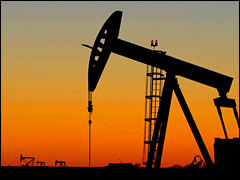
They make messes, but not earthquakes.
Photo: iStockphoto
Given that there are so many dang oil and gas wells (some 700,000 in the U.S. alone), your concern is understandable. But even with so many holes, the planet isn’t in danger of large-scale geologic rockin’ and rollin’. You see, the deepest among the drill holes plunge down about six miles, and the earth’s crust averages some 20 to 40 miles deep on the continents. And while extracting oil — an estimated 1 trillion barrels worldwide so far — can have some geological consequences, they aren’t major. Frankly, pollution from drilling and burning oil and gas is much more of a danger.
Let’s revisit Earth Science class, and remember that earthquakes are caused by the shifting of various tectonic plates that nudge each other and catch on one another and generally play a hefty game of bumper cars, though with billions of tons of rock. Fun! The crashing about causes some 500,000 detectable earthquakes in the world each year, though only about a fifth of them can be felt by humans, and only about 100 of them cause damage.
While the plate drama and other natural geological goings-on are what cause practically all quakes, according to the U.S. Geological Survey, it is possible for humans to cause earthquakes as well. Don’t you feel powerful? This is oil-related, though not directly a result of drilling. USGS says the cause of the few earthquakes triggered by humans “was injection of fluids into deep wells for waste disposal and secondary recovery of oil, and the use of reservoirs for water supplies.” They go on to reassure us that most of these quakes were minor, and that other human activities, even nuclear detonations, have not been linked to earthquake activity. Whew.
Since tsunamis are essentially big water surges caused by earthquakes, and since drilling itself doesn’t cause quakes, tsunamis are one more destructive phenomenon that is beyond drilling’s purview. Tidal waves, as it happens, are caused by the many and varied gravitational interactions between the moon, the sun, and the earth, a force oil companies haven’t been able to mess with — yet.
But here’s a wacky new angle to worry about, if you’re so inclined: While drilling for oil doesn’t cause earthquakes, burning oil — and heating up the planet in the process — just might. As the Canadian Press reported this summer, “A number of geologists say glacial melting due to climate change will unleash pent-up pressures in the Earth’s crust, causing extreme geological events such as earthquakes, tsunamis, and volcanic eruptions.” So, we seem to be on shaky ground after all.
Solidly,
Umbra