On the Brink of Disaster

Report identifies areas where natural disasters could hit hardest 4

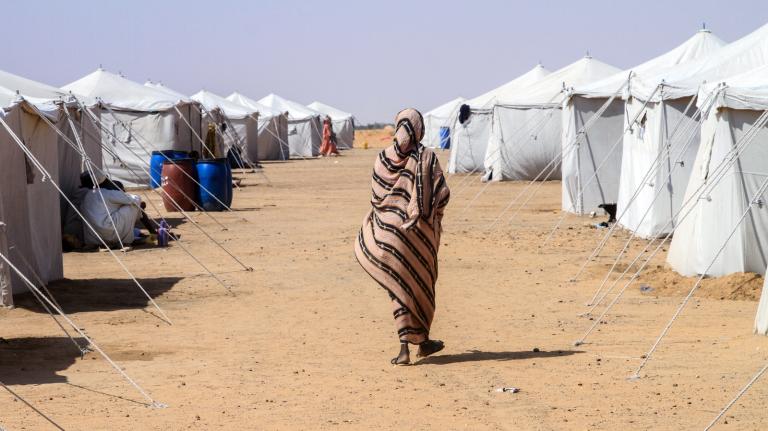
Natural disasters made more severe by climate change will hit especially hard in regions with shaky political, economic, and security situations, says a new report from the United Nations Office for the Coordination of Humanitarian Affairs and relief agency CARE International. Vulnerable areas include central Africa, the Horn of Africa, and the Sahel; Afghanistan, the Caspian region, India, Iran, and Pakistan; and Cambodia, Indonesia, Laos, and Myanmar. "The likelihood of floods, violent storms, and droughts resulting in disasters is determined by a number of factors, including timely access to proper equipment, information, and the capacity to exert political influence," says CARE's Dr. Charles Ehrhart. More frequent and intense extreme-weather events, he notes, "will not necessarily cause a corresponding rise in disasters if world leaders act now." The report recommends that humanitarian groups help strengthen local disaster preparedness and response capacity and focus beyond short-term aid.

Advertisement
Advertisement
  1. meeu Posted 2:49 am
    25 Aug 2008

    Brink of DisasterI wonder if Care International and Dr.Charles Ehrhart have any way to be aware of a potential ready to go way to reduce CO2 as much as turning off all house lights in developed countries? It is the apparent claim of a UC Berkeley grad engineer. It looks reasonable.

    http://hubpages.com/hub/How-To-Really-Do-Something-About- ...
  2. MAD MAC Posted 3:05 am
    25 Aug 2008

    Turn off the lights?"I wonder if Care International and Dr.Charles Ehrhart have any way to be aware of a potential ready to go way to reduce CO2 as much as turning off all house lights in developed countries?"
    Why, do house lights in developed countries burn more electricity than house lights in non-developed countries?
    What's the point in having lights if you are just going to turn them all off?
  3. meeu Posted 4:04 am
    25 Aug 2008

    Turn off Lights?Good questions

    #1 Houselight in developed countries burn more Electricly (mostly COAL).

    Houselights in undeveloped countries probably  burn more oil(kerosene for lamps)diesel for generators for lights.

    #2 The point is only a comparison. If you replace the kerosene burned by lamps you reduce CO2 as much as turning off all lights in deveoped countries. Not intended to slight developing countries. see following.. it is source of my comments.

    http://hubpages.com/hub/How-To-Really-Do-Something-About- ...
  4. MAD MAC Posted 4:44 am
    25 Aug 2008

    Can't speak for them all of courseBut I used to live in a place called Kh'ebri Dehar Ethiopia. The generator they used only ran six hours a day (fuel shortage). It was an old German submarine diesel engine. The thing was ancient. Anyway, we had an electrical engineer come out and look at it with an eye to replacing it. A band new diesel generator in 2004 would have been three times more efficient. The place had great wind and we looked at that as well, but it wasn't really logistically feasible. Anyway, my suspicion is in third world countries (you know, countries that are really not developing even though they're called developing countries) their generators are ancient and grossly inefficient.

Add a Comment

You are not logged in. Thus, you cannot post a comment. If you have an account, log in. If you don't have an account, well, by all means go make one! Meet you back here in five.

Hello, Visitor!    Why not register?

Advertisement