These metropolises aren’t literally the greenest places on earth — they’re not necessarily dense with foliage, for one, and some still have a long way to go down the path to sustainability. But all of the cities on this list deserve recognition for making impressive strides toward eco-friendliness, helping their many millions of residents live better, greener lives. If your favorite green city didn’t make the list, tell us why it deserves recognition in the comments section at the bottom of the page.
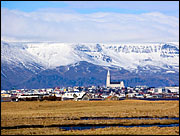

Reykjavik, Iceland
Remember the grade-school memory device “Greenland is icy and Iceland is green”? It’s truer than ever thanks to progress made by Iceland and its capital city in recent years. Reykjavik has been putting hydrogen buses on its streets, and, like the rest of the country, its heat and electricity come entirely from renewable geothermal and hydropower sources and it’s determined to become fossil-fuel-free by 2050. The mayor has pledged to make Reykjavik the cleanest city in Europe. Take that, Greenland.


Portland, Oregon, U.S.
The City of Roses’ approach to urban planning and outdoor spaces has often earned it a spot on lists of the greenest places to live. Portland is the first U.S. city to enact a comprehensive plan to reduce CO2 emissions and has aggressively pushed green building initiatives. It also runs a comprehensive system of light rail, buses, and bike lanes to help keep cars off the roads, and it boasts 92,000 acres of green space and more than 74 miles of hiking, running, and biking trails.


Curitiba, Brazil
With citizens riding a bus system hailed as one of the world’s best and with municipal parks benefiting from the work of a flock of 30 lawn-trimming sheep, this midsized Brazilian city has become a model for other metropolises. About three-quarters of its residents rely on public transport, and the city boasts over 580 square feet of green space per inhabitant. As a result, according to one survey, 99 percent of Curitibans are happy with their hometown.
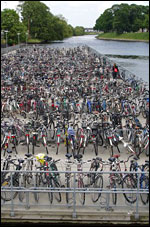

Malmö, Sweden
Known for its extensive parks and green space, Sweden’s third-largest city is a model of sustainable urban development. With the goal of making Malmö an “ekostaden” (eco-city), several neighborhoods have already been transformed using innovative design and are planning to become more socially, environmentally, and economically responsive. Two words, Malmö: organic meatballs.
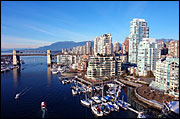

Vancouver, Canada
Its dramatic perch between mountains and sea makes Vancouver a natural draw for nature lovers, and its green accomplishments are nothing to scoff at either. Drawing 90 percent of its power from renewable sources, British Columbia’s biggest city has been a leader in hydroelectric power and is now charting a course to use wind, solar, wave, and tidal energy to significantly reduce fossil-fuel use. The metro area boasts 200 parks and over 18 miles of waterfront, and has developed a way-forward-thinking 100-year plan for sustainability. Assuming civilization will last another 100 years? Priceless.
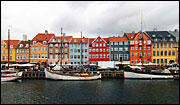

Copenhagen, Denmark
With a big offshore wind farm just beyond its coastline and more people on bikes than you can shake a stick at, Copenhagen is a green dream. The city christened a new metro system in 2000 to make public transit more efficient. And it recently won the European Environmental Management Award for cleaning up public waterways and implementing holistic long-term environmental planning. Plus, the pastries? Divine.
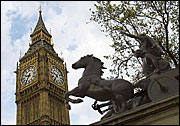

London, England
When Mayor Ken Livingstone unveiled London’s Climate Change Action Plan in February, it was just the latest step in his mission to make his city the world’s greenest. Under the plan, London will switch 25 percent of its power to locally generated, more-efficient sources, cut CO2 emissions by 60 percent within the next 20 years, and offer incentives to residents who improve the energy efficiency of their homes. The city has also set stiff taxes on personal transportation to limit congestion in the central city, hitting SUVs heavily and letting electric vehicles and hybrids off scot-free.
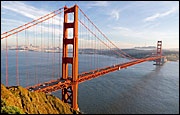

San Francisco, California, U.S.
Nearly half of all ‘Friscans take public transit, walk, or bike each day, and over 17 percent of the city is devoted to parks and green space. San Francisco has also been a leader in green building, with more than 70 projects registered under the U.S. Green Building Council’s LEED certification system. In 2001, San Francisco voters approved a $100 million bond initiative to finance solar panels, energy efficiency, and wind turbines for public facilities. The city has also banned non-recyclable plastic bags and plastic kids’ toys laced with questionable chemicals. Next thing you know, they’ll all be wearing flowers in their hair.
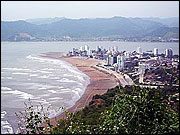

Bahía de Caráquez, Ecuador
After it suffered severe damage from natural disasters in the late 1990s, the Bahía de Caráquez government and nongovernmental organizations working in the area forged a plan to rebuild the city to be more sustainable. Declared an “Ecological City” in 1999, it has since developed programs to protect biodiversity, revegetate denuded areas, and control erosion. The city, which is marketing itself as a destination for eco-tourists, has also begun composting organic waste from public markets and households and supporting organic agriculture and aquaculture.


Sydney, Australia
The Land Down Under was the first country to put the squeeze on inefficient, old-school light bulbs, but Sydney-dwellers took things a step further in March, hosting a city-wide one-hour blackout to raise awareness about global warming. Add to that their quest for carbon neutrality, innovative food-waste disposal program, and new Green Square, and you’ve got a metropolis well on its way to becoming the Emerald City of the Southern Hemisphere.
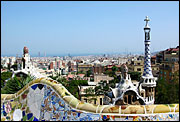

Barcelona, Spain
Hailed for its pedestrian-friendliness (37 percent of all trips are taken on foot!), promotion of solar energy, and innovative parking strategies, Barcelona is creating a new vision for the future in Europe. City leaders’ urban-regeneration plan also includes poverty reduction and investment in neglected areas, demonstrating a holistic view of sustainability.
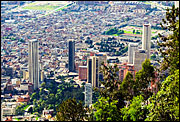

Bogotá, Colombia
In a city known for crime and slums, one mayor led a crusade against cars that has helped to make Bogotá one of the most accessible and sustainable cities in the Western Hemisphere. Enrique Peñalosa, mayor from 1998 to 2001, used his time in office to create a highly efficient bus transit system, reconstruct sidewalks so pedestrians could get around safely, build more than 180 miles of bike trails, and revitalize 1,200 city green spaces. He restricted car use on city streets during rush hour, cutting peak-hour traffic 40 percent, and raised the gas tax. The city also started an annual “car-free day,” and aims to eliminate personal car use during rush hour completely by 2015. Unthinkable!


Bangkok, Thailand
Once known for smokestacks, smog, and that unshakeable ’80s song, Bangkok has big plans for a brighter future. City Governor Apirak Kosayodhin recently announced a five-year green strategy, which includes efforts to recycle citizens’ used cooking oil to make biodiesel, reduce global-warming emissions from vehicles, and make city buildings more efficient. Bangkok has also made notable progress in tackling air pollution over the past decade. Though the city’s pollution levels are still higher than some of its big-city Asian counterparts, its progress thus far is impressive.
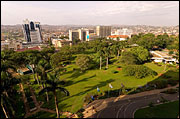

Kampala, Uganda
This capital city is overcoming the challenges faced by many urban areas in developing countries. Originally built on seven hills, Kampala takes pride in its lush surroundings, but it is also plagued by big-city ills of poverty and pollution. Faced with the “problem” of residents farming within city limits, the city passed a set of bylaws supporting urban agriculture that revolutionized not only the local food system, but also the national one, inspiring the Ugandan government to adopt an urban-ag policy of its own. With plans to remove commuter taxis from the streets, establish a traffic-congestion fee, and introduce a comprehensive bus service, Kampala is on its way to becoming a cleaner, safer, more sustainable place to live.
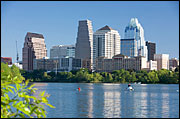

Austin, Texas, U.S.
Austin is poised to become the No. 1 solar manufacturing center in the U.S., and its hometown utility, Austin Energy, has given the notion of pulling power from the sun a Texas-sized embrace. The city is on its way to meeting 20 percent of its electricity needs through the use of renewables and efficiency by 2020. Austin also devotes 15 percent of its land to parks and other open spaces, boasts 32 miles of bike trails, and has an ambitious smart-growth initiative, making it a happy green nook in what’s widely perceived as a not-so-green state. To put it mildly.
Runners-Up

Chicago, Illinois, U.S.
Mayor Richard M. Daley (D) is striving to make his hometown “the greenest city in America.” There’s lots of literal greenery: under his leadership, Chicago has planted 500,000 new trees, invested hundreds of millions of dollars in the revitalization of parks and neighborhoods, and added more than 2 million square feet of rooftop gardens, more than all other U.S. cities combined. And there’s plenty of metaphorical greening too: the Windy City has built some of the most eco-friendly municipal buildings in the country, been a pioneer in municipal renewable-energy standards, provided incentives for homeowners to be more energy efficient, and helped low-income families get solar power.

Freiburg, Germany
Home to the famously car-free Vauban neighborhood and a number of eco-transit innovations, Freiburg is a tourist destination with a green soul. The city has also long embraced solar power.

Seattle, Washington, U.S.
Mayor Greg Nickels (D) has committed his city to meeting the emission-reduction goals of the Kyoto climate treaty, and inspired more than 590 other U.S. mayors to do the same. True to its name, the Emerald City is also planting trees, building green, and benefiting from biodiesel and hybrid buses.
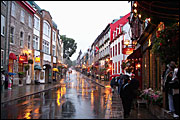
Quebec City, Canada
Dubbed the most sustainable city in Canada by the Corporate Knights Forum, Quebec wins big points for clean water, good waste management, and bike paths aplenty. C’est magnifique!
Kate Sheppard contributed to this list.