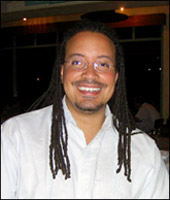
Ludovic Blain.
"The Death of Environmentalism" should be called "The Death of Elite, White, American Environmentalism." A critique of the environmental movement that draws on neither the perspectives nor achievements of the environmental-justice (EJ) movement is, at very best, incomplete. That the DOE interviews and recommendations only focused on white, American male-led environmentalism meant that the fatal flaws of that part of the environmental movement infected the critique itself. These omissions inspire me to paraphrase Sojourner Truth and ask, "Ain't I an environmentalist?"
I was struck by how the piece echoed the National People of Color Environmental Leadership Summits of 1991 and 2003, both of which I attended. (A review of the list of attendees indicates that neither of the report's authors, Michael Shellenberger and Ted Nordhaus, were present at either summit.) Their critique also repeated issues raised in letters that environmental-justice leaders have sent to leaders of white environmental groups since 1990. And yet, the authors have begun to attack the EJ movement, calling it fetishized NIMBY-ism during a panel presentation at Berkeley, while making the contradictory claim that environmental-health issues aren't real concerns in communities of color.
Other aspects of the article were hauntingly right wing-esque. "It's sad to see yet another analysis touting conservative work and ignoring people of color and their legacy of the kind of inclusive, big-picture organizing that the authors recommend," says Makani Themba-Nixon, executive director of the Praxis Project and longtime media-justice advocate. "Perhaps it's too hard to imagine a majority movement where those most affected lead. Instead, analyses like this push communications and mobilizing strategies that invest more resources into the powerful and further marginalize the affected."
The authors offer no hope of life after death beyond their own Apollo Project. (Had people of color written such a critique without any recommendations for action, we would have been called angry black folks. Are Shellenberger and Nordhaus the "angry white men" Rush Limbaugh often talks about?) And despite the authors' demands that the environmental movement broaden itself, they had little if any engagement with the U.S. EJ community or non-American environmentalists. For too long, the concerns and solutions proposed by those constituencies -- and especially by indigenous communities around the world -- have been ignored, scoffed at, and actively campaigned against by elite American environmentalists.
Great White Hopes
As an organizer for the past 15 years, I've seen the delusional nature of many privileged, white male advocates. They really seem to think that rather than expanding the group of thinkers and doers, all that's required for social change is that they improve their own thinking. "One of the things I learned at Harvard is most people there assume they are the best and the brightest," said Frances Kunreuther, director of the Building Movement Project, a New York-based organization dedicated to helping nonprofits create social changes through movement-building strategies. "They actually believe they got there by merit, so power and privilege are never in the equation."
That goes some way toward explaining the support for Nordhaus and Shellenberger, as well as the other contemporary great white hope, George Lakoff. Likewise, there's an adoration akin to worship of now-deceased community organizer Saul Alinsky, at least among predominately white community activists. Dartmouth College professor Michael Dorsey says, "Nordhaus and Shellenberger seem only interested in examining what they can do differently while maintaining their position of power rather than being open to options that require them to share power. Hence their complete silence on racism, sexism, or other realities that reinforce their power and privilege."
For Nordhaus and Shellenberger, environmentalism seems to exist only in the U.S. Nothing could be further from the truth. While elite, white American environmentalism faltered, eco-justice movements in the global south retooled whole cities, like Curitiba, Brazil, and toppled the Bolivian government after it attempted to privatize water resources. Simultaneously, European environmentalists stopped the flow of genetically modified American foods into the European Union. These eco-victories occurred while Americans stood by buying expensive but not worker-friendly organic foods and wondering, "What Would Jesus Drive?"
The Shellenberger and Nordhaus team should have gone on a local-to-global fact-finding mission to learn what robust environmental movements, in communities of color domestically and around the world, can teach and share with elite, white Americans like themselves. They would have learned why the mantra of the World Social Forum is "Another World Is Possible." Possibility exists not because elite, white American environmentalism is failing but because the rest of the world is moving far beyond the practice and even the dreams of those old, failed ways.
Finally, it is remarkable that more than 80 percent of the 25 "environmental leaders" interviewed for "Death of Environmentalism" were men. The report had no gendered critique of the environmental movement. Perhaps female leaders would have brought up the rampant "superhero syndrome" seen in male environmental leaders (amongst many other ills they recognize). By focusing on national leadership and not interviewing EJ or white local environmental leaders, the authors omitted the sectors of the movement where men don't run the show. They should have known better.
It doesn't have to be this way, as some white American male environmentalists have shown. "In contrast to the authors, white men allied with the environmental-justice movement -- such as Luke Cole and Benjamin Goldman -- have spoken and written about challenging the white privilege inherent in the environmental movement," according to Max Weintraub, director of the Environmental Justice and Health Union.
Are Funders DOE's "Sacred Cow"?
I don't know how environmental funders are reexamining their own practices in the wake of "Death." However, the paper was notable for its lack of focus on the funder-driven limitations imposed on environmental (and other social-justice) nonprofits. A 2001 study by professors Daniel Faber and Deborah McCarthy found that less than 5 percent of environmental grant-making supported environmental justice. Furthermore, competition for such funding was stiff, as community-based EJ groups were at a grant-writing disadvantage relative to larger environmental organizations with full-time development staff.
My experience is that environmental funders are already more hands-on than funders in other sectors. As more foundations become operating institutions that carry out programmatic activities rather than fund them, problematic framing, issue choice, and coalition development will be even more concentrated in the hands, and minds, of a few elite, white American men. If funders can only respond to conversations they initiate, then they've set up a closed loop with no feedback -- one that is doomed to fail. In fact, it was interesting that the paper itself wasn't given at a series of town hall meetings, or at an environmental summit, but rather at a funders' meeting. Are funders not only the constituency of the environmental movement but those who seek to criticize it as well?
Reconceptualizing the Environmental Movement
If the boundaries of the environmental movement, as understood by white environmentalists, white funders, and other would-be white allies, are as confined as this piece suggests, then it is indeed time to eulogize the movement, because it won't ever be effective. If these stakeholders won't take serious steps to address the racism that restricts their vision, no other strategic discussions are worth having with them. However, environmental justice leaders are likely to be willing to share strategic restructuring as a secondary aspect to defeating the racial myopia within the movement and its critics.
When I helped create the Northeast Environmental Justice Network, the NYC Environmental Justice Alliance, and several smaller neighborhood groups, I often said that one of the biggest environmental-justice issues was the inordinate influence of rich people's money on politics, and the ongoing nature of structural political, social, and economic disenfranchisement. I remain impressed by the successful efforts of the New York Public Interest Research Group's Straphangers Campaign, which worked together with unions to fight fare increases, rebuild New York's subway system, and make the system safer. These allies included not only transit worker unions, but health-care and other unions for whom increased subway costs would eat away any wage gains they might win.
The entire sustainability movement in the U.S. and abroad has been expanding the scope of environmentalism for over two decades. Redefining Progress, headed by longtime EJ activist Michel Gelobter, has been pioneering crossover policies that serve constituencies far beyond environmentalists. Redefining Progress provided the intellectual underpinning for the Blue-Green Alliance, which, in 1998, united parts of the AFL-CIO and the big environmental groups for a pro-worker approach to clean energy and climate protection. The organization hosts the Environmental Justice and Climate Change Initiative. It works with the Congressional Black and Hispanic Caucuses developing just policies for protecting the planet and raising the incomes of low-income communities. More recently, Redefining Progress and its partners are at the heart of the fight to preserve health care and education in over a dozen states by closing corporate loopholes that allow U.S. energy suppliers to rob states of critical financial resources and jobs.
What's Next?
Funders should have known they'd get a limited view from those two authors. Nonetheless, progressives can use "Death" to address longstanding problems with the lackluster elite, white American environmental movement, its stakeholders, and foundation supporters.
"The fervor that's been built up around this article is an opportunity for those of us struggling for a safe and healthy environment, fighting for a world in which we all have what we need, and organizing for justice to have a conversation about connecting our different movements," said Swati Prakash, environmental-health director at West Harlem Environmental Action.
Hopefully, the authors and the funding community they sought to address are open to a discussion and decision-making process beyond the typical white-American-guys-in-a-room scenario. As an ethical and practical next step, the funders of the "Death" piece should fund a companion report done by EJ activists, along with media experts like Makani Themba-Nixon from the Praxis Project, who understand the role of racism in public policy. The next report should be funded at the same level as the "Death" report, and should be sufficiently resourced to examine a range of issues, at least including how other movements in the U.S. are faring using a values, messenger, and context-based analysis; looking at the lessons that the EJ movement has already offered the white environmental movement and their funders; and spotlighting lessons from abroad, both in the global south as well as Europe, Japan, and other industrialized countries -- all places where environmentalism is far from "dead." And they should be willing to have the report presented at an Environmental Grantmakers Association conference.
However, if this deathly analysis gets colonized, the whole movement -- environmental and environmental justice -- loses a precious opportunity to work together from a place of mutual respect and recognition. Clearly, we all agree that there should be a broader movement. And we did not, as Nordhaus and Shellenberger write, have to go to the conservatives to learn it. We already have a movement positioned to build a multiracial progressive agenda that democratically represents the environmental interests of communities. That's the environmental-justice movement, built by the work of organizers of color.

Comments View as Flat
jdhlax Posted 4:51 pm
31 May 2005
To What Environmentalists Are You Referring
"The environmental movement drew much from the fight for black power and racial justice, but fails to acknowledge its debt..."
Baloney! Dave Foreman (Earth First co-founder) mentioned Dr. Martin Luther King almost every time he spoke. Every environmentalist I've ever worked with discussed how we got our ideas for direct action partially from the civil rights movement.
I'm really sick of the liberal guilt trip being laid on conservationists and other enviros. As I've said before, I and many conservation groups are perfectly willing to work with civil rights and enviro justice groups, so long as there's a quid pro quo. However, we certainly have no obligation to do anything but advocate for wildlife and wilderness, and won't do so unless social justice groups, such as enviro justice groups, advocate for our issues.
Permalink
jcolburn Posted 11:20 pm
31 May 2005
Who You Calling Dead, White Man?
I found this pair of missives curious. Blain and Gelobter both seem to conflate the fact that first-generation environmental activism copied from the civil rights movement with the normative claim that people like Shellenberger or Nordhaus are somehow morally or factually misguided in their pronouncements on the "death" of that form of activism.
If anything, what the two prove in their stories about the EJ community is how fractured the "environmental movement" in America truly is. I think that story is valid and one that more environmental progressives should be hearing these days. When 70% of Americans respond in polling that they are "environmentalists"--given how politically divided the country is--that should tell us something: the term has many different meanings to many different constituencies.
But, politically, the EJ community has very little claim to suburbia's environmental willingness to pay, if you could call it that. Every community (whether it is an issue community or a geographic one) is looking to maximize its own environmental welfare. Suburbia's environmental welfare is very different from that of poorer communities. And it has long been justified by use of the patron saints of preservation and wilderness like Muir--as Rod Nash argued almost 40 years ago. Poorer communities are often quite a bit less well-off and are seeking much more basic amenities like pollution reduction, public health enforcement, etc. What these two communities seek from government, though, is just not the same thing.
So when activists like Blain & Gelobter become indignant toward the Nordhaus and Shellenberger types, all I can think is that the balkanization among voters on the "left" in this country is complete.
Permalink
photokinesis Posted 5:20 am
01 Jun 2005
Is white a color?
Umm...just wondering...does Mr. Blain have anything nice to say about white males? Would it be acceptable in the EJ movement to attack any other group of people with such vehemence? I think not.Surely his gifts for coalition building could be even more effective if offered in a spirit of love. On the other hand, we all got different ways to work out our issues...I'm gonna go cry into my Tempurpedic pillow now.
Permalink
jvermillion Posted 7:48 am
01 Jun 2005
John Muir
John Muir was an angry, obsessed kook who disliked having people on the planet. Here is his opinion in his own words:
"Man is always and everywhere a blight on the landscape." -- John Muir
The developing world needs energy, water, food and medicine -- not anything at all from a misanthropic, 19th century nut.
It will take generations of work on hydroelectric plants, clean water wells, electrification, roads, schools, fertilizers, herbicides, insecticides, vaccinations, modern engineered crops, just to start to help places like Africa. But most of all it will require destroying the terrible corruption and rotten, self serving rulers there who steal most aid money for themselves.
Someday, far in the future, if they survive they will be able to afford environtmentalism as it is practiced in the west. I hope they get that far.
JV
Permalink
mtneuman Posted 8:05 am
01 Jun 2005
Reparation First, then: "The Dream"
I read "The Death..." when it first came out and must say I don't recall any special consideration to the problems remaining for people of color who have been badly discriminated against in the past and, and for those who are still being discriminated against, though not as blatantly so, in the present. In no area of the environment will the growing disparities between Americans of color and "The Haves" be more apparent that in suffering from the ill-effects of global warming.
Global warming will be most devastating to the poor and unhealthy in America. It should be no surprise to anyone that African-Americans score highly in both these areas - unfairly so, of course.
The poor are predicted to suffer more from heat waves which will become more numerous, longer, hotter and more humid (more deadly) with continued global warming. The poor live in housing units without air conditioning, or they can't afford to run the air conditioning even if they have it.
The poor are also most often located in large cities which more commonly experience heat island effects (from excessive levels of heat-absorbing asphalt), which can cause temperatures to rise 10 degrees F. above the temperatures outside the city.
Statistics also show African Americans suffer the most often from asthma conditions, heart attack, stroke and many other ailments related to their environment.
As temperatures increase with continued global warming, air quality will increasingly get worse as well, resulting in more hospitalizations needed for asthmatics and for people with heart, circulation and lung ailments. The warmer temperatures will also contribute to higher ground level ozone levels, which more frequently causes irreparable damage to small African American babies and young children.
It is a fact that African Americans have knowingly paid the unfair price for being different and singled out for living in America for centuries. Although it will not be possible to right any of these wrongs, America still needs to make restitution to its African Americans for the discrimination and injustices the country inflicted upon them as a race of people for so many years. Paying reparations would show them America is still aware of their suffering from the wounds and insults inflicted on their great heritage and ancestry of the past, and that is is well aware of they're having been denied so many economic opportunities over the years, due to ignorance and racial motivations that have been present in the American population and still continue to this very day.
In the city where I live, a petition drive was initiated a couple years ago by a brave leader in the Black community calling on city government to go on record in support of the legislation by Rep. John Conger, which would have authorized a study to look into the feasibility of the federal government paying reparations for slavery. I actively helped with the petition drive because I agreed that America still owes a tremendous debt to African-Americans - for the numerous generations of abuse and confinement.
Environmentalist organizations could be a natural fit in working for the reparations for slavery. After all, all human beings are also part of nature and the environment, and it is our duty to protect them along with other elements of "nature".
Environmentalist organizations have many good, hard working and caring individuals, most of whom are willing (and do) go to the mat for many good causes, including social causes. It is time for environmentalist organization to add reparations for slavery to their list of environmental causes. Just as the harming of the atmosphere and the environment has many long-term negative impacts, so also too has the slavery that was inflicted on the African American population in the past had many long-lasting negative impacts on the African-American population.
It only stands to reason that in order for the traditional environmental organizations (non-Blacks) to gain the cooperation of the African American population in fighting for environmental causes like global warming, they ought first earn that cooperation by supporting reparations for slavery. Only then will it be possible to move forward into fulfilling Dr. Martin Luther Kings Jr. dream - a dream for prosperity, a good education, freedom from discrimination, and justice for races, creeds and nationalities.
After all, are we not all our brother's keepers? Then we best all start reducing our fossil fuel emissions - in driving, flying and using energy in the home.
CONSERVE, NOW! to reduce GHG emissions
http://groups.yahoo.com/group/ClimateArchive/message/229
Permalink
DPW Posted 9:10 am
02 Jun 2005
Soul, Death and Fetish
Diana Pei Wu
02 June 2005
I read Gelobter et al.'s piece "The Soul of Environmentalism" and it resonated deeply with me.
I am one of many environmentalists of color who left the mainstream environmental movement to move into EJ and other social justice or sustainability work that Gelobter et al. reference in their thoughtful and artful response to "The Death".
This happened for several reasons, including the always personal but ultimately structurally sanctioned experience of racism in white liberal-dominated environments.
However, I want to discuss here a different reason that I left mainstream environmental conservation work. This was because of my own experience around the nature of mainstream U.S. and European-led conservation efforts in the international arena.
From the point of view of someone who is descended from people who were on the receiving end of U.S. and Europeans' colonial activities and imperial aspirations in my generations-removed country of descent, China, most international parks and conservation efforts reproduce structural dynamics that are not different from those of the injustices of colonialism. On the ground, those effects are experienced by people as colonial and imperial effects, from the visual similarity of the colonizers (old colonizers wore khaki, pith hats, leather and fleece, new colonizers wear khaki-colored goretex, pith hats, imitation suede and polartec fleece) to the deeply internalized self-hating effects. No surprise that also intimately and necessarily tied are the creation of internal political and economic colonies, and the creation and extraction of wealth for the colonizers, based literally on the backs of poor men and women of color.
As a woman of color I could not stand to see those dynamics reproduced, from the marginalization of Camerounian and Panamanian colleagues to the idea that development for local communities was sufficiently met by the wages we paid our porters: $5 a day, to carry 30 to 40 kilo sacs 30 kilometers through the bush.
If colonialism and imperialism were wrong, then it was wrong to continue to create and reproduce those dynamics. As a person of color in the "post"-colonial world, I expected even the colonizers to act differently. Skin color and language were barriers to those well-meaning white nature-loving biologist and ecologists' abilities to see the people we worked with as fully human.
Finally, a parting shot. Many have already described the substantive ways in which the report fundamentally misses the opportunity to have learned from the dynamic and successful movements for environmental justice and sustainability led by progressive and radical people of color and anti-racist folks in general.
As a Chinese-American woman situated in an area of the country where on a near daily basis I experience the exoticizing fetish of white people for many things Asian, even the very cover of "The Death" warned "northern California white liberal post-hippie men" to me. "Shit," I thought. "They can't talk to any living Asians, never mind Asian Americans, but they sure as hell like to put characters on the fronts of things that they publish and post. They'll use Asian things to say what they want, disguised as some ancient truth, but can't hear the truth from other living breathing human beings." Is this really that different from all the porn sites catering to socially sanctioned desires for fetishing Asian bodies? Both are based on fetish, exoticization of Asia, and based on the silencing of the people who have become objects in someone else's fantastic idea of who they are.
In fact, this falls into another global aspect of racism, tied together with colonialism. It is the often expressed desire to find wisdom in other people who are "from" other places: wise Black men and women in films, wise sayings and proverbs from the Orient on report covers, spices and hallucenogenics that produce wisdom and comfort from Latin America. Not only have the report's authors and producers reproduced the structural and social dynamics of everyday racism in their process and content, they have reproduced its cultural and visual markers in the final physical product. At least the package is complete.
If the fragmentation of the left is complete, perhaps the folks responding on this blog should take the critiques seriously and listen to the noise to understand why.
* * *
"The Soul of Environmentalism" can be read and downloaded at www.soulofenvironmentalism.org
Ludovic Blain's thoughtful piece, "Ain't I an Environmentalist?" is here: http://www.ludovicspeaks.com/socalled_death_of_environmentalism/index.html
"The Death of Environmentalism" can be read here: http://grist.org/news/maindish/2005/01/13/doe-reprint/
Permalink
jdhlax Posted 5:26 pm
03 Jun 2005
Response to jvermillion
John Muir was not only not a kook, he was a hero who is directly responsible for saving large natural areas from people like you who want to destroy (what you call "develop," a grossly misleading term) them.
Re Muir's dislike of humans, my guess is that he was referring to civilized humans, in which case his dislike is shared by everything on the planet with the exception of pets.
Permalink