Biofuel policy will give 'negligible' carbon cuts
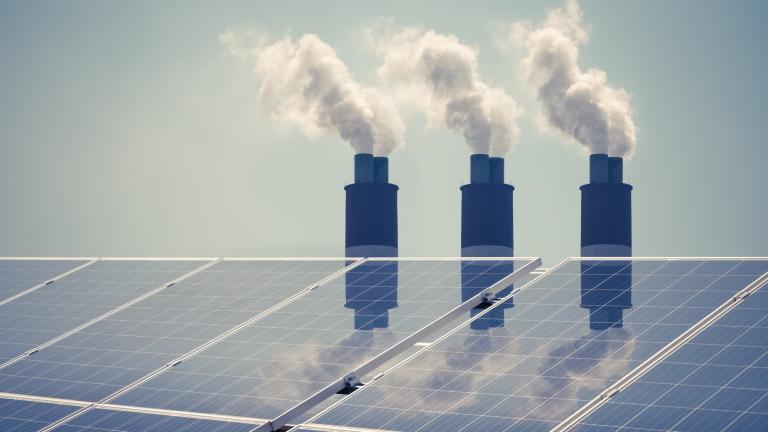
Someone in Europe is finally starting to realize the potential of biofuels to destroy carbon sinks and the biodiversity inside them:
For transport, improving energy efficiency of vehicles should be the first priority. If biofuels are to be part of the energy solution, the EU must ensure that those produced by clearing rainforests and protected habitats [carbon sinks along with associated biodiversity] will never be sold in Europe.
Their rather predictable solution is to put in place a system of "sustainability safeguards." In other words, extend their already moribund bureaucracy in an attempt to insure that all biofuel entering all ports in all of Europe is grown sustainably [without destroying carbon sinks and biodiversity].
It won't work. The reasons it won't work are unending.
Many countries cannot grow more biofuel monocrops without cutting down more rainforest. Producers will simply consume oil grown on razed rainforest domestically, or sell it to countries that don't care how it was grown, and sell that which was grown "sustainably" to biofuel-hungry European importers.
Brazil (PDF), for example, can use existing cow pasture for soybeans to make biodiesel. The displaced cattle ranchers will just clear more rainforest. It will become one giant shell game. Businessmen looking to profit from importing that fuel will look the other way with every opportunity, not because they are evil, but because that is just human nature (a matter of definition maybe). The lumber industry has tried to create sustainability safeguards to protect tropical rainforests. To date, 95% of those forests are protected only on paper.
Biofuels are bad news for biodiversity unless we can find ways to meet demand without using more land.
Comments
View as Threaded
greenstork Posted 6:13 am
12 Jun 2006
The single biggest threat to biodiversity is global warming. Many scientists believe that we are in the midst of a mass extinction:
http://msnbc.msn.com/id/3897120
As it relates to biofuels, biodivesivist spends an inordinate amount of time arguing against them. I am one environmentalist that's just tired of the environmental movement arguing against things. It's this ideology that has made environmentalism/environmentalist a dirty word. There are many benefits to domestic and even imported biofuels, and much promise for the future of our transportation. And of course, there are obvious drawbacks and growing pains along the way. Does that mean biofuels, as a whole, deserve to be constantly demonized? I think not.
In the U.S. and Europe, domestically produced biofuels deserve the support of environmentalists, not the ridicule of the entire industry. A sweeping statement like "biofuels are bad for biodiversity" is a irresponsible generalization, and fails to represent the many sustainable and beneficial biofuel technologies in use today and on the horizon.
Permalink
sunflower Posted 6:35 am
12 Jun 2006
Oh no, I disagree! When we do something to abate global warming it is the job of the environmentalist to note the environmental footprint. If we do damage we should do it with open eyes.
Permalink
greenstork Posted 7:00 am
12 Jun 2006
I'm all for knowing the full story but I am against blanket statements like "biofuels are bad for biodiversity". Biodiversivist tends to present selective facts about imported biofuels and I think it's important to look at the whole picture before demonizing the entire industry.
Permalink
sunflower Posted 7:23 am
12 Jun 2006
Mass extinction accelerates evolution. Does mass extinction increase biodiversity? Will humans diversify and evolve?
Permalink
Almuth Ernsting Posted 7:33 am
12 Jun 2006
Please have a look and send us any comments you might have!
Although we support mandatory regulation of the biofuel market (mandatory, not the voluntary labelling which is all the EU have for the timber market), this does not mean that we support the present EU target for biofuels, in the absence of any evidence that it can be met sustainably.
One important point often lost in the discussion is that this is not about global warming v biodiversity loss from deforestation. Where biofuels are grown at the expense of ancient forests, they are generally linked to much higher greenhouse gas emissions than the petrol or diesel they displace.
Permalink
atreyger Posted 7:38 am
12 Jun 2006
The lumber industry has tried to create sustainability safeguards to protect tropical rainforests. To date, 95% of those forests are protected only on paper.
It seems as if the wording is off. 'Protected' areas are areas that see none to minimal cutting (such as indigenous use). 'Forest management' plans mean a timeline of when, how the harvests are conducted and how regeneration takes place. Sustainable management initiatives in the tropics are conducted by three organizations:
Forest Stewardship Council,
Malaysian Sustainable Forest Certification,
Keurhout Certification (for Dutch importers).
These are it... The guidelines are stringent for FSC (not very familiar with the other two), and a lack of a forest management plan will result in a revokal of the certification. I believe that the writers of the article confused presence of a management plan with the presence of a 'protected' area, such as a nature (p)reserve, which would not need a management plan.
Despite all of this, sustainable forestry (or even exploitative logging) does not damage biodiversity to the level that land-use conversion does. Forest management has a lack of markets for small-to-medium (for example in NE US) and 'poor quality' trees, which are perfect for biomass energy, and to a lesser extent for biodiesel production (although willow biomass has a great conversion rate, about 16:1).
The situation in the tropics might be different, but considering that forestry down there is unlikely to be drastically different (except for crazy growth rates), I believe there is still room for low value wood to be used as fuel.
Biodiversity is an interesting thing: it isn't absolutely necessary for sustainability (although that is still up for debate). However, let's consider the Mayans, who (it seems like) depleted their landscape to the eyes of a conservation biologist during their civilization's time. Less than 2000 years later the region is back to being reforested and back to being 'virgin rainforest'. It's not though.
Let's consider biodiversity from a landscape level: can we only have old-growth forest and maintain beta or gamma biodiversity? Impossible... Can we do it using monocultures? Impossible... But how about a mosaic of different land-use types (Old-growth, even-aged forests, woodlands with no particular purpose, presribed burnings to maintain the oaks, small clearcuts to create openings for shrublands within forests, and shrublands in an agricultural mosaic, as well as early succesional habitat)??? I think now we are talking. If one focuses on only one or two species, then this would be almost bizarre to do. How can we save the spotted owl, when we need the old-growth forests? Well how can we have killdeer, woodcock, or grouse without patch clearcuts in population numbers that are at all meaningful?
There's more to biodiversity than saying we need protected habitat. There needs to be knowledge of what we want from biodiversity, what we want from forest management and what we want for our society.
My conclusion is that biofuels are not inherently bad for biodiversity, especially if you consider the previous comment by Greenstork about climate change. Things can go terribly well or terribly badly, or really really well in one area, while really really badly in another. If we put some thought into it, then we could do it right.
Permalink
amazingdrx Posted 7:42 am
12 Jun 2006
Chris Mathews is such a bonehead he can't even accept hybrids, much less electric cars.
Pretty sad. Mathews: "If we can grow enough biofuels so we don't have to import oil we can stop global warming?" Such delusional nonsense.
Teevee is part of the problem, only internet media can change any of this. Onward!
http://amazngdrx.blogharbor.com/blog
Permalink
ffletcher Posted 8:02 am
12 Jun 2006
When making such strong statements it is clear that the ends justify the means. When on the recieving end of such statements it seems unfair. The term yellow journalism is a term that has been applied to such strong statements for grand standing and profitteering. Overtime such strong statements, that may have been reserved for the yellow form, have entered mainstream journalism. I suspect that people respond to such strong statements more than they respond to the considered and accurately worded ones.
Kind of a dilemma. What was once consider yellow is now becoming green (as in given the green light, or in terms of traffic color signals "go", not the environmental association of the color green).
Permalink
Biodiversivist Posted 8:20 am
13 Jun 2006
You make a lot of good points as always. Managing forests sustainably (whatever that means exactly) would be preferable to converting them to biofuel monocrops of soybeans and palm trees.
I am not advocating that we strive to convert the planet to old growth forests. I side with those biologists and conservationists who just want to see the extinction event stopped whatever that takes. It does not matter why. No argument will change human nature.
Have you read the book 1491? Native Americans had devastated ecosystems where their population centers existed. Some estimates suggest that up to 90% of the Native Americans were killed by novel European diseases. Explorers in the 1600's were walking through forests where cropland and tree farms had existed a century before. Even Lewis and Clark encountered abandoned villages of teepees and bones. The population of the Americas was probably around a hundred million before the crash. We are heading for seven billion in the next decade or so.
I also like your concluding sentence:
If we put some thought into it, then we could do it right.
That's all I'm asking.
Greenstork,
The single biggest threat to biodiversity is global warming.
Precisely. Unless stopped, profit seekers will happily replace rainforest carbon sinks and all the biodiversity they contain with biofuel monocrops to sell to other profit seekers in countries where the governments are trying to stop global warming from destroying rainforests and all the biodiversity they contain.
I am one environmentalist that's just tired of the environmental movement arguing against things.
This post is arguing against replacing rainforest carbon sinks with biofuel monocrops. Surely you do not favor replacing rainforest carbon sinks with biofuel monocrops.
It's this ideology that has made environmentalism/environmentalist a dirty word.
True. Especially to those who would profit from replacing rainforest carbon sinks with biofuel monocrops.
Biofuels are bad for biodiversity.
I think you misquoted me... thrice. I said Biofuels are bad "news" for biodiversity. I realize it is a subtle difference but think of it this way: If a truck is heading your direction, that is bad news. If you don't take action, it is going to hit you and that's just plain bad.
In the U.S. and Europe, domestically produced biofuels deserve the support of environmentalists, not the ridicule of the entire industry.
I am all for biofuel research--the more, the better. Also, keep in mind that the article I referenced was not about domestically produced biofuels. It was about the problems associated with importing biofuels:
The EU goal of replacing 5.75% of fossil fuels with bio-fuels by 2010 would require significant imports from countries like Brazil and Indonesia.
In the end, it all comes down to biodiversity. Help acquire and protect ecological hotspots, give to a conservation organization: http://www.saveourbiodiversity.com
Permalink
greenstork Posted 1:13 pm
13 Jun 2006
Precisely. Unless stopped, profit seekers will happily replace rainforest carbon sinks and all the biodiversity they contain with biofuel monocrops to sell to other profit seekers in countries where the governments are trying to stop global warming from destroying rainforests and all the biodiversity they contain.
To clarify, I believe global warming is a much much bigger threat to biodiversity than biofuels, by an order of magnitude at least. I do not mean that biofuel production, as a response to global warming, is the biggest threat. In fact, I believe that biofuels are a great start to address global warming.
Permalink
caniscandida Posted 8:53 pm
13 Jun 2006
<<Biodiversity is an interesting thing: it isn't absolutely necessary for sustainability (although that is still up for debate).>>
What an astoundingly anthropocentric statement!
It rather reminds me of the report of a speech recently given by the renowned cosmologist Stephen Hawking, laboring amidst unthinkable difficulties in movement and communication. He is said to have said that it is necessary for human beings to leave this planet and establish themselves on other worlds: at first in the Solar System, but much better in other planetary systems around other stars. Disasters are likely to overcome humanity on earth, he is thinking; the only way for humanity to survive is to escape, and find a home elsewhere.
OK, granted, the part about the disasters. But "humanity" has a rather loose meaning, doesn't it, then. So the very few escape on their rocket ships, leaving all the rest of us behind to suffer and die from the catastrophe befalling us: those few have suddenly become "humanity," and we down here, left to die, are somehow no longer "humanity"?
Same thing with this amazing, breath-taking contrast between biodiversity and "sustainability." What does life mean to us, really? What are we prepared to sacrifice, in order to stay alive? How ethically monstrous are we prepared to become?
Permalink
Biodiversivist Posted 12:31 am
14 Jun 2006
In the end, it all comes down to biodiversity. Help acquire and protect ecological hotspots, give to a conservation organization: http://www.saveourbiodiversity.com
Permalink
atreyger Posted 2:00 am
14 Jun 2006
What an astoundingly anthropocentric statement!
What I meant to say was:
Sustainability is a perfectly anthropocentric construct, just like every other word that we use. 'Sustainability' does not exist as a real concept in my (and plenty of others) ecological understanding. If we are trying to actively sustain our culture, civilization and our ecosystems (which everything else depends on), then we might need biodiversity or not. For example, agrarian societies can be sustained indefinetely with reduced biodiversity on their landscape level.
Further, for example, self-sustaining (or ones that are resistant and resilient, somewhat of a different term, but closer to what I actually mean) ecosystems tend to decrease in their biodiversity on the landscape level, barring major disturbances or many small localized ones. So a 'self-sustaining' old-growth forest landscape has lower biodiversity than a landscape which has early, mid, and late successional features, which barring disturbance would be on a trajectory towards old-growth and lower biodiversity.
If we specifically want increased biodiversity, then we want to spend some time actively manipulating landscapes. Otherwise 'sustainable' systems may very well have lower biodiversity. That's what I meant.
Permalink