Back-to-school shopping doesn’t have to be an exercise in conspicuously ungreen consumption. Eco-friendly school supplies made of recycled and organic materials are easier than ever to find. One great place to start shopping is TheGreenOffice.com. And the Center for Health, Environment, and Justice has a handy back-to-school shopping guide that helps you avoid products containing polyvinyl chloride (PVC), a nasty type of plastic.
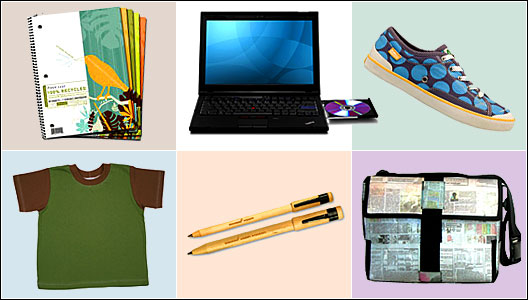
To give you just a taste of what’s out there, we’ve rounded up a few fun, green products:
NewLeaf notebooks.
Notebooks
Ecojot’s happy, whimsical creations use 100 percent postconsumer recycled paper, as do NewLeaf’s notebooks. DolphinBlue’s notepads are chlorine-free in addition to using all postconsumer recycled paper, and Ampad has recycled, chlorine-free binder paper, available from Staples.com. Or you could go “treeless” with EcoPaper’s chlorine-free notebooks made from banana paper.
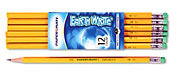
Earthwrite pencils.
Pencils
Paper Mate’s Earthwrite pencils made from reclaimed wood are the write stuff. Or try Zebra’s recycled mechanical pencils, which reuse material from car headlights, CDs, and plastic shopping bags. Plus, mechanical pencils can be refilled instead of landfilled.
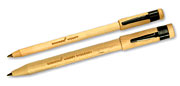
Goodkind Woody pens.
Pens
Goodkind Woody pens are some of the most sustainable out there. Made of recycled wood scraps from forests certified by the Forest Stewardship Council, they contain nontoxic ink and brass ink cartridges with at least 30 percent postconsumer recycled material — and they’re refillable. Pilot’s BeGreen pens are also refillable and contain up to 89 percent recycled material.
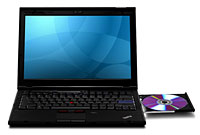
Lenovo Thinkpad X300.
Laptop computers
Like the idea of a green screen? Check out the Green Electronics Council’s online ranking system, which evaluates computers on criteria such as energy conservation, packaging, and elimination of hazardous materials. “Gold” rated laptops include the 13.3-inch Lenovo Thinkpad X300, praised on MetaEfficient’s 2008 list of green notebook computers for its energy efficiency and 90 percent recyclable packaging, as well as the Toshiba Portégé R500, commended for its ultra-low voltage processor. Dell has gotten a lot of buzz for announcing that it’s carbon neutral and aiming to be “the greenest technology company on Earth,” and Dell Precision and Latitude models also make the “gold” ranking. If a green Apple sounds a-peeling, the MacBook Air is mercury- and arsenic-free and gets the “silver” stamp from the Green Electronics Council (and a gold ranking in geek excitement, for what that’s worth). Whichever computer you choose, turn it off every night; using a power strip can make that easier.

Conserve laptop bag.
Backpacks and messenger bags
If recycling is your bag, Vy&Elle make backpacks out of discarded movie billboards, and Simple’s Hangover bag combines recycled plastic toggles and organic cotton. Recycled plastic sacks get hip new life in Conserve’s laptop bag, and recycled tires look deceptively like leather in a messenger bag by Passchal. PVC-free backpacks include Timbuk2’s hemp/PET fabric bag, the People Pak from Fleurville (for younger kids), and Patagonia’s sleek Beeline and Pocketwire Pack bags, made from 47 and 64 percent recycled doubleweave polyester, respectively. Want to use the sun to power your phone? Noon Solar offers swanky, biodegradable solar panel bags and purses, or Reware’s solar Juice Bags are a more affordable, brightly colored option.
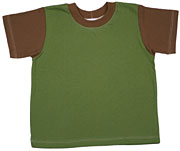
Garden Kids tee.
Clothes
For teens and college students, eurochic retailer H&M has some affordable organic cotton pieces (and all of its clothes are PVC-free), and Target has organic T-shirts and polos. Garden Kids’ clothing for children is organic cotton, and the company pays its workers a fair wage. Pristine Planet sells clothes for both kids and adults made by a variety of greenish companies, and tells you whether particular items are vegan, organic, fair-trade, and/or sweatshop-free. Maggie’s Functional Organics — which has shirts for adults and socks and tights for kids — goes even further, using certified-organic cotton and wool, minimizing packaging, and following a fair-trade business model.
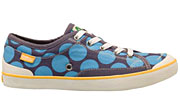
Simple ecoSNEAK.
Shoes
New Balance sneakers are PVC-free, and the company gets the highest rating in Co-op America’s Responsible Shopper guide. Brooks’ Cascadia 2 shoes are hailed as eco-friendly for skipping the petroleum and instead incorporating “green rubber.” Simple’s ecoSNEAKS line for kids, women, and men uses recycled materials like plastic bottles and bike tires. Zappos.com has an eco-friendly shoe section, rounding up products made from hemp, bamboo, organic cotton, or recycled polyester, or that were made in wind-powered factories.
As you go about your back-to-school prep, remember the first rule of green shopping: Ask yourself whether you really need something new at all. You may have plenty of pens, bags, and shoes already — and what you don’t have, you might be able to find in thrift stores. Buying less is always a head-of-the-classy move.