Conservation news is generally depressing, to say the least. Apparently, this has been pointed out to the folks at Mongabay and that is why they came up with the "
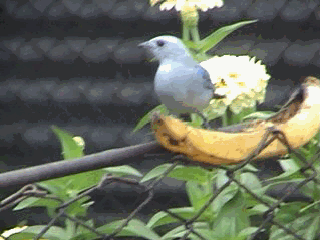 Conservation news is generally depressing, to say the least. Apparently, this has been pointed out to the folks at Mongabay and that is why they came up with the “happy-upbeat environmental news” section for those who just can’t take it anymore. I really enjoyed this story about two Ecuadorian brothers who turned their land into a birder’s paradise rather than a plantation. I know a few birders and they spend most of their vacations looking for new species to cross off their “must see before I die” list. Some are taking it to another level with photos that they can upload to the internet for additional bragging rights.
These two entrepreneurs have learned how to draw the birds out into the open using disemboweled earthworms, which must thrill the socks off visitors. Hummingbird feeders do essentially the same thing, replacing worm guts with sugar water. Hopefully, the food handouts will help the wildlife rather than screw something else up.
The brothers only charge $10 per tourist and never permit more than 15 visitors a day by appointment. This is earning them about $7,000 a year, which is a lot more than they would be getting from farming. It sure beats hunting and I can’t think of a better way to pry money out of the hands of well-off Baby Boomers. That will be a few thousand dollars that won’t go into a sports car or second home and the energy spent traveling there can be viewed as the price paid to preserve a carbon sink.
Studies have consistently shown that many small ecotourism businesses are grossly undercharging for their services. These guys could probably charge something like $300 a day and get away with it. Birders are spending big bucks traveling to exotic destinations just to add birds to their list. The idea that they will only be charged $10 at the end of that journey for a day of guided birding is ridiculous. With more money, these farmers could preserve more land and draw more business, giving their kids a livelihood as well.
There are a growing number of people out there who also want to see reptiles (herpers), and who doesn’t like to see army ants, tarantulas, and scorpions? Go here to see some bad photos from a trip I took back in 2004.
Considering how fast we are destroying biodiversity, anytime we can do something to enhance it, we should. The problem being that we often have no idea what we are doing.
Here is another article where two proud researchers first trapped, then darted, then radio collared a cheetah in Iran. The process will of course be repeated over and over again until their grant money runs out. I recall reading in a book a few years ago about a researcher who trapped Jaguars to study and ended up killing several by accident. Just last week I read about an elephant that was killed while researchers attempted to put a collar on it. Biologists have been known to study their favorite animals to death.