Thirty House Democrats signed
on to a new bill on Thursday that would save Property
Assessed Clean Energy (PACE) programs, which have been under attack
from mortgage giants Fannie Mae and Freddie Mac. PACE is a finance tool that helps homeowners
afford energy-efficiency retrofits and renewable-energy installations.
The PACE Assessment Protection Act of 2010 would force the government-sponsored corporations to adopt standards that support PACE, based on Department of Energy guidelines.
Yet the bill's author, Rep. Mike Thompson of northern California, hopes the legislation persuades Fannie and Freddie to accept a compromise before it's signed into law.
"I think we can do this without legislation, and I think we should do it without legislation," Thompson said in an interview. "PACE does everything from reducing greenhouse-gas emissions to creating jobs to reduce our reliance on traditionally generated energy. This is something that needs to continue. There are hundreds of jobs that have been created by this program."
The finance tool certainly has a lot of friends. It's been backed by $150 million in Department of Energy stimulus funding, the vice president's Middle Class Task Force, 22 state legislatures, governors such as Arnold Schwarzenegger [PDF], and mayors such as Michael Bloomberg [PDF]. California Attorney General Jerry Brown sued Fannie and Freddie yesterday to defend the PACE programs, the largest of which are in California.
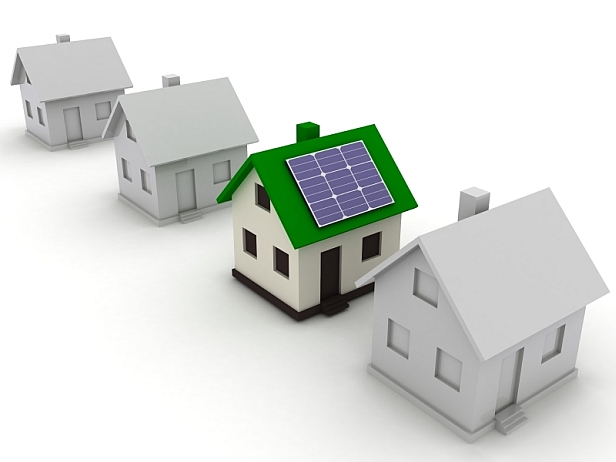
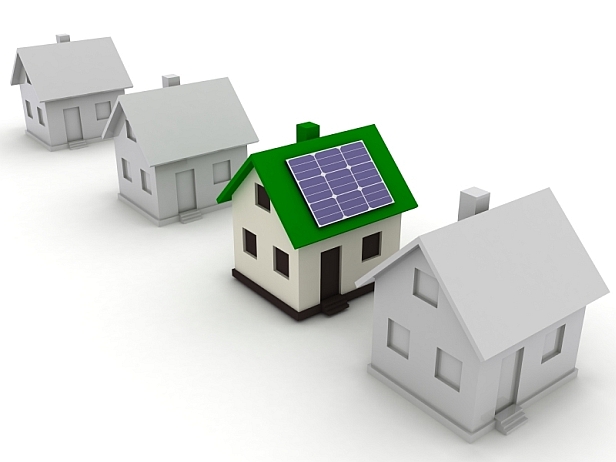
PACE programs let home and business owners pay for rooftop solar arrays, high-efficiency furnaces, insulation, and other improvements through a surcharge on their property tax bills, removing high up-front costs. Fannie and Freddie dislike that those tax assessments have senior lien standing to mortgages, even though analyses and pilot programs have found that energy efficiency and PACE programs can make borrowers more financially secure.
The bill would ban lenders from imposing penalties or stricter criteria on municipalities that use PACE; Fannie and Freddie recently told lenders to do just that. The bill would also prevent lenders from requiring homeowners to pay off assessments before refinancing their mortgages or selling their property.
Thompson said lawmakers and PACE advocates will meet next Tuesday with the Federal Housing Finance Agency, Fannie and Freddie's regulator. He's hopeful they can reach a resolution that lets cities and counties put programs back into action -- which would be much quicker than a lawsuit or passing a bill.
"These guys don't want to pick a fight with Congress," he said of Fannie and Freddie. "There's no value in that. I've been absolutely mystified as to how they've come to the conclusions they've come to, and I'm not sure why they're doing what they're doing. I think they're way off base and I'm hopeful we'll be able to bring them back into this universe."
Cisco DeVries, who designed PACE as chief of staff to the mayor Berkeley three years ago and now runs a company that helps cities and counties set up programs, said the legislation looked to be sound. "The bill looks spot on to us," he said by email.
PACE programs generally focus on cutting energy waste through insulation, leak-sealing, and more efficient furnaces, although some finance rooftop solar and wind as well. More than a third of the nation's carbon dioxide emissions come from buildings, so retrofits are an appealing step in fighting climate change, with the added benefits of creating local jobs and cutting utility bills for property owners.
Thompson said there were no Republican cosponsors of his bill because he hadn't had time to seek them out. More than 15 Republican districts have municipalities using or considering stimulus-funded PACE programs, so it's possible the legislation will pick up Republican support. Rep. Steve Israel (D-N.Y.), a cosponsor of the bill, plans to introduce another measure that would promote PACE and complement Thompson's legislation, an aide said.
Oakland's urban ag scene flourishes amid neglect
Could vegans be wrong on responsible omnivory?
Welcome to the colorful Colorado governor's race 


Comments
Post a Comment +
"[A]nalyses and pilot programs have found that energy efficiency and PACE programs can make borrowers more financially secure."
I'm disappointed to see this mistake made again. The article showed evidence of a strong correlation between ownership of energy-efficient homes and avoidance of foreclosure. But I don't see evidence presented to prove causation. It's possible that homeowners who financed energy improvements were simply more responsible than their socioeconomic peers and were already at reduced risk of foreclosure or financial hardship.
If this were the case, it would explain the strong correlation without the assumption that simply making a home more energy-efficient would make the owner more likely to make poor economic decisions.
I know I have posted on this subject before, many people tend to think I am against this program but I am not. In fact I suspect it will help me sell more solar systems. But I have noticed some serious flaws in the current program as it currently proposed. Those issues became very apparent as F&F made an issue of them. I see two main issues, one dealing with the sale of a mortgaged property, the other on default. All other issues aside, merits, government involvement, poor, oil etc, etc should have no bearing on the program being allowed to proceed unless these two issues are corrected.
I will only address one issue as I have come to understand it. Please feel free to correct me if I am wrong. --- When a home is sold that has PACE financing the loan is not paid off but transferred to the new homeowner.----At first I didn't give it a second thought. But by allowing this opens up a whole new world of abuse. This is exactly why all loans against a home are paid off when it is sold. This forces the person who originated he loan not to gain any more profit than they deserve. This is a tried and true practice. Why change this practice for a particular type of loan? (The reasons are could be innocent or by design for corruption, that is up for speculation. That is similar to a married man going into a hotel room late at night with a woman not his wife. Just don't ever do it and you will never have to defend your good name on that issue.)
The product sold for this ...read more
You can certainly pay off the PACE assessment when the property is sold. There is also the option to transfer it if both parties are willing. It's up to the program guidelines to make sure only real, permanent and cost-effective measures get financing in the first place.
Another misguided, unnecessary, program that is going to cost more than the benefits it creates. If you have good credit, you don't need this program. If you have bad credit, you probably should not be owning a home in the first place. Get ready for more waste, fraud and abuse - the good news is that Fannie and Freddie are actually attempting to be more responsible lenders by fighting this.
solarsam, good points.
The concept that lawmakers could command fannie /freddie to not consider pace is scary.
It sounds unconstitutional or at least against long standing concepts of what a contract is.
The idea that one party of a contract could change the terms against the wishes of the other party. the owner is getting the benefit and putting the cost onto the mortgage holder without any review! It reminds me of forclosure law where the property is found guilty without due process.
In a normal situation, an individual would decide to pay for the improvements themself. If they do it properly it will increase the value of their house(lower energy bills and higher selling price)
the individual would take the risk and get the gains.
If the city or mortgage holder is taking the risk, then the individual has less incentive to be careful with how the money is spent. with this much money available there is incentive for shady operators to try to get the improvements they are selling "approved" for the program.
EVEN IF there is no fraud, it is still much more expensive way to do improvements.
there are places where having something as cheap and effective as a clothesline is ILLEGAL!
If the government is really serious about saving energy then the easy cheap first step is to get rid of laws that ban energy savings such as this.
local governments are already in a huge financial mess. they are expected to do the same job even when there is a huge downturn in the economy and tax revenues.
I was reviewing the financial statements for one the major non-profits in our community yesterday. Both the federal government and the state government have drastically reduced funding to this organization over the past 2 years. Fortunately the local government has stepped up to the plate and filled most of shortfall. From the year ending in '07 to that of '09 Federal funding for this agency that was established in the 1960's has dropped 38%, State funding has dropped 61%, private donations have remained about the same and the Local government has increased it's funding by 30% and now it is the source of over half of the revenue.
Overall funding is down, but not what it could have been. What is the benefit of creating a program that encourages fraud, abuse or just simply elevates the costs when carried out in the normal course of the program and time? Especially if the burden to manage this and the cost of the fraud is absorbed by the local community which has limited resources and may prefer to devote those resources elsewhere?
Private homeowners can already fund this in a traditional way if they are responsible people. This program is targeted especially to the irresponsible and it is doomed to fail from the beginning.
@bc There are many responsible people who I have had attempted to sell solar to, but they are uncomfortable about financing and realizing the value they have added This program provides an avenue for financing they are comfortable with. But what give them comfort is a major financing headache, transferring the loan to the next guy. What really worries them is the "VALUE" of the improvement when the home goes for sale. They aren't yet sold that it will actually increase in value. I have heard it time and time again. The "greening" of a home is too new to show them data. Bath and Kitchen remodels no problem.
@solarsam With cheap electric rates in many places on the mainland (often as low as $0.06 kWh), PV is currently a poor "investment" and may not be creating any economic value at all, just a social one. Our utility rates are now over $0.32 per kWh and with tax credits PV is a break even in 7-8 years in my area - for a system that should last 20+ years, that is a true investment. For PV to really go mainstream on the mainland you would need some type of feed-in-tariff program or a much higher basic utility rate to make this an economic investment that would be worthy of financing.
poor grist, they run these articles in support of PACE, but most of the posts are against it (for financial reasons)
Grist provides an excellent forum for discussion. Facebook has only offered name calling. Maybe GRIST will have article that are more concise as it readers discuss issues. Less bias more factual. I have enjoyed the frankness of it journalist. Through discussions may be we can find solutions that are real and practical. We have many of the same goals but how we can achieve them is debated.