Nuclear nonsense

Stewart Brand’s nuclear enthusiasm falls short on facts and logic 162

Supporting technical details and citations for this post can be found here:  “Four Nuclear Myths” (PDF).
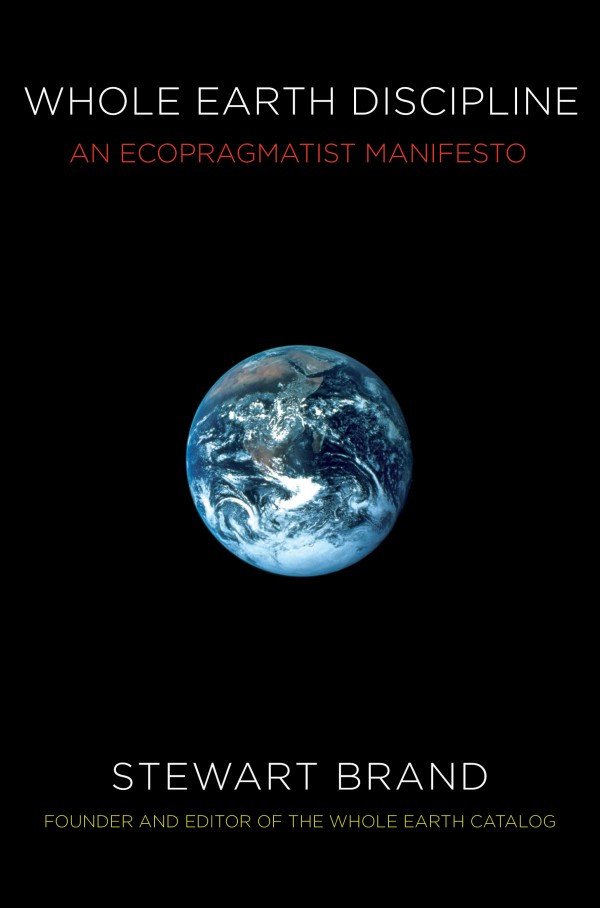
Stewart Brand - Whole Earth DisciplineWhole Earth Discipline, by Stewart Brand (Viking, 2009)I have known Stewart Brand as a friend for many years. I have admired his original and iconoclastic work, which has had significant impact. In his new book, Whole Earth Discipline: an Ecopragmatist Manifesto (Viking), he argues that environmentalists should change their thinking about four issues: population, nuclear power, genetically modified organisms (GMOs), and urbanization. Many people have asked me to assess his 41-page chapter on nuclear power, so I’ll do that here, because I believe its conclusions are greatly mistaken.

Stewart recently predicted that I wouldn’t accept his nuclear reassessment. He is quite right. His nuclear chapter’s facts and logic do not hold up to scrutiny. Over the past few years, I’ve sent him five technical papers focused mainly on nuclear power’s comparative economics and performance. He says he’s read them, and on p. 98 he even summarizes part of their economic thesis. Yet on p. 104 he says, “We Greens are not economists” and disclaims knowledge of economics, saying environmentalists use it only as a weapon to stop projects. Today, most dispassionate analysts think new nuclear power plants’ deepest flaw is their economics. They cost too much to build and incur too much financial risk. My writings show why nuclear expansion therefore can’t deliver on its claims: it would reduce and retard climate protection, because it saves between two and 20 times less carbon per dollar, 20 to 40 times slower, than investing in efficiency and micropower.

That conclusion rests on empirical data about how much new nuclear electricity actually costs relative to decentralized and efficiency competitors, how these alternatives compare in capacity and output added per year, and which can most effectively save carbon. Stewart’s chapter says nothing about any of these questions, but I believe they’re at the heart of the matter. If nuclear power is unneeded, uncompetitive, or ineffective in climate protection, let alone all three, then we need hardly debate whether its safety and waste issues are resolved, as he claims.

In its first half-century, nuclear power fell short of its forecast capacity by about 12-fold in the U.S. and 30-fold worldwide, mainly because building it cost several-fold more than expected, straining or bankrupting its owners. The many causes weren’t dominated by U.S. citizen interventions and lawsuits, since nuclear expectations collapsed similarly in countries without such events; even France suffered a 3.5-fold rise in real capital costs during 1970-2000. Nor did the Three Mile Island accident halt U.S. orders: they’d stopped the previous year. Rather, nuclear’s key challenge was soaring capital cost, and for some units, poor performance. Operational improvements in the ‘90s made the better old reactors relatively cheap to run, but Stewart’s case is for building new ones. Have their economics improved enough to prevent a rerun?

On the contrary, a 2003 MIT study found new U.S. nuclear plants couldn’t compete with new coal- or gas-fired plants. Over the next five years, nuclear construction costs about tripled. Was this due to pricey commodities like steel and concrete? No; those totaled less than one percent of total capital cost. Were citizen activists again to blame? No; they’d been neutralized by streamlined licensing, adverse courts, and Federal “delay insurance.” The key causes seem to be bottlenecked supply chains, atrophied skills, and a weak U.S. dollar—all widening the cost gap between new nuclear power and its potent new competitors.

Today’s main alternatives aren’t limited to giant power plants burning coal or natural gas. Decentralized sources provide from one-sixth to more than half of all electricity in a dozen industrial countries and, together with more efficient use, deliver the majority of the world’s new electrical services. Booming orders did lately raise wind-turbine and photovoltaic prices too, but they’re headed back down as capacity catches up; PVs got one-fourth cheaper just in the past year, and reactor-scale PV farms compete successfully in California power auctions. New U.S. wind farms—“firmed” to provide reliable power even if becalmed—sell electricity at less than typical wholesale prices, or at a third to a half the cost utilities project for new nuclear plants.

Rather than viewing nuclear power within this real-world competitive landscape, Stewart simply waves away its competitors. He praises efficient use of electricity, but rejects it because he says it can’t by itself replace all coal and power all global development. He also dismisses wind and solar power, and omits small hydro, geothermal, waste/biomass combustion, all other renewables, and cogeneration. Yet worldwide these sources make more electricity than nuclear power does, and for the past three years, have won about 10-25 times its market share and added about 20-40 times more capacity each year.

The world in 2008 invested more in renewable power than in fossil-fueled power. Why? Because renewables are cheaper, faster, vaster, equally or more carbon-free, and more attractive to investors. Worldwide, distributed renewables in 2008 added 40 billion watts and got $100 billion of private investment; nuclear added and got zero, despite its far larger subsidies and generally stronger government support. From August 2005 to August 2008, with new subsidies equivalent to 100+% of construction cost and with the most robust nuclear politics and capital markets in history, the 33 proposed U.S. nuclear projects got not a cent of private equity investment.

Nonetheless, Stewart rejects all non-nuclear options, for four fallacious reasons:

  • Baseload: Wind and photovoltaics can’t keep the lights on because they can’t run 24/7.
  • Footprint: Photovoltaics need about 150-175 times, and wind farms from 600+ to nearly 900 times, more land than nuclear power to produce the same electricity.
  • Portfolio: We need every tool for combating climate change, including nuclear power.
  • Government role: The climate imperative trumps economics, so governments everywhere must and will do what France did—ensure that nuclear power gets built, regardless of economics or dissent.

I believe each claim is unsupportable:

Baseload: The electricity system doesn’t rely on any plant’s ability to run continuously; rather, all plants together supply the grid, and the grid serves all loads. That’s necessary because no kind of power plant can run all the time, as Stewart says they must do to meet steady loads. I repeat: there is not and has never been a need for any particular plant or kind of plant to run all the time, and none can. All power plants fail, varying only in their failures’ size, duration, frequency, predictability, and cause. Solar cells’ and windpower’s variation with night and weather is no different from the intermittence of coal and nuclear plants, except that it affects less capacity at once, more briefly, far more predictably, and is no harder and probably easier and cheaper to manage. In short, the ability to serve steady loads is a statistical attribute of all plants on the grid, not an operational requirement for one plant. Variability (predictable failure) and intermittence (unpredictable failure) must be managed by diversifying type and location, forecasting, and integrating with other resources. Utilities do this every day, balancing diverse resources to meet fluctuating demand and offset outages. Even with a largely (or probably a wholly) renewable grid, this is not a significant problem or cost, either in theory or in practice—as illustrated by areas that are already 30-40% wind-powered.

Footprint: Stewart understates nuclear power’s land-use by about 43-fold by omitting all land used by exclusion zones and the nuclear fuel chain. Conversely, he includes the space between wind or solar equipment—unused land commonly used for farming, grazing, wildlife, and recreation. That’s like claiming that two lampposts require a parking lot’s worth of space, even though 99% of the lot is used for parking, driving, and walking. Properly measured, per kilowatt-hour produced, the land made unavailable for other uses is about the same for ground-mounted photovoltaics as for nuclear power, sometimes less—or zero, for building-mounted PVs sufficient to power the world many times over. Land actually used per kWh is up to thousands of times smaller for windpower than for nuclear power. If land-use were an important criterion for picking energy systems, which it’s generally not, it would thus reverse Stewart’s footprint conclusion.

Portfolio: The one paper he cites as proof that we need all energy options (Pacala & Socolow’s “Stabilization Wedges”) actually says the opposite. There is no analytic basis for his conclusion, and there’s strong science to the contrary. We can’t afford to stuff our energy portfolio indiscriminately with some of everything, and we shouldn’t: some options are less worthy and effective than others. The more you fear climate change, the more judiciously you should invest to get the most solution per dollar and per year. Nuclear flunks both these tests.

Government: If nuclear power isn’t needed, worsens climate change (vs. more effective solutions) and energy security, and can’t compete in the marketplace despite uniquely big subsidies—all evidence-based findings unexamined in Stewart’s chapter—then his nuclear imperative evaporates. Of course, a few countries with centrally planned energy systems, mostly with socialized costs, are building reactors: over two-thirds of all nuclear plants under construction are in China, Russia, India, or South Korea. But that’s more because their nuclear bureaucracies dominate national energy policy and face little or no competition in technologies, business models, and ideas. Nuclear power requires such a system. The competitors beating nuclear power thrive in democracies and free markets.

—-

Stewart’s reputation and his valuable prior contributions to clear thinking for a better world may win his nuclear views some attention. Yet judged on its merits, not his history, this nuclear chapter’s assertions can only worsen climate and security risks.


Physicist Amory Lovins is Chairman and Chief Scientist of Rocky Mountain Institute and Chairman Emeritus of Fiberforge, Inc. Published in 29 books and hundreds of papers, he advises governments and major firms worldwide on advanced energy and resource efficiency.

Advertisement
Advertisement
  1. solargroupies's avatar

    solargroupies Posted 8:18 am
    14 Oct 2009

    In the end, the cost of building a nuclear plant will be a pittance compared to the cost of storing and safeguarding radioactive waste for hundreds of centuries! Let's wake up and leave the nuclear lobby in the (radioactive) dust behind us!
    1. Darrin Sideman Posted 1:21 pm
      16 Nov 2009

      May as well start at the top and work downward.

      Rather than offering an unsupported statement about the allegedly ruinous cost of storing and safeguarding spent nuclear fuel and high-level radioactive waste, I will use the DOE's projections. The total lifecycle cost for the Yucca Mountain Project was estimated at approximately $98 billion, all of which would be paid for by ratepayer contributions to the Nuclear Waste Fund, as mandated in the same legislation that mandates the construction of a national repository for nuclear waste at Yucca Mountain, NV (the Nuclear Waste Policy Act, as amended).

      So the suggestion that the cost will be ruinous needs to be put in perspective. If we amortize this $98 billion over the life of the proposed repository, and even if we stipulate a doubling or tripling of the SNF and HLW inventory over that time (as opposed to the statutory limit of 77,000 metric tons set for Yucca Mountain), then we still come out with a reasonable annual cost for multiple deep geologic repositories, met via a proven and equitable funding mechanism.

      Any reprocessing schemes would obviously complicate the matter, but experts seem to agree that some form of deep geologic repository would still be required.

      More to the point, however, is the simple fact that disposition of nuclear waste is an immediate rather than a strictly future problem. "Leaving the nuclear lobby in the (radioactive) dust" may warm the hearts of the anti-nuke crowd, but it fails to address the problem of how we dispose of the waste we have ALREADY GENERATED.

      Like it or not, this problem will not go away, irrespective of the fate of the nuclear industry, and glibly dismissing it in the midst of making an anti-nuke argument generally is frankly irresponsible.

      Several studies, in fact, have pointed out the risks of "punting" this problem on to future generations. Under the current scenario of storage on-site, the various models that stipulate a "catastrophic" breakdown of social institutions in the next century project ruinous environmental consequences in the absence of institutional controls (the safeguards you allude to). By contrast, the deep geologic disposal method would limit these consequences by design. (For example, the Yucca Mountain scheme would remove 77,000 metric tons of waste to one isolated location before century's end. This location happens to be polluted already from the 900 atomic tests carried out at the adjacent Nevada Test Site, and the small water table over which it is situated dead ends in Death Valley. Contrast that to the many nuclear installations storing fuel near every major waterway in the U.S.)
  2. amazingdrx Posted 8:28 am
    14 Oct 2009

    Magnificent! Now will Brand respond? Good move using the old whole earth trademark picture though, hehey.

    With the fall of nuke-you-ler friendly politics (notice that this new administration uses the term "nuclear"), coupled with the cost explosion of nuclear power, this administration's tenure should see the end of new nuclear power in the US.

    Will the industry admit its mistakes and correct them with waste recycling reactors that fit inside the original nuclear facilities? The waste is too dangerous and expensive to even transport to a repository like Yucca Mountain, even if it was a safe site. Dealing with waste and decommisioning old nuclear plants will be a perpetual profit source for the industry, funded by taxpayers.

    Non-competitive fraudulent contracting will most likely continue for centuries. Moving the waste, storing the waste, securing the waste, combing the waste, cleaning the waste..hehehey..virtually forever.
  3. Erik Hoffner's avatar

    Erik Hoffner Posted 9:12 am
    14 Oct 2009

    Agreed on the nuclear idea. Besides their cost, it's their timeline that irks me. If they took less than 15 years to build, then they could maybe be considered as an option if everything else were even. But we don't have 15 or 30 years to wait for lots of nukes to get planned, financed, approved, and built. We need to put those resources into technologies we can deploy tomorrow, like renewables.

    And about the rest of the book: I'm intrigued re: what Brand has to say about population, but accept GMOs? Nah. Why do that? Like nukes, they deliver less than what they promise and for more money. Spawning things like superweeds, which then defeat the technology.

    We can do better with organic methods, biochar, rotation, heirloom breeds, etc. All the things that have always worked, and powered by people, not by corporations.

    Erik, Orion Grassroots Network
  4. Eeli Posted 10:57 am
    14 Oct 2009

    Don't object to nuclear unless you don't want climate change legislation either because, at least right now, you can't get one without the other. http://bit.ly/23UQFb
  5. Henry S Cole's avatar

    Henry S Cole Posted 11:22 am
    14 Oct 2009

    There is another reason why Lovins is right and Brand is wrong. We need to look at a very big economic picture; the dominant global economies (G-20+) are extremely fragile (non-resilient); there are many contributions to this vulnerability including (financial sector too large, hemorrhaging of local economies, consolidation / monopolistic practices in energy, food, finances and banking, over-consumption, privatization of benefits with risks and costs to the public, and of course the end result "too-big-to-fail" and the consolidation of political influence in the hands of the wealthy and powerful. Nuclear power scores badly on each of these points and will increase fragility. For example, where will the profits go? To the community (I doubt it). The only way that nuclear power can succeed is with (a) massive subsidies (with whose money?) and (b) bailouts in the case of financial collapse of a low probability but big consequence accident. With so much capital needed to build a nuclear infrastructure what will be left over for the small, local businesses that provide jobs (credit crunch?). Nuclear power has nothing to do with the kind of holistic solutions we really need to boost locally healthy economies in harmony with nature.
  6. stk's avatar

    stk Posted 11:34 am
    14 Oct 2009

    Amory is cherry picking facts to fit his arguments.

    Here's what the MIT Future of Nuclear report says about cost, for example: "Cost. In deregulated markets, nuclear power is not now cost competitive with coal and natural gas. However, plausible reductions by industry in capital cost, operation and maintenance costs, and construction time could reduce the gap. Carbon emission credits, if enacted by government, can give nuclear power a cost advantage."

    Now you never would have figured that out by reading Amory's post.

    Also, Amory forgets to mention that just about every reasonable renewable expert would disagree with him. At the Aspen Institute Environment Forum in March 2009, one of the attendees pointed out you can't get there without nuclear. None of the renewable experts disagreed. So Amory is not representing the renewable experts. His arguments have not been persuasive.

    The President of MIT told me the same thing: you cannot do it without nuclear.

    Germany found it out the hard way. They banned nuclear. Now they are buying electricity from France...produced by nuclear.

    As for waste, fast reactors such as the Integral Fast Reactor (IFR), turn our existing nuclear waste into an energy asset worth $30 trillion dollars...that's trillion with a "t". The waste from an IFR is very small (just fission products) and they are only dangerous for 300 years...that's easy to sequester. The IFR burns all the transuranics and actinides almost completely. So we can use all the leftover waste from power plants, nuclear weapons, and the depleted uranium...all can be used as fuel in fast reactors.

    The best part is the IFR can be used to replace the coal burner in a coal plant. So you eliminate carbon emissions while lowering operating costs...something CCS will NEVER be able to do. This is the key to stopping global warming...if we don't eliminate coal emissions, we're toast. This is critical, but Amory doesn't even mention or consider this.

    As far as cost, the two newest CANDU reactors at Qinshan (Phase 3) came in under budget and completed 52 days ahead of schedule. The cost was $2,000 per KW, very close to the cost of a coal plant. So don't say it can't be done. The Chinese are doing it today. In fact, they did it 6 years ago! Conveniently, Amory ignores this.
    1. roncastle Posted 12:33 pm
      14 Oct 2009

      What's the radioactive half life of a solar panel?
    2. Zixingche Posted 1:51 pm
      14 Oct 2009

      You are also cherry picking STK:

      1. IFRs don't exist right now and they probably won't happen in the US in the near future. Due to proliferation concerns, the US decided not to pursue them in the past. By the time you could scale these reactors up, it would be way too late to have a real effect on climate change. I could also give you a laundry list of energy sources that sound exciting (Biofuel from algae?) but they are still a long, long way from commercial viability.

      2. Nuclear reactors consistently come in 3-4x over budget and therefore they are not even close to being cost competitive. See this study for a good overview of the economics of nuclear power:
      http://www.nirs.org/neconomics/cooperreport_neconomics062009.pdf
      A lot of the studies that seem to support nuclear power are actually talking about existing reactors or are basing their numbers on projected capital costs that in reality never prove to be accurate.

      3. The number of reactors you would have to build to have an effect on climate change is enormous. Currently, there are around 20 applications for new nuke plants in the US but I would be surprised if of those applications more than 8 actually get built. We are talking somewhere in the hundreds of new nuke plants required to have a measurable effect on climate change. If they are not even being proposed at this point the timeline is at least 20 years until they are generating electricity. Nobody wants nuke plants near them and nobody wants to accept the waste. What is our long-term plan since Yucca Mountain is almost certainly dead in the water.

      4. You cite Chinese reactors coming online ahead of schedule. Is that really a powerful argument? It's China. It's government owned energy - they don't have to have insurance, they don't have to deal with independent inspectors, they don't have to get their plans approved by a large slow-moving bureaucracy. If the government wants something - it will get done. The system in the US is a little different.

      5. The real reason nuclear power is a not a viable solution, as Amory points out, is because it eats up money. It has grown fat off government subsidies in the past and is probably the most heavily subsidized form of energy in this country right now. Yeah, it can give you power with much lower emissions per kilowatt, but the point is that other sources can do that for much cheaper. The whole point is that you can get more bang for your buck with renewables right now so why waste that on nuclear?

      6. "Amory forgets to mention that just about every reasonable renewable expert would disagree with him. At the Aspen Institute Environment Forum in March 2009, one of the attendees pointed out you can't get there without nuclear. None of the renewable experts disagreed. So Amory is not representing the renewable experts." - Is that really your evidence that no renewable experts agree with Amory Lovins? Because of one conference of people who are not experts on nuclear power not disagreeing with one person who points out you can't "get there" without nuclear power?
    3. stk's avatar

      stk Posted 7:03 pm
      14 Oct 2009

      In response to Zixingche's comments:

      1. IFRs don't have to exist tomorrow, but if they can be rolled out en mass in 10 years, they can have an impact. Sure, it would be great if they were here today. But late is better than never. The sooner the better. It took only 1 year to build the EBR-II sodium cooled fast reactor. It ran for 30 years without incident.

      2. Nuclear reactors in Asia however seem to come in on time and on budget consistently. These are massive projects and hard to do. But the success in Asia proves it can be done...if we focus on it.

      3. That's right, the number of 1GWe reactors you have to build is enormous. But there is no alternative. Renewables are not sufficient. Germany is one example where they got rid of nuclear. Result: more coal plants.

      4. The US has in the past been able to do things like the Chinese do now. Liberty ships in WWII were constructed in only 42 days. If Obama and Chu made this a central focus, we are smart enough to do this. As for insurance, that shouldn't be a problem. Today's 3rd generation reactors have a PRA of around 29 million reactor years or about 3 orders of magnitude safer than Gen II designs. So the actual "payout" for accidents is far far less than coal plants, i.e., the true cost of insurance for a nuclear plant should be insignificant compared to a comparably sized coal plant. Just the one coal accident at Kingston is going to cost more than the cleanup costs in the last 50 years for commercial nuclear in the US.

      5. As for subsidies, this is way too long to fit here. See http://www.skirsch.com/politics/globalwarming/ifr.htm and scroll down to the "The "nuclear gets huge subsidies" argument" section and read the whole thing. You'll be surprised.

      6. The Aspen example was merely a proxy for "gather together a set of top renewable experts in a room and ask them." The point is Amory is speaking for a tiny tiny minority.

      We haven't build a new nuclear power plant in the US in 30 years, but it supplies 70% of our carbon-free power. That should tell you something.

      The pie chart at http://bravenewclimate.com/2009/04/11/climbing-mount-improbable/ really says it all. Read the explanation below it.
      1. Atomicrod's avatar

        Atomicrod Posted 1:39 am
        15 Oct 2009

        @STK - slight correction and update on the German nuclear power situation.

        The Germans "said" in 2000 that they were going to shut down their nuclear plants after an average of 30 years of operation. They actually only shut down a couple of their oldest and smallest plants and still have 17 nuclear power plants that provide about 25% of their electricity. A couple of weeks ago, the Germans held an election in which the nuclear phase out was one of the few issues that separated the major contenders. Angela Merkel promised to try to form a coalition that could overturn the phase out plan while her opponent promised to follow through with the plan.

        Merkel won and now the coalition that is being formed is working on the details of a service life extension policy for the remaining nuclear plants. One bit of controversy is what to do with all of the extra profits that the plant owners will be making by selling power from their already fully depreciated plants.

        Along with recent decisions in Sweden, Italy and Belgium, this reversal of a phaseout in Germany means that there are no remaining countries in Europe that have an official policy in place to attempt to provide electricity in the future without using nuclear energy.

        http://online.wsj.com/article/BT-CO-20091014-703772.html

        Rod Adams
        Publisher, Atomic Insights
        Host and producer, The Atomic Show Podcast
    4. Amory Lovins's avatar

      Amory Lovins Posted 7:31 pm
      15 Oct 2009

      I do not cherry-pick facts; I document conclusions to which the preponderance of the evidence clearly points. For example, I correctly summarized the 2003 MIT study as saying “new U.S. nuclear plants couldn’t compete with new coal- or gas-fired plants.” It also said, as STK notes, that nuclear’s cost disadvantage could be reduced if it got much cheaper and faster-to-build (the opposite actually happened), or reversed if carbon were priced high enough (>$100/TC to match coal or >$200/TC to beat expensive gas burned with older technology). The MIT study did not analyze nuclear’s competitiveness with efficiency or decentralized solutions, which, as my article summarizes and its technical backup paper shows, beat any new central plant. STK should examine the excellent economic analysis in the industry-dominated 2007 Keystone Center fact-finding study at http://www.keystone.org/spp/energy/electricity/nuclear-power-dialogue, which painted a much bleaker picture of nuclear economics even before its steep 2007–09 cost escalation.

      Readers deserve more solid proof that “just about every reasonable renewable expert would disagree” with me than STK’s observation that “none of the renewable experts disagreed” when one attendee at a conference claimed “you can’t get there without nuclear.” As a speaker at that event, I can confirm that many unfounded remarks were made by many people without others’ bothering (or being recognized) to demur. The evidence in my backup paper, on the contrary, reflects strong agreement renewable-energy-community alignment with my thesis. Though most renewable energy trade and professional organizations, as a matter of policy, advance renewables without criticizing competitors, they have published extensive scenarios consistent with mine.

      A remark by the President of MIT is similarly no substitute for reasoned and documented analysis. I have offered mine. I hope STK will present his.

      Germany did not “ban nuclear power,” though only 18% of Germans in an April 2009 thought it shouldn’t be abandoned. Germany gets 23% of its electricity from 17 nuclear plants, which by law must be phased out by or before 2021. Germany does buy some French offpeak nuclear electricity, which France sells at a loss to keep its overbuilt reactors busy. But Germany also sold to France in 2008 (with carbon emissions charged to the German account) 19 TWh of costly peak power to help meet the huge electric space-heating load France had stimulated to try to soak up its nuclear surplus. France has become a net importer of German coal power: see http://www.greens-efa.org/cms/topics/dokbin/258/258614.beyond_the_myth@en.pdf and http://www.neimagazine.com/story.asp?storyCode=2053958. France’s per-capita primary energy use exceeds that of Germany. France’s per-capita electricity consumption is 25% above that of Italy, which phased out nuclear energy after Chernobyl, and is 15% above the EU27 average.

      I do not believe the evidence supports STK’s generous claims about hypothetical IFRs, and have summarized why at http://www.rmi.org/sitepages/pid601.php.

      The Qinshan Phase 3 CANDU-6 builder gives at http://www.cnnc.com.cn/tabid/168/Default.aspx a construction cost of ~$1,978/kW. Such claims can’t be evaluated without knowing how the figure is calculated and expressed, what it includes and excludes, and the cost of money. (For example, CANDU owners in Canada traditionally don’t show in their financial accounts the ~$1/W cost of their heavy-water inventory.) MIT, Keystone, and other analysts have examined claims of cheap Korean reactors too, but been unable to satisfy themselves about the transparency and consistency of their accounting basis. The careful cost analyses cited in refs. 4–5 of my technical support paper at http://www.rmi.org/images/PDFs/Energy/2009-09_FourNuclearMyths.pdf include all reliable international data available, reflect the best thinking of experts in the utility, financial, and academic communities, and underlie my findings.
      1. Max8806's avatar

        Max8806 Posted 7:47 pm
        15 Oct 2009

        Amory, summarizing MIT's 2003 report on nuclear power, then saying offhandedly that since then things have gotten worse for nuclear so now it needs $100/tonCO2 to compete with coal... WHILE IGNORING THE 2009 MIT UPDATE TO THAT SAME REPORT that puts coal and nuclear at 8.3 and 8.4 cents/kwh respectively with just a $25/tCO2 price is the definition of cherrypicking.
      2. stk's avatar

        stk Posted 8:04 pm
        15 Oct 2009

        Amory, there are lots of very smart people who disagree with you and have determined that we can't do it without nuclear.

        One side is right, the other side wrong. But which?

        And can we afford to be wrong on this?

        Nope, we can't.

        So if we can do it without nuclear, fine and dandy. We'll have an extra power source in case something goes wrong...like the Atomospheric Brown Cloud making solar a lot more costly, climate change affecting wind patterns, etc.

        Hitting 450 ppm requires us to install about 1 GWe per day of new clean power every single day for the next 25 years. You can also reduce it with negawatts if you want. But we are nowhere near that goal with either new power or negawatts.

        Investing in nuclear in the meantime is a good contingency plan.
      3. Amory Lovins's avatar

        Amory Lovins Posted 2:26 pm
        17 Oct 2009

        Sometimes when I or others see my above posting, it is full of bizarre characters not in my uploaded original. I'll send the original separately to the moderator and ask him kindly to try to repost it without the character translation errors.

        Further on MAX8806's comment about the MIT 2009 update study: it shows 8.4¢ nuclear beats coal under moderate (6.2¢) or high (7.2¢) fuel-price assumptions. Naturally, and consistently with my postings, nuclear could beat coal on these figures if carbon emissions are priced high enough. However, my thesis is that nuclear and coal (and gas) all lose to efficiency and micropower, regardless of carbon price. That is what observed market behavior is telling us loud and clear, as summarized in my technical backup paper.
  7. Max8806's avatar

    Max8806 Posted 12:37 pm
    14 Oct 2009

    Backing up on STK's comments above, the 2009 update to the 2003 MIT Nuclear cost study puts nuclear's levelized cost of electricity at 8.4 c/kwh (2007), relative to 8.3 for coal if a $25/ton Carbon price is assumed. These numbers come with conservative assumptions for nuclear - only 40 year operating life at 85% capacity factor, and with a 10% Weighted Average Cost of Capital- for merchant generation, not loan-guarantee backed or even utility-builds.
    1. solargroupies's avatar

      solargroupies Posted 1:53 pm
      14 Oct 2009

      Please tell us what formula the MIT study used to project the costs of transporting, storing and safeguarding thousands of tons of nuclear waste for 500,000 years?
      1. stk's avatar

        stk Posted 2:30 pm
        14 Oct 2009

        They probably used the assessment amount for the Nuclear Waste Fund. A number of Indian tribes have offered to store the waste for free...so long as they can sell the waste to power fast nuclear reactors. So they make a $30 trillion dollar profit. A pretty good return on their investment.
      2. Max8806's avatar

        Max8806 Posted 2:36 pm
        14 Oct 2009

        Sure thing. MIT explicitly incorporated the one tenth of one cent per KWh that all nuclear plants are charged by the government to fund waste disposal. So far the fund has collected $30 billion dollars, including interest.

        http://www.ocrwm.doe.gov/budget/index.shtml

        Since the government has chosen not to spend the current $22bn balance on constructing the Yucca Mountain Repository, the Nuclear Waste Fund just goes to mitigating our annual deficits that we have to borrow from China to fund.
    2. Amory Lovins's avatar

      Amory Lovins Posted 8:44 pm
      15 Oct 2009

      I think the 2009 MIT update is analytically much inferior to the Keystone study I cite, which the MIT author apparently only skimmed without noting, for example, its important news about the likely demise of nuclear's historically low fuel-cycle costs. The 2009 MIT update is also hard to reconcile with all the recent utility and Wall Street reports on what new reactors would cost, as my cited papers show.
      1. Amory Lovins's avatar

        Amory Lovins Posted 8:53 pm
        15 Oct 2009

        STK, I think you've missed the central point of my argument. We can choose to invest in any combination of efficiency, renewables, cogeneration, nuclear, and other ways to displace carbon emissions. You think nuclear power is a good contingency plan. I think it's a poor one because of all options, it has the best chance -- based on its historic and current market performance and its inherent attributes -- of giving the least carbon displacement per dollar and per year. Its performance gap in these respects is so great that it cannot be bridged by any technology in view or indeed imaginable. The solution you propose would therefore have a high probability of reducing and retarding the climate protection we both want, because time and money spent on one kind of investment cannot also be spent on others. Buying costly, slow solutions instead of cheaper, faster ones makes matters worse. Buying mainly one solution instead of many increases the risk of failure.

        We'll all be eager to hear your reaction to the Jacobson & Delucchi article due out next week in Scientific American on a global renewables scenario (without even relying on efficiency).

        Yes, some very smart people disagree with me, as others do with you. Many smart people have made big mistakes before, individually and collectively. Neither of us is immune to error. That's why truth is best discovered by thorough, honest, and searching dialogue. This works best if we all clearly present our analyses and document our assumptions.
      2. RussellLowes Posted 9:16 pm
        18 Oct 2009

        It was pointed out by STK that the MIT study said that nuclear could become economical, given more support and with carbon pricing. That study was done in 2003, and contained the ridiculous projection that reactors would cost only $1500 per kilowatt of installation. Amory, you said that estimates have tripled since then. However, we have seen estimates as high as $8,800 and $10,000 per kilowatt, much higher than a tripling.

        The MIT study was so skewed toward low nuclear energy costs, that of course it could come up with the conclusion that it could be made competitive.

        The MIT study also called nuclear energy carbon-free. No energy production technique I know of is carbon-free. Even energy efficiency CAN be carbon-free, but many times is not completely carbon-free. The nuclear fuel cycle is full of CO2 emissions. The Sovacool compilation of 103 studies estimated nuclear at 65 grams of CO2 per kilowatt-hour, while wind was estimated at 10-11 grams and solar at 25-75 grams. Nuclear's emissions will skyrocket as ore quality continues to go down. Uranium was at 3000 parts per million in 1980 and today is at 1500 on average, with some projecting 400 by 2040. Much more CO2 will be produced by the mining and milling of uranium as time goes on.

        An interesting recommendation in the MIT study, however, was that since it is much more expensive to do a "closed loop" nuclear cycle, we should not reprocess and should instead only pursue the "once through" option. That means no breeders, French approach, etc.

        With the MIT estimate of plant costs already more than tripling, and with the study calling nukes carbon-free, it is easy to say that this study was extremely biased.

        So, with nuclear cost estimates having more than tripled, and they have not even broken the ground -- you ain't seen nothing yet! The average reactor overrun was well over 200% in the last round ending in the 1980s into the 90s. At the same time coal plant overran at an average of 50%. Nuclear energy is good at one thing -- dominating the energy scene. One of the most important messages you have pointed out over the years is that the nuke option would pull money away from the reasonable options like energy efficiency and renewables.
      3. Atomicrod's avatar

        Atomicrod Posted 1:57 am
        19 Oct 2009

        RussellLowes made the following statement:

        "It was pointed out by STK that the MIT study said that nuclear could become
        economical, given more support and with carbon pricing. That study was done
        in 2003, and contained the ridiculous projection that reactors would cost
        only $1500 per kilowatt of installation. Amory, you said that estimates have
        tripled since then. However, we have seen estimates as high as $8,800 and
        $10,000 per kilowatt, much higher than a tripling. "

        I have pulled out the study from my library of documents. That statement is not true. Page 43 the 2003 MIT study titled "The Future of Nuclear Power" contains a table titled "Base Case Assumptions" that lists nuclear with an overnight cost of $2000 per kilowatt of capacity. It also makes a few additional assumptions that are not computationally favorable to nuclear energy:

        - return on equity investment of 15% for nuclear, but just 12% for gas and coal,
        - finance structure of 50% equity and 50% debt (at 8%) when coal and gas are structured at 40% equity and 60% debt (this assumption yields a significantly higher overall cost of money for nuclear than for coal and gas)
        - coal fuel cost of just $1.20 per million BTU
        - coal fuel cost escalation of just 0.5% per year
        - "high" price gas of $4.50 per million BTU escalating at a "high" assumption of 2.5% per year (there is also a low and moderate case run) (for a gas plant, as much as 93% of the cost of electrical power is the cost of fuel, so the fuel cost assumption is very important for competitive purposes.)
        - economic lifetime for all facilities of just 40 years (most nuclear plants operating in the US today will run for at least 60 years)
        - "high" case nuclear capacity factor of 85% - compared to an average over the entire US fleet of more than 90% for the past five years
        - "high" case coal capacity factor of 85% - which is pretty close to actual experience
        - "high" case CCGT capacity factor of 85% - which is about 2x the reality as measured in the marketplace over the past five years.

        Since gas has already experienced one peak of $13 per million BTU in just the first 5 years after the study was completed, what do you think the probabilities are that it will behave in the manner assumed? Coal prices have also increased much more rapidly than assumed - by the middle of 2008, the average price was well over $2.50 per million BTU on the spot market.

        In these days of spreadsheets, any moderately educated person can make the computations of how much electricity will cost over time once they make their initial assumptions. The key in the accuracy of the projection, however, is in the skill with which the assumptions are made and the closeness with which they approach reality.

        One thing that can be said about nuclear power plant costs is that the have not "tripled" since no one has actually built a plant in more than 30 years. The accounting has not been done so any discussion has to be about estimates. Since the news that we read includes numbers from vendors still engaged in price negotiations, there is at least some justification for assuming that the prices discussed are a bit on the high side. Why would a vendor who does not have a cost plus contract come in with a lower than necessary bid?

        Rod Adams
        Publisher, Atomic Insights
        Host and producer, The Atomic Show Podcast
  8. jb943 Posted 2:18 pm
    14 Oct 2009

    STK and MAX8806 -- Lovins's central point is that nuclear costs more than cheaper, more readily available competitors -- like renewables and micropower. It's not a nuclear vs. coal world no more. If you put a price on carbon, it will help nuclear be more competitive, but it will also make renewables and micropower more competitive, so nuclear still loses. He's not cherry picking facts -- those are big IF's listed in the MIT study. Yes, IF all of those IF's were in place, THEN nuclear would be competitive. Not current reality. What are we arguing for or against anyway? Subsidies? For nuclear? A mature industry? Just put a price on carbon and let the best technologies win.
    1. stk's avatar

      stk Posted 2:28 pm
      14 Oct 2009

      Nuclear doesn't need any subsidies. But we need to make an investment to kick start nuclear in the US. We haven't built a new nuclear plant in the US in 30 years.
    2. Max8806's avatar

      Max8806 Posted 2:56 pm
      14 Oct 2009

      JB943, is it the nuclear advocates or the renewables advocates who want, on top of a price on carbon, a MANDATE that each utility dedicate a certain percentage of their generation portfolio to their technology?

      Is it the nuclear or the renewables advocates who keep pushing for feed-in tariffs for their technology way above market prices?

      Just back of the envelope: a 1.2GW nuclear reactor with a 90% capacity factor would produce about 9,461 Million KWh's in a year. (365 days * 24 hours * 1.2Million KW * .9 Capacity Factor).

      If you assume 5-6 cents per KWh, since large merchant power plants are selling wholesale, that's looking like $473-568Million per year. If you had the crazy opinion that nuclear power deserved the same public support as, say, solar power and offered it a 30 cent tariff (far from the highest available to solar around the world), now that same nuclear plant makes over $2.8 Billion(!) just in its very first year of operation. How expensive would you have to figure the plant to be for those numbers not to sound like a good investment? This is why to maintain that government policy (e.g. subsidies) distorts the market in favor of nuclear relative to renewables is nonsense.
      1. jb943 Posted 5:06 pm
        14 Oct 2009

        Mature was the operative word I was using. A mature industry, like nuclear, should be able to stand on it's own without subsidies. Renewables are a nascent industry and if we want them, they need subsidies -- just like any other industry in the history of industries. Renewables are dropping fast in price, just like you would expect a growing industry to do, and at little risk. I mean, are you really arguing against solar? Investing in solar should be a no-brainer by now -- solar is utilizing the largest power source available to us, a nuclear plant remotely located 93 million miles away. If nuclear in the US needs an "investment" to get started again, a second chance if you will, and it truly is all you claim it is, then it should be able to attract private investment capital, no problem -- but it hasn't done so because it doesn't hold up under scrutiny...as far as I know. I don't think it would be wise to have that investment risk fall on taxpayer shoulders.
      2. Zixingche Posted 5:24 pm
        14 Oct 2009

        Rod-

        If nuclear power is such a good investment then how come they haven't been built in the last 30 years?
        You don't have to take our word for it.

        Nuclear power has been around for over 50 years. In that time it has received unprecedented support from the government. We wouldn't have ever had nuclear power had it not had the protection of the Price Anderson Act way back when, which to this day provides an unprecedented amount of protection for the nuclear industry. Not to mention the billions thrown into R&D, the creation of an entire government agency to oversee nuclear power (NRC, formerly AEC), and the handouts of around $13 billion in the 2005 energy bill. And, after all of that, it's obvious that nuclear power is STILL not competitive since there have been no new plants in the last 30 years.

        Let's give renewables the same level of support and then let them compete.
      3. stk's avatar

        stk Posted 7:06 pm
        14 Oct 2009

        Zixingche: regarding subsidies, see http://www.skirsch.com/politics/globalwarming/ifr.htm and scroll down to the "The "nuclear gets huge subsidies" argument" section and read the whole thing. You'll be surprised.
  9. Henry S Cole's avatar

    Henry S Cole Posted 2:50 pm
    14 Oct 2009

    To: STK

    Could you please tell us: Why you think that nukes have not been built in the past 30 years? A lot of money has been invested in all kinds of things, why not nuclear?

    When you say kick start, what kind of kick start? How big an investment? Who pays?
    1. stk's avatar

      stk Posted 7:22 pm
      14 Oct 2009

      I've heard that the combination of Three Mile Island + the China Syndrome + activists soured people on nuclear. A lot has changed since then.

      In 1971, Nixon made the fast reactor a national priority. Congress and the AEC agreed. In 1994, Clinton cancelled it.

      GE has a fast reactor design based on the IFR known as the PRISM ready to go.

      But we need a sea change at the top to change this.

      Global warming and nuclear waste is causing that sea change.

      Senator John Kerry, who led the unsuccessful fight in the Senate to kill the IFR, is now a proponent of nuclear. I asked one of his staffers about the change of heart. "He's in a different place today."

      Indeed, if global warming weren't a problem, we wouldn't be having this discussion.

      But the IFR is a great technology, even without nuclear waste and global warming driving its resurrection. It has the promise of unlimited clean cheap BASELOAD energy with minimal waste.
      1. igmuska's avatar

        igmuska Posted 9:06 pm
        23 Oct 2009

        Nuclear is not cheap, it will not decrease global warming, but somehow pro-nuclear shills such as yourself delude yourself into thinking so.
        From my uneducated perspective, both the "pro and con" nuclear groups were busy playing paper ping-pong until Al Gore proclaimed "Global Warming" then somehow nuclear energy ramped up its efforts to insert itself into the American psyche as the solution. Yet this lingering doubt remains, if nuclear energy is so safe, if nuclear energy is so cheap; why then does the nuclear energy need Global Warming to sell itself? What were they doing prior to the Global Warming theory?
      2. Des Emery Posted 7:48 pm
        24 Oct 2009

        Igmuska - Nuclear power generating electricity can definitely delay AGW if not actually prevent it from occurring. Replacing any amount of fossil fuel is a good thing. Al Gore, his movie, his Oscar simply made more people aware of the problem which nuclear advocates had been trying to push for years. It's like the H1N1 flu controversy now. The killer virus was identified months ago but no one paid much attention ("It's just the Mexicans' problem") until today when Obama declared it to be a national emergency, and there isn't enough vaccine to go around.
      3. igmuska's avatar

        igmuska Posted 2:06 am
        25 Oct 2009

        Ah, another Texas sharpshooter, straining at a gnat and swallowing a camel. Here is the stark reality, while the nuclear industry is spinning its wheels, trying to force its way through Congress, the wind and solar industry is making very real and significant headway in establishing itself as a viable electricity source. The moment they improve the national power distribution grid, wind energy will win the hearts and minds of Congress.
        Perhaps if the nuclear energy industry, i.e., NUSTART, didn't mention Global Warming or compete against itself, it may have at least built one new plant, but their martketing strategy was built on the false assumption that the public is stupid and ignorant so they messed up that opportunity. But since they didn't build any new plants prior to the Global Warming Proclamation, this can only indicate they have a very faulty planning and development process. They failed to fully realize the potentials of the Internet because of promises made by NEI and its shills.
        As you are probably aware, there is a Rising Tide of a public supporting the notion that the people own the power, that corporate private ownership is a very bad thing that could bankrupt this country and sell our energy policy to foreigners which is a very unpatriotic action bordering on treason-people are not dumb and for its shills to throw massive quantities of technical jargon at people just shows how desperate nuclear energy is for endearing itself to the people.
        And perhaps it might be better for the pro-nuclear shills discussing everything else in this topic to give us reasons why they support Stewart Brand, rather than their current discussion on nuclear energy-it is getting boring and is a hijack of this wonderful topic on Stewart Brand. Besides I've read all this pro-nuclear technical jargon, it does nothing except turn off people, the very people the nuclear energy industry needs to sells it poisonous electricity.
      4. TomBlees Posted 3:29 pm
        25 Oct 2009

        Igmuska, just because some people disagree with you about nuclear power doesn't mean they're shills for the nuclear industry. I happen to know some of these commenters and none of them have any connection to the nuclear power industry, nor do I. Your emotional and vituperative rants certainly don't add any light to the discussion, tossing around accusations of treason and such ridiculousness. Some people are serious about finding viable solutions to the climate and energy crises. You don't seem to be one of them.
    2. Atomicrod's avatar

      Atomicrod Posted 1:02 am
      15 Oct 2009

      Henry - there are a lot of complex reasons why US utilities have avoided nuclear power plant construction projects for the past 30 years. Many of those same reasons apply to large coal fired power plant construction projects, which have also been pretty rare for the past 30 years.

      Part of the reason is that the rate in electric power demand growth slowed considerably in the 1970s from its historic trend of about 7% per year for the entire period between the end of World War II and the Arab Oil Embargo of 1973. Utilities suddenly had more capacity in operation and under construction than needed.

      The existing nuclear plants are producing about 275 Billion kilowatt-hours more each year than they did in 1990 when the first wave of construction projects were completed. That is roughly the output of about 30 gigawatt class power plants operating 24 x 365. That has also mitigated the need to build large, capital intensive projects.

      From 1990-2004, utilities could make the easy decision to simply build new gas fired power stations as new capacity was needed. Methane extraction companies have convinced environmentalists and consumers that "natural" gas is "clean", but most importantly for utility decision makers it was also cheap (less than $3.00 per million BTU for that period) and they had convinced their PUC's to allow them to directly pass the cost of fuel directly to consumers. The vast majority of monopoly utilities were not exposed to any financial risk for rapid fuel price increases.

      That situation has changed. There is now one brand new unit under construction at Georgia Power's Plant Vogtle site (no safety grade concrete has been poured, but the earth is being moved), at least 4 EPC (engineering, procurement, construction) contracts in effect, and 17 license applications in progress at the NRC - each of which requires the investment by the applicant of $257 for every hour that the Commission staff spends in the review process.

      There are also at least 6 vendors that have announced small and medium sized reactor products ranging from 25 MWe - 330 MWe. Two of those vendors are funded by venture capitalists. There is also a very interesting company named TerraPower that is funded by Bill Gates that is working on something called a traveling wave reactor that could operate for several decades without any new fuel.

      We live in exciting nuclear times. Lovins is way out of date. Perhaps he should go back to school and actually complete a course of study; the business of anti-nuclear activism may be getting less lucrative in the near future. I could be wrong about that - the fossil fuel industry might spend even more money than it has for the past four decades trying to keep its nuclear competition tied up in knots like Gulliver in the land of the Lilliputians.

      Rod Adams
      Publisher, Atomic Insights
      Host and producer, The Atomic Show Podcast
  10. Tasermons Partner Posted 3:40 pm
    14 Oct 2009

    Hasn't anyone noticed that nuclear plants aren't renewable?

    More troublesome, hasn't anyone noticed that we now import the vast majority of our uranium (60 million pounds imported, versus about 4 million domestic)?

    And that uranium, a relatively rare element, has skyrocketed in price?

    What good is gettin' off the oil and coal roller coasters of pricing if we just switch it with uranium?

    Exchange Saudi oil sheiks for Russian mineral and mining czars?

    Also, despite that their has been no new plants in the US for 30 years, the amount of uranium being feed into the current plants has increased significantly, from less than 35 million pounds in 1990, to more than 50 million pounds last year.

    Doesn't this indicate that the amount of uranium a plant needs over time dramatically increases, even if power output remains relatively unchanged?

    And thus, wouldn't uranium reserves run out faster with more units online, and drive the up the price of uranium, thus driving up operating costs even more?
    1. Max8806's avatar

      Max8806 Posted 4:28 pm
      14 Oct 2009

      "Hasn't anyone noticed that nuclear plants aren't renewable?"
      So what? Corn ethanol is clearly "renewable," but its not sustainable and its terrible for the environment and people everywhere who like to eat. Nuclear energy is sustainable, inexhaustible, and carbon-free, which is what counts.

      "Exchange Saudi oil sheiks for Russian mineral and mining czars?"
      Global Uranium Supply is produced largely by allies. (see table)
      http://www.world-nuclear.org/info/inf23.html

      "Doesn't this indicate that the amount of uranium a plant needs over time dramatically increases, even if power output remains relatively unchanged?"
      No, power output has dramatically increased, due to increased capacity factors (less downtime) and power uprates. This is why nuclear's share of US electricity generation has remained pretty stable at around 20% for the past 20 years without new plants coming online.
      http://www.eia.doe.gov/emeu/aer/pdf/pages/sec9_5.pdf
      1. Tasermons Partner Posted 4:48 pm
        14 Oct 2009

        Just how is nuclear energy sustainable and inexhaustible?

        There's only a fixed amount of uranium, and every year we use more and more of it. Aside from hypothetical and non-existant,(and not in any current plans) plants which would recycle some of their fuel, I don't see how it's sustainable.

        And even if the power output from the current plants may have increased, they had to use more uranium to do it. So whatever "efficiency" factors they've used, it hasn't translated to savings or reductions on the supply end.

        And as the known supplies are depleted more rapidly, wouldn't the cost of fuel increase?

        Also, if the current on-line plants are producing more energy, wouldn't that mitigate the need for new plants?
    2. stk's avatar

      stk Posted 7:15 pm
      14 Oct 2009

      http://en.wikipedia.org/wiki/Uranium_depletion covers uranium depletion.

      The current gen II reactors are dead ends. I've seen numbers estimating 25 to 100 years.

      But fast reactors are a totally different story entirely. The big difference is they are so efficient that the price of fuel can go up by 100 times and it's still economical.

      But even if you don't believe that, the undeniable fact is that JUST in the DU on-hand in the US, we can power the entire country for over 1,500 years.

      That's just the DU...it doesn't include any nuclear waste or plutonium from weapons.

      And it gets even better because fast reactors can pretty much use any actinide.

      But even if we limit ourselves JUST to uranium, the sun will burn us alive before we run out of fuel.

      But ONLY if we have IFRs or a similar fast reactor technology plus pyroprocessing.
    3. Atomicrod's avatar

      Atomicrod Posted 12:35 am
      15 Oct 2009

      Tasermons Partner wrote - "And that uranium, a relatively rare element, has skyrocketed in price."

      First of all, uranium is more common than tin.

      The price of uranium, according to Ux Consulting (http://bit.ly/1Bh0i8) is currently $45.00 per pound in the United States. That is almost exactly the same price as it was during the period from 1977-1982, when oil ranged in price from $15-40.00 per barrel.

      At $45.00 per pound for natural uranium, the fuel cost for currently operated reactors is approximately 0.5 cents per kilowatt hour including all enrichment, conversion, and fabrication costs. In comparison, the fuel cost for a plant burning today's "cheap and abundant" natural gas is about 3.4 cents per kilowatt hour. (Bloomberg reports that the spot price for natural gas is about $4.55 per million BTU and an efficient gas plant needs 7500 BTU to produce a kilowatt hour.)

      Even if uranium prices increased by a factor of ten, the finished cost of nuclear fuel would still be less than the cost of natural gas and the plants using nuclear fuel would be dumping nearly zero pollution (roughly 40 grams per kilowatt hour for the entire fuel cycle) into the environment while the gas plants will emit about 600 grams of CO2 per kilowatt hour at the plant, plus another unknown quantity through the rest of the discovery, extraction and transportation part of the fuel cycle.

      Rod Adams
      Publisher, Atomic Insights
      Host and producer, The Atomic Show Podcast
      1. Tasermons Partner Posted 10:48 pm
        15 Oct 2009

        That's very misleading.

        Yes, uranium is common, and I guess I should've been more specific-uranium that's readily accessible and of the proper quality/grade to be used in power plants isn't that common.

        Also, your assertion that uranium prices now are just as much as in the 70's is also correct, but you "forgot" to say that there was a huge price spiked in the 70's (due to the Cold War, amongst other things) and then went lower in the 80's before they spiked back up again...only this time market fundamentals don't seem to support another downward trend in pricing later. Look at the average pricing since the 50's (inflation adjusted) and you'll see the general upward trend, with a large spike in the 2000's.
  11. Atomicrod's avatar

    Atomicrod Posted 4:51 pm
    14 Oct 2009

    Once again, I have had the "pleasure" of reading a recycled work about the economics of nuclear energy produced by the hand of a man who made the following comment about his career experience while talking with Amy Goodman on the July 18, 2008 edition of Democracy Now!

    "You know, I’ve worked for major oil companies for about thirty-five years, and they understand how expensive it is to drill for oil."

    I have a hard time trusting the economic figures provided by someone who has spent his career working for a competitor to nuclear energy.

    (Disclosure - I have a vested interest in the continued construction and operation of nuclear energy plants as a former Navy nuclear engineer officer, as the founder of Adams Atomic Engines, Inc. and as a publisher of an atomic energy focused blog and podcast.)

    There will be some who will point out that the US burns very little oil in our electric power plants today, but what they will fail to mention is that as late as 1978, when our nuclear plants were just coming on line and provided about 12% of our total electrical power generation (and rising fast - that figure was up from less than 1% just 10 years earlier), oil burning power plants still provided as much as 17% of the electrical power used in the United States. http://www.eia.doe.gov/emeu/aer/txt/ptb0802a.html

    Oil burning power plants also provided more than half of the electricity consumed in France, a significant portion of the electricity used in Korea, and a major chunk of the electricity used in Japan. In each of those markets, as nuclear fission's market share grew, it reduced the consumption of oil for power generation, helping to provide low oil prices for more than 15 years between 1985 and 2000. The most important determination of price for commodities like oil, gas and coal is the balance between supply and demand - the completely new supply provided by nuclear fission power plants and nuclear powered naval ships that replaced oil burning power plants had a substantial effect on the overall supply of useful energy.

    Lovins and many of the commenters here dismiss the current performance of the existing nuclear plants here in the US, but I am old enough to remember that Lovins told us in the 1970s that nuclear plants were incredibly expensive and should not be built.

    Now those plants he fought are paid off, have several decades worth of life left in them and produce power for an average cost of 1.8 cents per kilowatt hour, generating hundreds of millions in profits for the investor owned utilities in competitively priced markets while keeping electricity prices low for consumers in those markets that are still under cost of service regulation.

    Last week there were two major meetings in Washington that also demonstrated that Lovins is either a liar or misinformed when he says that all nuclear plants are large and capital intensive projects or that no private money is being invested in the technology. One was a meeting held by the Center for Strategic and International Studies titled "Scaling Down Reactors: A Different Model for Nuclear Energy" (http://bit.ly/4b1gSI) and one was a workshop hosted by the Nuclear Regulatory Commission on the topic of licensing issues for small and medium sized reactors. (http://bit.ly/3jIXyQ)

    Each of the meetings was well attended and included representatives from at least 6 American companies that are investing private money into near-term projects that will result in the construction of reactors in the 25-300 MWe power range within the next 10 years. Some may be generating power within the next 5-6 years at a cost that is lower and far more predictable than wind and solar. Those moderately sized nuclear plants will also produce an infinitely lower level of emissions than the fossil powered "micropower" that Lovins and his employers love to sell.

    Look closely at the plants that get included in Lovins's category of "micropower" and you will find an awful lot of diesel, coal, and natural gas being consumed as the fuel source.

    Rod Adams
    Publisher, Atomic Insights
    Host and producer, The Atomic Show Podcast
    1. Amory Lovins's avatar

      Amory Lovins Posted 8:37 pm
      15 Oct 2009

      Rod Adams’s opening shot may merit an observation beyond the obvious one that ad hominem is a logical fallacy. Yes, over the past 36 years I have worked for oil companies, as well as for gas companies, coal companies, scores of utilities (many of them nuclear operators), nuclear and electric equipment vendors, and practically every other sector of the energy industries. (That consultancy is provided by my employer, the nonprofit Rocky Mountain Institute, and its fees go to RMI, not to me.) I do not think this experience disqualifies me from expressing independent opinions about any energy technology. Indeed, if I lacked this extensive background, Mr. Adams would probably criticize that too. I would certainly not suggest that his own nuclear background disqualifies him from commenting on anything he likes. Readers can judge his understanding against the evidence presented by others such as myself.

      My well-known independence of client interests is illustrated by my team’s 2004 Pentagon-cosponsored study Winning the Oil Endgame (free at move.rmi.org/oilendgame). Its Forewords are by George Shultz (former Secretary of State, Chairman of Bechtel, etc.) and Sir Mark Moody-Stuart, former Chairman of Royal Dutch/Shell Group. Its content is a detailed roadmap for getting the U.S. completely off oil by the 2040s, led by business for profit. RMI has made gratifying progress with implementing that strategy through institutional acupuncture, as summarized at http://www.rmi.org/sitepages/pid469.php.

      In any event, oil produces less than 2% of U.S. electricity, and less than 2% of U.S. electricity is made from oil. (The global figures were 7% a few years ago and are probably lower now.) Nearly all the oil so used is resid (the gooey bottom of the barrel) unsuited to making distillate products. I can’t think of anyone who’s building new oil-fired condensing power plants, although France recently had to take 2.6 GW of old oil-fired plants out of mothballs to meet its nuclear-overbuilding-induced peak loads, mentioned above in my post responding to STK.

      As a student of nuclear power for over 40 years, I understand and respect its culture, and am delighted that in the past few years my organization has hired three excellent nuclear engineers retired from the U.S. Navy. I do not “dismiss the current performance of the existing nuclear plants here in the US,” but on the contrary specifically credit the industry’s impressive operational improvements on p. 6 of my cited backup paper at http://www.rmi.org/images/PDFs/Energy/2009-09_FourNuclearMyths.pdf.

      Mr. Adams says two recent meetings in which 25–300-MWe reactors were proposed have “demonstrated that Lovins is either a liar or misinformed when he says that all nuclear plants are large and capital intensive projects or that no private money is being invested in the technology.” What I actually wrote was in the former case about existing and under-construction plants, and in the latter case that those projects had attracted no equity investments. If Mr. Adams has evidence that either statement is untrue, I would like to see it.

      I knew that some startup companies are spending their investors’ money trying to develop other kinds of reactors. My spring 2009 RMI Solutions Journal article at http://www.rmi.org/sitepages/pid601.php, ref. 6 of my cited backup paper, explained why I think those investments are likely to disappoint. The proposal for a Toshiba mini-reactor in Galena, Alaska, was also analyzed in my reply to the World Nuclear Association’s Ian Hore-Lacy’s critique of my Dec. 2005 Nuclear Engineering International article “Mighty Mice”; this exchange unfortunately seems to have been taken down from http://www.neimagazine.com/comments.asp?sc=2033302, cited in ref. 1 of my backup paper, but doubtless Mr. Adams has the magazine.

      Mr. Adams’s claim about “an awful lot of diesel, coal, and natural gas” being consumed by micropower is addressed in Part One of my response to David Bradish’s post at http://neinuclearnotes.blogspot.com/2008/06/amory-lovins-and-his-nuclear-illusion_05.html. Mr. Bradish was referring to the fuel mix of the non-biomass cogeneration that our “micropower” database combines with renewables other than big hydropower. As I stated, cogeneration does burn some coal, but not much. The mainly gas-fired cogeneration fuel mix is unknown in detail but does include some coal, chiefly in China and India (where gas is often available), and to some extent in Germany, all aided by coal subsidies. USEIA also reported that 18.7% of the U.S. cogeneration in its partial database for 2006 that burned fossil fuels was coal-fired, including culm or waste coal. However, even coal-fired cogen greatly reduces the carbon otherwise emitted by separate production of power and heat, because it displaces the separate fueled boiler(s) otherwise needed to produce the heat that cogen recovers. The resulting carbon saving is smaller than for the predominant gas-fired cogen, let alone for renewables, but is still substantial. I hope soon to receive updated cogen data casting more light on the fuel mix, and if I do, will post it to our micropower database at http://www.rmi.org/sitepages/pid256.php#E05-04.
      1. Atomicrod's avatar

        Atomicrod Posted 2:35 am
        16 Oct 2009

        Amory:

        My point in the ad hominem comment was to provide some background so that people would recognize that you have an economic interest in reducing the supply of energy, which by very basic economic theory, tends to increase its price and benefit all remaining suppliers whose sources have not been restricted. It may not be considered "fair" in college debating classes to mention such background, but I hardly believe that it is a logical fallacy to believe that people are often motivated by job security or economic interest. (I am clearly motivated by a desire for nuclear energy to succeed, though no one pays me now to be active in that pursuit.)

        You have assisted in my argument by pointing out even more of the energy establishment interests who have supported your work over the many years in which you have said good things about almost every energy source save fission. All of the companies that currently extract, transport and supply energy for sale into the market have at least some vested interest in keeping the supply under their control so that they can prevent "overcapacity" and reduce price competition. Even my own "day job" employers in the Pentagon who have hired your consultancy have a vested interest in using control over energy supplies for objectives other than providing world citizens with abundant, cheap, clean power.

        I am aware that you have hired former Navy nukes; I regularly speak with at least one of them whenever I attend the Energy Conversations held in Washington. I do not claim that my views about the economics of nuclear energy represent the majority viewpoint, even among my colleagues who have served on submarines. They have been told throughout their career that their nuclear fuel is very expensive, that replacing the fuel in submarine reactors can be so expensive as to lead to decisions to retire the submarine early, and that the training that they receive makes them so special that they deserve tens of thousands in extra pay each year. I have spent the past several years in positions that required me to do budgetary analysis for ship and submarine maintenance and new construction; no details are allowed, but I can say that the folklore I heard was not correct without understanding a lot of other contributing factors.

        You have been correct over many years that nuclear plants have tended to go way over budget and that they nearly always fail to meet their schedule projections. That is not a ding on fission technology; it is ding on the project management, institutional organizations, and perverse incentives when doing construction work for cost of service regulated monopoly utilities. Cost is a solvable problem; especially for nuclear energy where any nuke worth his salt can document hundreds of unnecessary cost increasing rules and policies that have been imposed by humans into the technology. I will never forget ordering two identical valves, one requiring nuclear pedigree, one not. The one with the paperwork cost 8 times as much as the one from exactly the same factory production line.

        You repeated your claim that there has been no private equity investment in new nuclear power plants in the very same comment in which you stated that you recognized that there were some startup companies "spending their investors’ money trying to develop other kinds of reactors". I may have a different definition of equity than you, but when investors put their money into a startup company that is specifically formed with the sole intention of developing and deploying new nuclear power generators like Hyperion and NuScale have been, that indicates that there are at least some people who are putting equity (not leverage) into building new plants.

        Of course, there are not any of these new reactors actually "under construction" and none of them have licenses actually under review by the NRC, but just because there is no meal on the table does not mean that there is not real money already being spent and cooks busy in the preparation rooms. That meeting I mentioned at the NRC was held because the rules that have been established so far have been written with the assumption that all nuclear power plants are large, light water reactors producing something close to a gigawatt of electricity.

        Those of us who believe that there are many applications for much smaller power plants - some of that thinking, by the way is influenced by your excellent work on the benefits of distributed power generation - recognize that some of the rules have nothing to do with safety but essentially put up a roadblock to small plants. (Econ 101 would call the rules an imposed "barrier to entry".) Even Chairman Jaczko recognized that the fee structure, for example, must be changed, otherwise it would stop any thought of smaller plants. Right now, every operating power reactor pays the same annual regulatory fee - $4 million per reactor. That is not terribly challenging for plants that make hundreds of millions to a billion per year in electricity sales, but it would be a 100% tax on a 25 MWe Hyperion or a 45 MWe NuScale. It would even be a bit of an issue for a 125 MWe mPower (a moderate reactor project being developed by B&W, a player with more than 50 years in the business that just happens to be a subsidiary of McDermott, a multi billion dollar energy services company.) In other words, it is not just startups that are intrigued enough to invest equity money.

        One more thing - the April 2009 German poll that you cited is somewhat less important than the September 27, 2009 ELECTION that affirmed a coalition that had specifically pledged to overturn the nuclear phaseout. Once voters figured out the cost of shutting down well run nuclear plants and buying the replacement power, they made a typically rational German decision. I am sure that you can find many renewable power experts that agree with you that the decision was a bad one. I am cynical enough about the way that money works to believe that part of the reason is explained by this quote from an October 7, 2009 article on RenewableEnergyWorld.com titled "Is the German Renewable Energy Industry in Jeopardy?":

        “A lifetime extension of the nuclear plants would slow, if not completely halt, the expansion of renewable energy in Germany,” said BEE spokesman Daniel Kluge. “There’s a simple reason for this: We have more and more renewable energy companies generating and delivering more and more electricity. So letting nuclear reactors stay on the grid longer will only lead to congestion, with too many companies generating too much electricity.” Kluge and others in the industry worry that renewable energy upstarts could be the ones bumped aside."

        Rod Adams
        Publisher, Atomic Insights
        Host and producer, The Atomic Show Podcast
    2. Amory Lovins's avatar

      Amory Lovins Posted 8:11 am
      16 Oct 2009

      Your logic about my supposed conflict of interest is curious, especially when I add that RMI and I have also worked for the efficiency and renewables industries. But no doubt readers can figure out such things.

      For fuller information on the German situation, which is not as you represent it, see Craig Morris's 13 Oct 09 post "Why solar won't topple in Germany" at http://www.grist.org/article/2009-10-13-why-solar-wont-topple-in-germany/ and the 3 Oct Reuters report "German FDP says may not extend nuclear plants' lives" at http://www.reuters.com/article/rbssindustry/MaterialsUtilitiesNews/idUSL32886820091003. Obviously nuclear power was far from the only issue in the German election.
      1. Atomicrod's avatar

        Atomicrod Posted 11:22 pm
        16 Oct 2009

        Amory - ALL competing energy sources have an incentive to slow and add cost to the deployment of nuclear energy. Even current operators of nuclear fission power plants that are in competitive wholesale markets have a financial incentive to hinder the cost-effective construction of new plants that might increase supply and lower prices for the output of existing plants. This is not unique to nuclear energy - gas suppliers often criticize coal, coal goes after imported oil, wind and solar go after coal. (Tim Wirth, John Podesta, Ted Turner, Al Gore, Aubrey McClendon, T. Boone Pickens and others have been working to develop a coalition between methane gas suppliers and unreliable alternative power sources since they believe that methane is the natural beneficiary that gets used when the wind dies down or the sun sets.)

        A financial interest in those energy sources certainly does not disqualify anyone from commenting on energy matters. As you have said, often those with financial interest have substantial technical expertise and experience that adds value to the discussion. I simply believe that economic interests should be disclosed so that readers can use that information as part of their critical thinking about the comment's accuracy and applicability.

        With regard to the German situation, here is an update from today's Wall Street Journal: (http://bit.ly/qRlDf)

        "Both Ms. Merkel's Christian Democrats and their new governing partners, the business-friendly Free Democrats, want to scrap a law that says all 17 of the country's nuclear plants must be shut down by 2022. In alliance negotiations this week, the parties struck a preliminary agreement to allow the reactors to run longer, at least until renewable-energy sources can fill the gap."

        One fact that I think is useful to know about the 2002 phaseout agreement is that Gerhard Schroeder, the Chancellor who negotiated the agreement, went to work for Gazprom, the Russian natural gas monopoly, within a month after he lost his reelection bid to Angela Merkelin December 2005. (http://bit.ly/2TVUNR)

        Here is another excerpt from the WSJ article:

        "To keep the power on without them, Germany might have to burn more coal and miss its goals to reduce greenhouse-gas emissions -- or become more reliant on its largest natural-gas supplier, Russia."

        Talk about a revolving door of employment!

        Energy is BIG business for profit. Controlling the supply of energy by spreading FUD (Fear, Uncertainty and Doubt) about competitors is a part of what makes it sometimes outrageously profitable for the remaining suppliers.

        Rod Adams
        Publisher, Atomic Insights
        Host and producer, The Atomic Show Podcast
  12. Des Emery Posted 6:14 pm
    14 Oct 2009

    No figures here, pro or con, prices high or low, costs of acquisition, costs of waste disposal. Important considerations, perhaps, but somewhat irrelevant when it comes to survival of the human race.

    Atomic energy is the most secure,stable and clean producer of electricity.
    Electricity is destined to be the single source of power to operate our homes,our transportation,our industry. If we live that long. Climate change may influence solar, hydro, wind, and tidal power adversely. We absolutely need many, many small nuclear (bad word) generating stations spread out across the country, around the world, plugged into a grid that never goes off-line and is always being renewed. If we don't look to a target that may be in the far future, there will be no future for us. Can we afford to argue about what is the most economical way to save our lives?
    1. stk's avatar

      stk Posted 7:30 pm
      14 Oct 2009

      Well said. That's precisely the point. We should be talking here about how to make nuclear and fast nuclear a reality, not focusing on how hard it is.

      The planet is at stake. You cannot simply write off all of the credible scientists who tell us that "you cannot do it without nuclear." The fact that nuclear is 70% of our clean power even though we haven't built a nuclear plant in 30 years is a good indicator those scientists are right.

      We cannot afford to be wrong on this.

      The point is this: we will need every viable clean energy source to combat climate change. Even if we had IFRs today, the challenge ahead of us is immense.

      It would be nice if people stopped focusing on why we can't do it and instead focused their energies on how we can get it done. Because if we can restart nuclear and make it economically viable, that will be a great thing.
  13. Zixingche Posted 7:32 pm
    14 Oct 2009

    STK: OK so I read the whole thing about subsidies at the link you provided. The author doesn't cite any sources for how he derives his figures, doesn't mention Price Anderson at all, and the only source he does provide is from the Australian Uranium Association (AUA). Furthermore he is most likely talking about current subsidies. Of course right now they are low for nuclear because nobody is building nuclear reactors. The subsidies for current reactors were handed out in the past and if we start building again it will only be a result of subsidies like loan guarantees, insurance caps, tax breaks, etc. etc.

    Also, from the link you provided here is a quote:

    "If our objective is to get to 20% nuclear in our energy mix, that means we must build one 3GW plant per week for the next 25 years."

    A plant a week for the next 25 years!
  14. stk's avatar

    stk Posted 11:57 pm
    14 Oct 2009

    That number is from Saul Griffith's Game Plan 1.0 slide 150 (march 13, 2008 release).

    Let's do the math...

    That 3 GW/wk * 52 weeks/yr * 25 years = 3.9 TW

    That's high...his goal was 3.0 TW for new nuclear (20% of the 15 TW total in 2033 so that the total nuclear would be 26%).

    So it really should be 2.3 GW/wk, not 3 GW.

    Good catch. I'll let Saul know and see what he says.

    Roughly speaking, we need about 1 GW/day of new clean power to avoid 450 ppm.
  15. jimbeyer Posted 7:54 am
    15 Oct 2009

    Mr. Lovins makes a scary comment on page 9 of his "Four Myths" paper that deserves some attention, as others have said the same thing.

    He says that PV technology will ride down a "Moore's Law-like" curve in lowered costs. I am hopeful that PV technology will indeed become less expensive with new technology and higher volumes.

    But it won't be like Moore's Law. No energy technology will.

    Moore's Law was a comment on how many transistors can be jammed on a chip. Historically that number has doubled about every 18 months, though it might be slowing a tad at this point. Many pundits have argued the same thing about PV technology, how the cost per Watt will halve every few years or so. I certainly hope that happens, but it is not likely to.

    The problem is that Moore's Law is a measure of an abstraction; a transistor monitoring a single bit of logic. This really isn't tied to any real entity. In the extreme, a logical bit could be represented by the presence or absence of an electron. I guess at that point, Moore's Law will reach its limit (but I wouldn't bet even on that).

    For energy products, the situation is completely different. A Watt is a Watt; a very tangible thing; namely when 6.242x10^18 electrons flowing passed a point with the potential of 1 volt. That's a Watt. You can't make it any smaller by making a gate smaller.

    As for PV, you can make the materials cheaper, thinner, and more efficient, but you will never get more power out than the sun provides, and you can't get it to produce power when the sun isn't shining. Even if PV gets to $1 per Watt (installed) it will still be pretty pricey to the typical consumer, and more expensive than existing technology (coal, nuclear, even wind) albeit with no CO2 emissions during use.
    1. amazingdrx Posted 8:40 am
      15 Oct 2009

      My new 400 dollar PC is thousands of times faster than my 4000 dollar 10 year old PC. Is that due to Mooore's Law? In part. But mainly it's due to mass production.

      In fact we don't need to invoke Moore's Law-like progress in PV cells to get to 1 dollar per watt solar power.

      NREL already verified 38% efficiency for concentrating solar PV years ago, that was with a mere 10 sun concentrator. Cogeneration, capturing the heat from a solar collector as well as the electricty, can gain another 30% for heating domestic hot water.

      These advances have not followed into production yet, let alone mass production. But consider this, with 10 sun concentration, 1/10nth the area of PV material is needed to get 3 times the electricty of a normal 12% efficiency flat panel collector. And the heat collected saves kwhs normally used for hot water heating.

      This kind of performance coupled with cost reduction will cover our roofs with collectors. Will they be manufactured in China or will they be made here, with an acompnying job recovery? That's the important question. Chinese companies are pulling ahead rapidly, while our hedonists in DC fiddle and bathe in bribe money.

      When will they heed Lovins' advice?
      1. jimbeyer Posted 9:23 am
        15 Oct 2009

        No, it is due to Moore's Law. Mainly being able to make thinner circuit lines on the silicon. I daresay your $400 PC does not use 1000s of times less power than your older $4000 model.

        No, we don't need to invoke Moore's Law with respect to PV improvements. But Lovins did, and he shouldn't have.
    2. Amory Lovins's avatar

      Amory Lovins Posted 8:56 pm
      15 Oct 2009

      Thanks. I agree the analogy is not exact and the physics are different, and didn't mean to imply otherwise. But the ~21% experience curve for PVs (21% lower marginal cost for each doubling of cumulative production) is now back on track after the recent silicon shortage and has a very long way to go.
  16. stk's avatar

    stk Posted 8:04 am
    15 Oct 2009

    OK, i heard from Saul. It wasn't a mistake. He used a capacity factor of .8 for nuclear which he and I agree was pretty low. so that's how he got the one 3 GWe nuclear plant a week for the next 25 years. So it's somewhat less than this rate.
  17. kenshin Posted 8:22 am
    15 Oct 2009

    it is not renewable and we do have peak uranium situation to think about too.

    these projects only come online here in the US from those dreaded government backed loan guarantees. there's only $18 billion approved from 2005 (not small change.) there's 4 projects up right now on phase 1 approval. all of them cost $10 billion or more (some are lying or not being upfront about their real cost, NOT including waste disposal of course of course...so numbers numbers).

    if we divy up the money amongst all 4 projects, u wouldn't get enough to finish any project...just enough to start the project, have the project declare bankruptcy half-way thru completion, default on the loan, and then walk away like nothing happened.

    for many of the French companies that do this, the rest of the money might come from the French bank (government), but even then they are trying to deregulate who would get first privilege in the case of default on the government-backed loans. banks are arguing that they should get what's left-over first, rather than US taxpayers.

    can anyone say credit default swaps? they have no intention of building anything that will produce a single kilowatt of energy--this is a scam on US taxpayer's money, and by the time the senate investigation hearings are opened, it will not have brough us a single step closer to stopping climate change.
    1. stk's avatar

      stk Posted 1:29 pm
      15 Oct 2009

      Fast reactors such as the IFR can burn any actinide. But even if we restrict ourselves to uranium alone, we have enough of that in seawater to power the planet FOREVER (the sun burns us alive before we run out of uranium).

      So your renewable argument doesn't hold for the new generation of nuclear reactors (like the 2 the Chinese just ordered from the Russians).

      But the bigger point is we need nuclear for climate change mitigation. Only Amory Lovins and a handful of others disagree. So we have to make it work.
      1. igmuska's avatar

        igmuska Posted 9:21 pm
        23 Oct 2009

        You brought up Actinides, what are the human health consequences of ingesting, or breathing Actinides? Are actinides regulated? If so, under what law and what agency? If not, then why not?
      2. Darrin Sideman Posted 1:39 pm
        16 Nov 2009

        @IGMUSKA:

        As I've been trying to suggest in other replies, implicit in your argument is the mistaken notion that nuclear waste (and the actinides it contains) is NOT YET A PROBLEM, when in fact it clearly is.

        We have, at present, about 60,000 metric tonnes of spent nuclear fuel and high-level radioactive waste in the U.S. inventory.

        Those of you who are arguing against STK's enthusiasm for reprocessing on the basis of nuclear waste should be arguing for it along with him if you are really and truly concerned about nuclear waste and its byproducts. If you were really and truly concerned about actinides escaping into the environment, you would be fully in favor of any technology that burns them up. Your alternatives, at present, are the various solution-based methods that merely separate out the byproducts in an effort to recover the unused uranium and byproduct plutonium for reformulation into mixed-oxide fuels (the method used by France, for example).
  18. Biodiversivist's avatar

    Biodiversivist Posted 10:47 am
    15 Oct 2009

    Take everything with a grain of salt.

    Stewart Brand was once a big proponent of space colonies. I just watched a video where he said "I used to have a romantic view about living in a village but that was because I never lived in one" --the classic idyllic commune fantasy. The Whole Earth catalog was standard reading material in all bathrooms for anyone under 25 years of age. If I had to pick one word to describe it that word would be naïve. I don't know that any thing predicted in it every came to fruition.

    He's much older and much wiser now. Age brings the opportunity for wisdom. Only older people can be wise, but older people are not necessarily wise. His population ideas entail promotion of urbanization. Get people out of subsistence farming. Get people out of the countryside where they burn wood for all energy and destroy any form of biodiversity that crosses their path because it is competing for the same resources that keep them alive. I very much agree with him on that one. Here is an excellent TED video with a scene six minutes in that is just hilarious:

    http://current.com/items/90416515_stewart-brand-proclaims-4-environmental-heresies.htm

    With all due respect, Amory Lovins also has a pretty abysmal predictive batting record. His promotion of hydrogen for transportation being a prime example. His arguments promoting it have been long and detailed, but in the end "fall short on facts and logic." If you are a betting person, you may want to bet the opposite of Lovins.

    The cost of nuclear has become the backbone of the argument against it. But costs are unknown. Only a market can flush out costs. Economists really and truly can't predict costs, or anything else for that matter. If the government is going to subsidize alternatives to coal, why not nuclear along with wind and solar? Since we seem incapable of using a price on carbon to combat coal, government subsidies appear to be the only thing left, as bad as they tend to be.

    I suspect that the weakest technological link with nuclear is availability of affordable fuel. Commenter STK is assuming future technology will fix that fatal flaw. But breeder reactors don't exist. Essentially he is saying, build conventional reactors today, hoping that breeder reactors will become a reality about the time we run out of affordable nuclear fuel.

    On the other hand, if breeder technology never comes to fruition, the cost of electricity from the nuclear plants would eventually make then economically noncompetitive (because of the high cost of fuel) and would in theory shut them down (assuming government does not screw the whole equation up by subsidizing them).

    This might be a reasonable fail safe strategy, providing humanity with some breathing room to bring on better technology, including radical efficiency gains. Nuclear might be a good idea even if breeder reactors never make it.

    Lovins is right about efficiency gains being the most important player here but efficiency gains are typically driven by market forces (witness plywood and the Prius). Renewables alone can't kill coal in the time allotted. Don't forget the fourth dimension.
    1. stk's avatar

      stk Posted 11:58 am
      15 Oct 2009

      @biodiversivist: Good comment, but not quite right.

      We've had breeder technology running since the 1960's. Argonne National Labs Experimental BREEDER Reactor-II (aka EBR-II) ran flawlessly since 1965 for 30 years. It was a complete success. Naturally, Clinton ordered it dismantled in 1994, essentially snatching defeat from the jaws of victory. We could have been leading the world in fast reactor technology if it wasn't for Clinton.

      Today, there are a handful of fast breeder reactors operating in several countries. China just signed a deal to buy 2 Russian BN-800 fast breeder reactors. So now Russia is the market leader in commercial fast reactors. The US is missing in action. Our strategy apparently is to let the Russians dominate this market while we sit and watch.... a great strategy!

      So to say that "breeder reactors don't exist" or that I am hoping they will become a reality when they are needed, well, that is simply not correct.
      1. Biodiversivist's avatar

        Biodiversivist Posted 2:07 pm
        15 Oct 2009

        "..Today, there are a handful of fast breeder reactors operating in several countries.."

        I could not find one still in operation. See the following links:

        http://en.wikipedia.org/wiki/Fast_breeder_reactor
        http://en.wikipedia.org/wiki/Superphénix
        http://en.wikipedia.org/wiki/BN-600_reactor
        http://en.wikipedia.org/wiki/FBTR
        http://en.wikipedia.org/wiki/Monju_Nuclear_Power_Plant

        All but one or two were demonstration reactors. Demonstration reactors come in many sizes and most generate power while being tested of course.

        "..The successor to Monju is expected to be a larger demonstration plant that will be completed around 2025.."

        "..FBTR for the first time reached the 100,000 megawatt-days per metric ton uranium (MWd/MTU) mark. This is considered an important milestone in breeder reactor technology. Using the experience gained from the operation of the FBTR, a 500MWe Prototype Fast Breeder Reactor (PFBR) is in advanced stage of construction at Kalpakkam.."

        But if a given demonstration reactor design were feasible (without unresolved technical flaws, scaleable, potentially profitable), the plans would already have been disseminated and commercially viable reactors based on those plans would exist somewhere. That is what I meant by "does not exist." Demonstration plants are just as likely to demonstrate that something does not work.

        I run into this fairly often on Internet debates. To debate a given technology's merits you must of course first convince your debate partner that the technology already exists, or is just "five years away" as the cliché goes. Carbon capture and storage (CCS) for coal plants is a good analogy. People point out that it is used to pressurize old oil wells and then list small-scale test facilities around the globe as evidence that it is real.

        And if it is real then who needs nuclear? I'm being facetious. CCS, like breeder reactors, is an idea with test facilities here and there, not a functioning, profitable reality.

        The Russian design for China may not work any better than all of the designs that have come before it.

        As far as I could determine, none of the demonstration reactors passed muster (all had major unresolved technical issues and/or failures). None of them turned a profit. Apparently one was used to desalinate water in the Soviet Union but I would bet that it was not a safe design others want to emulate.

        Nuclear might be a good idea to displace coal and buy time for humanity while we seek renewable energy. Somebody needs to build a new one here. That would shed some light on costs and time frames.
      2. stk's avatar

        stk Posted 3:14 pm
        15 Oct 2009

        Russia is operating BOR-60 and BN-600, and BN-800 is under construction. The BN-600 which is 560MWe, is a full size commercial reactor. It is operating today and has been operating now for about 29 years.

        So this reactor is the evidence you were looking for to disprove your statement....since you are discounting all the small reactors, this reactor proves beyond any doubt that it is possible to build and operate a commercial size fast reactor that has operated for 30 years without any significant incidents.

        Other reactors:

        The EBR-II ran in the US for 30 years. It was a sodium cooled fast breeder reactor. It was shut down for political reasons, not cost or scientific reasons. There was nothing in those 30 years that indicated the technology wouldn't work when scaled.

        France has been operating Phenix (250 MWe) for over 35years, scheduled to be decommissioned this year.

        Japan has Joyo (100 MWth) under repair now and Monju (260 MWe) to be restarted in February 2010.

        India has FBTR (~40 MWth) in operation and PFBR (500 MWe) to be commissioned next year.

        China is in the process of commissining CEFR (~40 MWth) later this year.
  19. jimbeyer Posted 10:54 am
    15 Oct 2009

    If Uranium runs out, there's plenty of Thorium. You can pick it up with your hands on the beaches of India.
  20. Biodiversivist's avatar

    Biodiversivist Posted 5:32 pm
    15 Oct 2009

    STK,

    Don't get me wrong, I am not against breeder technology as long as it performs as advertised. I'm just saying it is not a proven technology. This discussion has better defined your use of the terms "handful" and "several."

    Your original comment was:

    "..Today, there are a handful of fast breeder reactors operating in several countries.."

    That was a little optimistic although I stand corrected. There are a total of three in operation. Your last post lists India's FBTR "test reactor," Russia's BOR-60 "research reactor," and Russia's BN-600 reactor as operational, for a total of three operating FBRs on the planet Earth, two of which are defined as experimental. The rest are decommissioned, being repaired, or will come on line in the future with varying degrees of success.

    The BOR-60 is described as a "research reactor" that "has been operating reliably since 1969 to solve sodium cooled fast reactor problems."

    Source: http://en.wikipedia.org/wiki/Research_Institute_of_Atomic_Reactors

    That leaves one reactor that isn't called experimental, the BOR-60, although after reading some literature, it has been used for a lot of experiments:

    "..This paper reviews the major experimental results on different types of control rods with boron carbide and europium oxide, which have been tested in the BN-600 reactor during the operating period. ..The BN-600 operating experience is essential for designing next generations of fast reactors.."

    Interesting that it has been in operation for almost 30 years and yet nobody has ever bothered in those three decades to build a second one. Maybe it is the Rosetta Stone of breeder reactors, but I'm not betting my first born on it.

    "..The EBR-II ran in the US for 30 years.."

    The "E" in EBR-II (not operational) stood for experimental and it "provided the bulk of heat and electricity to the surrounding facilities." Add "experimental breeder reactor" to the other descriptions given for most of the other reactors around the world, small-scale prototype, research FBR, demonstration plant, experimental, and test reactor.

    "..France has been operating Phenix (250 MWe) for over 35years, scheduled to be decommissioned this year.."

    Phénix is described as a "small-scale prototype" that had to be stopped every few months to be refueled and stopped producing power last March:

    Source: http://en.wikipedia.org/wiki/Phénix

    "..Japan has Joyo (100 MWth) under repair now and Monju (260 MWe) to be restarted in February 2010.."

    The Joyo is described as an "older research FBR" and by under repair you mean, not operating:

    Source: http://en.wikipedia.org/wiki/Fast_breeder_reactor

    Monju, described as a "demonstration plant" has been out of operation for 14 years after if had a major failure and sodium fire one year after starting operation--also presently not operational.

    Source: http://en.wikipedia.org/wiki/Monju

    As mentioned above, India's FBTR is described in the Wikipedia article as a "test reactor."

    The "E" in China's CEFR also stands for experimental.
    1. Max8806's avatar

      Max8806 Posted 6:19 pm
      15 Oct 2009

      BioD, I think the real issue here is that running out of U235 is somewhere between not a real concern at all and get-back-to-me-in-a-hundred-years-and-we'll-see. As has been pointed out before on this thread, fuel is such a small part of nuclear fuel costs that even if Uranium prices shot up permanently, reprocessed fuel and seawater uranium would cap the price spike before it actually made a material difference for the economics of nuclear. You would be hard pressed to find a nuclear physicist who would tell you that in 100 years there won't be thorium nuclear plants or more reprocessed fuel plants (a la France) or breeders or seawater uranium extraction. This stuff isn't around now because mining it is currently cheaper, not because its so scifi.
    2. stk's avatar

      stk Posted 7:12 pm
      15 Oct 2009

      @biodiversitist: You keep ignoring the BN-600 and its cousin, the BN-800.

      I'll try one more time

      The BN-600 is a COMMERCIAL fast breeder reactor. It has operated nearly flawlessly for 30 years with only very minor incidents. The Russians were SO PLEASED WITH IT, they are now building even bigger reactors, the BN-800. The Russians have found that their fast reactors (commercial and test reactors) are among their best performing.

      I only need ONE example to prove your "does not exist" argument. Yes, a commercial fast breeder reactor does currently exist, it is extremely reliable, and the Russians are building more at a larger size. The Russian ALSO want to build the IFR. And the Chinese just inked a deal to order two of the BN-800s.

      I realize this is an inconvenient truth for your argument, but I think it's important we get the facts straight.

      It is time for us to join hands and support nuclear and advanced nuclear. Without it, we haven't got a chance.
      1. Biodiversivist's avatar

        Biodiversivist Posted 8:15 pm
        15 Oct 2009

        Real good points, Max, Des

        STK,

        A single functioning commercial sized 30 year old Russian breeder reactor does indeed refute my argument that none exist, but just barely ; )

        If the Russians can pull it off, more power to them. Utilities inside the former Soviet Union were not particular constrained by the need to make a profit. Is it possible that this reactor was operating in the red all that time? Why is it the only one?

        This is an argument I would be happy to lose.
      2. advancednano Posted 12:36 pm
        16 Oct 2009

        The Beloyarsk 4 - BN 800 will generate 880 MWe and should be completed in 2012. China has just signed a deal two buybuild two BN-800 fast neutron reactors.

        India:
        Plans for two more fast breeder reactors at the nuclear power complex in Kalpakkam near here are proceeding fast, even as India’s first 500 MW fast breeder nuclear reactor plant is fast coming up at the complex.

        The fast breeder reactor operating company Bharatiya Nabhikiya Vidyut Nigam Limited (Bhavini) will soon start pre project activities for the construction of two more reactors at Kalpakkam, 80 km from this Tamil Nadu capital.

        The government has sanctioned construction of four more 500 MW fast reactors of which two will be housed inside the existing nuclear island at Kalpakkam and expected to be ready by 2020.

        RUSSIA
        Besides BN 600 and BN800

        Russia has experimented with several lead-cooled reactor designs, and has used lead-bismuth cooling for 40 years in reactors for its Alfa class submarines. Pb-208 (54% of naturally-occurring lead) is transparent to neutrons. A significant new Russian design from NIKIET is the BREST fast neutron reactor, of 300 MWe or more with lead as the primary coolant, at 540°C, and supercritical steam generators. It is inherently safe and uses a U+Pu nitride fuel. No weapons-grade plutonium can be produced (since there is no uranium blanket), and spent fuel can be recycled indefinitely, with on-site facilities. A pilot unit is planned at Beloyarsk and 1200 MWe units are proposed.

        A smaller and newer Russian design is the Lead-Bismuth Fast Reactor (SVBR) of 75-100 MWe. This is an integral design, with the steam generators sitting in the same Pb-Bi pool at 400-480°C as the reactor core, which could use a wide variety of fuels. The unit would be factory-made and shipped as a 4.5m diameter, 7.5m high module, then installed in a tank of water which gives passive heat removal and shielding. A power station with 16 such modules is expected to supply electricity at lower cost than any other new Russian technology as well as achieving inherent safety and high proliferation resistance. (Russia built 7 Alfa-class submarines, each powered by a compact 155 MWt Pb-Bi cooled reactor, and 70 reactor-years operational experience was acquired with these.) In 2008 Rosatom and the Russian Machines Co put together a joint venture to build a prototype 100 MWe SVBR reactor.

        Rosatom has put forward two fast reactor implementation options for government decision in relation to the Advanced Nuclear Technologies Federal Program 2010-2020. The first focuses on a lead-cooled fast reactor such as BREST with its fuel cycle, and assumes concentration of all resources on this project with a total funding of about RUR 140 billion (about $3.1 billion). The second scenario assumes parallel development of fast reactors with lead, sodium and lead-bismuth coolants and their associated fuel cycles. It would cost about RUR 165 billion ($4.7 billion). The second scenario is viewed as the most favoured, since it is believed to involve lower risks than the first one. If implemented it would result in technical designs of the Generation IV reactor and associated closed fuel cycles technologies by 2013, and a technological basis of the future innovative nuclear energy system featuring the Generation IV reactors working in closed fuel cycles by 2020.


        =======
        china's pebble bed reactor will also have higher burn rates. the 200 MW unit should start construction this year.
      3. amazingdrx Posted 8:22 am
        17 Oct 2009

        Evidence from the old soviet system or the new KGB-mob run Russia can't be taken at face value stk. Basing any hope on Russian industrial efficiency and safety regulation might not be a good model for the rest of the world, but if they get their nuke-on-a-barge program going we might not have a choice, yikes.

        Obviously a new waste recycling/neutralizing reactor design that can be tested and proven to be safe and affordable is needed before any new investment in nuclear power takes place. That will most likely take a decade or two. Have you got any information on any R&D into these devices? The last I heard it would involve fast neutron reactors.

        Any modern verifiable information might help your cause and maybe help eliminate the looming disaster of used fuel rods and other nuclear waste. Do you have any current decommisioning and waste treatment costs from actual experience or any reliable (verified by non-nuclear industry sources) estimates?
  21. Des Emery Posted 6:10 pm
    15 Oct 2009

    We need to remember that all other "natural" things adapt themselves to the changing times by changing themselves. Man alone changes the other things to suit himself. We can change Climate Change itself, but it will take international political will coupled with scientific know-how. If we insist that it must pay for itself we are doomed to extinction and rightly so. There is a price to be paid for survival and who cares who pays it. The Titanic tragedy happened because the owners cut costs by not providing enough lifeboats for all the passengers - I'll bet they would have gladly paid more for their tickets if they had known those tickets included "rescue."

    If we allow Climate Change to occur, then the world we know now will not exist, and we cannot imagine what the new world will be like. Columbus and his men, experienced sailors, could not begin to conceive of the Titanic or aircraft carriers or atomic submarines. There is a time for everything, but our time is running out, and sooner than we think.
  22. amazingdrx Posted 9:32 pm
    15 Oct 2009

    A completely different take on nuclear power:

    It will be with us for a long time wether it is shut down or keeps running out it's useful safe lifetime. Furthermore, if waste recycling reactors could be installed to replace them one by one, the waste problem would sunset with useful energy as a byproduct and no dangerous transportation or trillion dollar multi century storage in repositories.

    And if a nation wide high voltage direct current smart grid were built to handle the power from these aging nukes as well as renewables, and conservation were pushed hard, with ground source heating/cooling and electric transportation, fossil fuel could be phased out that much sooner.

    Nuclear power could die a safe peaceful deatrh with as little extra contamination as possible. What say you, do we let that 20% of national power use from nukes go to 40% as we cut power consumption through conservation? It's not a bad plan.

    With a very stable dispatchable (utility talk for they can turn it on and off at will when it's needed) 40% nuclear that could actually remain running at a steady state, while different renewables and load timing through a smart grid took up any slack, coal might go by 2020? Just what the new climate estimate says we need in terms of GHG curtailment timing.

    So make a compromise nuclear power boosters, take 40% for as long as radioactive waste treatment will take, maybe 25 years? Gradually nuclear power can phase out as renewables take over 100% of our power needs in 25 years.
  23. Biodiversivist's avatar

    Biodiversivist Posted 10:03 am
    16 Oct 2009

    Nice comment, DRX

    Rod,

    Your insinuation that Lovins is a clandestine shill for the energy company shadow world took some shine off your argument, IMHO.

    On the other hand, look at the comments in the Renewable Energy World article you mentioned:

    http://www.renewableenergyworld.com/rea/news/article/2009/10/is-the-german-renewable-energy-industry-in-jeopardy

    In Germany it really has come down to coal or nuclear. Given the choice of shutting down coal plants or fully amortized nuclear plants, they were planning to shut down the nuclear. I suspect that decision was driven less by science and economics than by politicians' fear of young protesters in the now stereotypical death's head masks being misled by unwise elders who were themselves taught as impressionable young people that anything with the word nuclear in it is a bad thing.

    If the Russians actually become the planet's manufacturers of safe and affordable breeder reactors this argument will become moot, although, we will always have the die-hards.

    But don't get excited yet. There is apparently only one functioning commercial scale breeder reactor on the planet and in its 30-year lifespan, for reasons unknown, nobody was motivated to duplicate it. That apparently is changing. Let's hope for the best.

    We are all products of our early childhood and young adult experiences. Even with reliable breeder reactor designs, you can still expect some of the old guard from the seventies who grew up protesting nuclear plants to continue to resist anything with the word nuclear in it. Rename "solar panels" to "long range nuclear fusion energy absorbers" and they might protest those also. A few years ago Greenpeace was protesting funding of fusion research.
    1. amazingdrx Posted 11:03 pm
      16 Oct 2009

      Thanks Bio-d. It sure is great to see Lovins here in the forum instead of Khosla.

      I don't know if or when a safe affordable waste recycling/neutralizing reactor could be produced, that would safely take care of the contamination. Given the impossibility of moving the used fuel rods and reactor cores safely to some kind of storage facility for a resonable price, one alternative is to shut the reactors down and leave the mess where it is, maybe put it all inside the containment structures.

      A better one would be to use the better, safer design to treat the waste onsite. The waste processing reactors could be moved from plant to plant.

      The whole R&D process would take a decade or two at the usual pace of the industry. Maybe the plants could operate within that time and then be decommisioned, one by one dismantled and the radioactive elements neutralized by the special reactors. Coal might be shut down a lot faster with this plan.

      Are these plants a lot more dangerous in operation than they would be mothballed for centuries? I think we owe it to future generations to clean up our mess now. As with exiting the oil wars, these nuclear behemoths can't just be shut down and left alone, safely.

      Water circulation must be maintained in the used nuclear fuel rod "swimming pools" to prevent catastrophic radioactive fires and the escape of radiation many times the contamination from Chernobyl. And that is from only one fuel rod storage pool, there are hundreds spread around the country, beside existing nukes. How do you protect these potential disasters from power outage, plane crashes, terrorism, earthquakes, supertornadoes, and so forth?

      If the water leaks out or stops circulating or evaporates, the fuel rods will heat up and burn, sending radiocative contamination on the wind and into groundwater. So keep them running, producing power and phase them out safely and sensibly? This gives the nuclear industry a big job building the waste treatment reactors and working on the phase out and in the end it will be much cheaper and safer than the alternative.
  24. jimbeyer Posted 10:47 am
    16 Oct 2009

    Of Lovins 4 "Myths", the last three are rather meaningless (no, footprint is not a major issue; there are lots of rooftops and farmland for solar and wind; yes, economics and technical soundness should ultimately dictate the choices we make; yes, the role of government in nuclear power, or any other enterprise for that matter, can be problematic for myriad reasons), but his comments on the first myth, baseload, are confusing and border on being specious.

    Everything he says about baseload is true, but little of it is relevant. What might be relevant to mention is that the capacity factors for nuclear (and coal) are about 90%, whereas the capacity factors for wind and solar are usually below 20%. What does this mean? Well, for one thing, more wind turbines and solar panels must be built, up to and exceeding 5X the nameplate capacity, to properly service the grid (and this makes the rather generous assumption that all of these sites will have independent capacity curves temporally -- a hard assumption to support given that it tends to get dark at night pretty much all over).

    Well, ok. That might be an issue, but nothing that more money can't fix, right? Well, yes and no. As was shown in Texas in February 2008, sudden drops in wind can be hard to manage, even with a small penetration percentage of wind power on a grid. (Demand response played an important role in averting more severe problems in that case.) This begs the question as to how loaded our grid can actually be with production sites with such low capacity factors. If Texas can have a few grid wobbles with a capacity of less than 4%, what will it be like with a national grid at 30%? Or 100% ?

    Some cite the Danish wind capacity of how such grids can work well. It's great what the Danes are doing, but their wind capacity (about 20%) is backed up numerous non-wind power sources in Finland, Germany, and Sweden. Collectively, they represent an energy grid that provides about 100 times the power that Denmark uses. There is lots of "cushion" there to fall back upon.

    In the end, it is really all about cost. It probably would be possible to run the grid entirely with wind or solar, but the cost compared with other alternatives is highly questionable. Nuclear, for all its problems, is more contained and predictable with respect to costs compared with replacing all of our power sources with low capacity alternatives. Basically, if you can get a nuclear plant built and up and running, you are home free, at least in the United States. The cost overruns might make the payback 50 years instead of 30, but you at least have a producing resource. (Just don't let FirstEnergy run the thing.) This view is supported by the high rate of service life extensions applied for by nuclear power plant owners. Once the plants have been built and paid for, they are basically cash cows for the owners. The trick (and it's not an easy one) is to get to that point.

    On the other hand, what is it really like to run a significant grid with wind as 30% of the power sources? And no "big brother" like Denmark has to source or sink energy imbalances? To say the least, there's a huge amount of uncertainty in this proposition. I'm sure we will learn more when and if we get the grid to 10%. Given that, it seems to make sense to carry forward the nuclear option at least a bit longer.
    1. Amory Lovins's avatar

      Amory Lovins Posted 6:23 pm
      16 Oct 2009

      Jim, thanks for reading the tech backup paper; few of those posting here seem to have done so.

      I'm not sure where you get your capacity-factor data, but here are mine. Nuclear capacity factor for LWRs is at most in the low 0.90s, has lately averaged ~0.90 US and 0.80 world, and is cumulatively 0.77 world and France, 0.79 US. Coal (US utilities’ average 2008) is 0.73. Gas combined cycle (using 2007 to reduce price-induced oddities) is ~43%, condensing gas ~16%. The "micropower" portfolio in our database at http://www.rmi.org/sitepages/pid256.php#E05-04 averages 2008 global capacity factors of (conservatively) 66% for all micropower, 83% for cogen, 60% collectively for geothermal/small hydro/biomass/waste, 40% and rising for all renewables except big hydro, 26% for wind, and ≥17% for PV. However, the last three of these values no longer represent modern best practice: U.S. windpower averaged 35–37% 2004-08, is typically ~30-40% in good sites, and exceeds 50% in the best sites, while PV capacity factor in a US-average site like Kansas City (±25% or so for the solar irradiance range from Mojave to Buffalo) is nominally 17% residential, 18% commercial, and 30% utility (higher because these typically use one-axis trackers for best economics) for a nominal weighted average of 18% today rising to 22% by 2020.

      I therefore do not think the empirical data support your impression that all decentralized generators have severalfold lower capacity factor than central thermal stations, nor your statement that “the capacity factors for wind and solar are usually below 20%”. For PV, yes if you include residential but not for the utility-scale (nowadays even GW scale) projects now spreading rapidly; the Nuclear Energy Institute says “solar”, which might include solar-thermal-electric, averaged 19.8% in 2007. But definitely not “below 20%” for wind: DOE/EERE/LBNL’s 2008 Wind Technologies Market Report (July 09) shows at p.38 only ~2 projects out of 124 projects added since 2002 falling below 20%, NEI gives a 2007 average of 30.4%, and as noted above, the official national database has lately averaged 35-37%. Of course, capacity factor is less important than the statistical and operational characteristics of unit outages: how much output is lost at once, how quickly, how unpredictably, for how long, and for what reasons. On these criteria, central thermal plants have uniquely awkward failure modes.
    2. Amory Lovins's avatar

      Amory Lovins Posted 6:26 pm
      16 Oct 2009

      (continued:) Your statement that, based on your incorrect "below 20%" capacity factors, “more wind turbines and solar panels must be built, up to and exceeding 5X the nameplate capacity” seems to me relevant to cost/kW but irrelevant to my analysis, which compares levelized cost per kWh and therefore already counts each resource’s capacity factor. For example, the average price at which new U.S. windfarms connected in 2008 sold their power was $51.5/MWh busbar (id.), net of a Production Tax Credit with a levelized aftertax value around $10/MWh; the price reflects actual capacity factors. As for correlation between wind sites, please see my tech paper’s notes 29-30 for wind: picking anticorrelated sites for your portfolio can easily save half the capacity for the same firm output. And the flip side of PVs’ going dark at night is that they have exceptionally well peak-correlated output in the daytime (especially on sunny afternoons), greatly increasing their value (http://www.smallisprofitable.org).

      I think you may be misinterpreting the Texas 26 Feb 08 event; the 1.4-GW drop in wind output was not an important cause of the power disturbance you cite. The initial press stories, e.g. http://www.reuters.com/article/domesticNews/idUSN2749522920080228 and the Star-Telegram’s story, didn’t mention larger and steeper simultaneous shortfalls in supplies scheduled by several non-wind energy providers, nor unexpectedly and rapidly spiking demand, nor the operators’ inadequate use of the accurate wind forecast data, nor ERCOT’s use of a zonal rather than a nodal market. In summary, in the 40 minutes before load curtailment began, wind output fell 80 MW vs. its schedule, non-wind generation fell 350 MW vs. its schedule, and load rose 1,185 above forecast. A good explanation is at http://www.awea.org/newsroom/pdf/AWEA_Viewpoint_on_ERCOT_event_031208.pdf.

      The U.S. is about 200 times the size and has about 100 times the electricity use and 1,000 times the wind resource of Denmark; thus it enjoys both large, highly diversified wind resources and strong integration options. DOE (20percentwind.org) already found no significant problem with 20% windpower by 2030, nor has isolated Ireland’s grid found a planned initial 40% problematic (http://www.dcenr.gov.ie/Energy/North-South+Co-operation+in+the+Energy+Sector/All+Island+Electricity+Grid+Study.htm); indeed, about 40% was recently achieved on especially windy days in both Ireland and Spain. Annual wind fractions of 30–40%, sometimes over 100%, now prevail in five states of Germany. The Danish grid does indeed exchange with Norwegian/Swedish hydropower and German coal power, yet Spain (12% windpowered) and Portugal (9%) achieve stability without those close balancing ties to strong grids. You don’t address my comparison (further explored in my refs. 4-5) between the failure modes and impacts of central thermal plants vs. a diverse, dispersed, mainly renewable portfolio; evidently my point was not sufficiently clear. If we can agree that all resources need grid integration and that its cost needs to be symmetrically compared under the same firm-delivery objective, then I think you’ll find stability is at least as easily and cheaply achieved in a high-renewables as in a high-nuclear world.
    3. amazingdrx Posted 11:21 pm
      16 Oct 2009

      The capacity factor argument really comes down to cost per kwh Jim. The variability is a different question, the wind blows or does not blow seemingly based on capricious nature.

      The sun too is affected by weather. One wind farm in Texas might have a problem supplying steady power, but wind farms on the great plains, in the great lakes region, and on the coasts and solar power in the desert southwest from solar thermal power plants, and PV electricty from roofs all over the nation, and biogas powered fuel cells running on waste stream biodigestors all transported over a high voltage electron interstate power grid, will be perfectly steady. Why? Statistics. A study of only 8 windfarms proved it.

      Then there is load adjustment made possible by smart grid technology in every building and factory. The best nuclear advocates can hope for is a slow 20 year sunset for nukes. If they agree to a compromise. Take care of your mess!
  25. brodgers Posted 12:10 pm
    16 Oct 2009

    Several points Mr. Lovins states as facts seem to be more open to discussion then would be believed by his comments.

    The first point that jumps out at me is Mr. Lovin’s statement where more money was invested in renewable power then in fossil power in 2008 because it is cheaper, faster, etc with an implication that nuclear was not selected for investment because it is "bad". What I do not see from Mr. Lovins is any mention of the effect of direct tax subsidies for investing in renewables such as wind and solar and the effects of those direct subsidies on the decision-making process that occurs in various boardrooms throughout the world. Nor do I see any mention by Mr. Lovins about various governmental regulations requiring more “green” power investments that have come about over the past several years. Both direct tax subsidies and governmental regulations, which have specific deadlines, are more directly related, in my viewpoint, to the increase in investments in renewable areas then any concept in boardrooms that nuclear is "bad". I would also add there is false sense of prestige from a financier’s standpoint from investing in "green" since it makes for great short-term PR value whereas nuclear does not.

    The finance arena looks to quick payback period on their initial investment, i.e. 3-5 years, 10 years tops. The renewable and natural gas technologies fulfill that requirement since the payback period ensures the financiers will receive a healthy return both in direct paybacks as well as direct tax breaks within 7 years at most. What is not discussed in these "economic" discussions of payback periods is the act of tying our national economic standing to variably priced resources that hits consumers in the pocketbook. Wind and solar are not constant so a backup generation source is necessary to maintain grid stability as was exemplified earlier this year in the Pacific Northwest when approximately 1000 MW’s of wind power came and went in less than 2 hours. http://seattletimes.nwsource.com/html/localnews/2009542434_apwabalancingwind.html?syndication=rss

    The backup generation source that fulfills the need to come quickly on line to ensure grid stability is maintained is usually gas turbines except in the Pacific Northwest where Bonneville Power must use hydro to make up the difference, which then causes river fluctuations and possible damage to fish populations. My point is there is a direct benefit to the gas turbine and methane gas industries to see more wind and solar generation developed over the next 10-15 years. What I do not see from Mr. Lovins in his economic discussion is any mention of these complicated issues about tying our national future to a variably priced commodity, methane gas, which is at relatively historic lows but is projected to permanently increase staring in the 2011-2012 timeframe if not sooner.

    Additionally Mr. Lovins seems to deny the existence politics of power generation from the economic issues. He states that the US government support has been "strong" when discussing financing. I would disagree with the use of the word "strong". I would submit that the US government support for nuclear has been middle of the road with the occasional head nod towards the industry at best. The US government for the past decade or more has been primarily lead by politicians with ties to the oil, coal and methane gas industries. Those governmental links to the various fossil fuel industries are far stronger than any ties to the nuclear industry. Look to the hotly debated subject of Senator Alexander’s push for 100 reactors within the next 20 years. If the governmental ties to nuclear were as strong as Mr. Lovins’ indicates there would be no debate. Senator Alexander’s plan would have been developed and approved while the Bush administration was still in control.

    But then again I also disagree with Mr. Lovin’s premise that there is limited amount of money to spend on power generation to alleviate the GHG issues. First of all, the time frames we are discussing are many decades long not just the next decade. Even if we started now with every renewable source, or for that matter, every nuclear source we would not dramatically affect the ppm levels in our atmosphere for 20-30 years at best. The levels will continue to rise due to our world-wide dependence on coal. We are looking at a multi-generational problem that no matter which path we choose we will be dealing with 100 years from now.

    The environment will be slow to respond to any changes we make and we really won’t know the long term effects of the rising GHG levels on humanity for another decade or so. We can make assumptions based on what we see now and what happened in the past geologic history but we are in new and uncharted waters. So while immediacy is critical in decision making in that we do need to make changes, we are not faced with a limited resource pool that will run out 10 years from now as Mr. Lovins seems to indicate. We are looking a resource pool that will maintain some level of ability to invest in all aspects of power generation because that resource pool will still be in existence decades from now.

    Therefore, any decisions should not be of the sky is falling variety because the sky has already fallen if CO2 ppm levels are our declared measuring stick for global warming. We are at ppm levels that have not been seen in over 2 million years or 15 million years depending on which news report is used. That problem just does not quickly resolve itself within the next generation because we here in the US suddenly decided to tie ourselves to wind or solar within the next 5 years. Nor will the problem resolve itself by focusing on playing at the margins of efficiencies of design and power usage which is one of Mr. Lovins’ favorite subject to discuss. We are looking at long term societal changes, which in my mind must be powered significantly by nuclear reactors as they are the true direct competitors, and therefore the replacements to, the largest GHG emitters; coal and methane gas facilities.
    1. Amory Lovins's avatar

      Amory Lovins Posted 6:41 pm
      16 Oct 2009

      Very briefly: with few exceptions, renewables and efficiency are far less subsidized than nuclear power, and far less driven or determined by government policy. Mr. Rodgers's statement about "a backup generation source is necessary" is incorrect and asymmetrical (all generators need balancing and integration somehow, and a diversified renewable portfolio tends to need less for the reasons explained in my tech paper and its references). I didn't say nuclear is "bad," but that for pretty clear reasons it is less attractive to investors than the micropower and efficiency investments that are walloping nuclear (and other central plants) in the global marketplace. Renewables and efficiency are an excellent hedge against volatile gas prices and, in significant quantities, can markedly improve the risk/reward performance of the whole supply portfolio; that's why RPS saves customers money even if renewables cost more, which they generally don't. I consider the new (from Aug 05) nuclear subsidies, on top of the old ones, that are comparable to or exceed new nuclear construction cost to be "strong" support (see earthtrack.net for detailed assessments by Doug Koplow, the best independent scholar of energy subsidies). US Federal policy has been driven by strong fossil-fuel AND nuclear lobbying and predilections. I do not think the literature bears out Mr. Rodgers's claim that we cannot "dramatically affect the ppm levels...for 20-30 years at best," and am curious how he would support this conclusion. I did not claim there is a "limited resource pool that will run out 10 years from now," but I do think we need to allocate capital judiciously and take opportunity costs seriously. I do not know on what economic, technical, or operational basis nuclear plants can be said to be "the true direct competitors, and therefore the replacements to," coal- and gas-fired central power plants; this seems simply a disguised version of the "baseload" claim debunked in my papers. A short lay treatment of this issue is at freakonomics.blogs.nytimes.com/tag/amory-lovins/.
      1. Atomicrod's avatar

        Atomicrod Posted 10:50 pm
        16 Oct 2009

        Amory - you are correct that there are several reasons why renewables have been more attractive than nuclear to the Wall Street and "The City" investment community for the past decade or so. Forgive me if I get a bit off topic here, but I am not too impressed by the decision-making that particular community has imposed on the rest of us. Products like securitized mortgages, collateralized debt obligations, debt insurance, and private equity funds have put all of our savings and pensions (even my future government pension) at high risk that is not yet completely in the past.

        I really hate the fact that a single industry has received so much in the way of public funds that have suddenly made it so "profitable" (on paper at least) that it can return to practices of paying, in some particular cases, an average of $700,000 per employee in compensation. Citing investment community decisions over the past decade or so as a reason to continue investing in renewables like wind and solar - which have experienced some very interesting financial situations in the past couple of years - is not a convincing argument for me.

        I like atomic fission because I have lived for months at a time in a world totally powered by fission with few worries about unplanned unavailability of power. That world was an isolated little environment sealed up against some fearsome outside pressures, but it was quite comfortable. We had fresh water that we made out of "waste heat" and salt water. We had plenty of power to clean our atmosphere of any contaminants. We even made oxygen to replace what we consumed by separating H2O and throwing away the H2 - it was a dangerous waste product in our little environment. I also have close friends who have spent many years plying the ocean on fast moving "towns" with a large, busy airfield and 5,000 or so of their closest friends. Their environment - except for the aircraft - was also completely powered by fission plants that nearly always worked when scheduled.

        Can you point to figures that substantiate your claim that renewables receive less in the way of subsidies per unit output or per unit of total energy provided over time compared to nuclear? The studies I have read from the Energy Information Agency appear to dispute that claim by a wide margin.

        http://www.eia.doe.gov/oiaf/servicerpt/subsidy2/pdf/execsum.pdf

        That study, performed by a non partisan, statistical agency of the US government indicated the following:

        Source - subsidy and support in dollars per megawatt-hour (mills per kilowatt-hour)

        Nuclear - 1.59
        Biomass (and biofuels) - 0.89
        Geothermal - 0.92
        Hydroelectric - 0.67
        Solar- 24.34
        Wind - 23.37
        Landfill Gas - 1.37
        Municipal Solid Waste - 0.13
        Renewables (average) - 2.80
        Total (average) -1.65

        Even with large hydro included in the renewable category, which skews the average a bit, renewables still receive about 2 times as much subsidy and support per unit output as nuclear. If I was to use the 1999 figures, it would be even more dramatic since the direct expenditures and tax expenditures for nuclear that year were ZERO, with a total "subsidy" of 740 million for research and development of advanced systems - mainly job protection for national laboratory employees.

        Yes, nuclear has received more in total dollars over the past 50 years than renewables. Unlike the wind and sun, which have been known by humans to be a source of power for many millennia - and dismissed by many generations of smart people as not worth the effort to capture, fission was not even discovered until 1938 and not proven to be controllable until December 2, 1942, when my dear mother was 9 years old.

        The return on nuclear energy investment has been impressive - we are now getting more than 800 billion kilowatt-hours per year of electrical power from atomic fission generation (in the US). That is about 20% more than the entire US grid produced in 1960, when there was only one nuclear power plant in operation. Even at just 5 cents per kilowatt hour, the value of that electricity is $40 billion per year, for an integrated value of many hundreds of billions over the past 4 decades. Because of the market damping effects of increased supply versus a demand that is growing more slowly, that new supply capacity tends to keep all other energy fuel prices a bit lower than they would otherwise be. (I think that is wonderful; energy suppliers, including coal, oil and gas interests and those who prefer to push wind turbines and solar panels are not so happy about that situation.)

        I like to think of our investment in nuclear like an investment in a potential basketball player. Over time, a guy like David Robinson received far more subsidy to develop his basketball skills than a guy like Danny DeVito would have received. A rational, numbers oriented person would believe that an investment in a 7' 2" muscular man like "The Admiral" would have a better chance of paying off in developing a great ball player than an investment in a chubby, vertically challenged guy. In my humble opinion, investing money into atomic fission technology is far more likely to pay off with abundant, affordable, reliable, clean energy than an investment in windmills or solar panels.

        I keep a tiny simulated fuel pellet on my desk for inspiration; it represents an object that has an energy value equivalent to 147 gallons of fuel oil using today's fission technology, but a potential energy equivalent of 3675 gallons of fuel oil using those fast reactors that STK has described. We are still at the very low end of the technological 'S' curves when it comes to capturing and using atomic fission. There is far less room for improvement for its competition.

        Rod Adams
        Publisher, Atomic Insights
        Host and producer, The Atomic Show Podcast
      2. advancednano Posted 11:31 pm
        16 Oct 2009

        US Energy subsidies, Management Information Service analysis of US energy funding of all kinds from 1950-2006
        http://nextbigfuture.com/2008/09/us-energy-subsidies-updated.html

        Feed in Tariff support of renewables around the world
        http://nextbigfuture.com/2008/02/feed-in-tariffs-support-for-renewable.html

        Energy costs with externalities
        http://nextbigfuture.com/2008/01/energy-costs-with-externalities.html

        Coal is way more deadly and dangerous nuclear energy
        http://nextbigfuture.com/2008/04/coal-is-more-deadly-and-dangerous-than.html

        Coal power and coal waste details
        http://nextbigfuture.com/2009/02/coal-power-and-waste-details.html

        Newly Identified Persistent Free Radicals (from burning fossil fuels, coal, oil and gas)
        Scientists have long known that free radicals exist in the atmosphere. These atoms, molecules, and fragments of molecules are highly reactive and damage cells in the body. Free radicals form during the burning of fuels or in photochemical processes like those that form ozone. Most of these previously identified atmospheric free radicals form as gases, exist for less than one second, and disappear. In contrast, the newly detected molecules — which Dellinger terms persistent free radicals (PFRs) — form on airborne nanoparticles and other fine particle residues as gases cool in smokestacks, automotive exhaust pipes and household chimneys. Particles that contain metals, such as copper and iron, are the most likely to persist, he said. Unlike other atmospheric free radicals, PFRs can linger in the air and travel great distances.

        Once PFRs are inhaled, Dellinger suspects they are absorbed into the lungs and other tissues where they contribute to DNA and other cellular damage. Epidemiological studies suggest that more than 500,000 Americans die each year from cardiopulmonary disease linked to breathing fine particle air pollution, he says. About 10 to 15 percent of lung cancers are diagnosed in nonsmokers, according to the American Cancer Society. However, Dellinger stresses additional research is necessary before scientists can definitely link airborne PFRs to these diseases.

        Air pollution is a major environmental risk to health and is estimated to cause approximately 2 million premature deaths worldwide per year.

        The mortality in cities with high levels of pollution exceeds that observed in relatively cleaner cities by 15–20%. Even in the EU, average life expectancy is 8.6 months lower due to exposure to PM2.5 produced by human activities.
        Deaths per TWH for different energy sources
        http://nextbigfuture.com/2008/03/deaths-per-twh-for-all-energy-sources.html

        Rooftop solar can be safer [0.44 up to 0.83 death per twh each year). If the rooftop solar is part of the shingle so you do not put the roof up more than once and do not increase maintenance then that is ok too. Or if you had a robotic system of installation.

        World average for coal is about 161 deaths per TWh.
        In the USA about 30,000 deaths/year from coal pollution from 2000 TWh.
        15 deaths per TWh.
        In China about 500,000 deaths/year from coal pollution from 1800 TWh.
        278 deaths per TWh.

        Wind power proponent and author Paul Gipe estimated in Wind Energy Comes of Age that the mortality rate for wind power from 1980–1994 was 0.4 deaths per terawatt-hour. Paul Gipe's estimate as of end 2000 was 0.15 deaths per TWh, a decline attributed to greater total cumulative generation.

        Hydroelectric power was found to to have a fatality rate of 0.10 per TWh (883 fatalities for every TW·yr) in the period 1969–1996

        Nuclear power is about 0.04 deaths/TWh.


        http://nextbigfuture.com/2009/01/another-amory-lovins-big-lie-nuclear.html
        The lie is not that nuclear power costs large amounts of money. The big lies ignore these truths:
        1. Other forms of power also cost a lot money
        2. Government money massively subsidizes and supports all forms of energy
        - public money is needed to prop up all of the private energy companies and industries
        3. Other forms of energy are risky to develop as well

        Most thin film solar companies fail. Out of hundreds of companies only one or two companies have brought products to market in any scale.


        The reality, according to Neal Dikeman, partner with VC firm Jane Capital Partners, is that only one or two thin-film projects have brought product to market in 30 years, and it's a US $100M-$200M dollar up-front investment "just to play the game and see if your product really works."

        Silicon Valley investors have mistakenly bet on "really great teams" while the technology is still at a science experiment stage, he argues — investors are beginning to realize this, he thinks, and that the industry is sitting on the back end of about 5-10 years of US $100M bets. "We're going to see a bunch of write-offs coming up," he warns.

        The challenge that has caught startups in this sector time and time again, Dikeman explained, is underestimating the engineering scale-up and production on a tens-of-megawatts (MW) scale.

        "People always assumed that if the technology worked and the team was good, that the rest was just engineering...and so far, that has never proven to be the case," he observed, noting that there have been several hundred (thin film) companies that have tried and only two succeeded.

        "The challenge has been that the engineering scale-up has been much harder than the science experiment." Citing the "black art" aspect to thin-film projects, he observed that for factories in the 30-40 MW range, what matters is getting the same yields, distributions and performance out of the second plant as was achieved in the first.


        New energy costs money to develop. Tens of billions spent on wind and solar over decades to get them to this point and they are still not certain in scaling up. Any hope of scaling up is only with massive government support.

        Governments are involved all over energy. It is not "all just private companies". Jerome Paris is and investor and developer of wind energy projects. In an Oil Drum article he is asking Obama for constant high levels of government subsidies. He notes that three times the wind energy industry was wiped out because of periods of insufficient of subsidies.

        Solar and wind are likely to be getting $20 billion from a clean energy bill, probably going along with tens of billions more in whatever 800-1500 billion stimulus packages get passed.

        The long-term extension of the renewable energy production tax credits, which would cost the government $13.1 billion over 10 years. Plus 30% tax credits for instant subsidy.

        Worldwide it is about $2 trillion per year for energy spending. Hundreds of billions on subsidies and research and development. Energy costs BIG money. Why does anyone think otherwise ? All the investments are big and multi-year and often decades long. Just because you can chunk up some aspects of it into small pieces is meaningless. Yes, one set of solar panels does not take long to make but you need millions of houses with solar panels on roofs to equal one nuclear plant. It takes time to make the factories to make the panels. Doing the research and development takes time. As noted only a small percentage of the thin film solar power companies make it. The solar companies are often betting on competing specific technologies. It takes time to scale up the supply chains. Wind power takes 5,000 large wind turbines to equal one nuclear power plant. Again it takes timed to scale up the wind factory and the component supply chain and it takes ten times as much concrete and more steel for enough wind turbines to generate comparable amounts of power.

        The solar and wind factories and supply chain cost a lot of money and take years to scale up. $100-200 million for each solar thin film company to make a serious play and they take a decade or so to get their R&D and then make scaled factories and try to deploy. Plus each one is competing with a hundred other variants. So which is the riskier long term investment ?

        The US energy grid is going to take well over a trillion to upgrade over the next decade or two. Same for Europe's energy grid. Renewable like solar and wind need a better energy grid to have deeper penetration.

        What is this "all private" BS ? By that standard you would be telling wind power developers like Jerome Paris - make it "all private" which he as a developer of wind, lack of wind subsidies wipes out the wind industry. Coal gets and natural gas and oil get their credits too and the biggest gift to coal is not having them pay for their waste or handle it. (the CO2, smog, particulates which would more than double the cost of coal power, it would also add 30% to natural gas)
      3. Amory Lovins's avatar

        Amory Lovins Posted 12:26 pm
        17 Oct 2009

        I'm going to have to drop off this thread for travel, but wanted to respond to Rod Adams's 1050 16 Oct 09 post:

        If you don't like all or part of the US financial community, you might like to know that the $100 billion of private new investment that renewables (except big hydro) got last year was from investors all over the world. If you don't like anything the private marketplace does, and prefer the choices made by centrally planned systems, then our differences are not just about technology and economics but also about political philosophy. To paraphrase Churchill, market democracies are the worst system of government--except for all the rest. Your military service, which I appreciate, was devoted to protecting our own market democracy. It is far from perfect, and we all try in our different ways to make it better.

        Compared to competing options, fission is a pretty good way to run strategically important long-range nuclear submarines (and probably carriers, though the economics are awful for medium surface combatants). But compared to competing options, fission is a grossly uneconomic way to increase electricity supply in any country I know, which is over 50 of them. One technology does not fit all uses.

        As I posted, the best independent scholar of energy subsidies is Doug Koplow. His work is all posted at earthtrack.net. The World Nuclear Industry Status Report 2009, published 27 Aug 09 by the German Environment Ministry, is coauthored by Doug and has an excellent section on US and UK nuclear subsidies (the UK part by Steve Thomas, a British professor of finance). The Calvert Cliffs 3 case-study on the Earth Track homepage is also instructive. If you click on "Learn about subsidies," you'll find a nice tutorial hyperlinked to, among other things, Earth Track's subsidy reference library and its reports and papers. One of those, at http://energy.annualreviews.org/cgi/content/full/
        26/1/361ijkey=2zGcFva7fLEMA&keytype=ref&siteid=arjournals, in the energy journal of record, reviews all major US subsidy studies in the past three decades. EIA's subsidy work (1992 and 1999) is well known to be analytically flawed, as Koplow specifies at http://www.earthtrack.net/earthtrack/library/Eiarep4.doc; among other things, as Koplow says, "The subsidies are far too narrowly defined; important programs they view as subsidies were not added into their total values either due to how the study was scoped or to measurement problems; they do not look at off-budget subsidies in any detail; and they exclude any subsidies of large, but not sole, benefit to the energy sector." The 2008 EIA study to which you refer was commissioned by Senator Lamar Alexander, a champion of nuclear energy and its subsidies, and was again framed specifically to produce the distorted and incorrect result you quote. Koplow details these flaws in a new report to be published shortly at earthtrack.net. (Note that I am not saying EIA is dishonest; only that they are charged to answer the specific questions they are asked, and Senator Alexander framed the question to get the result he wanted.)

        Your belief that wind and sun were "dismissed by many generations of smart people as not worth the effort to capture" is incorrect. Both classes of technologies have been developed repeatedly to high levels of sophistication and wide levels of adoption in many cultures over the past few thousand years. See Butti & Perlin, A Golden Thread: 2500 Years of Solar Architecture and Technology, Van Nostrand Reinhold, 1980 (new edition now in preparation). Typically, these achievements were suppressed by discoveries of apparently cheap fuels -- wood for the Roman Empire, then coal, then oil, then gas. I think that sequence is about done.

        Nuclear energy is a significant source of electricity (~19% of U.S. and 14% of world TWh/y). This has been achieved, however, at a high accounting cost (see e.g. Koomey & Hultman, En. Pol. 35:5630-5642, 2007) and an even higher opportunity cost. You refer to an energy return and to the cash-cow nature of sunk-cost nuclear plants (which is like saying one's house is very cheap to own...except for the mortgage). I do not think you can make an empirically based business case that the existing nuclear power plant fleet has been economically worthwhile (counting all externalities at zero), nor that there is any business case for building more. This is of course an empirical question. My papers present and cite extensive empirical evidence on it. You provide none. Frankly, I think nuclear advocates would be better served if they focused more on economics, because then they would really understand, in a way the industry doesn't now understand, what its competitors are. On present form, the nuclear industry will meet its end never knowing what did it in, because the technologies beating it worst in the global marketplace are ones it doesn't acknowledge as legitimate competitors. It was in the hope of conveying this message that I started offering a modern economic comparison to the industry in my Dec 05 Nuclear Engineering International article "Mighty Mice."

        As a lifelong technologist and innovator, and a student of nuclear power for 40+ years, I've come to a different conclusion than you have about its promise. However, I think that holding the beliefs and enthusiasms you do, you should simply invest your money in the nuclear enterprises and projects that you think look promising. I don't plan to, and I don't think taxpayers should be forced to.
      4. brodgers Posted 2:08 pm
        17 Oct 2009

        There is one thing that blogs and commentary like this is excellent at providing and that is access to other sources of opinions and data. This discussion has provided me additional information that will take time to digest and hence my comments below are more of the quick observation variety not in-depth assessments.

        I have skimmed your 4 myths article and have several comments on your references you use to supposedly debunk what you call the “baseload myth”. There are some things I will agree with but not the idea of baseload requirements. For example, you do not discuss the regulatory environment that utilities must operate when you attempt to do away with the commonly accepted definition of baseload. This requires utilities to make decisions not necessarily in the best interest of efficiency or cost but to satisfy local, state and now federal requirements for grid stability to ensure power is available to the consumer be it residential, commercial or industrial. There are requirements for spinning reserves that so far I do not see accounted for in your discussions.

        I also do not see any discussion about feed-in-tariffs, which is one of the crutches that are required to make distributed renewables viable in today marketplace. Feed in-tariffs absolutely require a regulatory environment to function. No business or engineering person in their right mind would pay out a higher cost for a distributed power generation source that requires a higher administrative cost to monitor then what can be freely purchased in bulk amounts on the open market. But that is a discussion for another day.

        Your note 21 states, "utility operator’s parlance baseload refers to resources with the lowest common operating cost". This might be a small technical detail but in my viewpoint, your usage of "utility operator’s" terminology is a generalization of the wide variety of functions a utility or integration company provides. There are people who are responsible for power and grid management and there are people who are responsible for the design, operation and maintenance of the power generation resources. Sometimes these groups are not even associated with the same companies.

        Look at Bonneville Power Administration (BPA) for example. It is partially responsible for grid management in the Pacific Northwest and has its own generation resources. However, it must also assist in coordinating resources and regulatory requirements from other utilities in the greater Pacific Northwest area including California and Canada. Therefore, its power management people can sometimes be at odds with its operators due to the need for the power management requirements to maintain grid stability. It would have been more appropriate to use “power management” terminology not “utility operators”

        Your note 24 refers to what I suspect is a one-on-one conversation with Mr. Jim Harding, formerly of Seattle City Light, which makes the asset capacity factor of 25% unverifiable and, therefore, should not have been mentioned in your paper unless data from Seattle City can be provided. The 25% capacity factor is also an interesting stat since Seattle City Light’s own literature indicates their power purchase decisions and power resource management is very dependent on the local weather conditions considering their 90% reliance on hydropower.

        My question to Mr. Harding would concern the contractual arrangements BPA and BC Hydro have with Seattle City. Seattle is increasing its reliance on BPA and BC Hydro for its power requirements as the demand for electricity in Seattle naturally increases. Seattle is geographically locked in its current boundaries and must buy power to serve its customer base since small hydro additions (5-30MW) are not directly available nor will it meet their future growth curves in a cost efficient manner.

        So how does the fact that BPA supplies the bulk of the power generation in the Pacific Northwest affect Mr. Harding’s definition of baseload since BPA provides the power leveling for Seattle that they themselves cannot provide 100% of the time? I bring this up because BPA is a unique organization in the power generation and grid management sector. I believe the BPA’s effect on the Pacific Northwest market would also address your comment about low prices and high reliability. Would Mr. Harding in his role of performing strategic planning for a municipal power provider have a different definition of baseload if he were in a different part of the country where a leveling organization such as BPA did not exist?

        So baseload is in my from my standpoint is not a debunked issue since this is not a static subject. I submit that as we move more towards finally upgrading our creaky grid using “smart” grid technology, a “smarter” grid mindset or just upgrading out-of-date components we will continue to revisit what baseload means, as we should due to our dynamic power generation issues.

        As to my statements about little ability in affecting ppm levels within 20-30 years, I am using IPCC reports and a little experience in systems engineering, social engineering, and thermodynamics to make my comments. The IPCC states we have until 2050 to avoid catastrophic climate change. That comment comes from a quasi scientific-political organization whose statements must receive wide scrutiny before release which means they have been watered down somewhat.

        When I hear comments like that, it reminds me of a battle field triage situation where the medic states the patient can survive the catastrophic battle injuries but there will be permanent damage such as a loss of a limb. The IPCC is not saying that in 20-30 years or by 2050 we will be okay if we take action now. They are saying we will avoid catastrophic climate change, which means there will be climate change no matter what.

        The IPCC also states that the “water vapor is the most important greenhouse gas”. The earth’s temperature will continue to rise for many years to come because of where we are now. The earth’s climate is very complex; in fact, so complex the climate models have an incredibly large sensitivity band of 2-4 degrees C. So even if we magically lower the CO2 ppm level within the next 10 years we will still be faced with far ranging effects of climate change. However, since the historically non-industrialized countries are looking to increase their standing and wealth in the world they will increase their burning of fossil fuels and so ppm levels will not decrease any time soon.

        It has been an interesting discussion and we will not agree, as I believe nuclear as well as renewables will both be part of the US power generation makeup based on a 50+ year timeline for a makeover of our power generation system. They are not competitors to the death since renewables will ultimately serve a different purpose on the grid then does nuclear as we move our transportation system away from fossil power to electric power through the use of PHEV’s and true electrics. I am a firm believer that while it was a fairly straight line towards our climate issues i.e. burning of fossil fuels, it will take a mix of power generation sources to get us out of this mess of our own making.
  26. advancednano Posted 1:05 pm
    16 Oct 2009

    Nuclear reactors are being added into operation in the USA. One in 2007 and another expected in 2013 (under construction now)

    http://www.tva.gov/power/nuclear/brownsferry.htm

    The $1.9 billion Tennessee Valley Authority project (Brown Ferry 1) to restart Unit 1 completed in 2007 as scheduled, the payback period had dropped to about two and a half years of operation due to the rising costs of power across the nation. After a year of operation, it has saved our customers nearly $800 million in avoided power purchases. (Spot natural gas purchases)

    Operating licenses for Browns Ferry Units 1, 2, and 3 were renewed in May 2006, which will allow continued operation of the units until 2033, 2034, and 2036.

    http://www.tva.gov/power/nuclear/wattsbar.htm
    The $2.5 billion project to complete Unit 2 will put an existing asset to work for TVA customers by 2013 and add 1,180 megawatts to the TVA power system.

    Plenty of cost analysis that shows that nuclear power is economical.
    http://nextbigfuture.com/2008/11/energy-cost-analysis-2008_18.html

    Here is a rebuttal of cost arguments by Florida Light and Power that explains the complex analysis that utilities make when choosing nuclear and other power sources. Flexibility across a range of scenarios is important

    http://www.psc.state.fl.us/library/filings/09/08267-09/08267-09.pdf
  27. amazingdrx Posted 11:46 pm
    16 Oct 2009

    Another big technology that can steady the power from renewable energy with storage, already in use on a small scale here in my local utility grid, is superconducting electromagnetic energy storage. It can store the power that flows over a national high voltage DC grid.

    This technology can benefit greatly from the superconducting electromagnetics employed in fusion and particle accelerator research. It really needs R&D stimulus funding right now.

    Electric commuter rail and HVDC power cables should be run in freeway medians. Like the interstate highway system these should be government built, owned, and regulated. Commuter train cars and convertible bus/train vehicles would be owned by private companies and local governments.

    There's a public works project for america, get Detroit making the trains and vehicles. Lots of good jobs would be made, building this out. It would free our economy from the poisonous volatility of imported energy and fertilizer.

    It's important for financial security, long term prosperity. Even leaving the huge issue of climate change aside. A financial house built on imported oil and fossil fuels is on shaky ground.

    Is that a bus on those train tracks? Yeah, and it's my ride to work, and it's powered by renewable electricty. And it goes 200 mph in a tube? hehey. It's possible.
  28. Adam Sacks's avatar

    Adam Sacks Posted 6:31 pm
    17 Oct 2009

    This discussion is interesting and informative, but is it driven out of a concern for global climate disruption? It seems to be, but it's so disconnected from climate reality that it's somewhat hard to tell.

    We've seen such rapid and extensive acceleration of climate events, including positive feedbacks currently in process - with less than 1 degree C of temperature rise to date - that we have to do far more far faster than balancing energy sources. An atmospheric concentration 450 ppm CO2 is likely a total disaster; today's 390 ppm is already a disaster in many parts of the world. We can't wait (although we probably will dawdle as the planet burns nonetheless).

    Global warming is an unintended consequence of technology, but the driver of the technology is our acting as if the earth's carrying capacity were infinite. Changing energy sources will not eliminate the problem - at this point it may not even alleviate it enough to make a difference, although we certainly have to try. Mostly, we have to cut way back on the way we live on all fronts. If climate disruption were to disappear tomorrow, we still would be suffering from grave overshoot - and possibly collapse - on many fronts.
  29. Daniel Coffey's avatar

    Daniel Coffey Posted 7:32 pm
    17 Oct 2009

    Nuclear power is beset by a host of problems, most of them arising from the nature of the materials themselves. That said, the availability of fuel is a huge challenge. In my March 12, 2009 San Diego Daily Transcript opinion column, I pointed out:

    "In October 2006, solar power researcher Nathan Lewis of Cal Tech and his MIT
    co-author, Daniel Nocera, wrote a paper entitled "Powering the Planet: Chemical
    challenges in solar energy utilization." It's chocked-full of calculations, many of
    which stem from the profound notion that future generations are entitled to a
    quality of life like ours, replete with energy supplies as abundant as ours.

    Mr. Lewis asserts we need to create 10 terawatts (TW) or 10 million megawatts of
    noncarbon energy capacity in the next 40 years to meet our worldwide civilized
    needs and avoid a looming global warming catastrophe. Remarkably, he notes
    that all available uranium supplies would be exhausted in about 10 years to
    supply 10 TW of electricity. The paper does not mention wind power; wind energy
    would require a modest 10 million 2.5MW turbines (assuming 40 percent
    availability) to meet Lewis' goal."

    The arguments for placing our resources into wind, solar and geothermal are overwhelming, especially as we become better able to balance and stabilize transmission grid, control demand with production, and produce pluggable hybrid vehicles which use electricity and chemical fuels derived from renewable sources. The same amount of money spent on a nuclear power plant would produce roughly 5 times as much wind power production capacity, the decommissioning of which is relative child's play and altogether lacks residuals.

    Mr. Lovins is right.
    1. advancednano Posted 12:02 am
      18 Oct 2009

      19% of world electricity is being supplied by nuclear power now using about 66000 tons of Uranium. the current reactors only burn about 5% of that uranium. Deeper burn reactors are being developed. Thus all of the actinides will be burned.

      Uranium can be economically obtained from coal ash as is being proved now.
      http://nextbigfuture.com/2009/09/uranium-from-coal-ash-and-seawater.html

      Japan is developing large scale extraction of uranium from seawater. there is 3.5 billion tons of uranium in seawater and more gets put into seawater from river runoff.
      http://nextbigfuture.com/2009/09/uranium-from-seawater-on-large-scale.html

      duration of power from nuclear fission
      http://nextbigfuture.com/2009/02/revisiting-duration-of-nuclear-power.html

      The total abundance of Uranium in the Earth's crust is estimated to be approximately 40 trillion tonnes. The Rossing mine in Nambia mines Uranium at an Ore concentration of 300 ppm at an energy cost 500 times less than the energy it delivers with current thermal-spectrum reactors. If the energy cost increases in inverse proportion to the Ore concentration, shales and phosphates, with a Uranium abundance of 10 - 20 ppm, could be mined with an energy gain of 16 - 32. If deep burn reactors are developed and used where all of the nuclear fuel is used then 20 times more power would be generated from the same amount of metal.

      If all of the 2 ppm fuel was able to be mined for higher energy return then the energy cost of mining then about 20 trillion tons is accessible. And then about quadruple that by including thorium. The earth's crust has 6 ppm of Thorium and 2 ppm of Uranium. Some deep burn reactor approaches such as fusion/fission hybrids do not require any enrichment. Any uranium is usable not just uranium 235.

      80 trillion tons times 950 gigawatt days/ton times 24 billion watt/hours per GWd.
      1750 billion trillion kilowatthours.

      World net electricity generation nearly doubles in the IEO2008 reference case, from about 17.3 trillion kilowatthours in 2005 to 24.4 trillion kilowatts in 2015 and 33.3 trillion kilowatthours in 2030.

      100 times current world electricity usage for 1 billion years.

      Advanced nuclear (deep burn 99.9% usage of fuel) can last for billions of years at 100 times the energy usage rate we have now.
    2. brodgers Posted 8:52 am
      18 Oct 2009

      Mr. Coffey,

      A quick review of the report you reference indicates the researchers were basing their unreferenced statement (not a referenced analysis) on pre-2006 data and the belief in that time that we would use a once-through spent fuel storage strategy. Since 2006 we have shelved Yucca Mt. which brings reprocessing and recycling back into the discussion as it should since that would mean a more efficient use of the uranium we have already mined but is locked in the fuel matrix due to the nature of commercial fission process as has been discussed in this post. Additionally the uranium industry has made advances in the discovery of uranium deposits that were not available in the pre-2006 data the researchers appear to have used.

      Bottom line is that the statements in the report you reference are out-of-date based on the current events in the nuclear, spent fuel and uranium arenas of 2009.
      1. Daniel Coffey's avatar

        Daniel Coffey Posted 6:27 am
        19 Oct 2009

        Brodger: Please cite your sources.

        Moveover, OK double the amount of uranium and make it 20 years supply. The point is the fuel itself has limits.

        More important, current events in Iran point rather strongly toward one of the constantly looming challenges of the nuclear fuel cycle - proliferation of weapon-making capacity - and I don't mean just large explosive devices, but also low grade, spread-it-around types of weapons suitable for inspired enemies lacking sophistication beyond improvised explosive devices (IEDs).

        The notion that we are saber rattling over Iran's nuclear capacity and at the same time arguing for wide-ranging distribution of breeder reactors does not make much sense. Moreover, the monitoring costs of who has what become rather staggers as the number of reactors rise. Maybe we can hope for a reduction in the number of crazy, power hungry leaders who will take control of countries with such capacity. For example, consider how much time and trouble has been incurred in connection with N. Korea or Iran. And we are fighting to keep Pakistan from falling into the "wrong hands."

        I think I summarized it well by saying its the material itself which raises problems with nuclear materials.

        Best wishes,
      2. brodgers Posted 9:15 am
        24 Oct 2009

        Mr. Coffey

        I am not sure what you want me to cite considering the base report you discuss does not footnote its own statement of "Estimated terrestrial sources of U are sufficient to produce ~ 100TW-yr of electricity using conventional once-through U reactor technology".

        Several questions can be asked about that statement and should since it provides a fundamental jumping off point for the authors' later discussions leading to their various conclusions such as "terrestrial insolation far exceeds that of all other renewable energy resources combined". I am not questioning their conclusions; I am just wondering what information lead to their declaration concerning estimated uranium reserves.

        So as their statement was not footnoted I took it as a distillation and generalization of the current information available to them based on 2006 estimates of current uranium mining deposits. Further review of their paper indicates they may have distilled information provided in the 2003 MIT report - "The Future of Nuclear Power" which spends considerable time discussing the once through process versus reprocessing.

        Therefore I provided generalizations myself concerning the uranium mining industry which has seen growth due to the efforts of such uranium mining companies as Areva whose efforts in Canada and Africa, to name one example, in the years since the two reports have been written have increased the number of quantified uranium deposits. This would naturally lead to a larger estimated reserve as additional uranium deposits have been found.

        The nuclear industry has a much different approach to spent fuel then it did in 2003 when the MIT report was written which was an input into the report you cite. Safe on-site spent fuel storage is being successfully used or will be at every nuclear plant now, whereas in 2003 the technology was not 100% accepted yet since many utilities were still anticipating the opening of Yucca Mt. There are many nuclear and utility industry articles that discuss these issues.

        The facts about the defunding of Yucca Mt. are widely available so we should be able to agree that I do not need to cite my comments on this issue.

        As to the nonproliferation issues you raise, first and foremost nuclear power does not lead to nuclear weapons. That is one issue Mr. Lovins is beginning to change his tone from the 1980's to now as he has been shown certain facts about nuclear proliferation which he cannot deny. You will notice he does not discuss proliferation in his 4 myths article. That omission speaks volumes. If Mr. Lovins were still a true believer that nuclear power automatically leads to proliferation he would have labeled his article the 5 Myths with an extensive discussion on how a widespread increase in nuclear power would be detrimental to nonproliferation efforts but he did not.

        Additionally, as Advancednano very succinctly points out in their most recent post, many countries including our own acquired nuclear weapons first then went onto develop nuclear power. Proliferation is not an issue of power generation; it is an issue of technology transfer which has already happened due to AQ Khan who had support of various governments around the world.

        Proliferation is also an issue of politics. Politics lead to AQ Khan being able to do the damage he did and politics has suppressed the technology that would limit, if not outright stop, the proliferation of nuclear material that exists now. Hiding spent fuel in a mountain is not a true nonproliferation strategy, that just leaves it for future generations to deal with. Nor is threatening to bomb any country we do not agree with who has acquired nuclear technology a nonproliferation strategy. True nonproliferation is ensuring that the material is reduced to its smallest volume possible which means we need to move from prototype reprocessing plant designs to building full scale facilities. True nonproliferation discussions also need to discuss deep sea burial of the reduced waste as is discussed in Gwyneth Cravens' book - "Power to Save the World"

        I will leave you with two additional points of discussion about geothermal and solar. Geothermal is a geographically locked resource which now has significant issues based on the Switzerland earthquake events in Basel and the fact that the latest US based geothermal company has had significant technical issues with their drilling sites as noted in this NY Times article:
        http://www.nytimes.com/2009/08/20/us/20alta.html

        And secondly, once again to refer to the report you cite the authors� state one critical issue that must be overcome. That issue is energy storage technology as they state �solar energy can never become a primary source of energy for society, because of the diurnal variation of local insolation.� To that note I will add another article which is from Power Engineering where utility scaled solar is discussed and more importantly to this debate mentions that not all areas of the US are equal when it comes to solar insolation required for utility scale solar thermal installations.
        http://pepei.pennnet.com/display_article/369897/6/ARTCL/none/none/1/Utility-scale-Solar/

        Geothermal and solar-gas plants are regional solutions that are totally dependent on the unpredictability of nature so they cannot be widely deployed across the US. As I stated before, I am not against those technologies being developed. I have issues with the footprint required of solar installations, the expectation that for some reason federal land should be automatically given over to the solar industry and now in the case of geothermal where it appears more study is needed relative to the possible earthquake issues. But more importantly, I do not agree that solar thermal or geothermal can solve the future power needs of the Midwest, Pacific Northwest or the Northeast as we move our power generation industry away from cranking out GHG�s over the next 50 years. That is why I am a nuclear power supporter.
  30. Max8806's avatar

    Max8806 Posted 8:47 pm
    17 Oct 2009

    Amory, you've now repeated a couple claims here in the comments that really ought to be substantiated by some numbers and sources to be taken seriously. I looked through your technical paper attached to try and find more support on these particulars and did not find any, though admittedly I might have missed something. You've been impressively responsive so far, maybe you can clear these up.

    First, you've said here (and in the technical paper) that 2005 EPAct nuclear subsidies exceed the full capital cost of building a plant. I personally cannot fathom how you make the numbers work for that one, unless you count the value of loan guarantees as just grants. Or perhaps you're counting Price-Anderson as some sort of infinite subsidy--I've seen that claim on grist before-- despite the fact that it imposes on the industry a duty to maintain around $9Billion in pooled liability coverage, and has never imposed upon the public purse (even after TMI). So perhaps you could give a clearer accounting of the missing several billion dollars.

    Second, and related, is your claim that subsidies for nuclear are greater than for renewables, even greater than PV according to your technical paper. Just a little back of the envelope arithmetic here: a 1.2GW nuclear reactor with a 90% capacity factor would produce about 9,461 Million KWh's in a year. (365 days * 24 hours * 1.2Million KW * .9 Capacity Factor). If you offered nuclear a $0.30/kwh tariff for power, which is not even particularly generous by PV FIT standards, that nuclear plant would rake in over $2.8 Billion (with a 'B') in just the very first year of operation! How expensive would you have to figure the plant is for those numbers not to sound like a good investment? So I think its hard to argue that nuclear gets this level, or more, government support.

    On the EIA report on government subsidies, you're right it was commissioned by Lamar Alexander, but I've read the analysis request letter and its not stacked to get predetermined answers at all. I believe what you are referring to is the request specifically for "subsidy per kwh," but that's only an unfair framing if you don't ask "how many tomatoes" to someone who offers to sell you "tomatoes" for $10. Wouldn't you ask how many tomatoes? I would. And while it doesn't include historical spending on R&D, that seems to have had an incredible social return. While I certainly would be the last one to ignore the role of market liberalization and utility divestiture in increasing nuclear capacity factors, its hard to imagine all that R&D didn't help. And the knowledge about how plant components hold up to significant radiation exposure, simulating years/decades in a reactor, have certainly contributed to the NRC's ability to extend licenses an additional 20 years. So while "evil, corporate" nuclear subsidies overwhelmingly go to the broad-based social good of public R&D, "altruistic" renewables insist on having their subsidies paid personally, in cash and upfront for each specific installation. Perhaps this is why we get so many fewer kwh's out of our public renewables subsidy dollars. I think if we're honest nuclear takes its subsidies in a much more socially welfare-enhancing form.

    Finally, just a general remark about your refrain that nuclear gets no "private capital investment" while renewables and micropower are killing it in the global marketplace. Obviously Japan, Korea, Russia and parts of Europe never stopped building nuclear power plants, and yet you still feel confident arguing wherever these investments crop up its just because of government support. But I'm pretty sure you don't take all the renewables that get super-high FIT's out of your database. So to me at least, I've always found it difficult to take your proclamations seriously because it seems like an awful double standard. There's no point in drumming up this huge distinction you like to draw in whether capital is "private" or "at-risk" if its offered a tariff at 3-4 times the market rate.
  31. Biodiversivist's avatar

    Biodiversivist Posted 8:54 pm
    17 Oct 2009

    Amory,

    Note that the Grist logo on the main page says "beta." The grist comment field is the longest running beta test in the history of software development. What do you expect from a bunch of dirty hippies?
    1. amazingdrx Posted 10:24 pm
      17 Oct 2009

      Exactly Bio-d, "dirty hippies", which makes it even sweeter that we are right here on the leading edge of energy and climate debate. Amazing! Hehehey.

      You've probably noticed that Brand must be afraid of us too. Excellent.
  32. Charles Barton Posted 9:54 pm
    17 Oct 2009

    Amory Lovins claims, "I think the 2009 MIT update is analytically much inferior to the Keystone study I cite, which the MIT author apparently only skimmed without noting, for example, its important news about the likely demise of nuclear's historically low fuel-cycle costs. The 2009 MIT update is also hard to reconcile with all the recent utility and Wall Street reports on what new reactors would cost, as my cited papers show."

    Lovins is short of detail on his account of the shortcomings of the MIT study. Lovins statement about the nuclear industry's fuel cycle costs is typically vague. Nuclear fuel costs are currently so low that even a dramatic rise in nuclear fuel cost might not dramatically effect nuclear generation power costs. For example in 2007 the average fuel cost for the United States nuclear industry was less than one half a cent per MWh. Doubling nuclear fuel costs would lead to something less that a 20% increase in the cost of power generated by old Nuks, and something like a 5% increase in the cost of electricity generated by new nuclear plants. The facts do not support Mr. Lovins contention.

    Lovins does not specify how much he expects the increase in nuclear fuel costs to run, or how increases in fuel costs would effect the Uranium supply. Hence Lovins relies on a vague and ambiguous argument that is short on specifics and facts. Lovins claims that the 2009 MIT study is needs to be reconciled with recent utility and Wall Street reports, but again he fails to specify any way in which the MIT study conflicts with other reports, so again we have an argument that is ambiguous to the point of meaninglessness. In short, Amory Lovins does not like the conclusions of the MIT study which conflict with his own beliefs, so he simply makes up excuses for discounting it.
  33. Charles Barton Posted 12:43 am
    18 Oct 2009

    Lovins, .All power plants fail, varying only in their failures size, duration, frequency, predictability, and cause. Solar cells and windpowers variation with night and weather is no different from the intermittence of coal and nuclear plants, except that it affects less capacity at once, more briefly, far more predictably, and is no harder and probably easier and cheaper to manage. In short, the ability to serve steady loads is a statistical attribute of all plants on the grid, not an operational requirement for one plant. Variability (predictable failure) and intermittence (unpredictable failure) must be managed by diversifying type and location, forecasting, and integrating with other resources. Utilities do this every day, balancing diverse resources to meet fluctuating demand and offset outages. Even with a largely (or probably a wholly) renewable grid, this is not a significant problem or cost, either in theory or in practiceas illustrated by areas that are already 30-40% wind-powered.

    First Wind and solar not only fail, but their output varies on a seasonal, daily hourly and even a minute by minute basis. These variations are sometime spread over vary large areas. For example wind output reports suggest that in many North American Locations day time wind outputs are lower than night time wind outputs. Summer wind outputs are typically lower than Summer wind outputs Photo Voltaic and solar thermal outputs varie according to time of the day, without building from nothing at dawn, to maximum output at solar noon, and back to nothing at dusk. Solar output varies according to season of the year, with winter outputs being substantially lower than summer outputs. Solar out also varies with cloud cover and following rain storms, dust storms, and even snow falls.

    Both wind and solar outputs are very much effected by location. For example many areas of the south have cloud cover 50% of the time or more. The same areas my have wind capacity factors of .20 or less meaning that solar and wind generation power will not be available for at least 30% of the time. Nuclear Generators deliver over 90% of their rated power on an annual basis. Most power shut downs are conducted by operator choice, rather than temporal or geographic factors. Nuclear plants produce equal amounts of power during summer and winter, and thus are far more reliable than solar and wind power facilities.

    Nuclear plants are available to produce power when consumers want electricity. Solar and wind powered facilities produce when solar and other climatic conditions are good at particular localities. Conditions at many localities may not be good for much of the time at some localities.

    Thus the lovins claim that "Solar cells and windpowers variation with night and weather is no different from the intermittence of coal and nuclear plants," is utterly, completely and totally absurd. Lovins completely misrepresents the difference between renewables and nuclear power, and this misrepresentation suggests Lovins simply does not understand the limitations of renewable generated electricity.
  34. Charles Barton Posted 2:53 am
    18 Oct 2009

    “My writings show why nuclear expansion therefore can’t deliver on its claims: it would reduce and retard climate protection, because it saves between two and 20 times less carbon per dollar,. . . than energy efficiency or micropower”

    Lovins critics complain that his data bas is created by cherry picking sources. If the critics are correct then Lovins contentions are based on a confirmationism, a major epistemological error.

    According to the Institute for Energy Research
    “The Energy Information Administration (EIA) produces forecasts of energy supply and demand for the next 20 years using the National Energy Modeling System (NEMS). These forecasts are updated annually and published in the Annual Energy Outlook (AEO). EIA published a preliminary version of the AEO 2009 in December 2008, and updated the forecasts in April, 2009, to incorporate the energy provisions in the stimulus. All sectors of the energy system are represented in NEMS, including the electric power generation, transmission, and distribution system.”

    The IER has summerized data from the EIA’s updated April 2009 forecast. If lovins dors not Cherry pick his data, he would most certainly use thee EIA data, but we find that the EIA data contradicts Lovins claims.
    For example, the EIA forcast for energy generator completed in 2016 estimates that Advanced Combined Cycle generators, a form of natural gas powered generators which Lovins likes because of their efficiency will have a levelized cost of 8.7 cents per kWh. In contrast reactors completed in 2016 are forecast to have a levelized cost of 10.7 cents per kWh. While this figure is higher than the combined cycle generator, the combined cycle generator does not save between two and 20 times less carbon per dollar. Coal fired power plants produce a ton of CO2 per MWh of electricity produced. Hence the cost of eliminating a ton of CO2 equals the levelized cost of producing a MWh of electricity if the electricity is produced at zero emissions. However combined cycle generators prefered by Lovins for their efficiency do produce some CO2 and will varry a levelized cost of cost $160 for every ton of CO2 saved. In contrast reactors cost will cost $107 per ton of COw. Renewable generating sources turn out to also be more expensive per ton of CO2 saved than reactors:
    Wind (classified by Lovins as micropower) will cost $141-229 per ton CO2
    Solar (classified by Lovins as micropower) will cost $263-396 per ton CO2

    Hence it appears that had Mr. Lovins used recent EIA data he would have been forced to reject the claim that that non nuclear energy technologies favored by Mr, Lovins save between two and 20 times less carbon per dollar. Indeed Nuclear technology saves more CO2 per dollar of levelized cost than energy technology preferred by Mr. Lovins, Not only is Mr. Lovins wrong about nuclear power adding to the expense of preventing CO2 emissions, but he is wrong that more efficient forms of carbon emitting technology, and rewbewable forms of micropower lowering the cost of saving CPO2 emissions.

    ot is clear that not only does Mr. Lovins cherry pick his data sources, but je ignores or attempts to discredit sources that di not support his a priori determined conclusions.
  35. advancednano Posted 8:10 am
    18 Oct 2009

    From page 10 of Amory - four Myths

    Photovoltaics’ business case, unlike nuclear’s, needn’t depend on government subsidies
    or support.

    Global installed PV capacity reached 15.2 GW in 2008, adding 5.95 GW (110% annual growth) of sales and 6.85 GW of manufacturing (the rest was in the pipeline). That’s more added capacity than the world nuclear industry has added in any year since 1996, and more added annual output than the world nuclear industry has added in any year since 2004. About 90% of the world’s PV capacity is grid-tied. Its operators think it works just fine


    From Greentech media which quotes the solarbuzz report which generated those stats. the added solar is mostly going to Spain and Germany which are using massive feed in tariffs. About 42 cents per kwh. Spain numbers could be fraudulent.

    The 15.2 GW is about 16 TWh.

    In 1996, nuclear power plants generated 2 312 TWh, which accounted for 17 per cent of the electricity produced world-wide.
    from page 10.
    http://www.nea.fr/html/ndd/climate/climate.pdf

    In 2006, nuclear power generation was 2650 TWh and was 2600 TWh in 2008 (Japan had some reactors off in 2007, 2008 which have since been turned back on and their were some German reactors shutoff.)

    300 TWh added from 1996 to 2006, is an average addition of 30 TWh per year. Double all global solar power up to 2008.

    Solar report review
    http://www.greentechmedia.com/articles/read/report-global-solar-industry-raked-in-371b-in-2008-5899/

    Spain solar fraud
    http://www.greentechmedia.com/articles/read/solar-fraud-could-eliminate-spanish-market-5380/

    Europe remains the world's largest market, accounting for 82 percent of the demand, Solarbuzz said. The United States is the third largest market (360 megawatts) in 2008, following Spain (2.46 gigawatts) and Germany (1.86 gigawatts). South Korea ranked No. 4 (280 megawatts), making it the largest market in Asia.

    The ranking of the top four markets echoed the findings by Displaybank, whose report said Spain installed 2.28 gigawatts, Germany 1.53 gigawatts, the United States 333 megawatts and South Korea 274 megawatts in 2008 (see Report: Korea's Solar Industry on the Rise).

    Displaybank said Japan ranked No. 5, followed by Italy. Solarbuzz said Italy was a larger market than Japan in 2008.

    GTM Research also saw Spain making the most gains in solar-panel installations in 2008. The country's feed-in tariff program, in which the government sets high rates for solar electricity and requires utilities to buy all the solar power available on the market, boosted Spain's installations by 258 percent to reach 1.7 gigawatts last year.

    Germany installed nearly 1.54 gigawatts while the United States installed 313 megawatts last year, according to GTM Research. Japan came in fourth at 235 megawatts, followed by Italy at 175 megawatts and South Korea at 95 megawatts.

    The amount of solar power installed in Spain has been hotly disputed, given the problems the country faced in carrying out its feed-in program. A rush to take advantage of the feed-in tariffs last year spurred allegations of fraud. A government investigation has been launched to see if some developers claimed to have installed the systems and connected them to the grid by a deadline when they didn't

    How many billion kilowatt hours is the total solar power ?
    In 2007, Solar power was at 12.4 GW or about 12.6 TWh.
    15.2 GW generates about 16 TWh (terawatt hours)

    So solar is getting feed in tariffs for most of its growth in Europe and Canada. And in the US it is getting state and federal tax credits and rebates. In China, it is mostly the non-private money building it.
  36. Atomicrod's avatar

    Atomicrod Posted 9:09 am
    18 Oct 2009

    Amory Lovins at 12:26 PM on 17 October wrote the following:

    "Your belief that wind and sun were "dismissed by many generations of smart people as not worth the effort to capture" is incorrect. Both classes of technologies have been developed repeatedly to high levels of sophistication and wide levels of adoption in many cultures over the past few thousand years. See Butti & Perlin, A Golden Thread: 2500 Years of Solar Architecture and Technology, Van Nostrand Reinhold, 1980 (new edition now in preparation). Typically, these achievements were suppressed by discoveries of apparently cheap fuels -- wood for the Roman Empire, then coal, then oil, then gas. I think that sequence is about done."

    I am sorry, I should have been a little more clear in my choice of words. As Lovins described, many cultures over the past several thousand years have developed quite sophisticated ways of capturing the sun and wind. Those inventions have been overcome in the marketplace by such "cheap" and easy to capture fuels as wood cut from forests and hauled by human or animal power to the place of use, coal dug out of deep mines at a terrible cost in human lives and effort, oil found in remote deserts deep underground, and gas found several thousand feet underwater, extracted, purified and compressed through pipelines to deliver to customers.

    Yep, that widely distributed and freely available sun and wind was so successful in the marketplace that enormously wealthy companies were able to fool customers into quickly abandoning their inexpensive solar cookers and carefully fashioned sailing vessels so that they could be hooked on hydrocarbon products.

    Of course, the logic of that assertion fails a bit when one employs a bit of critical thinking to figure out how those fossil fuel pushers got so wealthy and powerful in the first place. My interpretation of history is that hydrocarbon suppliers succeeded by meeting a very human need for controllable power and light that allowed a market to develop. Even very poor people figured that it was worth it to pay for rather dirty and relatively expensive fuel products instead of waiting long enough for the sun and the wind to do similar tasks.

    Lovins also tries to imply that I must be a fan of central planning because I pointed out that the recent investment choices made by the financial community on Wall Street and in "The City" were short-sighted and dangerous to all of the rest of us. (By the way, I did not point to just American financiers with my comment. "The City" is the name given to The City of London, the financial district which, in combination with Wall Street, is a primary trading hub for international investment capital.)

    Nothing could be farther from the truth. The reason I like submarines is because I like distributed decision making and independent action. I operated two small companies during a 6 year break from military service and I ran a couple of enterprises as a teenager - mowing lawns and delivering papers. I even documented my free market philosophies by publishing an article in the Libertarian leaning publication called The Freeman. My article was titled "The First Atomic Age: A Failure of Socialism".

    (http://www.thefreemanonline.org/columns/the-first-atomic-age-a-failure-of-socialism/)

    Amory Lovins concluded his reaction to my criticism of his anti-nuclear polemic with the following:

    "As a lifelong technologist and innovator, and a student of nuclear power for 40+ years, I've come to a different conclusion than you have about its promise. However, I think that holding the beliefs and enthusiasms you do, you should simply invest your money in the nuclear enterprises and projects that you think look promising. I don't plan to, and I don't think taxpayers should be forced to."

    As a lifelong free thinker, entrepreneur, and formerly qualified operator of nuclear fission power plants who has actually graduated from a few challenging schools, I agree with his recognition that we have reached different conclusions about the promise of nuclear power. As near as I can tell, Lovins made up his mind about nuclear power at least 40 years ago while pretending to attend Oxford while actually working as a Friends of the Earth campaigner under the tutelage of David Brower (http://www.economicexpert.com/a/Amory:Lovins.htm).

    At that time, nuclear fission power plants had just begun to make inroads into the power plant market and average capacity factors were as low as 60% due to the need to do a lot of learning about reliability improvements and operator training. (Note: the link I inserted above claims that Lovins earned a master's degree from Oxford. According to a biographical sketch published by his own institute (RMI); he dropped out of both Harvard and Oxford. http://bit.ly/PwEVq)

    If nuclear energy knowledge and system development had stopped in about 1970, when Lovins first started writing in opposition to its development, perhaps he would be correct about his view of its potential. However, that is not what occurred. Based on what I know now, I happily follow his advise of investing in nuclear focused enterprises and have been doing so for quite a few years now.

    As a US taxpayer, I sure wish that he and his alternative energy establishment friends (Examples: GE, Chevron, BP, T. Boone Pickens, Ted Turner, FPL Group, Siemens and Vestas) would stop using their political power to force me to contribute, along with all other taxpayers, billions of dollars every year to support their hobbies with accelerated depreciation schedules, Production Tax Credits, feed-in tariffs, Renewable Portfolio Standards, and direct "stimulus package" expenditures on wind and solar power production deployments.

    Rod Adams
    Publisher, Atomic Insights
    Host and producer, The Atomic Show Podcast
    1. RogueIntellect's avatar

      RogueIntellect Posted 6:39 pm
      18 Oct 2009

      I have to ask a question and you seem best suited to answer. I am not a nuclear physicists or engineer. I am cattle farmer with much varied interests. I was raised near The Cook Plant and Palisades in MI. At one time in my youth considered a career in one of those places. But that is a different story.

      I was recently told, by someone whose information I respect, that TVA (Tennessee Valley Authority) over the years built five nuclear power plants, but never brought them online because they discovered that they would produce more power than they could sell. One in particular is being maintained and only requires fuel to be added. Is this true?

      If it is not I would like to know, for I have made a statement recounting this information on another forum. I am not one for making false statements and will correct my comment if I was in error.

      I appreciate the commentary here as it seems well informed. Unfortunately, un-editorialized facts in today's science appears to be a rarity, spun by special interest groups that wish to profit from their version of truth.

      Thank you,

      R
      1. solargroupies's avatar

        solargroupies Posted 7:10 pm
        18 Oct 2009

        In a simplistic sense, without considering the enormous infrastructure, monitoring, maintenance, decomissioning costs and waste transport, safeguarding and storage, yes! In a realistic sense, your information source is conveniently leaving out all of those other responsibilities. It's kind of like saying "all you need to do is put gas in your car and it keeps running". Except your car doesn't need 4 foot thick concrete walls to protect everyone from radiation, and your car doesn't use millions of gallons of cool water to cool the fission heat, nor does it need a huge staff of engineers, maintenance people and monitors to keep it operating and safe. The plant is also a convenient terrorist target, it generates tons of radioactive waste that will contaminate the earth for hundreds of thousands of years, and one more thing. The nuclear plant and property will never be of any other use, EVER. Outside of that, all you need to do is add fuel.
      2. RogueIntellect's avatar

        RogueIntellect Posted 7:49 pm
        18 Oct 2009

        Solargroupies,

        Thank you for your response. However my question was directed toward AtomicRod. And secondly, as stated before, I grew up near a Nuclear Plant. The land it occupied was very small compared to power output. Especially when you compare it to solar plants being built on 100's of acres of sensitive desert habitat. Thirdly, what a horrible thought, good paying engineer jobs, oh the horror.

        The plant I grew up near allowed the surrounding area to build schools, cut property taxes to almost zero, offered almost free education for qualifying high school students, paying 80% of their college outright and refunding the rest when you went to work for them. Not to mention the jobs that were created in building the plant in the first place. They had a visitor center that frequently held art shows and cultural events. Nature trails were also available, until Bush made the world our enemy.

        Again thank you for your opinion, but I was looking for facts and a direct answer to my specific question.

        R
      3. Atomicrod's avatar

        Atomicrod Posted 1:26 am
        19 Oct 2009

        @RogueIntellect - The situation at TVA is a little more complicated than what you described in your question, but your impression of the overall situation is not far from the truth. In the 1960s, the area served by the TVA experienced dramatic economic growth, partially due to the availability of low cost, reliable electricity. That attracted a lot of new industries, especially in manufacturing, along with a lot of new people to work in those industries. The lakes behind the TVA dams also attracted a lot of tourists and residents seeking to live on or near the water.

        With the economic growth came a rapid increase in electrical power demand. The leaders at TVA responded with new construction projects including an aggressive plan to build 17 new nuclear power plants. In the 1970s, after the Arab Oil Embargo, economic growth slowed and there was less immediate need for the new nuclear plants. In the late 1970s, a man named S. David Freeman was appointed to the job of running TVA and he worked quickly to replace the growth program with one more focused on conservation and making better use of existing power production facilities - which were largely coal fired.

        President Jimmy Carter, who had appointed S. David Freeman, had made a conscious choice to use more coal as a way to reduce oil imports. He discouraged further investment in nuclear power plants. One of the big justifications for the deferral of construction completion was that the units would provide an "overcapacity" that was not justified - many of the power companies in areas surrounded by TVA worked hard to get the Congress to pass laws restricting TVA's sales to its originally defined territory. They, reasonably enough, did not like the idea of competing for sales with a quasi government agency that did not have to pay federal taxes.

        A fire at the 1155 MWe Browns Ferry unit 1 caused a temporary shutdown at that plant. Later - in 1985, that fully licensed plant was shutdown for some additional repairs and not restarted - for about 22 years. It was recently refurbished at a cost of $1.9 billion and restored to service (May 2007). Watts Barr Unit 1 construction was stretched out (partially to keep the construction crew employed) for more than 23 years and was finally completed in 1996. Watts Bar Unit 2 is now being completed at a cost of about $2.5 billion.

        When TVA deferred construction activities at Bellefonte in 1988, Unit 1 was 90 percent complete and Unit 2 was 58 percent complete. Though the company requested a termination of the construction licenses for these units from the NRC in 2006, it has made some recent plans to take a new look at the site and determine if the plants can be completed or replaced with two new units built from the ground up. http://www.tva.gov/environment/reports/bellefonte3/index.htm

        A brief summary of TVA's nuclear plants can be found at http://www.tva.gov/power/nuclear/nuclear_fact_sheet.pdf, but the story of the agency is long and full of juicy political infighting details.

        Though the refurbishments and construction completion projects are quite a bit more involved than "just adding fuel" and the numbers provided above seem a bit scary, the investment is sound when compared to alternative ways of generating power. The $1.9 billion invested in Browns Ferry, for example, is expected to be fully paid back within just 3-5 years because of its low operating costs - less than $18 per megawatt-hour - in an era where electricity sells for a wholesale average of about $50 per megawatt-hour.

        The projects also provided some well paying jobs in an area of the country that needs places for skilled people to work and once the nuclear plants start operating they provide low cost, reliable electricity that attracts manufacturing employment.

        Rod Adams
        Publisher, Atomic Insights
        Host and producer, The Atomic Show Podcast

        PS - there are also 2 fully completed 1100 MWe reactors owned by Exelon on the shores of Lake Michigan at a site called Zion which could be refurbished and restored to operation at an estimated cost of something close to $2 billion.
      4. solargroupies's avatar

        solargroupies Posted 3:54 am
        19 Oct 2009

        Mr. ROGUEINTELLECT, You asked: One in particular is being maintained and only requires fuel to be added. Is this true? If you want numbers to support my answer I can give it to you. I am familiar with all of the pros you mention as we have VT Yankee in our backyard. Solar installations will shrink and improve with new technology if we provide the same enormous subsidies as we have for nukes and fossil fuels, and solar will not poison the land forever. When enormous corporations fail, the government (you and me) are the ones who bail them out. Several retired nuclear plant engineers have told me that those plants will never be decommissioned, there is simply not enough money i the world. The question is are you willing to factor in the whole cost, including the enormous toll for future generations that will make our present projections for our federal deficit look like a piggy bank? I think I know the answer to that question.
    2. katana0182 Posted 9:53 pm
      19 Oct 2009

      Mr. Lovins is trying to manipulate the rules, rewards, and incentives of the system (Meadows leverage point #5 in the expanded scale). Leverage-point analysis shows that financial rewards are the motivation behind constructing nuclear power plants. Of course, since nuclear power plants (or nuclear technologies in general, or just technology, in general), to Mr. Lovins, are the real threat to human survival, they must be stopped. But what if Mr. Lovins assumptions are faulty? What if the real enemy isn't nuclear power? What if he suffers from a defective goal (Meadows #3)? What if the real threat to human survival is carbon dioxide? (Unfortunately, Meadows #1 - the transcendence of paradigms - is not working today.)

      In the game of human survival, we have something called the Gaia theory - that the biosphere is a self-regulating system, capable of complex, adaptive behavior, the object of which is to maintain homeostasis. Kind of like a gyroscope, in fact: once spun up, if you apply force to push it out of its center of rotation, it applies a greater force to compensate, and maintain it's center of rotation.

      Kind of like what happened in Africa. Humans went around cutting down tropical forests. They found something there in those forests they cut down that stopped them from cutting those forests down - stopped them by killing them, very effectively. What was it? The HIV virus. An opportunistic virus that hitchhiked on the opportunistic, ever-expanding pool of reproducing simians, who were reproducing a bit too successfully. Self-regulation. How about the Black Death? A function of the high population density and intensive fecal-based agriculture of China, which was causing a hothouse of human growth and oversuccess, mayhaps? Coincidence? Consequence.

      When something goes out of whack enough to affect the total environment, the living system of the Earth WHACKS IT BACK. What do you think is going to affect the total environment of the Earth first? Nuclear power? Or carbon dioxide? And what is going to happen when the Earth whacks back those pesky humans causing all that carbon dioxide trouble?

      Answer: We all die.

      Like it or not, the fastest way to fix the carbon problem isn't to hope for unobtanium solutions to intermittency issues in the energy storage field, it's to work within the system that we have now with the only scalable non-intermittent industrial scale non-carbon solution that we have, and then force people on to that solution. At this point, even *****g RBMKs are acceptable if they're the quickest thing to build. The occasional meltdown is an acceptable alternative to extinction. Eminently acceptable.

      Renewables do not work when the power grid wants them to; industry and commerce does not work when the power grid wants it to; instead industry and commerce work when industry and commerce work. Industry and commerce produce the wealth of capitalism; the capitalist class will never give up its wealth; intermittent renewables are incompatible with industry and commerce until you figure out a way to store the power; you cannot figure out a way to store the power that is acceptably cheap to the capitalist class; thus, the capitalist class will never accept renewables; and ultimately, the capitalist class controls enough political resources to stop any attempt to force them on to renewables; thus, because renewables will not sate the capitalist class, and nothing will convince them that we're on the edge of extinction, we're all going to die, the human race will kill itself.

      Unless we use nuclear power. Which is acceptable to the capitalist class, as industry and commerce continue as before. (With even cheaper power.)

      Then we can all fiddle with our windmills to our heart's content. But otherwise, we're just fiddling with windmills while Rome is burning.

      Sorry, Amory, but when it comes to human extinction, a meltdown is but a warm fire on a winter morn; even the gentle blue glow of used fuel is inviting in comparison to the end of the human race. (And we can even reuse and recycle it too! Ain't that just fine and dandy?)
  37. Charles Barton Posted 9:22 am
    18 Oct 2009

    Rod, the good news is that Amory can retire to raise and eats those famous bananas he grows in his legendary greenhouse. Lovins finished his career, when he failed to finish the last three of the 5 rebuttals he promised in response to David Bradish's critique. No doubt Lovins now recognizes the damage he did to his reputation by failing to give his promised answers to Bradish. He is now making a panicky effort to appear to be available for debate, but he is a day late and a dollar short. His moment is passing fast.
  38. Des Emery Posted 12:35 pm
    18 Oct 2009

    Isn't the relative 'cost' of a kilo-watt hour somewhat irrelevant -- even if the discussion here is informative and entertaining -- when what we need right now is the most available and efficient method of rescuing us from imminent extinction?

    True enough, we don't know what the ultimate effects of global warming are going to be, but we can certainly extrapolate that they are negative, not positive, and that the longer we wait the worse the disaster will be.

    Three Mile Island and Chernobyl scared a lot of people, many of them powerful enough to turn off the taps and look for other power sources. But we haven't let aircraft disasters deter us from flying or automobile deaths to push us back to horse-and-buggy travel. If we can get nuclear facilities up and running, along with solar arrays, turbines, and other experimental power trains, then we should advocate for them all, operating where they can divert whatever fraction of natural energy production we can wring out of them for the sake of the human race, and worry about the cost afterwards.
  39. solargroupies's avatar

    solargroupies Posted 1:03 pm
    18 Oct 2009

    Nuclear power plants will not save us from imminent demise- you couldn't build enough of them in the next 20 years even if you could afford to, to do that. According to Nocera, from MIT, who measures global power needs in terawatts, we will need ALL of our available power sources to fuel the world's electricity needs. The question is can we AFFORD to safeguard and store nuclear waste? There is no solution now and of all the responses so far, no one has addressed that basic issue. Even if we subsidize more fission plants the waste storage will bankrupt us. When you compare toxicity of radioactive fuel to the sun and wind, it is really an insane proposition to produce more nuke plants that we will never be able to afford to decommission, and will cost trillions to safeguard and store waste. Even fossil fuels and carbon sequestration, which has all kinds of problems, start looking pretty good in comparison. It simply doesn't make sense. Might it be driven by corporate greed? We need to smarten up and realize that we can't take our profits to the grave, but we can leave a legacy that is unaffordable for our children's children.
    1. Charles Barton Posted 1:45 am
      19 Oct 2009

      Building enough nuclear plants would require a change in the method of building. The focus would have to be on factory production with a minimum of onsite labor. There are advanced nuclear designs, most notably te LFTR that are relatively simple, robust, and requite a minimum of building time.
    2. Darrin Sideman Posted 12:54 pm
      16 Nov 2009

      @Solargroupie:

      I'm not quite sure where you are going with your argument beyond advocating for solar/wind and against nuclear power. That said, the familiar invocation of the "waste problem" as an argument against nuclear power is pretty much a canard at this point, over 30 years into the game. If you are truly concerned about safe and secure disposal of spent nuclear fuel and high-level radioactive waste (as opposed to using the issue schematically as a "wedge" in a solar vs. nuclear debate), then you will acknowledge that the legacy you mention is not just a future possibility but also a current reality. At present, the U.S. has about 60,000 metric tonnes of SNF and HLW that must be disposed of one way or another. So the dire "legacy" you would rather not leave our children WILL be left, one way or another; it's more a matter of degree at this stage, as opposed to kind. And even if we adopt the re-processing strategy as advocated by STK and others, all the experts seem to concede that we will still require a strategy for long-term disposal (for vitrified defense waste, for example, and other waste forms that cannot be re-processed).

      In short, the genie is already out of the bottle, so in certain respects a blanket dismissal of nuclear energy based, even in part, on the waste issue is little more than a "punting" of the problem to the very future generations you would protect. We're talking (according to DOE statistics) about 160 million Americans within 50 or so miles of a nuclear facility that stores nuclear waste, in close proximity to every major waterway in the U.S. What is to be done about THIS problem, irrespective of nuclear power's future?

      And on the subject of nuclear waste's toxicity, which you allude to, how do we quantify it? You resort to the familiar theme of "toxic for thousands of years," but so what? I've never understood the vehemence of this strain of the argument when we contrast it with other examples of toxicity. The familiar environmentalist claim, for example, that the current inventory of plutonium, if evenly distributed and ingested, could kill 10 billion people. Sounds horrific indeed, until you realize that we produce enough chlorine gas to kill 400 trillion people, and enough phosgene to kill 20 trillion. Phosgene is one of the ingredients of methyl isocyanate, the culprit in the Bhopal tragedy. And yet seldom do you hear opponents of nuclear energy discuss the relative risks of waste storage. Where is the alarm over the 2 million tons of phosgene produced annually, or the 4 million kg of methyl isocyanate produced annually in the U.S.?

      It seems to me, given the respective histories of, say, the chemical industry and the nuclear industry, that this conversation has to take place in the context of relative risk. Otherwise, it's just another example of anti-nuke prejudice or fear-mongering. No honest environmentalist who has surveyed the entire field of toxin-producing industries can obsess over one while ignoring the others.
  40. RussellLowes Posted 9:21 pm
    18 Oct 2009

    The seawater argument for uranium extraction has been thoroughly discredited at least at http://www.stormsmith.nl It takes too much energy to power the extraction process to get a net yield of energy.
    1. Charles Barton Posted 1:33 pm
      21 Oct 2009

      RussellLowes You used StormSmith to discredit mining Uranium from the Sea? Unbelievable. Don't Stormsmith has been repeatedly discredited discredited. You will have to come up with a better source than that.
      1. RussellLowes Posted 10:55 am
        24 Oct 2009

        Hey Charles,
        Happy International Day of Climate Action!
        You say that stormsmith.nl has been "discredited discredited." By whom? By Nuclear Engineering International? What a joke. NEI "discredits" anyone that says anything against nukes. Their "research" is sloppy at best, truly a hack PR job.

        There was a very fine study done of 103 nuke net energy/CO2 studies (http://www.nirs.org/climate/background/sovacool_nuclear_ghg.pdf) by a man named Benjamin Sovacool. Stormsmith.nl got front and center placement in the analysis, which indicated that the average of the qualified studies showed that nukes generate 66 grams of CO2 per kilowatt-hour. This is over 6 times that of wind, many times that of energy efficiency. Stormsmith show that as uranium goes from 3000 parts per million in ore grade of the 1980s to 1500 ppm today to 400 ppm by about 2040, the CO2 will go up much higher than the 66 grams/KWH.

        By the way, stormsmith.nl lists the web addresses of its attempted rebukes, and then assesses these attempted rebukes. Check it out.
  41. Craig Schumacher Posted 4:04 am
    19 Oct 2009

    Solargroupies, I'm not sure where you're getting your information from, but it's time to consider the following:

    -There is no reason at all why we couldn't have, say, 300 1.6GWe nuclear plants under construction worldwide at any given time. Assuming a construction time of ~3 years (reasonable once a particular design has been approved and FOAK issues are sorted)this gives a rollout of 160GWe/year, or 1.6TWe per decade. Over two decades this completely eliminates all carbon-emitting electricity generation. Over four or five decades, it allows us to eliminate the great bulk of carbon-positive liquid fuels, even for a fully industrialised world of ten billion people. If you assume ~10,000 full-time workers for each reactor being constructed (almost certainly an overestimate), this works out to a labour force of 3 million people. This is eminently doable.

    -Radioactive waste disposal is not really the big nasty issue anti-nukes like to make out. most of the reactors of the future will be breeders, so most of what is currntly described as waste will become an extended fuel supply. The highly radioactive fission products (those of them we don't find something useful to do with) will be back to background radiation levels within a few centuries. The storage task involved in sequestering some solid, dense material for such a period is not difficult, and not particularly expensive. All this has been known for a long time. The contention that radioactive waste is any sort of significant industrial or health problem compared to climeate-change inducing CO2, acid rain, coal sludge, radon from natural gas, or polysilicate waste from solar panel production is either mistaken or an outright lie.

    -Decommisioning costs for nuclear plants are well understood and factored into the price of electricity thus generated. It is not a significant cost unless you're British, and decide to build a bunch of Magnox reactors. Don't go doing that.
  42. Craig Schumacher Posted 4:16 am
    19 Oct 2009

    Solargroupies, I'm not sure where you're getting your information from, but it's time to consider the following:

    -There is no reason at all why we couldn't have, say, 300 1.6GWe nuclear plants under construction worldwide at any given time. Assuming a construction time of ~3 years (reasonable once a particular design has been approved and FOAK issues are sorted)this gives a rollout of 160GWe/year, or 1.6TWe per decade. Over two decades this completely eliminates all carbon-emitting electricity generation. Over four or five decades, it allows us to eliminate the great bulk of carbon-positive liquid fuels, even for a fully industrialised world of ten billion people. If you assume ~10,000 full-time workers for each reactor being constructed (almost certainly an overestimate), this works out to a labour force of 3 million people. This is eminently doable.

    -Radioactive waste disposal is not really the big nasty issue anti-nukes like to make out. most of the reactors of the future will be breeders, so most of what is currntly described as waste will become an extended fuel supply. The highly radioactive fission products (those of them we don't find something useful to do with) will be back to background radiation levels within a few centuries. The storage task involved in sequestering some solid, dense material for such a period is not difficult, and not particularly expensive. All this has been known for a long time. The contention that radioactive waste is any sort of significant industrial or health problem compared to climeate-change inducing CO2, acid rain, coal sludge, radon from natural gas, or polysilicate waste from solar panel production is either mistaken or an outright lie.

    -Decommisioning costs for nuclear plants are well understood and factored into the price of electricity thus generated. It is not a significant cost unless you're British, and decide to build a bunch of Magnox reactors. Don't go doing that.
  43. Pangolin's avatar

    Pangolin Posted 4:33 am
    19 Oct 2009

    Coming late to the party I am saddened to see the level of debate. It's somewhat akin to a streetlight shining on an empty parking lot; there's a lot of power being used but it shows me nothing.

    How much carbon reduction happens for a given investment in solar/wind/renewables vs. the same money spent on nuclear power? From today, how fast would such funds be deployable and when would the return period start?

    I'm still pretty sure that $1 billion invested in 50% renewable power and 50% efficiency will be able to get significant reductions in carbon emissions years before the same money spent on a new nuclear power plant would produce a single watt. That should be the bottom line.
  44. Daniel Coffey's avatar

    Daniel Coffey Posted 7:28 am
    19 Oct 2009

    AtomicRod: As a man with military training how do you propose to deal with the looming issue of nuclear proliferation in an age of widespread power plant distribution? We have Iran, North Korea, Pakistan, and various and sundry leaders in the wings who want nuclear power and its byproducts for less than civilized purposes. Such weapons need not be large, sophisticated or even explosive to be threatening and effective. Legitimate fears exist over weapons based on mere dispersal of nuclear materials and wastes.

    Second, how will you deal with the accumulating byproducts of spent nuclear fuel. As things stand, our (US) current policy of waste control is to leave it in place at the point of production. Yes, every power plant has a waste disposal - I mean temporary storage- site of its very own. These boneyards are getting rather large and challenging.

    Theoretical solutions to the challenges presented by the nuclear "waste problem" will not get it done. If these plants were as benign as suggested, the political powers and sensible environmentalists in this country would have embraced them long ago. But those solutions are not thus far forthcoming.

    While people speak about nuclear power, and I am not inherently against it, the overall burden of maintaining the power plants and wastes are far higher than otherwise taken into account. For one thing, if you factor in the cost of long term storage for the waste, it overwhelms the $/kWhr estimates which do not take into account " economic externalities" like waste storage and disposal.

    Note that the folks who inherited CERCLA hazardous waste sites went broke for the most part, and their problems were child's play in comparison to those faced by the likes of Hanford and similar sites.

    In sum, its not just about power production methods, its about the aftermath of our choices which determine the real cost. In the past those costs were easier to ignore. Now they occupy a good deal of the thinking of those charged with investment.
    1. advancednano Posted 12:10 am
      24 Oct 2009

      Proliferation is more a matter of key knowledge. The key knowledge was proliferated by Pakistan's AQ Khan back in the seventies through the nineties. Knowledge of bombs and centrifuges.

      http://en.wikipedia.org/wiki/Abdul_Qadeer_Khan#Nuclear_Proliferation_and_Rise_to_Fame

      The belief that there is nuclear power leads to nuclear weapons is wrong.

      Countries get nuclear weapons firstly and directly.

      USA bombs first. (Hiroshima, Nagasaki - pre nuclear power). 1957 first reactor
      USSR bombs first. 1949 first bomb. first nuclear reactor June 27, 1954
      United Kingdom first nuclear weapon 1952, first reactor 1956
      France tested its first nuclear weapon in 1960, first reactor 1963
      China first nuclear weapon in 1964, reactor 1991
      India 1974, first reactor 1969 (exception to the bomb first)
      Pakistan 1998, karachi 1972 (exception to the bomb first)
      http://www.fas.org/nuke/guide/pakistan/nuke/
      Achieved with secret enrichment, centrifuges

      North Korea 2005 bomb, no commercial reactor
      Israel late 1960s, bombs no commercial reactor

      ======
      Waste for coal, billions of tons of particulates, smog, CO2 spewed and tens of thousands of tons of uranium and thorium mixed in with the particulates. Mercury, arsenic and toxic metals. Nuclear power displaced would have been more coal and gas power
      =====
      Nuclear waste - unburned fuel a basketball court of material per year. Each nuclear power plant is on one or more square miles of space.

      =====
      10% is reprocessed in France, Russia, Japan, UK

      ===
      there are deep burn reactors in development to handle the waste.
  45. ckmapawatt Posted 8:07 pm
    19 Oct 2009

    Maybe this has been mentioned in this long comment thread, but has anyone read David Mackay's excellent book "Sustainable Energy - without the hot air". I wrote a blog on it back in June:
    http://blog.mapawatt.com/2009/06/15/sustainable-energy-without-the-hot-air/
    Mackay was appointed the Chief Scientific Adviser to Britain's Department for Energy and Climate Change in Sept. In the book he does a basic energy balance of different renewable technologies to see what adds up. He uses actual MATH to come to conclusions.

    While he never comes out and supports any one technology, he says it would be very hard to go off fossil fuels without nuclear in the picture. But it's not what he says, it's how he says it: with actual numbers.

    He takes Great Britain and does an energy balance excluding all costs (i.e. if we used all the area suitable for wind here is the theoretical max we could get from wind turbines, if we put solar on 50% of roofs here is max we could get from solar power, etc.). But even when costs aren't considered, he shows how difficult it is to get our power from 100% renewable sources.

    So my question to Amory (who I greatly admire) would be: Have you or anyone from RMI/MIT/etc. done an energy balance of the U.S. with basic assumptions for renewables/distributed power generation proving that we could use them instead of nuclear/fossil fuels?

    We aren't going to solve this argument citing old reports. But we can make some progress if we start making some assumptions, do some basic math, and see if everything adds up.
  46. djysrv's avatar

    djysrv Posted 6:57 am
    20 Oct 2009

    One immediate thought is that Lovins assumes Al Gore’s “super size paradigm” is at work, e.g., the VP’s famous quote that all reactors come in one size “extra large.”

    A series of briefings were just completed at the U.S. Nuclear Regulatory Commission workshop on small reactors Oct 8-9 and at two other venues the same week in Washington, DC. For those who are interested, the briefing slides on small reactors (size=less than 300 MW) from all three meetings are indicated below. Note the NRC workshop files are quite large.

    http://csis.org/event/scaling-down-reactors-different-model-nuclear-energy
    http://resources.nei.org/documents/NRC_Workshop_slides.pdf
    http://resources.nei.org/documents/NRC_Workshop_DOE.pdf
    http://www.nuclearfoundation.org/event25september2009.html

    Additionally, small reactors offer the opportunity to build networks of resilient power so that if in a city wide six pack of 125 MW reactors, if one goes down, the remaining five are up. On the other hand, if you do have an 1,100 MW giant that trips, the lights go out all over town.

    The most significant barrier to deployment and market share for various small reactors, both light water and sodium cooled, is not technology, but the licensing fees for reactor design certification and the combined construction and operating licenses (COL). The NRC is required by law to apply for cost recovery of both reactor design reviews/certification and the COL application. However, the government has the ability to do cost shifting by funding these costs from the Department of Energy rather than burdening the small reactor firms themselves. This measure would speed up time-to-market and also support the potential for U.S. exports of these small reactors.

    See for instance my interview with NRC Dale Klein on this issue (scroll down in long article)
    http://djysrv.blogspot.com/2009/09/nrc-rule-no-rabbits-out-of-hat.html

    And also my response to venture capitalist Bob Metcalfe’s OP ED in the WSJ last June. It lays out an organizational approach for the industry. http://djysrv.blogspot.com/2009/06/change-nrc-cost-recovery-rule-for-small.html

    Quite simply, Lovins argues from Al Gore’s perspective relative to capital costs. Size does matter relative to cost. Small reactors come in at $2,500-$4,000 per KW, but at 125 MW cost approximately $300-500 million and can power a city the size of Greeley, Colorado (pop 90,000). They are affordable to utilities which cannot afford to bet the company on a $6 billion deal. Any municipal utility which currently buys power from a coal fueled plant will want to get off it once carbon taxes and carbon-cap-and-trade show up. Small reactors provide the potential escape hatch.

    Also, because the plants are modular, as growth in demand for electricity occurs, utilities can add them on in increments rather than having to buy capacity in multi-billion blocks. BTW: This is not an argument against large reactors which have a market regardless of what Mr. Lovins thinks. In fact, large nuclear reactors enable renewable energy technologies because they pay the rent on transmission and distribution networks. Solar and wind, as variable sources with 30% or less availability, cannot support constructions of new grids no matter now “smart” they are.

    In summary, if the licensing cost recovery issue can be addressed, and there is considerable interest at NRC and DOE in doing so, then these reactors can start to achieve market share in the 2015-2020 time frame or earlier depending on technology, manufacturing capability, and regulatory clearance for design and licenses.
  47. jimbeyer Posted 7:57 am
    20 Oct 2009

    Let's try a different approach.

    I've been investigating the nuclear power question for awhile, and the main issues that keep coming up are waste storage, proliferation, and cost. In all fairness, it should be pointed out that all of these problems were sufficient to scare most utilities back to the coal mines until the issue of global warming came along. (That being said, I don't appreciate the strip mining, mercury dispersal, and even radiation dispersal associated with coal use.)

    With respect to waste storage, this is a visceral problem which simply does not sit well with the human psyche, but which is in fact not a huge issue. Yucca Mt. turned out to be sort of a disaster, but that's mostly because the Feds kept moving the goal posts of what it was supposed to do. You can't just mandate a longer storage period in the middle of such a project without dire consequences. In any case, the use of IFRs (Integral Fast Reactors) is probably a better fate for such waste than mountain storage anyway.

    Proliferation, in my opinion, is also a valid complaint about nuclear power. Perhaps the best one, in fact. Iran could not push for its reprocessing desires without the guise of nuclear power to support it. On the other hand, if the U.S. dropped nuclear electricity generation as a technology, I doubt that would change the mindset of the Irans, the North Koreas, and the Syrias of the world either. The genie is sort of out of the bottle. We just have to deal with it.

    The final issue is cost. Also a valid issue, and probably the most inscrutable. The pro-nuclear folks says the cost is low, and the anti-nuclear folks say it is astonishingly high. What is the likely truth? Well, the EIA is pretty clear about RUNNING costs, which tend to be around 5 cents or so per kW-hr. But they have no information about total costs, which would include paying off all the bonds needed to construct the things. As others have mentioned, 1/10 of a penny is paid out per kW-hr to deal with waste storage, so that is not a big issue cost-wise, though it is obviously problematic politically. Some critics such as Lovins would include the cost of failed projects (Cherokee, Zimmer) in the overall cost of nuclear power. This is perhaps acceptable, but it more relates to the politics of nuclear power, and not the technology. In the same way, one could cite the NIMBY backlash on wind power (Cape Cod) as an added cost to wind.

    Anyway, if you paw through the numbers, you will find the overall cost of nuclear power is probably somewhere in the area of 8 to 12 cents per kW-hr. Quite a bit higher than anyone would like, and quite a bit higher than coal. It's also a rather broad range, which reflects a great deal of uncertainty about costs, which is also bad. Unfortunately, IFR plants, which would address both waste storage concerns and Uranium fuel supply concerns (which are a bit of a red herring), will cost even more than the current Generation III reactors. On the other hand, once these bonds are paid off, the plants are quite profitable. This can be seen in how so many plants get their licenses renewed and extended.

    The United States builds nuclear power plants very poorly. Each one seems to be an individual design effort, which means novel construction, novel materials and components, and novel operating procedures. Given the amount of paperwork and regulation needed to operate these things, this is madness. We should agree on one design (or maybe two, the blue team and the green team) and just go with it. If we had the same basic reactors running in different locations, we could correct design and procedural issues faster. Construction costs could be contained. Basically, we should build them the way France does.

    A final point on the canard about Uranium supply. This is really not a valid complaint. First, fuel is such a tiny cost of nuclear power plant operation anyway, the fuel cost could rise by 10X or more and have little effect on generation cost. Second, IFR design would reduce fuel use by up to 100-fold. And finally, third, if Uranium did become scarce, we always have Thorium to fall back on. There is plenty of that around.

    There are valid complaints about nuclear power. Uranium ore depletion is not one of them. Storage is a largely political issue, which has technical solutions. Proliferation is the horse that got out of the barn. The main valid complaint, in my opinion, is cost and the uncertainty of cost. And to be fair, the true cost of some renewable sources are not so clear as well.
  48. igmuska's avatar

    igmuska Posted 8:10 pm
    20 Oct 2009

    All this malarkey over Mr. Brand...it's just too bad sophistry is a sure sign of absolute megalomania.
    Without using too much words, who will pay for all these nuclear nightmares? The poor cash strapped rate payer, again.
    Then where is all this uranium going to mined? Africa, Australia or Canada? Isn't this the same mess we are in the Middle East, a war over oil?
  49. Gene Preston's avatar

    Gene Preston Posted 5:32 am
    21 Oct 2009

    Amory, you did a study for my city once, Austin, Texas, and your conservation savings exceeded our total load. With that goofy report, even our anti nuclear city council members realized your mistake. I do power system studies for a living and I can say with certainty that what you call four fallacious items, are in fact all true. Here is Texas new base load generation has come to nearly a halt. The generation reserve margin keeps dropping. The state is preparing for controlled load shedding. Austin has a 600 MW coal plant that will need to be retired to cut CO2 emissions. At $7/watt rooftop solar with a 14% capacity factor, Austinites would have to invest $30 billion dollars in solar to produce the same amount of energy we receive from that single plant. Will Austin make this investment- heck NO! And the bottom line is that the coal plant will not be retired, because solar and wind cannot replace that coal plant. Thus your ideas are actually making the global warming problem much worse by keeping utilities hooked on coal power much longer than they would choose to.
  50. TomBlees Posted 12:48 pm
    23 Oct 2009

    For those who gripe about how long it takes to build nuclear power plants and use that as an argument against building them, take a look at these stats from plants that were built during the last 25 years:

    China
    11 reactor projects completed
    Min time: 4.2 yr
    Max: 6.9 yr
    Average: 5.8 yr
    Standard Deviation: 0.9 yr

    Korea
    11 reactor projects completed
    Min time: 4.0 yr
    Max: 5.2 yr
    Average: 4.6 yr
    Standard Deviation: 0.4 yr

    Japan
    21 reactor projects completed
    Min time: 3.2 yr
    Max: 5.2 yr
    Average: 3.9 yr
    Standard Deviation: 0.5 yr

    They're getting faster to build with modular designs, not slower. If it takes forever in the USA it's because of the legalistic quagmire exacerbated by anties constantly dragging nuclear projects through the courts. It's not a fault of nuclear power technology.

    Go check out bravenewclimate.com for a non-Gristean viewpoint that looks more at hard data and less at emotion. And for a different view of Amory's nuclear expertise, check out http://tinyurl.com/ykwe3ms
    1. RussellLowes Posted 10:37 am
      24 Oct 2009

      TomBlees:
      Are you suggesting that the U.S., which has a higher standard than average for reactor safety, although not high enough, reduce its standard to that of Third World nations and other countries specifically like Japan, which has not sufficiently designed their plants against earthquakes?

      The TEPCO facility had to shut down for a year, before a spotty restart, after an only medium level earthquake over a year ago. If they are going to build them, they need to take the time to build them right -- and that means a long long lead time.

      This discussion has gotten so tangential, but interesting. At the core of this is which energy palette works the best. Clearly wind at half the price of nuclear, mixed with energy efficiency at one eighth the price, mixed with solar at a slightly lower price now than nuclear (much cheaper if you count the externalized waste costs and accident and proliferation risks), we need to not go nuclear!
      1. TomBlees Posted 12:32 pm
        24 Oct 2009

        RL @ 10:37 writes: Clearly wind at half the price of nuclear, ...mixed with solar at a slightly lower price now than nuclear...

        Tell it to the Germans, the Spaniards, and the Danes.

        This has gone on long enough now that we actually have data to see just how such assertions stack up in the real world. I know there are plenty like Lovins who simply assert and expect that to be enough, but I'll take data, thank you very much.

        The newest modular reactors are designed to be seismically isolated more effectively than any past reactors. Both U.S. and foreign designs are being built in the Far East, not just some local tinkertoys. Westinghouse and GE designs are both being built and have been built there. The implication that the USA has the best of everything, including safety culture, is as ridiculous as saying that we have the best health care system in the world.
      2. TomBlees Posted 12:43 pm
        24 Oct 2009

        RL @ 10:37 writes: Clearly wind at half the price of nuclear, ...mixed with solar at a slightly lower price now than nuclear...

        Tell it to the Germans, the Spaniards, and the Danes.

        This has gone on long enough now that we actually have data to see just how such assertions stack up in the real world. I know there are plenty like Lovins who simply assert and expect that to be enough, but I'll take data, thank you very much.

        The newest modular reactors are designed to be seismically isolated more effectively than any past reactors. Both U.S. and foreign designs are being built in the Far East, not just some local tinkertoys. Westinghouse and GE designs are both being built and have been built there. The implication that the USA has the best of everything, including safety culture, is as ridiculous as saying that we have the best health care system in the world.
      3. Daniel Coffey's avatar

        Daniel Coffey Posted 1:38 pm
        24 Oct 2009

        Tomblees: You say "this has gone on long enough" as if to suggest the wool has been pulled over everyone's eyes.

        Take a look at the 154 page August, 2009 California Energy Commission draft staff report comparing wind, coal, nuclear, coal, natural gas, and other central station costs of production. These numbers pertain to US, not European, power plants. The cost numbers are very instructive.

        http://www.energy.ca.gov/2009publications/CEC-200-2009-017/CEC-200-2009-017-SD.PDF
  51. RussellLowes Posted 11:08 am
    24 Oct 2009

    A small number of messages in this thread have contended that nuclear proliferation is not related to civil nuclear energy. One message went so far as to say that no reactors (not specified civil OR military) were built until after these countries had the bomb. A reactor is required to be built before bomb-grade material is produced. An American president has admitted this connection between the connection of civilian and military nuclear bomb-making potential: http://www.youtube.com/watch?v=v-T3A4-ysJQ&videos=NCQHKgt_w2k

    I hope many visit this site to better understand the link between civil and military nuclear energy.
    1. advancednano Posted 2:51 pm
      27 Oct 2009

      The dates provided were for first nuclear bomb versus first commercial nuclear reactor.

      Highly enriched uranium does not require a reactor, you can get it with centrifuges. Which is what Pakistan did and what Iran is doing.

      You can make a specialized reactor for making plutonium but that it would very inefficient to try to get plutonium via commercial nuclear reactors.

      Also, note in terms of actual deaths.
      since 1945, 200 million deaths from conventional weapons and warfare versus less than 200,000 from the nuclear bombs. Plus during world war 2, the fire bombing of tokyo for three days killed about 100,000 people. comparable to one of the nuclear bombs. During vietnam if operation rolling thunder had been used to fire bomb cities then you could have the equivalent of 100 tokyo firebombings.

      With air superiority, conventional weapons can be just as lethal as nuclear bombs. Plus one could implement the Stalin scorched earth policy on enemy territory. Poisoning water and food and crops, destroying medical facilities, bridges etc... Near total exterminate of a country of region could be achieved in weeks.

      ===
      Outdoor air pollution has killed 3 million people per year. total those daaths up and it is also about 150 million deaths since 1950s when commercial nuclear power became available. World Health Organization stats. Early heart attacks and cancer, asthma attacks and other illness that remove 1-2 decades off of a persons life and kill babies too.

      Understand the actual risks and existing damage and deaths. It is not like having a crappy plan that does not replace coal and oil as fast as possible does not have a high cost.
      1. Daniel Coffey's avatar

        Daniel Coffey Posted 5:44 pm
        27 Oct 2009

        Advancednano: I am not sure what point is made by dating commercial power versus research reactor. The point was that plutonium is made in reactors and that reactors can provide plutonium.

        But more to the point, we have quarrel with respect to the idea that reducing pollution is a good thing. The reference to the resulting dead from wars, however, does not inform the discussion. As a brilliant professor I used to work for once said to me: "in the long run, we're all dead." The real question settles in around what risks are raised by undue exposure to radiation, air pollution, and other things which may reduce the quality of life and harm future generations at the germ cell level.
  52. Daniel Coffey's avatar

    Daniel Coffey Posted 11:50 am
    24 Oct 2009

    Brodger:

    PROLIFERATION:

    You state with respect to my earlier comment: "As to the nonproliferation issues you raise, first and foremost nuclear power does not lead to nuclear weapons. That is one issue Mr. Lovins is beginning to change his tone from the 1980's to now as he has been shown certain facts about nuclear proliferation which he cannot deny. You will notice he does not discuss proliferation in his 4 myths article. That omission speaks volumes. If Mr. Lovins were still a true believer that nuclear power automatically leads to proliferation he would have labeled his article the 5 Myths with an extensive discussion on how a widespread increase in nuclear power would be detrimental to nonproliferation efforts but he did not.

    Additionally, as Advancednano very succinctly points out in their most recent post, many countries including our own acquired nuclear weapons first then went onto develop nuclear power. Proliferation is not an issue of power generation; it is an issue of technology transfer which has already happened due to AQ Khan who had support of various governments around the world.

    Proliferation is also an issue of politics. Politics lead to AQ Khan being able to do the damage he did and politics has suppressed the technology that would limit, if not outright stop, the proliferation of nuclear material that exists now. Hiding spent fuel in a mountain is not a true nonproliferation strategy, that just leaves it for future generations to deal with. Nor is threatening to bomb any country we do not agree with who has acquired nuclear technology a nonproliferation strategy. True nonproliferation is ensuring that the material is reduced to its smallest volume possible which means we need to move from prototype reprocessing plant designs to building full scale facilities. True nonproliferation discussions also need to discuss deep sea burial of the reduced waste as is discussed in Gwyneth Cravens' book - "Power to Save the World""

    ------------\
    RESPONSE:

    Fundamentally, much of nuclear power has been framed around the "Atoms for Peace" program, but the reality is one must have a source of appropriate isotopes in order to make weapons. Hence, while it may be true that in a perfect, non-violent world people could use nuclear power for electricity, there is also little doubt that nuclear facilities can and have been used as sources of nuclear isotopes for weapons. The Isrealis did not bomb a nuclear power plant pre-fueling in order to prevent production of electricity, did they?

    As for the notion that weapons and proliferation must be based on sophisticated explosive devices, that is well known to not be the case. Nuclear materials can be "weaponized" by simply spreading them around in the environment. That is part of the overall problem with the materials used in nuclear power.

    I am aware that people are exploring ways of reducing the capacity of isotopes to be used as weapons, but it does not detract from the fundamental risk and potential for abuse that such materials pose.

    Moreover, if the waste problem is so easy to solve, then solve it. Sensible people will not stand in the way of doing the right thing if you can show the way. So far that has not worked very well and the official disposal program is storage in place at reactors across the nation.

    CIVIL V MILITARY REACTORS AND WEAPONS:
    As a last point, to produce fission materials for the first nuclear weapons produced by the US, it was necessary to first produce reactors - a bit of history from the Manhattan Project, though I don't recall if this was stressed in Fat Man and Little Boy, and hence may not have become part of the "historical record." U238 ore can produce U235 isotopes using gas centrifuges or other, later technology. But Pu239 is typically a fission byproduct of U238 produced in reactors. (See Wikipedia Plutonium for a quick read.)

    Though Wikipedia not definitive as a source, its quickly available, and provides the following:

    The Manhattan "Project research took place at over thirty sites across the United States, Canada, and the United Kingdom. The three primary research and production sites of the project were the plutonium-production facility at what is now the Hanford Site, the uranium-enrichment facilities at Oak Ridge, Tennessee, and the weapons research and design laboratory now known as Los Alamos National Laboratory. The MED maintained control over U.S. weapons production until the formation of the Atomic Energy Commission in January 1947."

    Notice the reference to Hanford - a reactor facility. A quick look for articles on Hanford provides the following: "At noon on this particular Saturday a group of us climbed onto a bus in Richland to tour Hanford’s notorious B Reactor, which was designated a National Historic Landmark in August of 2008. Constructed by DuPont in just 11 months back in the early 1940s, B was the first full-scale plutonium production plant in the world. This summer the Department of Energy, along with the help of the Fluor Corporation, provided regular public tours of the reactor, hoping that one day the facility will be turned into a national museum of sorts."

    DEEP SEA BURIAL:

    You mention "deep sea burial." Material science and the simple logistics of working in deep salt water environments make this a non-starter if you want to sequester nuclear materials out of the general environment. People have trouble with merely shipping waste materials on trains, let alone placing them in the "out-of-sight, out-of-mind sea bed." Such suggestions are actually counterproductive since they are easy to refute and make proponents appear less than practical. We live in an age where practical thinking is needed more than ever.
    1. brodgers Posted 12:54 pm
      24 Oct 2009

      Mr. Coffey,

      Due to time today I will have to provide a quick response to your comments.

      First I would recommend the following link from Dr. Alex DeVolpi who has far more experience then either of us on the issue of nuclear power, nuclear reactors, and proliferation issues both technically and politically due to his years at Argonne National Labs working on these very subjects.

      http://knol.google.com/k/alexander-devolpi/-/1gsyt5k142kc5/0#knols

      Your reference to the Hanford reactors does not indicate any link to commercial power that I see and being somewhat familiar with the project there is no link between the spent fuel being extracted from our civilian reactors and the weapons complexes you mention. The power generation reactors still at Hanford are just that, power generation reactors owned an operated by Energy Northwest which is not in the business of making bomb material. Yes a reactor is needed for making bomb material but a power generation reactor is technically not the same thing. They perform two different functions especially where our national grid is concerned.

      Additionally it is not only the reactor that is required. Huge sums of money must be spent on centrifuges and other infrstructure to develop bomb making material. Your other concern of a simple explosive is an issue that once again politics has played more of an effect then technology. We have programs in place to ensure material is contained but due to geopolitical issues those programs are sometimes hindered.

      Proliferation issues are here to stay as are terrorits who decide to use planes as bombs. Our decision to use or not use nuclear power in an effort to reduce our GHG emissions will not change that fact. I consider our moral and ethical responsbility to ensure proliferation is stopped in its tracks. Unilaterally denying the validity of the abilities of our scientists and engineers who can assist in this problem is just emotions and politics leading us to keep our heads in the sand.

      As to your comments about deep sea burial I refer you once again to Gywenth Craven's book who uses the research of Dr. Rip Anderson and other's during the 1970's and 1980's about this method of disposal which was funded as part of Sandia studies into this subject as part of the major question of what to do with the nuclear waste. Yucca itself was a political attempt at an out of site, out of mind disposal method since one aspect being researched was back filling the cavity. How much more out of sight or out of mind can you get then filling the hole you dug, walking away from it and hoping nothing goes wrong 10,000 years from now. At least the deep sea disposal method buried the material in a area of the globe that is inaccessible to normal human activity as discussed by Dr. Rip Anderson. And nuclear material is already safely being transported by rail and ship around the globe on a regular basis so this is strictly an emotional not a factual issue.

      Regards
      1. Daniel Coffey's avatar

        Daniel Coffey Posted 2:38 pm
        24 Oct 2009

        Brodgers: I think there may be some misunderstanding of my view. I am not per se against nuclear power, though I think it has challenges aplenty. What concerns me the most is deployment of the most renewable energy sources the quickest for the least total investment. For various reasons, my studies of this objective lead me to believe that wind power coupled with solar PV hold the best options for rapid deployment and least total environmental risk over the entire life of the generation equipment.

        I concede that there are many people who know more about the details of nuclear power than do I. That's not really my point or concern, however. My personal focus is not on the academic dimensions of such technologies, but the pragmatic reality of what can be done the fastest with the least total cost. Nuclear power has already been deployed and produces 20% of US electricity.

        Note that the total US generating capacity for wind power is 31,300 MW as of the end of the 3rd quarter of 2009. That number was the result of increases in 2007 of roughly 5000 MW, and was similarly increased 8700 MW during 2008. Thus far, in 2009 the annual increase in wind power is about 5800 MW. That said, there are currently more than 300,000 MW of proposed wind projects in the permitting pipeline - at least for transmission purposes.

        Practically speaking, wind power has rapidly added an enormous amount of non-carbon energy productive capacity to this nation's stockpiles. In recent years, nuclear would have a hard time showing the same results, would it not?

        Moreover, Sempra Energy, for example, installed a 10MW thin film solar project in Nevada. From go ahead to completion - switched on the grid - it took 6 months total. It requires one person to maintain. They have 48 MW more planned in the same location. In Arizona they plan roughly 400 MW of solar. These commercial utility-scale installations are easy to build, easy to maintain, and have a charm all their own. That's not to say that they aren't going to use land, but that is the trade off between atmospheric pollution, global warming, and other risks. Energy production has environmental costs, be they land, water, air, or treasure - plain and simple

        Yes, I know, its not base-load generation. But there are other ways creative, intelligent people are able to achieve stable base-loads from intermittent sources, especially when coupled with natural gas fired units. Demand-side and production-side control need to come into play, instead of the pure production side control which has dominated electricity production to date. In effect, utilities have been dealing with demand-side intermittence from the first days of grids. However, they wanted control over the production-side to reduce uncertainty. Now they will deal with production-side intermittence via forecasting, smart-grid, storage, and a host of traditional methods.

        Let's face it, 20% of US electricity is produced by nuclear, 48% from coal, 2% from renewable, and most of the rest from natural gas. Nuclear already plays a large role and will continue to do so. But that does not mean there aren't cheaper ways to do things, especially when "environmental externalities" and political realities are factored into the mix.

        I look forward to a better world, one in which stridency on all sides can give way to a commonly shared view that America needs to build more things, employe more people, and produce wealth more sustainably. Extractive methods have a place, but sustainable methods need to be given more attention. We're here, and hopefully, we're here to stay.

        Best regards,

        Dan
  53. Gene Preston's avatar

    Gene Preston Posted 3:14 pm
    24 Oct 2009

    Dan, I do transmission studies across the US. If we are to tap into a lot more wind we will need a lot more transmission capacity. Its difficult to find any significant spare transmission capacity in the WECC system and I have run a jazzillion studies all over the western system for prospective wind and large scale solar wannabe power producers. Both Texas and California have added about as much wind as they can to the current system without making major new investments in transmission. They want to build new wind but they cannot find any suitable locations where there is both wind and transmission. Now Texas is investing $5 billion in new lines that will be completed by 2013. What is CA doing in new transmission? Just about nothing as far as I can tell. I am even a member of WECC and I review WECC data so I know what is going on in rather a lot of detail. Not enough is what I can say for sure. The wind power you are envisioning just isn't going to happen because there is too much objection by Californians on new transmission lines. What about solar. Concentrating solar has the same problem wind power does. Transmission in the desert SW is currently stretched very thin and hardly meets current NERC rules for reliable operation. New lines are desperately needed from those solar plant sites in the SW to load areas like LA and SF. But its not going to happen because environmentalists are opposed to the new lines that are needed. And the lines are also expensive, with time delays not unlike nuclear plants. Who will pay for the new lines in WECC? That issue has not been resolved. What about rooftop solar? Rooftop solar is the lowest energy producing most expensive power source available. For example Austin is trying to put in 100 MW of rooftop solar between 2010 and 2020 to cover new load growth. It will cost about 700 million dollars. The utility can't finance it because its too expensive so they are trying to induce (trick is the way I view it) individuals into buying solar roof top installations. But how much energy will that 100 MW actually provide to Austin? If you multiply out the numbers, 100 MW of solar power in Austin will provide about 122640 MWh annually. The total Austin system uses about 8760000 MWh annually. That 700 million dollar investment only supplies 1.4% of Austin's annual energy. And that's supposed to cover the annual growth of 4 percent per year or so. That's only 0.14 percent energy growth per year or just 1/30th of what is needed in new energy sources to keep up with growth. To keep up with growth in load (not even retire existing coal) would require an investment in solar of 30(700) = 21 billion dollars, or about 2.1 billion dollars in new roof top solar each year. I think the entire city budget is only about 1 billion dollars each year. Its totally outrageous, the cost of rooftop solar.
    1. Daniel Coffey's avatar

      Daniel Coffey Posted 4:26 pm
      24 Oct 2009

      Gene Preston: Greetings.


      TRANSMISSION:
      I agree with you that transmission is essential, period.

      In my series entitled "Erect, Connect, Repeat," I take on various aspects of what is a simple formula: build renewable energy facilities (Erect), connect them to new or existing transmission (Connect), and then keep doing it until we have enough capacity to achieve specific goals (Repeat).

      California has begun to address the issue of transmission, but is facing a confounding and perplexing environmental opposition. This is particularly true in San Diego with the opposition to the Sunrise Powerlink which is characterized by local environmental groups as "unnecessary." A local advocate for solar rooftop installation has convinced the Sierra Club, Center for Biological Diversity (CBD) and others to oppose this project and a 0.6 mile, five-tower generator tie-in line across the US-Mexican border, the sole purpose of which is to bring power from the proposed 1250 MW wind farm in La Rumarosa, Mexico. This is not

      SOLAR ROOFTOP:
      I wrote a column which contained basic calculations for rooftop solar and the truthful math was met with general hostility because it demonstrated how impractical using only individual solar installations on rooftops would be. Apparently local unions have hopes for such installations and see them as valuable. (See "Erect, connect, repeat: I want my cake and a view, too," the text of which is at the end of this comment below)

      I agree that the current cost of solar panels when placed individually on rooftops is too high. However, there are advantages and cost-reducing economies of scale which can be achieved using large scale / utility scale deployments. The ultimate objective, in my mind, is to make solar cheap and easy. That can only be done when installation and manufacturing costs are reduced.

      With respect to solar rooftop, I too stirred trouble by doing the math. Here is a part of my column "Erect, connect, repeat: The many shades of green" By Daniel Coffey, Thursday, May 14, 2009:

      "Money spent on environmental projects had to be earned and therefore has an associated environmental cost. It should be spent carefully in order to minimize environmental harm and maximize benefit.

      ...

      While not entirely clear, at one point Powers mentioned a cost of $8 per installed watt for solar PV panels, not including the significant additional costs required for large-scale battery storage systems. In past comparison calculations, I have used an advertised retail price of $22,700 for a 3.7 kilowatt PV installation, or about $6.15 per watt.

      To provide 2000 MW of solar (PV) power would require 540,000 (3.7 kW) rooftop installations, occupy a minimum of 16,000 rooftop acres, and would cost $12.3 billion. Powers says this approach saves money when compared to Sempra's $1.3 billion dollar Sunrise Powerlink transmission line, a project which, even with a 40-year pay-down period, including interest, Powers says is $7 billion. That leaves $5.3 billion for power production equipment and enables the transmission and purchase of less expensive, more efficient, renewable energy.

      When $30 million builds a 15 MW wind power project at $2/watt, producing five times the electricity, shouldn't we carefully consider how we expend 30 million precious "green" dollars?"
      ------------


      TEXAS TRANSMISSION and CALIFORNIA RETI:

      My understanding of what Texas has done serves as an example of how to do it right. I have written several columns lauding Texas as environmentally minded and putting words into action. (See, for example: "Is environmentalism bigger in Texas?" By Daniel Coffey, Thursday, March 27, 2008.)

      In California we have the RETI process - Renewable Energy Transmission Initiative (RETI) (http://www.energy.ca.gov/reti/index.html)

      In many ways RETI has become the battleground for endless environmental uncertainty and concerns. However, it seems to be making progress. WIthout a very long explanation, it is clear that California needs to come to grips with greater needs for transmission, something which will require a great deal of education and re-education away from passions and prejudices acquired from years of people v utility struggles. Incidentally, by law we pay people to oppose transmission projects in California. Hence the interest and incentives to do the wrong thing.

      -----------

      COLUMN TEXT: (See http://www.sddt.com/Commentary Daniel Coffey)

      "Erect, connect, repeat: I want my cake and a view, too" By Daniel Coffey, Thursday, May 28, 2009

      It's been observed that a grain of sand can obscure the entire world if held too near the eye. Likewise, human perspective and focus are remarkable things, potentially distracting attention away from what may be particularly significant.

      Two weeks ago, I critically commented on Mayor Sanders' proposed plan to spend $30 million on three megawatts of solar photovoltaic power production at $10/watt. The proposed plan assumed $5 million from the Obama administration. My concern was we are spending too much when we could spend less and get more renewable energy.

      By example, I performed cost comparisons adopting recent retail solar panels at $6.15 per installed watt versus $2/watt wind power. Mentioned was $8/watt solar, a 2007 value Bill Powers associated with his proposed plan based on 5,000 to 10,000 commercial rooftops occupying at least 16,000 rooftop-acres. My column elicited a critical response from Mr. Powers.
      Admittedly it's less risky redirecting criticism at me than Mayor Sanders's proposed high-cost expenditure. Powers challenged as neglected in my critique such things as tax treatments, recently lowered costs for solar panels, and the like.

      What was explicitly identified in my column was that tax treatments, while traditional policy tools, befuddle a simple understanding of actual cost. Sound environmental policy requires accounting for full life-cycle costs to the purchaser and society. Minimized costs should also maximize benefits.

      Tax treatments, as exemplified by substantial governmental subsidies provided to the petroleum industry, coal and other hydrocarbons, may obscure the true internal and external costs borne by society.

      Powers also wished I'd used $4 per watt for solar in my cost comparisons with $2/watt wind, a value he views as proper due to recent declines in demand for solar panels and lower costs for improved thin-film technology from one company, First Solar. OK, I reiterate: If solar is $4/watt, why is Sanders spending $10/watt, and with a non-San Diego vendor?

      To the good, if solar photovoltaic panels are as desirable, effective and cheap as posited by Mr. Powers, they will be deployed and with that I have no quarrel. My view is we need not select between alternatives; we need large amounts of all forms of economical renewable energy, and now.

      In the past, along with others, I have advocated for wind, solar and expanded electric transmission-line capacity.

      ...

      It's not necessary to rehash topics raised in my previous columns, but Powers' comments highlight a more significant issue, one worth repetition, that of specific well-intentioned interests delaying achievement of broader environmental objectives.

      While I have read transcripts of the objections and concerns of those, like Bill Powers, who are trying to delay construction of various transmission lines for renewable power in favor of, inter alia, a daytime-only solar strategy, I remain convinced that San Diego's ability to tie into a broader and more diverse portfolio of electricity sources advances the larger goal: heading off an enormous global temperature rise. MIT's best study recently updated that rise to nine, not four, degrees Fahrenheit by 2100.

      A few environmental groups, sanguine time is with them, oppose transmission lines and industrial-scale renewable power production. There is nothing more frustrating than being tackled by your own team members as you advance down the field. The reason: they would have taken a different path had they held the ball, and consequently they trip their teammates.

      Paradoxically, those who are trying to build needed renewable energy transmission infrastructure are criticized for that effort partly because it will cost money which the ratepayers will necessarily absorb. Simultaneously, those same critics wish to subsidize solar power using Feed-in Tariffs (FIT). Let's face it, we are going to pay to transform how we produce and use energy.

      Some opponents of the Cross-border and Sunrise Powerlink transmission lines cite past practices and suspicions of Sempra management as justification for opposing them. Note: we are not engaged in an interpersonal parlor game with our warming climate. What we truly need is an all-hands-on-deck approach. We cannot benefit from frivolous environmental delay tactics; time is not on our side.

      Al Gore, a year ago, forcefully articulated we have a 10-year window in which a great deal of transformation must occur. We should cut away the delays and get on with it.

      On balance, given what is at stake, the urgency of our situation, and the need for a comprehensive renewable energy response, let's all douse our differences and quickly undertake the necessary transformational work."


      Best regards,

      Dan
      1. igmuska's avatar

        igmuska Posted 2:11 am
        25 Oct 2009

        But Dan, they are getting on with it, just check out AWEA's website, read what they are saying about their successes.
        I see in the future that Great Plains wind energy selling cheap electricity to the West and East Coast, I don't see the latter selling coal and nuclear energy in the Great Plains-that's Econ 101, if you can undercut your competitors, you've beaten your competitors.
  54. TomBlees Posted 8:25 pm
    24 Oct 2009

    Dan, within 5 years we could have a fully working IFR built and operating and be ready to build them by the hundreds, because their modular design and ability to operate at atmospheric pressure removes the fabrication bottlenecks that hamper such massive and rapid buildup of light water reactors. It would be the height of foolishness to not build one single IFR now and instead foreclose that option that may well be the best possible chance we have to bring massive clean energy on line in the near term. The amount of money that it would take to build that one power plant and prove the point is a pittance and wouldn't impact the spending on other renewables to any meaningful degree. If it works as all the evidence from Argonne National Lab has shown it will, not only will we have virtually unlimited clean energy from already-mined uranium, but we'll have the solution to our nuclear waste problem (and many other problems) in the bargain. If proliferation is the issue, they're the most proliferation-resistant type of design ever devised, and besides, even if we only built them in countries that are already nuclear-capable, those countries produce more than 80% of the world's greenhouse gas emissions. The actual waste you'd get after using up all the spent fuel from LWRs would be vitrified, embedded in glass that would keep it from leaching into the environment for thousands of years, yet it would only be radioactive beyond background levels for a few hundred years. So yes, you could easily and safely dump it into the area that the Seabed Working Group already found, though you could safely dispose of it in any number of other locations.

    Check out Prescription for the Planet dot com for the details on all this.
  55. Atomicrod's avatar

    Atomicrod Posted 3:16 am
    25 Oct 2009

    Daniel Coffey produced a post (2:38 PM 24 OCT 2009) with some quotes that illustrate why it can be very frustrating for a nuclear trained person to try to reason with someone who is adamant that power sources like wind and solar energy can do the job of providing reliable energy. (When it comes down to it, the whole cost argument is goofy if one of the choices cannot even do the required job to begin with. Who cares if a plane costs more than an automobile if the mission is to get from New York to the UK in less than 6 hours?)

    Here are the quotes to ponder:
    "Note that the total US generating capacity for wind power is 31,300 MW as of the end of the 3rd quarter of 2009."

    Not much later in the same post he wrote:
    "Let's face it, 20% of US electricity is produced by nuclear, 48% from coal, 2% from renewable, and most of the rest from natural gas."

    So my logically driven mind asks - if we have so much wind energy CAPACITY, why is wind, which is only a portion of the "renewable" category, PRODUCING such a small portion of our electricity? Of course, the answer is that massive wind turbines can be profitably installed under current rules, regulations and tax structures, but they CANNOT be controlled by humans in such a way as to PRODUCE any more power than the weather will allow. They are wastefully IDLE or underused 70-80% of the time.

    Here is another couple of quotes to ponder:
    "Moreover, Sempra Energy, for example, installed a 10MW thin film solar project in Nevada. From go ahead to completion - switched on the grid - it took 6 months total. It requires one person to maintain."

    The concluding paragraph Daniel then stated:
    "I look forward to a better world, one in which stridency on all sides can give way to a commonly shared view that America needs to build more things, employe more people, and produce wealth more sustainably."

    Okay - so if a 10 MWe thin film solar project really can be completed in 6 months and requires only one person to be employed as an operator, WHERE is the "employ more people" part of the equation? That solar plant will only produce 10 MWe at the very peak of solar insolation; it will be a massive, weather exposed surface that will be IDLE or underused for 70-90% of its operating life AND it will only result in one employee who probably does not get much training.

    The contrast with the proven capability of nuclear energy plants to provide massive quantities of reliable electricity while also providing hundreds of jobs that pay wages suitable for raising a family is worth thinking about. Go and visit any one of the 50 or so communities where the local power plant is the anchor employer. Check out the schools, ball fields, cultural activities. Talk to the people who live there and find out why they are so supportive of the idea of building even more new nuclear plants in their communities. Then talk to the owners of the plants, read their annual reports and talk to the investors to find out why they like owning and operating nuclear power plants.

    Many in this thread have asked - if nuclear plants are so wonderful, why aren't more being built. There are a whole host of reasons for this, but here is something that many do not consider. The companies that are most qualified to build, own and operate new power plants already own the existing ones. In some cases they also happen to own a large quantity of coal and gas power plants that produce a major portion of their output and contribute to their bottom line.

    If (when) a lot of new nuclear power plants start coming on line, the available supply of electricity will increase. This will inevitably put downward pressure on electricity prices in areas where there is wholesale price competition. The revenues from existing plants will fall as a result of the "overcapacity" and there may even be pressure to completely shut down and decommission plants that have higher marginal costs like those that burn coal and natural gas. For the plant owners, this might mean a premature shutdown of a capital asset that will then turn from a revenue producer into a cost for decommissioning and disposal. For the fuel suppliers to those facilities, the shutdown will mean a huge loss of a revenue stream - the fuel suppliers to a power plant capture between 60-95% of the revenue generated at the facility. A significant reduction in fuel demand at power plants will lead to a drop in fuel prices, again slowing revenue for large, politically and financially powerful fuel suppliers.

    Now, do you understand a bit more about why building new nuclear energy facilities is not quite as popular in the business community as its technical advantages would lead one to expect?

    My mission is to try to get energy CUSTOMERS (including those large and powerful companies that manufacture cars, steel, aluminum, beverages, plastics, and airplanes or that engage in transportation activities) to understand the logic in the notion that increased electricity production is GOOD for them, but potentially a financial burden for the establishment power and energy business. That group has never learned from the high technology industry that creative destruction is the only way to survive. If the establishment will not move due to fear of the effect on their current position, then it is time for upstarts like NuScale, Hyperion and TerraPower to show the way.

    Rod Adams
    Publisher, Atomic Insights
    Host and producer, The Atomic Show Podcast
    1. igmuska's avatar

      igmuska Posted 4:37 am
      25 Oct 2009

      But, Mr. Adams, your thesis resembles the Jevon's Paradox; increasing production does not mean lower consumer cost, rather the opposite always seems to occur, energy prices rise for the consumer that has no choice but to pay them. And the rest of this slanted topic that started on account of Stewart Brand somehow turned to the Hindenburg thinking-the Germans have a better means of transportation so we got to build airships like them to stay competitive because we are smarter than them, then the Hindenburg explodes, and with it, American airship production.
      My uneducated perspective says that since most current nuclear generating corporations are deeply indebted to foreign capital, is it American to have our energy policy under the control of foreigners? Isn't this the same predicament that our economy is in right now. Could it be that foreigners want to control our energy policy? And could this also be the reason why Congress doesn't give the nuclear industry a blank check as it did for the banks in the TARP?
      1. Atomicrod's avatar

        Atomicrod Posted 5:06 am
        25 Oct 2009

        @Igmuska - You are confused about the Jevons Paradox - he recognized that increasing energy efficiency would lower cost per unit, thus allowing people to perform tasks at lower costs. Since there is always more work to be done, people would do more of the lower cost tasks, resulting in an OVERALL increase in the use of energy.

        Simple economic theory predicts that anytime the supply of a commodity increases to a position that is much greater than the demand, the price that consumers will pay per unit of the commodity will always drop because the suppliers will compete through lower prices to attract the customers. Of course, in a monopoly situation, economic theory can be overcome so that the single supplier can raise prices no matter what the supply/demand balance is. The key to lower prices is competition and plenty of supply alternatives.

        You are very definitely "uneducated" if you think that "nuclear generating corporations like Exelon, Entergy, FPL, Dominion Resources, Duke Energy are deeply indebted to foreign capital. They are traditional American companies often owned by "widows and orphans" looking for solid rates of return on invested capital.

        Rod Adams
        Publisher, Atomic Insights
        Host and producer, The Atomic Show Podcast
  56. Gene Preston's avatar

    Gene Preston Posted 5:09 am
    25 Oct 2009

    I am a pro transmission advocate. My business is TAC, Transmission Adequacy Consulting. Pro transmission is also being pro renewables. I get a lot of business doing transmission studies for wind and solar clients. I have never received any money doing transmission studies for a nuclear plant or coal plant - anywhere! So if I have a special interest, it is in seeing that solar and wind projects develop as described by you Dan and by Jacobson in his paper on page 58 of the Nov 09 issue of Scientific American. However, the reality is that nearly all the transmission lines that currently exist throughout the US were sized to be just barely adequate for providing a reliable supply of power. What do I mean by reliable? Well, in the simplest terms it means that loss of a single line anywhere does not cause a cascading blackout of a large part of the system, like a whole city, or a large load area. So let's say that we want to put 20,000 MW of solar power in the desert areas of the SW US. That would require several 500 kV transmission lines of several hundred miles each. It will take years and years of endless hearing and environmental assessment impact studies before those lines would be approved. You would have land owners fighting the lines, i.e. not in my back yard arguments. This means that multiple routes would have to be developed and studied. All this takes time. The notion that we can install these solar plants in the desert quickly is just purely wishful thinking. Who is going to pay for the cost of 10,000 miles (a reasonable guess when you include multiple paths and interconnections with several load areas) of the new 500 kV lines? That's another battle that does not have a current answer in CA, but has been resolved in TX. In TX everyone pays for the new lines. But not everyone in WECC will pay for the lines that benefit mostly CA. And you have lines helping CA at the environmental impact in other states. This is something that Texas did not have to deal with. Now let's consider CA installing wind generators all along the coast. Do you really think Californians are going to approve continuous rows of rows of picket fence looking like wind turbines all along its beautiful coast line? No way! How about the new 500 kV lines needed to support those new new wind generators? You can't just hang the wind generators on existing lines, because they would quickly overload. That's what happened in Texas, a lot of wind was installed in West Texas until the system started overloading and the breakup and collapse problem arose. The wind generators kept building in Texas anyway and at the present time there is about twice the amount of wind that the transmission system can handle without overloading or breaking up and collapsing the system. Currently wind generators are being curtailed to about half their full output in west Texas because of transmission constraints. The Texas CREZ $5 billion dollar investment in transmission lines is actually a catch up process to allow those existing wind generators to operate as planned up to their full output power. The wind generators will keep piling into Texas as long as the economics are there, even causeing overloads, assuring that the system is maxed out with wind. Texas is power line friendly compared to California. How do the Californians ever think they can implement the renewable plans while they are so opposed to transmission? Note that I have not said a word about nuclear power, coal power, or climate change. Come on California, let's start building those new lines, all over the place. You need em. I need the business.
    1. Daniel Coffey's avatar

      Daniel Coffey Posted 7:39 pm
      25 Oct 2009

      Gene Preston: I appreciate your long experience and perspective on the issue of transmission. From your comments, and to some extent through my own experience, it seems that we have more of a social issue than a technical one. Objections to transmission are fostered extensively by the people who don't think that it is necessary to do more than they are comfortable with. In so many ways, we have been sold the easy, quick, slick solutions for a variety of issues, but power transmission is a harsh mistress and very demanding.

      Part of what I try to write about is the need to get practical when it comes to responses to global warming. We are not going to be able to respond if the environmental community does not come to grips with the amount of energy, time and equipment which will be required to deliver on a world run on renewable energy sources.

      In one of my columns I did a comparison of the energy content of different sources to produce 2.43 MWhr of electricity. This odd number was selected because of easy results. The column, "Prospecting the new way forward" By Daniel Coffey, Thursday, August 20, 2009, reads in part:

      "Thar’s gold in them thar hills" is a stereotypical refrain from the imaginary "Ol’ West." In reality, it never turned out quite like most miners, prospectors, speculators, and accidental millionaires thought.

      Now, as before, the new energy riches of this land are hidden in various ways, defying simple appreciation, but available to those who are willing to organize and extract wealth through wise resource investment, organization, law, policy, and accounting. The solar and wind energy land rush is underway in earnest. The energy paradigm has changed, but the importance of location, geography, land, and resource quality remain the same.

      Consider: to produce 2.43 megawatts of electrical energy for an hour (2.43 MWhr) requires processing either 16,000 cubic feet of natural gas or 1600 pounds of coal. By contrast, to produce the same results from renewable energy sources requires an adequately sized wind turbine with wind blowing 19.5 miles per hour processing 500 million pounds of air; or, the sun must shine directly on about 19.1 acres of desert land covered entirely with solar photovoltaic panels. That said, at the end of the hour, wind turbines and solar panels consume no oxygen, produce no direct pollution, no ash, and use no chemical fuel."

      That reality and many more like it have to be driven home to meet arguments like "all we need is solar rooftops" or just build nuclear plants or just ignore the problem.... Nothing in renewable energy is being made easy, but in time enough political cache and economic power will accumulate around renewable energy that the process will be much simpler. Key to the whole process is trust in the public that what is being done is both necessary and doing the least environmental harm possible.

      Best regards,

      Dan
      1. Atomicrod's avatar

        Atomicrod Posted 1:14 am
        26 Oct 2009

        Dan - interesting analysis. Here are additional options for producing 2.43 MW-hrs of electricity:

        Fission 0.3 ounces of commercial nuclear fuel in a second generation light water reactor (those 1960s vintage technology machines currently operating to produce 807 billion kilowatt hours per year.)

        Fission somewhere between 0.01 and 0.3 ounces of plutonium, depleted uranium, thorium, mined natural uranium, or used nuclear fuel in a fourth generation reactor using fast neutrons and liquid metal cooling, or molten salt, or high temperature gas with TRISO particles, or reduced moderation light water.

        When you fission those quantities of actinides, you will not consume any oxygen or produce any waste gases that need to be dumped into the atmosphere. All residues can be contained. If the reactor is sufficiently refined, like the Integral Fast Reactor (IFR) that Steve Kirsch has mentioned on this thread, all of the used material can be safely stored for a few hundred years above ground until it has decayed to a level of radiation emission lower than the ore initially mined from the ground to produce the fuel in the first place.

        In contrast to devices that capture energy from the wind and sun which need to be very tall and touch either hundreds of millions of pounds of air or spread out over more than a dozen acres of land, the device required to produce 2.43 megawatts of electrical energy can be small enough to fit inside a two car garage. It can be controlled to produce exactly as much power as the humans who operate it want to produce. It can achieve a high level of reliability and only need new fuel every 30 years or so.

        (BTW - achieving that level of performance does not require cutting edge science with an unknown outcome. It does not even require much research, only solid engineering choices using known material properties. The US Army operated a couple of reactors at about that level of power output in places like Antarctica, Greenland, Wyoming and Alaska in the early 1960s. Our current generation of new submarines are loaded with enough fuel to operate for 33 years.)

        See why I get so enthusiastic about the value of investing in atomic energy?

        Rod Adams
        Publisher, Atomic Insights
        Host and producer, The Atomic Show Podcast
  57. Daniel Coffey's avatar

    Daniel Coffey Posted 8:32 am
    26 Oct 2009

    ATOMICROD: Thanks for adding to the list of options, it makes for an interesting and enlightening comparison.

    You said: "Dan - interesting analysis. Here are additional options for producing 2.43 MW-hrs of electricity:

    Fission 0.3 ounces of commercial nuclear fuel in a second generation light water reactor (those 1960s vintage technology machines currently operating to produce 807 billion kilowatt hours per year.)

    Fission somewhere between 0.01 and 0.3 ounces of plutonium, depleted uranium, thorium, mined natural uranium, or used nuclear fuel in a fourth generation reactor using fast neutrons and liquid metal cooling, or molten salt, or high temperature gas with TRISO particles, or reduced moderation light water.

    When you fission those quantities of actinides, you will not consume any oxygen or produce any waste gases that need to be dumped into the atmosphere. All residues can be contained."

    Now, I think we all are faced with choices which are not really choices. Somehow the arguments seem to fall into the category of one energy production method over another. The reality is that the 48% of US electricity produced by coal must eventually be produced using some other mix of technologies.

    What chastens me with respect to a much larger commitment to nuclear power stems from some of the tougher to handle problems like radiation embrittlement, chemical transformation, extremely long-term waste storage, the fact that things just go wrong sometimes (Murphy's law applies to reactors just like everything else), and the question of whether there really is enough fuel to supply increasing needs. (E.g see http://www.nrc.gov/reading-rm/doc-collections/gen-comm/gen-letters/1988/gl88011.html)

    You have made a case for some parts of the answer to those questions, and I think your enthusiasm for nuclear power has merit. However, the elephant in the room is that over the period 1949 to 2009 - 60 years, we have not seen an adequate disposal method for nuclear materials which are dangerous to manage, difficult to store and will last and require storage far longer than western civilization has existed.

    That is the baseline problem which needs to be addressed, even now, because 20% of our nation's power is produced with nuclear power. Increasing that amount may well be a partial stop gap measure in addressing global warming, but it is absolutely mandatory under any scenario. In other words, we have not yet solved a major hurdle and in order to commit further to a power production method which presents such a conundrum does not bode well for wise investment.

    Put another way, if we are asked to invest in a power technology for the long run, should it be a technology with admitted advantages but intractable disposal issues, or should it be in relatively benign technologies which are more directed to capturing more of the real-time energy streaming from the sun? I spent many years in the Superfund program and advising clients on how to address long term hazardous waste issues. After that experience and seeing the difficulties which conventional items like plain old dry cleaning fluids present, I am concerned that the pragmatic operation and maintenance aspects of power production are being given too little attention. The legal context into which one enters can have a great deal to say about what is acceptable and what is not. A lifecycle approach to energy production with economic and environmental externalities included is very useful.

    If it can be done, people will be motivated to do it. However, I think that we need to be mutually supportive of a variety of methods for producing power and solve the technical challenges each offers. As I pointed out in one of my columns in addressing the "we only need solar on rooftop and we don't need wind and nasty transmission" argument, we are not playing an interpersonal parlor game with the climate.

    In the column: "Erect, connect, repeat: I want my cake and a view, too" By Daniel Coffey, Thursday, May 28, 2009, I pointed out

    "Some opponents of the Cross-border and Sunrise Powerlink transmission lines cite past practices and suspicions of Sempra management as justification for opposing them. Note: we are not engaged in an interpersonal parlor game with our warming climate. What we truly need is an all-hands-on-deck approach. We cannot benefit from frivolous environmental delay tactics; time is not on our side.
    ...
    On balance, given what is at stake, the urgency of our situation, and the need for a comprehensive renewable energy response, let's all douse our differences and quickly undertake the necessary transformational work."

    (See http://www.sddt.com/commentary/ Daniel Coffey for my columns)

    So much of the debate these days seems to be how to do it best with one technology. The real answer is all, fast, and without too much bickering.

    Best regards,

    Dan
  58. TomBlees Posted 11:28 pm
    26 Oct 2009

    Dan writes: What chastens me with respect to a much larger commitment to nuclear power stems from some of the tougher to handle problems like radiation embrittlement, chemical transformation, extremely long-term waste storage, the fact that things just go wrong sometimes (Murphy's law applies to reactors just like everything else), and the question of whether there really is enough fuel to supply increasing needs.

    Radiation embrittlement is sufficiently minor as to allow service lifetimes of 60-80 years for a modern nuclear plant. I'm not sure just what chemical transformation Dan is concerned about here, but if it has anything to do with his following concern about extremely long-term waste storage, IFRs eliminate the problem (as Rod and others have mentioned) both for themselves and for lightwater reactors, whose "waste" they will burn for fuel. His final problem about whether there's enough fuel is also moot with IFRs, since we already have enough fuel mined to power the entire planet just with IFRs for nearly a thousand years. As for Murphy's Law, there's another set of laws that trump that when it comes to a well-designed IFR: The Laws of Physics. One of the beauties of the IFR is that it is passively safe, and that it can't sustain a reaction—because of the laws of physics—if it loses flow or heat sink. It will simply shut itself down, even if it's running at full power with control rods out and all the operators are absent.

    Dan, you said "That reality and many more like it have to be driven home to meet arguments like "all we need is solar rooftops" or just build nuclear plants or just ignore the problem.... Nothing in renewable energy is being made easy..." Actually we could just build nuclear plants, if we built enough of them and built them quickly enough (and yes, IFRs could be built by the thousands quite quickly and inexpensively). It's time you and others started classifying nuclear as renewable, since it's essentially limitless if you end up using IFRs. And it's time to abandon old fears and concerns that don't apply to the new technology that holds the key to our energy and environmental crises. Perhaps you'd like to read my book and rethink your position on nuclear power in light of these developments.
    1. Daniel Coffey's avatar

      Daniel Coffey Posted 10:40 am
      27 Oct 2009

      Tomblees: Says, in effect, IFR are limitless, safe and produce no waste. With such a record and opportunity it would appear there is no reason not to build. Where are constructed examples of this reactor type located at the current time and how much power are they producing? It's always helpful to see real life examples producing real power with no waste.

      As for the 60-80 life without concern over embrittlement, what happens to the facility at the end of its useful life?
      1. TomBlees Posted 2:50 am
        02 Nov 2009

        Dan writes:Tom Blees says, in effect, IFR are limitless, safe and produce no waste. With such a record and opportunity it would appear there is no reason not to build. Where are constructed examples of this reactor type located at the current time and how much power are they producing? It's always helpful to see real life examples producing real power with no waste. As for the 60-80 life without concern over embrittlement, what happens to the facility at the end of its useful life?

        I never said they produce no waste, only that the small amount they do produce is easily managed. Just because a commercial-scale version of the IFR isn't built yet doesn't mean its construction isn't perfectly feasible. The EBR-II ran just fine for 30 years, and sodium-cooled fast reactors have over 300 reactor-years of use, including the BN-350, the BN-600 (Russia's most reliable reactor of any kind), and the Phenix, which has run since 1972 in France and is 2/3 the size of the PRISM reactor many of us hope to see built soon. The PRISM has critical advantages over any of these, however, particularly its metal fuel. This is proven technology, not pie in the sky. If not for the shortsightedness and ignorance of Congress and Clinton in 1994 we'd have them running today.

        As for decommissioning, there won't be all that much radioactive material left when you take these apart: stainless steel vats and the reactor core itself. You could bury it at WIPP or dump it into the mud the Seabed Working Group recommended, and be done with it. This is definitely NOT a deal-breaker.

        Dan also writes: Tomblees: Concern over allocation suggests that we get to direct resources to one technology to the exclusion of all others as might be done in a totalitarian or communist regime; the reality is that people will decide based on a series of factors how to allocate resources.

        That's an absurd strawman to equate concern over allocation to communist central planning. Governments pick winners all the time, and allocate resources accordingly, be they dictatorships or democracies. And who said anything about excluding all the others? When a country makes decisions like Germany that results in increased carbon emissions and stratospheric costs in the name of environmental correctness, I'd say there have definitely been some allocation issues that were mishandled, especially when at the same time they're planning to shut down some of the best nuclear power plants on the planet.

        "The real point is that we need to move away from the endless bickering over which choices to make. They're all out there and theoretically possible. The people who are going to invest in them will look carefully and make those decisions. In recent years that choice has been made in favor of wind and natural gas power primarily, with a small percentage new coal. There must be reason that this pattern of investment is being made."

        The people who invest in these technologies do not all look carefully. Many of them are snowed by zealots who convince them (the politicians and the public) that pie in the sky will work just fine. It doesn't matter if technologies are theoretically possible. They have to be at least marginally practical and economical, otherwise they're a bad choice. The fact that wind and natural gas and coal have been the gainers in recent years doesn't mean that they're the best. If the government decides to dictate big feed-in tariffs and subsidies, somebody like T. Boone will gladly launch some big wind project that'll sell a lot of his gas and reap a lot of subsidies. It doesn't mean it's the best idea for the public. And in fact T. Boone's backed out even with all those positives. What does that tell you?

        Nuclear power has languished in the USA because of obstacles thrown up by environmentalists and the accompanying bars thrown in the wheels by governments unwilling to establish any sort of support to give utility companies a reasonable expectation that their plants, once invested in, will be able to be finished and operated without constant harassment, lawsuits, and stoppages. It's not because nuclear power is inherently untenable.

        Look at the economic fiascos of the solar industries in both Spain and Germany and the wind industry in Denmark, and then look at the country that sits between them, humming along on nuclear power with the cleanest air in Europe. Every one of those countries made decisions about allocation of resources for their energy supplies. And we're making those decisions here in the States, too. Which one would you rather emulate?

        Having a reasoned debate using actual data in order to make rational decisions about allocation of resources is not bickering. It's responsible.
  59. TomBlees Posted 1:02 am
    27 Oct 2009

    Dan writes: So much of the debate these days seems to be how to do it best with one technology. The real answer is all, fast, and without too much bickering.

    That's true to a point, but one must consider allocation of resources. When Germany commits 70 billion Euros to solar panels to provide less than 2% of their electrical demand (at today's levels, no less), one must consider the 70% of their electrical demand that could be met 24/7 with nuclear power plants if they'd used that 70 billion for them instead. See this link for a discussion of that quandary.
    1. Daniel Coffey's avatar

      Daniel Coffey Posted 8:23 am
      27 Oct 2009

      Tomblees: Concern over allocation suggests that we get to direct resources to one technology to the exclusion of all others as might be done in a totalitarian or communist regime; the reality is that people will decide based on a series of factors how to allocate resources. As we all know, its not always the best method from a technical sense that is picked to the exclusion of all others. Since there are lots of ways to produce electricity, and since 20% of the power is currently produced by nuclear facilities, it would seem that some people are going to pick nuclear.

      The real point is that we need to move away from the endless bickering over which choices to make. They're all out there and theoretically possible. The people who are going to invest in them will look carefully and make those decisions. In recent years that choice has been made in favor of wind and natural gas power primarily, with a small percentage new coal. There must be reason that this pattern of investment is being made.

      Best regards,

      Dan
      1. Gene Preston's avatar

        Gene Preston Posted 8:43 am
        27 Oct 2009

        Hi Dan, actually we are all trying to find a way to make the non fossil energy supply work. The silly presentation this month by Jacobson in Scientific American doesn't help because its an unworkable plan, leaving out many important details, like the transmission system, and how is backup and reliability to be maintained? Tom's ideas on nuclear also have yet to be demonstrated in an actual test plant. What's frustrating to nuclear proponents is there are many excellent ideas being presented to the NRC but the NRC says they don't have time to look at the different plant designs. One excellent plant design is the Toshiba 4S plant (super simple safe secure), that could keep Alaskans from freezing in the dark as they currently are. But I guess they will have to freeze a few more years because the NRC says its low on the list of important projects they are working on. At this time we do not have a workable engineering energy plan for the nation. Have you seen a comprehensive energy plan out of Chu's office? - no. The plan hasn't even begun to be formulated. I haven't even seen an outline. I'm beginning to wonder if the energy problem is too complex for any one group to get their arms around all the issues. The suggestions I have been seeing for how to fix the energy problems seem to just pop out from different groups a hodge podge manner. They do not connect with the current system and do work together in the future as a working system. When I recently suggested to Alan Bard, a chemist at the University of Texas, that his report to the DOE needed to include an hour by hour simulation of the future for up to 40 or 50 years he said that was not possible. I thought to myself, well if that's what you think, we are going nowhere, because that is the only way we are going to make sure these energy supply concepts mesh correctly and are affordable.
  60. Atomicrod's avatar

    Atomicrod Posted 2:43 am
    27 Oct 2009

    Dan wrote:

    However, I think that we need to be mutually supportive of a variety of methods for producing power and solve the technical challenges each offers.

    This might not be a popular thing to say, but I have a hard time thinking of reasons why other energy producers would want to be mutually supportive of a technology that can leave them in the dust in any kind of fair competition. It is much easier to see why other energy suppliers would be terribly jealous of nuclear energy's natural advantages and do everything in their power to hamstring and restrict their competitor so they have a breath of a chance of prevailing in at least some sales competitions.

    It is also much easier for me to logically conclude that the natural allies for nuclear energy are the rest of the vast population of people who use energy and desire an abundant life enabled by having controllable power available on demand from a reliable grid supplied by reliable power plants. As a consumer, I hate the idea of "demand side management", that translates to me to some distant grid controller deciding that he needs to reduce demand instead of increasing supply. The only way to reduce demand is to TURN OFF POWER to a customer who has already decided he needs it by turning on a device or a light switch.

    Energy discussions are not just about science and technology; they are about sales, revenues and political power enabled by wealth.

    Rod Adams
    Publisher, Atomic Insights
    Host and producer, The Atomic Show Podcast
    1. Daniel Coffey's avatar

      Daniel Coffey Posted 8:30 am
      27 Oct 2009

      ATOMICROD: You say: As a consumer, I hate the idea of "demand side management", that
      translates to me to some distant grid controller deciding that he needs to
      reduce demand instead of increasing supply. The only way to reduce demand is
      to TURN OFF POWER to a customer who has already decided he needs it by
      turning on a device or a light switch."

      Hmmm, it's merely about efficiently and not wastefully producing and using electricity. The demand side is often done indirectly through price and availability - brown outs, transmission restrictions, etc. It may be of concern that someone is making "in the sky" decisions about power demand and supply, but that is just the reality of power production. That process takes place every single day. It's really just a sophistication of the production side control which is already standard operating procedure.
  61. Daniel Coffey's avatar

    Daniel Coffey Posted 10:16 am
    27 Oct 2009

    GENE PRESTON: I like what you have to say because I learn. You point out: "The silly presentation this month by Jacobson in Scientific American doesn't help because its an unworkable plan, leaving out many important details, like the transmission system, and how is backup and reliability to be maintained?"

    In the long run you are right that we need to know with precision precisely what we are trying to accommodate in the future. However, my less than perfectly informed perspective is that people are trying too hard to create a grand plan down to the last detail before they start. I think the way the Texas folks went at the problem is an example for the nation. I could be wrong in my impression, but it seems that they identified the potential, identified the locations, set out a general plan and then implemented it in big blocks. The nitty gritty details were left for later to be done by people who have special skills when it comes to making things work at the detail level. The nation needs a general framework with acceptance that it is necessary first and foremost. Working on the details before their is a commitment to the framework seems less than efficient.

    What troubles me is that we can't seem to get past the bickering to get a reasonable resolution. We can all argue 'til the cows come home, especially as more details are introduced, but it will not produce a better outcome. And many of these arguments are really about threshold matters, not the invisible details. Professionals like yourself who have to bring things in to being and make them work are not the source of the delay, so far as I can tell. It seems that it is those who are trying to emotionally work past the state where they accept that steps needed to be taken, the options are not many, and we should do this thing.

    As you point out, the Brand plan, without transmission, is simply not workable, even in the abstract.

    That said, I have come to the conclusion that it is not the technical but psychological dimension which holds us back at the present time. It's as if we are going skydiving. We get in the plane, arrive at 15,000 feet, open the door, look out and then say something like "I'm not sure" or "where's my chute?" OK, we're at altitude, we must go down somehow, but we're debating whether we just fly back to the ground or jump. If jumping is what must be done, then you want someone with real experience to have packed the chute, you want to have some idea how to deploy the chute, and you want to know that there is, in fact, a chute available to put on. But first you have to commit to jumping; after that the laws of physics kick in.

    Where we stand now is that the society, the environmental community, and certain political special interest groups are not fully committed to diving, and the likes of the coal industry are whispering in their ears "don't worry, you don't need transmission, just do X and it'll be all you need" or "there's really no need to jump." "Oh, good, let's fly back down and get out of this plane," is the natural response.

    On the other hand, transmission needs to be presented as a de facto integral part of any move to widespread renewable energy - because it is. The compelling reality is that one cannot reach renewable goals without transmission, no matter how wishful we all may be. The reality is the only way down is jumping and we can be forced out of the plane at the end of a boot or jump with a plan. With too much delay, we are going to go kicking a screaming and possibly without a chute if we don't have a plan. It's as if the environmental community does not believe their own pronouncements, and if they do, don't appreciate the consequences of what is coming our way. In fact, the big concern might better be: has plane run out of gas, has the pilot has left the cockpit, or is there really any way to get out alive without jumping?

    In skydiving it is assumed that everyone knows what it takes to land on the ground alive: sufficient height, chute, deployment in time, and the will to pull the ripcord. In reality, if you take a random group of people up in an airplane, open the door, and shout jump, you will get resistance. When it comes to energy, we need something in the same kind of simple appreciation by the broader community of what must be done and why in order to achieve a lasting mental commit to what must be done. Or, at least that's my view of it.

    It's not the details, its the framework and commitment to its necessity which we need to spend more time on - after that, the laws of physics take over. Once, through straight, honest talk, people appreciate the genuine need, then the triage decisions are more sensible, are easier to make, and will come faster. Otherwise, we end up battling the same details over and over for each specific project as it arises.

    Best regards,

    Dan
  62. Daniel Coffey's avatar

    Daniel Coffey Posted 10:35 am
    27 Oct 2009

    GENE PRESTON: I think it is particularly interesting that "Renewables are inevitable, transmission is optional" is being discussed in tandem with this topic. I have not seen you comment on that topic. Why? I think that your educated perspective is exactly what is needed.
  63. Gene Preston's avatar

    Gene Preston Posted 2:01 pm
    27 Oct 2009

    Dan, the modeling I am talking about is essential. I was suggesting setting up the same kind of spreadsheet calculations using historical years of sunlight, wind, electric load profiles, etc, and seeing how well the renewables works in a realistic world with all its variables rather than an overly simplistic block model. The utilities do this kind of planning all the time when they try out new resources in their models. I can assure you they rely on the historical wind output files here in Texas for 2006, 2007, and 2008. We also have excellent solar data (Mack Grady at UT has excellent data.) I will now take the article in SA and try to expand it just a little to give an idea of what is missing in the analysis and what it means. I also just read this morning on page 44 of this renewables magazine http://www.qmags.com/d/?pub=REWNA&upid=14690&s=OL&fl=others/REWNA/REWNA_20090901_Sep_2009.pdf that transmission issues are not likely to get resolved, even at the federal level. It also talks about the opposition to wind is growing and is becoming more organized. Looking at the graph on the SA article nov 09 issue on page 63, I have estimated that the amount of wind on that graph is 40,000 MW to serve CA load plus another 40,000 MW centralized solar, probably in the desert. That's 80,000 MW of power. If each line carried 1500 MW nominally, thats about 50 new 500 kV lines. In addition, there will be times when CA has no wind or solar (a calm night) and would have to import its power from other areas of the US, so that means there would need to be about 50 500 kV lines tieing CA to the rest of the US. Lets say that the average distance of power plants and wind area to loads is about 500 miles. Then the WWS power plants would need about 50 times 500 or 25000 miles of new 500 kV lines. To connect CA to the rest of the US would require about 50 500 kV lines that are 2000 miles long or 100,000 miles of new 500 kV lines. Thats a total of 125000 miles of new 500 kV lines by 2030. Thats just 20 years. So we would need to add 6250 miles of new 500 kV lines each year to the system to reach the 2030 target. Now I would think this is a rather severe shortcoming I have pointed out about the article in SA. Not only that, I can easily show that this system will not even work electrically. The solar and wind generators cannot control the reactive powers in this system. Its essentially going to self destruct with over voltages at times. I am currently working on a study in ERCOT on a similar problem we are having with the few CREZ lines we are adding. This work I am doing is likely to land in the lap of the PUC and legislature showing that there has not been sufficient engineering done to insure the system will actually work. ERCOT engineers are extremely worried about this problem and working on a solution. Their latest data update is a week late on being posted. I suspect they have uncovered a problem that they have not yet found a solution for and are desperately trying to come up with a solution. Bottom line is that its insane to propose such sweeping system changes without looking at the details to see if those changes can even be implemented.
    1. Daniel Coffey's avatar

      Daniel Coffey Posted 5:10 pm
      27 Oct 2009

      Gene: Now I understand better to what you were referring. I was thinking about other issues. I agree that what your suggesting can be done, within reason. Obviously, whether you look on the demand or supply side of the equation, there can be a lot of variability and hence risk to the grid. I know that in California there is the notion that we can gain 33% of power from a mix of renewable sources, but grid stability has been a lingering issue.

      You say "The solar and wind generators cannot control the reactive powers in this system." I'm going to look into that aspect more closely. Maybe I'm mistaken, but I thought wind facilities are controlling their reactive power from the whole farm. Am I missing something here?

      As for the number of wind turbines and solar plants for a total of 80,000 MW which need to be connected to the grid, that does raise the specter of lots of connections and lines. I see what your concern is. I don't see any great ways to avoid that situation. Somehow, transmission lines are portrayed as looming monsters which dominate the landscape. However, 80 additional lines does not seem enormous, especially given the alternatives would also require lines.

      What I do wonder about is the average 500 miles for each line. That seems very long to me. How do you come up with that number?

      I am very interested in the ERCOT study you're doing. The grid's ability to handle intermittence has been as issue in my mind, but I have been informed by utility folks that they can handle the matter, within reason. In California before they settled in on an RPS of 20%, I believe they studied this issue carefully, but I could be wrong. I assume from your comments that is your concern.

      Your words are food for thought.

      Dan
  64. david w's avatar

    david w Posted 3:09 pm
    27 Oct 2009

    Dan, when you suggest transmission restrictions via "...efficiently and not wastefully producing and using electricity..." I think of rationing. You are suggesting, as ever serious renewable advocate has in this years long debate, that at the very end of the day, "we use too much".

    Your philosophy, your perspective, unfortunately dovetails neatly with this 'energy starvation' perspective. *Why* consider such rationing when it is so utterly unnecessary. The world *everywhere* is moving in quite the opposite direction: trying to secure energy supplies and doing so, if possible, in a non-carbon form. Why? Because overall world percapita use of energy is *far too low*. In order to bring countries out of their underdeveloped state, provide 24/7 power, even at relatively lower loads, will require mass amounts of new, *cheap* and abundant energy. It seem that only nuclear can offer that promise. I suspect that is why more and more defenders of the ecology of the planet are turning pro-nuclear.

    David W.
    1. Daniel Coffey's avatar

      Daniel Coffey Posted 4:36 pm
      27 Oct 2009

      David W: I think you read too much into too little. What I am talking about is the control over demand meeting production as is currently done by utilities in order to shed load or avoid buying very high priced peak power. That is not a philosophy, its standard utilities operating in a way that makes sense. That is simply not rationing as such.

      I think you're assuming facts not in evidence and going a bit too far afield in your statements about my philosophy and perspective.
  65. Stewart Brand Posted 11:23 am
    01 Nov 2009

    Great discussion here. I've perused it with fascination but haven't posted, having been on the road book-touring---including a delightful visit at Grist HQ in Seattle.

    One thing I don't see much of in the thread is reference to my chapter in Whole Earth Discipline that Amory is rebutting. Amory's original post---and his lengthy paper downloadable from RMI---came out as sort of a preemptive strike before my book was published. Amory had not read the rest of the book, nor the online annotated, illustrated, updated version of the chapter at http://www.sbnotes.com.

    Since my "New Nukes" chapter is my own rebuttal of Amory's nuclear views---long familiar to me; I published some of them in CoEvolution Quarterly---I'll add just a couple comments here.

    First, there is no reason to doubt the deep sincerity of Amory's views just because he has worked for some fossil fuels companies. His views long predate those consultancies and showed no change other than refinement as the years and gigs went by. I also have worked for big oil & coal. I was employed at Royal Dutch/Shell in London for 3 months, and I've consulted with Jim Rogers, head of Duke Power, which runs massive amounts of both coal and nuclear power. I've also spoken for good fees as nuclear conferences. I've zero loyalty to the nuclear industry, and I daresay Amory has ditto for the combustion biz.

    Amory's downloadable paper, "Four Nuclear Myths," has some valuable information. "98-99 percent of U.S. power failures originate *in the grid*," he writes (his italics), and that is indeed a good argument for "distributed micropower." He is densely informative about nuclear ambitions in China and notes, "If anyone can build enough reactors quickly enough to matter, its China."

    Amory correctly busts me for 3 technical lapses in my text: a misspelled John Gofman (I used 2 f's), "gigawatts per year" (groan!), and misreading "energy intensity" as efficiency. Fortunately the sentences in question retained their meaning okay, but I'll hasten to correct the language and spelling in future printings.

    How about the validity of Amory's overall argument? Lots of details we clearly differ on. In my view, for instance, solar farms bulldoze wild desert irretrievably. He says that such installations can be easily removed and "PVs normally get mounted not on the ground but well above it, leaving the space between ground mounts available for other uses such as grazing. (The moving shade can reportedly benefit both grass and sheep.)"

    Some of Amory's statements can be read as predictions, which events will prove correct or wrong. He appears to think that Germany's 17 reactors will be shut down. I predict they'll stay operating. He defends the "linear no-threshold" model of low-dose radiation damage. I predict it will be disproven by research now underway at the WIPP, and discarded---with huge consequences to the economics of nuclear power.

    Mostly importantly, Amory describes the current growth in nuclear projects as a no-future "dead-cat bounce." To my eye it is the beginning of a live-cat leap (which environmentalists would do well to encourage and help guide). The trend of just a couple years should show who is right on that one.

    I'm surprised that Amory makes no reference to my material on the new generation of microreactors (25 - 125 megawatts) coming along. They strike me as speaking directly to every one of his concerns about nuclear, and they offer a realistic path to widely distributed micropower. (He dismisses the whole subject in 4 paragraphs in his March 21, 2009, paper, "'New' nuclear reactors, same old story.")

    The problem is not that nuclear is expensive, I keep insisting. The problem is that coal is cheap. Governments will have to make coal expensive, or our goose is cooked. OR we need to make unfettered nuclear (or something else equally clean, constant, and scalable) cheaper than unfettered coal. That's the kind of design challenge that Amory used to rise to---as he did when he defied environmentalist pieties and worked to redesign cars rather than ban them.

    Toward the end of Whole Earth Discipline I predict that no matter what happens, Amory Lovins will never have a good word to say about nuclear power. I would dearly love to be wrong about that.

Add a Comment

You are not logged in. Thus, you cannot post a comment. If you have an account, log in. If you don't have an account, well, by all means go make one! Meet you back here in five.

Hello, Visitor!    Why not register?

Advertisement