The greenosphere is all abuzz with the news that a few Republican Senators, led by Lindsey Graham (S.C.), have signaled that they’re open to coming around on the climate bill if certain conditions are met. In classic form, Senate Dems have responded by rushing to signal they they are willing — eager, even! — to give these Republicans whatever they want.
This isn’t actually huge news. Graham and John McCain (R-Ariz.) have been fence-sitters for a while, and it’s never been a mystery what could bring them over. Graham’s public statements just mark the beginning of the bargaining process. Anyway, Bill Scher and Brad Plumer have covered this pretty well. I’d just add two things.
First, if Dems are going to compromise, they should secure real commitments in return.
Senate Dems (Barbara Boxer in particular) are notorious for telling their interlocutors that they can have whatever concession they are seeking — without getting, in exchange, any firm commitment to support the resulting bill. What happens then is that said interlocutors take what they got, put it in the bank, and immediately resume badmouthing the bill and asking for more.
This is in sharp contrast to Henry Waxman (D-Calif.) and Edward Markey (D-Mass) in the House, who may have given all sorts of goodies to Rick Boucher (D-Va.) and Collin Peterson (D-Minn.), but by God got their yea votes in return. In fact, Boucher and Peterson did yeomen’s work whipping for the bill on the floor.
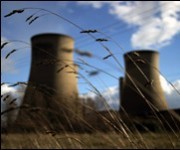
If Graham, McCain, et al want their nukes and their offshore drilling, John Kerry (D-Mass.) should get their solemn pledge that they will support the bill in the face of what is sure to be immense pressure from their base to bail. Vocal, public support from the likes of Graham and McCain could shift the debate in a huge way and possibly bring several more Republicans along.
Secondly, Dems should compromise with money, not architecture.
There are at least five Senate Dems that are certain no votes on the climate bill. That means you need at least five Republican yeas. To get them, there are going to have to be provisions for nuclear power and offshore drilling. There’s no getting around it. But I don’t think things are so bleak for those who oppose both those purported solutions to our energy troubles. As long as the compromises do not mandate nukes and drilling, or write them into the architecture of the bill, things should turn out all right.
On offshore drilling, the politics are trending toward opening up new areas for leasing. Once the price of oil and gasoline rises high enough, political pressure will be irresistible. Might as well use it as a bargaining chip while there’s still something to get in exchange. As Joe Romm has argued, the fact is that even if the federal and state moratoria on drilling were lifted, there’s not a lot of reasons to think oil companies will want to lease these areas. They’re not as ignorant on this subject as the GOP and most of the public — they know these areas represent huge investments of time and money for not much payoff. That’s why there are already tons of available leases in the Gulf going unexploited.
So on offshore drilling, you have the makings of what could look like a huge concession from Dems, but could turn out to have fairly modest real-world consequences.
Nuclear has always been a strange subject. Its backers say, “nuclear can work, once we solve those pesky siting, cost, and waste issues.” Its opponents say, “nuclear can work, but only if we solve those pesky siting, cost, and waste issues.” The differences between them aren’t that large. It’s just that nuke proponents think the pesky problems can be solved, and nuclear opponents don’t.
So the key on a nuclear compromise is not to mess with the basic architecture of the bill. Specifically, Dems should resist efforts to let new nuclear plants qualify as satisfying the Renewable Energy Standard (RES).
They could increase loan guarantees and smooth out regulatory issues around siting and permitting. They could establish some sort of expert panel to figure out a waste solution. They could even make nukes eligible for the same tax credits and subsidies offered to renewables. What these compromises have in common is that they make federal assistance available if a utility wants to build nuclear plants. They do not mandate or fully fund such plants.
So if you’re a nuclear opponent and you believe that nuclear plants are never going to attract sufficient private capital, it follows that you think the result of these concessions will be … not much. Maybe a couple of new plants. Nothing like the silly 100 plants McCain and Lamar Alexander (R-Tenn.) keep talking about.
(Side note: Reid will never, ever concede on nuclear issues until Yucca Mountain is taken completely off the table.)
Point is, both these compromises amount to less than they appear. And if they manage to attract enough Republicans to get the bill through, I will be mind-bogglingly shocked and surprised. It would be a small price to pay, and frankly I’ve been expecting — and still expect, really — a much higher price tag.