G20, your resolution sounds terrific

G20 cans fossil-fuel subsidies, but fails to make other climate-conserving moves 7

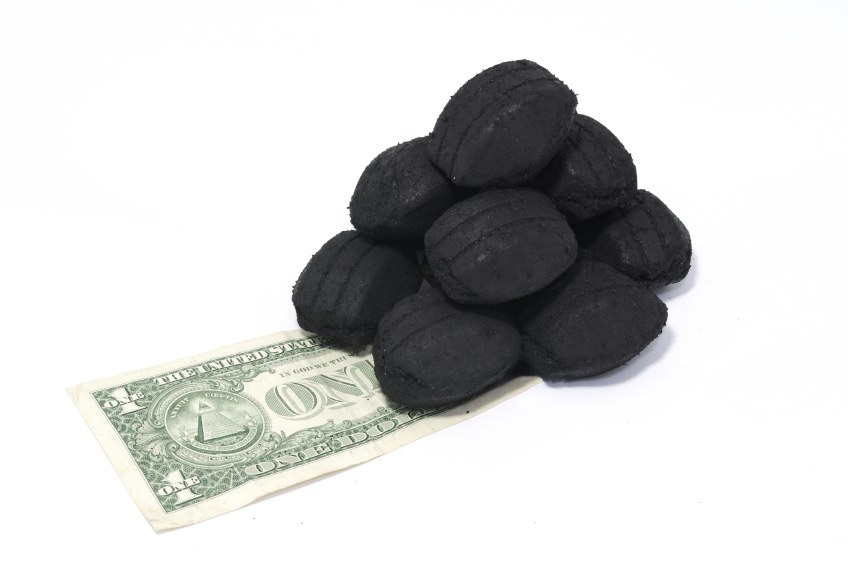
Coal and moneyLet man tear asunder.On Friday afternoon, President Barack Obama formally announced that the world’s 20 major developed and developing nations had agreed to gradually eliminate fossil-fuel subsidies. 

It was the only climate-specific policy directive to come out of the Group of 20 (G20) Summit in Pittsburgh, and it fell far short in the view of climate activists, who were hoping for a firm proposal on “climate finance”—G20 aid to poor nations for help in adapting to and mitigating climate change.

“Removing fossil-fuel subsidies could be an important step towards cutting CO2 emissions,” said Oxfam climate advisor David Waskow in a statement. “But it should not be allowed to distract from the failure of rich countries to offer poor countries the help they need. Poor people should not be asked to pay the price of cutting emissions” that rich countries have created.

Greenpeace climate finance advisor Steve Herz agreed.  “We think it’s an important step forward,” said Herz, “but it’s no substitute for the work we expected them to be doing here, which was putting together a fair and ambitious financing package to help the world’s poorest nations.”

Despite the disappointment of activists, the commitment on the part of G20 leaders to cut fossil-fuel subsidies is an important step, assuming they follow through on their pledge. Fossil-fuel subsidies add up to around $300 billion across the G20 major world economies. Developing nations tend to use these subsidies to artificially lower fuel prices for consumers, while developed nations like the United States use them in the form of economic and tax sweeteners for fossil-fuel producers.

According to estimates from the International Energy Agency and the Organization for Economic Cooperation and Development, eliminating the subsidies would reduce global greenhouse-gas pollution 10 to 12 percent by 2050.

“We already know that the prices [for fossil fuels] are too low because they don’t reflect the cost of climate change ... the true scarcity value and opportunity cost of using this resource,” said Columbia University’s Scott Barrett, who studies natural resource economics. “These subsidies are sending the wrong signal about value and scarcity of fossil fuels in the marketplace.”

Fossil-fuel subsides are also a drag on the ecomony. “If you’re selling kerosene at a lower price than the world price ... it will come out of the public purse in some other way,” said Barrett, who co-authored a survey of economic policy strategies for combating climate change—including the elimination of fossil-fuel subsidies—for the Intergovernmental Panel on Climate Change’s Second Assessment report, published in 1995 [PDF].

Removing artificial price supports will help cool demand for dirty fuels while simultaneously making cleaner energy more competitive. But it has to be done with care. if subsidies are cut off thoughtlessly, warned Barrett, a head of state could end up with riots in the streets.

G20 Voice logo

This is one reason fossil-fuel subsidies have not played a bigger role in climate negotiations. Another, according to Barrett, is that many climate negotiators “were pushing for targets and timelines,” to the exclusion of all other options.

“The biggest problem with targets and timetables is that they’re not being met, they don’t work,” said Barrett.  “So why not supplement discussions about targets and timetables with discussions about actions that are actually going to be taken”—like retiring fossil fuel subsidies, which looks like it may actually happen.

At the end of the Pittsburgh Summit, G20 heads of state directed their finance czars to begin developing a more detailed phaseout plan at a November meeting in Scotland. The G20 will revisit the issue at its next meeting, in Toronto in June 2010.


Emily Gertz is a New York City-based freelance journalist and editor who has written on business, design, health, and other facets of the environment for Grist, Dwell, Plenty, Worldchanging, and other publications.

Advertisement
Advertisement
  1. waves16 Posted 9:57 am
    26 Sep 2009

    The phasing out of subsidies is great, but I wonder how the resolve will hold when the price of oil goes up and, as a result, the price of food.

    We need more fundamental changes as to how the system works. The approach at A New Strategy for Global Warming, Renewable Energy, Toxic Contaminants, Resources...
    proposes just that. Markets are very powerful. Using them (as the approach does) rather opposing them offers a more effective way to handle environmental issues.

    A Powerful Alternative to Cap-and-Trade
  2. Bill Hewitt's avatar

    Bill Hewitt Posted 12:16 pm
    26 Sep 2009

    This is pretty darn important development. I wrote about this yesterday: “An Idea Whose Time Has Come.”
    There is also the question of the disparity of fossil fuel subsidies to those for renewables. See this excellent graphic
    from the Environmental Law Institute for the US.
  3. VijayV Posted 7:23 am
    28 Sep 2009

    Emily, I wanted to bring to your attention the following.

    The issue of world banks energy generation subsidies must look at the current CO2 emissions for power generation across the globe, as well as all of the projects whose work is in progress, and not single out one or two developed countries, as that would be unfair. Renewable energy sources such as solar energy are still quite expensive watt per watt, and therefore developing countries need to be allowed some flexibility as they attempt to provide electricity to all of their people.

    This June'09 DOE report, "Tracking New Coal-Fired Power Plants", at the URL http://www.netl.doe.gov/coal/refshelf/ncp.pdf , talks about the coal-fired plants whose construction is underway in the US. There are apparently many.

    The CARMA website gives a lot of data regarding CO2 emissions from the power sector: http://carma.org/region

    In particular, India's (1.2bn population) CO2 from its power sector is about 1/5th of China's (1.3bn population) and 1/4th of US' (300mn population). And 400 million people in India still don't have any (and many don't have adequate) electricity supply. When solar energy per watt is still very expensive (India is already investing a good bit in solar, wind and other renewable energy sources), its only fair that countries like India need to have some flexibility in their future energy source mix, especially when their current CO2 emission levels (both total and per-capita) are very low (please see: http://india-planet.blogspot.com/ ) compared to similarly populated China and far less populated US, or they get unfairly squeezed by those that already operate a huge volume of coal-fired power generation.
  4. Dave from Canada Posted 10:33 am
    28 Sep 2009

    This is huge, positive news. Yes, it doesn't deliver on everything that everyone would like, all at once. But it is big progress nonetheless. We should be paying attention to the implementation details and making sure that it works, and doesn't take forever to phase in.

    I am concerned about low income people, whether they are in "poor countries" or "rich countries" (certainly not everyone in poor countries is poor, ditto rich countries). Removing their fossil fuel consumption subsidies - and doing nothing to compensate - will hurt those people financially and where they rely on it for heat some could die.

    The removal of those subsidies needs to be offset by income support. Income support is better than fossil fuel subsidies.

    People are poor because they lack money, not because they lack lots of cheap subsidized fossil fuels.

    So give them money.

    Give them money that the government previously spent on subsidizing fossil fuels. Then they can choose to spend it on whatever they need - energy efficiency, food, fossil fuels, shelter, water, health, whatever their priorities are.

    Giving people fossil fuel subsidies is essentially like giving them money, and then dictating to them that they can only spend it on fossil fuels, regardless of their needs. It fails to respect their needs and their preferences. It causes excessive pollution (which affects the poor disproportionately). In a nutshell, it's stupid.

    So let's celebrate the movement to get rid of those subsidies, and make sure it happens, and then move on to other changes that need to be made.
    1. Jag4331 Posted 8:28 pm
      28 Sep 2009

      Dave, your emphasis on low-income folks is correct, yet I don't agree with your assessment of how to address it.

      Poverty runs much deeper than income, especially when you're talking about how to help people become financially stable and secure. Simply raising income does not address the long-term, underlying causes: thin savings, shallow social networks, socioeconomic exclusion and discrimination.

      Therefore, we need to develop an energy infrastucture that incentivizes innovation without privileging those who already have access to (often cost-prohibitive) renewable technology. There's a good example of this in Colorado (http://www.voteyes1a.org/voteyes1a.org/Home.html), where there's a model for financing voluntary home-energy improvements with loans that do not raise property taxes for non-participants. Again, you're right to focus on income, but it seems that these entrenched problems require innovative solutions.
  5. David Brodwin Posted 12:28 pm
    28 Sep 2009

    Notwithstanding the slow pace of the G20, serious business leaders from major companies -- even those who are part of the old energy paradigm -- are realizing the economic importance of climate protection and acting accordingly. For example, in the past week, three major energy companies, PG&E, Exelon, and PNM have quit the U.S. Chamber of Commerce over the chamber’s ongoing denial of climate change and their attacks on climate protection legislation.

    For more, see: http://brodwin.com/PG_E_Break_Signals_Climate_.html
  6. Tasermons Partner Posted 7:00 pm
    28 Sep 2009

    I would be much more excited, perhaps, if I knew exactly how "gradually" they meant to take.

    In other words, the lack of any exact commitments or figures doesn't impress me much. They have given mo reason for me to believe that they will do as they propose, and even less to believe that will do so in any reasonable timeframe.

Add a Comment

You are not logged in. Thus, you cannot post a comment. If you have an account, log in. If you don't have an account, well, by all means go make one! Meet you back here in five.

Hello, Visitor!    Why not register?

Advertisement