
The Agrichemical Revolutionary

Thoughts on the legacy of Norman Borlaug 14

Norman BorlaugNorman Borlaug (Photo courtesy FAO)In the early 1940s, Mexico was a fraught region for U.S. geopolitical strategists. Not so long before—1939—a revolutionary government had nationalized the Mexican oil supply, dealing a sharp blow to U.S. oil interests, especially the Rockefeller family’s dominant Standard Oil. Meanwhile, as war raged in Europe, there was doubt about which side the Mexican government would take—the Allies or the Axis. What if Mexico chose to supply the Germans with oil?

Into that tense milieu, the Rockefeller family’s foundation dispatched a team of agricultural scientists into the Mexican countryside on a mission of goodwill: to bring Mexican farmers the seed varieties, knowledge, and inputs necessary to “modernize” crop production.

As the University of Texas economist Harry Cleaver put it in a 1972 paper in American Economic Review, “The friendly gesture of a development project would not only help soften rising nationalism but might also help hang onto wartime friends.”

One of the junior scientists on that mission would become the best known, eventually netting a Nobel Peace Prize for his work: Norman Borlaug, who died Sunday at the age of 95.

Borlaug is widely hailed as the father of the Green Revolution—the grand effort, which started in Mexican wheat and corn fields in the 1940s, to bring industrial agriculture to the global South.

There’s no evidence that Borlaug thought much about geopolitics during his career as a plant pathologist and evangelist for industrial agriculture. In their book Enough—largely a Borlaug hagiography—the Wall Street Journal reporters Roger Thurow and Scott Kilman portray him as a man almost innocent of politics: He started out with a narrow scientific interest in wheat rust and a desire to “secure a steady job where he could work outdoors”; by the ‘60s and for the rest of his long life, he wanted merely to “do what was best for the hungry,” the authors write.

Rather than focusing on the social relations around agriculture, Borlaug honed in on one thing: increasing yield. For him, the complexities of poverty and hunger could be reduced to a single problem: not enough food. From there, the answer was simple: grow as much as possible, using whatever technology available.

For Thurow and Kilman, Borlaug stands as an “international hero, an example of what an individual can accomplish in the quest to end hunger.” That view is conventional, nearly universal. Borlaug’s accomplishments inspire a kind of awe—and rhetorical flights. “A towering scientist” and a “great benefactor of humankind,” declared the U.N.‘s Food and Agriculture Organization in a communique after Borlaug’s death. The New York Times called him “the plant scientist who did more than anyone else in the 20th century to teach the world to feed itself and whose work was credited with saving hundreds of millions of lives.”

But it may be that Borlaug’s blindness to politics—his refusal to consider the power relations at work in the countries whose hungry he set out to save—undermined his legacy. His tireless effort to boost grain yields, while no doubt resulting in a flood of cheap grain, created all manner of problems that won’t be easily solved.

In Mexico, to be sure, yields of corn and wheat rose dramatically in the areas where Borlaug’s techniques took hold. But while Thurow and Kilman convincingly argue that Borlaug’s main intent was to “help poor farmers,” Mexico’s smallholders have been in a state of severe crisis for more than a generation. The so-called “immigrant crisis” here in the United States is better viewed as an agrarian crisis in Mexico. Since the the advent of NAFTA alone, more than 1.5 million Mexican farmers have been forced off of their land. Since the Mexican manufacturing economy has been nowhere near robust enough to absorb them, a huge portion of one-time Mexican farmers now wash our dishes and harvest our crops.

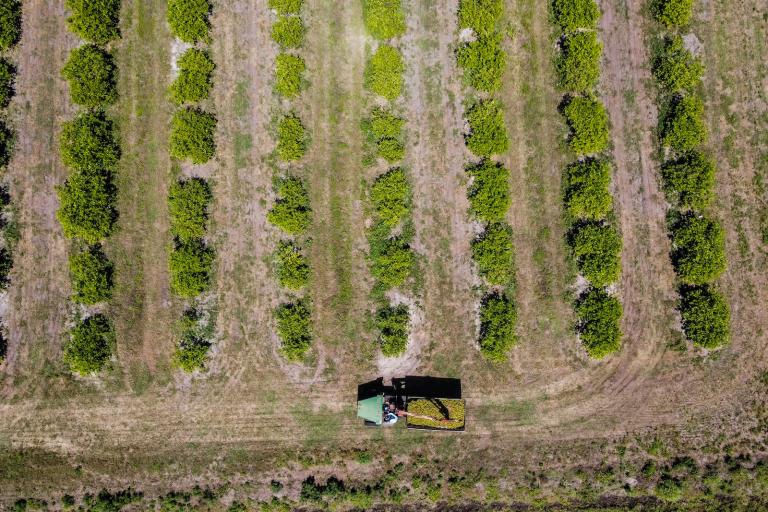
While the factors contributing to Mexico’s agrarian disaster are multiple and complex—including neoliberal trade policy and U.S. crop subsidies—the zeal to increase yield certainly factors in. In Borlaug’s Green Revolution paradigm, farmers are urged to specialize in one or two commodity crops—say, corn or wheat. To grow them, they were to buy hybridized seeds and ample doses of synthetic fertilizers, pesticides, and irrigation. (Borlaug’s celebrated “dwarf” varieties can thrive only with plenty of water and lots of synthetic nitrogen, and face serious pest pressure, requiring heavy pesticide doses.) The award for buying into the “Green Revolution package” was a bumper crop. The problem was that when everyone did the same thing and yields spiked, the price farmers received for their crops plunged.

The result is a kind of vicious cycle: farmers scramble to produce more to offset losses, leading to yet more downward pressure on prices. Of course, there’s the temptation to boost yields with yet more inputs like fertilizer—meaning that farmers’ costs could continue creeping up even as the prices they received in the marketplace fell steadily. The result is a kind of structural economic crisis in farming.

The winners in the game are not farmers, but rather the buyers of the cheap commodities (mainly transnational grain processors like Archer Daniels Midland and Cargill) as well as input suppliers (like Monsanto, Dupont, and, again, Cargill) that sell the needed seeds and agrichemicals. As I’ve written before, Mexico’s grain trade—both corn and wheat—has fallen largely under the control of U.S. agribusiness giants, and its culinary staple, the tortilla, has succumbed to a kind of vapid industrialization.

Urban residents do benefit from cheaper food prices, to be sure; but it’s worth emphasizing that in post-Green Revolution Mexico, urban poverty and malnutrition has remained stubbornly persistent, as anyone who has visited Mexico City in the past 20 years can verify.

One of the most ironic things I see in Borlaug obits is the idea that his innovations made countries like Mexico and India “self-sufficient” in food production. Actually, these nations became perilously dependent on foreign input suppliers for their food security. 

In India, site of the Green Revolution’s greatest putative triumph, the legacy is even more mixed.

Today in India’s grain belt, less than 40 years after Borlaug’s Nobel triumph, the water table has been nearly completely tapped out by massive irrigation projects, farmers are in severe economic crisis, and cancer rates, seemingly related to agrichemical use, are tragically high.

In other words, to generate the massive yield gains that won Borlaug his Nobel, the nation sacrificed its most productive farmland and a generation of farmers. Meanwhile, as in Mexico, urban poverty and malnutrition in India’s urban centers remained stubbornly persistent.
 
For me, the point isn’t that Borlaug is a villain and that crop yields don’t matter; rather, it’s that boosting yield alone can’t solve hunger problems in any but the most fleeting way. Farmers’ economic well-being; biodiversity; ecology; local knowledge, buy-in, and food traditions—all of these things matter, too.

As the U.S. and European governments, along with the Gates Foundation, turn their attention to Africa’s hunger crisis, I hope those lessons are heeded—despite Borlaug’s near-canonization as a modern-day saint.

Grist food editor Tom Philpott farms and cooks at Maverick Farms, a sustainable-agriculture nonprofit and small farm in the Blue Ridge Mountains of North Carolina. Follow my Twitter feed; contact me at tphilpott[at]grist[dot]org.

Advertisement
Advertisement
  1. The Other Borden Posted 8:04 pm
    14 Sep 2009

    It's kinda funny actually, I guess the death hit me a little more since I go to the university where he teaches.I think Borlaug knew more than anyone that what he did really didn't solve the issue of hunger.  That's why he still taught at A&M up until the day he died, that's why the vice-president of the Borlaug Institute has 7 tons of compost in his backyard (he's also a big advocate of sustainable agriculture, though not necessarily organic if that's what you're thinking, just sustainable for now), and that's also why students like my friend Brad were sent to study abroad in nations like South Africa, where he planted a 400 square foot vegetable garden at an orphanage.Oh, don't get me wrong, I don't believe in Borlaug's methods either.  I believe in organic sustainable agriculture adapted to nature and the local land, as opposed to western industrial agriculture.  Yet I can't help but feel that as this giant passes on he is secretly hoping that his decades of teaching actually pay off.
    1. foodprovider's avatar

      foodprovider Posted 7:28 am
      16 Sep 2009

      You may not agree with Borlaug's methods or teachings, But I am confused.  How do you see organic, or as you like to call sustainable,(to me sustainable is far more reaching than organic) agriculture providing enough food to feed the world?  At the present time we are not able to feed the world. 
  2. Aaron Lucich's avatar

    Aaron Lucich Posted 11:21 pm
    14 Sep 2009

    The sad thing is how earnest he was in his conviction that he was doing the right thing.  Such a strange and familiar concoction of hubris and humility.

    Not unlike Liebig in his tenure. Liebig the father of our NPK paradigm who eventually came to his senses and left us with, "The art of agriculture will be lost when ignorant, unscientific and short sighted teachers persuade the farmer to put all his hopes in universal remedies, which don’t exist in nature. Following their advice, bedazzled by an ephemeral success, the farmer will forget the soil and lose sight of his inherent values and their influence."  

    The problem is not in the man but in the vain assumption that our very minimalist scientific paradigm can even begin to address something so complex as life in the natural world. If the definition of "feeding the world" is to bend the diverse peoples of the globe to your economic construct and train them to decimate their inherent resources necessary for natural food production then the Nobel was deserved.  Yield, however, at the expense of bio-diversity is a net loss.  He was a success in his own game judged by the rules of the game makers. How many actually benefit from those rules?  

    And yet we are still playing the yield game as if it has ever answered the problem.  The problem with these market driven remedies is that where hunger exists people don't need a solution based on money.  
    In my opinion Norman Borlaug might best be remembered as a Liebig of his generation. A well intentioned man, well acquainted with a few pieces of a very large and complex puzzle who put them together with conviction and skill. We remember this giant as we forget our very recent past (wasted water, cancer trains and suicides) and set our eyes on a new "Green Revolution" in Sub-Saharan Africa.
    Remember Liebig also said, "I had sinned against the wisdom of our creator, and received just punishment for it. I wanted to improve his handiwork, and in my blindness, I believed that in this wonderful chain of laws, which ties life to the surface of the earth and always keeps it rejuvenated, there might be a link missing that had to be replaced by me--this weak, powerless nothing."
  3. Justice from Farm to Plate Posted 7:58 am
    15 Sep 2009

    While the myth persists that Norman Borlaug fed the world's hungry through the 1st Green Revolution, the sad reality was that people remained hungry amid plentiful food supplies. The UN Research Institute for Social Development confirmed that fact in 1974 after four years of study. Its "Global Two" report found that while Borlaug's 1st Green Revolution increased production, it failed to distribute food fairly.World leaders considering a 2nd Green Revolution can avoid such unintended consequences. Last year, the International Assessment of Agricultural Science and Technology for Development (IAASTD) issued its final report. Initiated by the World Bank and the FAO, after six years 400 experts chosen through a multi-stakeholder process concluded: "Business as usual is no longer an option." By this they meant that the current pardigm of Agricultural Knowledge, Science and Technology (AKST) unevenly distributes its social benefits, has caused unsustainable environmental results, including deforestation and natural degradation, and that that its fundamental flaw is ignoring that agriculture operates within complex natural, social and community systems. The national choices they point to include strengthening the agroecological sciences, redirecting AKST to address persistent socioeconomic and gender inequities, and fully developing the use of existing AKST (formal, traditional and community-based). While acknowledging that some challenges my be resolved by applying emerging AKST, it encourages nations to refocus existing AKST on small-scale agricultural systems to create opportunities for poor farmers.Finally, its authors state that nations face critical choices in revising regulatory frameworks and international agreements to improve the ecological and social sustainability of agricultural practices, calling new institutional arrangements "essential." The authors take export-oriented agriculture to task for failing to improve soils, sequester carbon, improve water supplies, create desirable farm livelihoods, reduce poverty and hunger, or improve the vitality and resilience of farming communities. Thus, unlike Borlaug's technological tunnel vision, the IAASTD's vision goes far beyond to consider the social structures and ecological services entailed in agricultural production. Unlike the 1st Green Revolution, the authors of the IAASTD squarely address the challenges facing nations that aim to sustainably increase food production, while improving the livelihoods of the rural poor. Finally, a useful guide is at hand, and 60 nations signed off on it. Peter van Schaick, ResearcherPS For those interested in the impact of the 1st Green Revolution, see Pearce, Seeds of Plenty, Seeds of Want (UN 1980). For the IAASTD, see Agriculture at a Crossroads: Synthesis Report. Available at http://www.agassessment.org.
  4. Justice from Farm to Plate Posted 8:21 am
    15 Sep 2009

    While the myth persists that Norman Borlaug fed the world's hungry through the 1st Green Revolution, the sad reality was that people remained hungry amid plentiful food supplies. The UN Research Institute for Social Development confirmed that fact in 1974 after four years of study. Its "Global Two" report found that while Borlaug's 1st Green Revolution increased production, it failed to distribute food fairly.World leaders considering a 2nd Green Revolution can avoid such unintended consequences. Last year, the International Assessment of Agricultural Science and Technology for Development (IAASTD) issued its final report. Initiated by the World Bank and the FAO, after six years 400 experts chosen through a multi-stakeholder process concluded: "Business as usual is no longer an option." By this they meant that the current pardigm of Agricultural Knowledge, Science and Technology (AKST) unevenly distributes its social benefits, has caused unsustainable environmental results, including deforestation and natural degradation, and that that its fundamental flaw is ignoring that agriculture operates within complex natural, social and community systems. The national choices they point to include strengthening the agroecological sciences, redirecting AKST to address persistent socioeconomic and gender inequities, and fully developing the use of existing AKST (formal, traditional and community-based). While acknowledging that some challenges my be resolved by applying emerging AKST, it encourages nations to refocus existing AKST on small-scale agricultural systems to create opportunities for poor farmers.Finally, its authors state that nations face critical choices in revising regulatory frameworks and international agreements to improve the ecological and social sustainability of agricultural practices, calling new institutional arrangements "essential." The authors take export-oriented agriculture to task for failing to improve soils, sequester carbon, improve water supplies, create desirable farm livelihoods, reduce poverty and hunger, or improve the vitality and resilience of farming communities. Thus, unlike Borlaug's technological tunnel vision, the IAASTD's vision goes far beyond to consider the social structures and ecological services entailed in agricultural production. Unlike the 1st Green Revolution, the authors of the IAASTD squarely address the challenges facing nations that aim to sustainably increase food production, while improving the livelihoods of the rural poor. Finally, a useful guide is at hand, and 60 nations signed off on it. Peter van Schaick, ResearcherPS For those interested in the impact of the 1st Green Revolution, see Pearce, Seeds of Plenty, Seeds of Want (UN 1980). For the IAASTD, see Agriculture at a Crossroads: Synthesis Report. Available at http://www.agassessment.org.
  5. GreeningTX Posted 10:44 am
    15 Sep 2009

    You write that "Borlaug honed in on one thing." No, he didn't. He homed in. Please don't contribute to the mangling of the language.
  6. askantik's avatar

    askantik Posted 4:05 pm
    15 Sep 2009

    Sorry to be crude, but this is motherf****ing brilliant.  After all the blind praise of this man (especially people pointing to the Penn & Tenller "Bullsh!t" episide (ugh, Penn and Teller, really?), it is a relief that someone actually understands the true nature of this all.
    Borlaug may have helped people in the short term, but he disadvantaged greater numbers of people down the road, as explained by Tom. 
  7. jtrauben Posted 11:03 pm
    15 Sep 2009

    "Our father's diet
    kills him
    and you hire
    his chef"
        Saul Williams

    Norman
    Borlaug, Nobel laureate and father of industrial agriculture, was a
    hero. His farming innovations have saved countless lives from
    starvation, many estimating more than a billion. Wendell Berry, author
    and grandfather of the modern agricultural movement, is also a man
    worthy of a statue, and in the end, his contributions might just save
    us all. His novels, short stories, poems, and essays have helped us
    remember what ought to be remembered, resonating a simple theme: nature
    as a model. While greatness cannot easily be quantified, the paths that
    these two men have chosen are worlds apart.

    India is often
    used as the poster child of industrial agriculture. Back in the late
    60's, India was almost completely reliant on food imports and with the
    memories of the four million killed during the Bengal famine of 1943
    still strong, India was eager for change. Adopting Norman Borlaug's
    industrial techniques of fertilizers, pesticides and high-yield seeds,
    Indian farmers were able to transform a once dependent nation into a
    budding superpower that exports grain.

    Political factors were
    heavy in developing India's malnutrition though, as British colonialism
    unashamedly exploited local villages, transferring most wealth produced
    outside the country while simultaneously increasing production of
    commodity crops over food. Grains per year had declined from 195 kgs.
    in 1920 to 152 kgs in 1945, with population doing much the opposite.
    Such deficits were enhanced when during India's independence and
    subsequent split from Pakistan, India was left with 83% of the
    population and only 77% of the land. In the end, 60% of India's arable
    land was completely dependent on monsoon rains, with no irrigation
    systems in place. A common theme: India's starvation was not the result
    of an unproductive earth, but rather an unforgiving man.

    Regardless
    of how it emerged, there is no doubt that prior to its
    adoption of industrial agriculture India was in the midst of a food
    crisis. There is also no doubt that industrial agriculture provided
    India with the temporary tools to survive. India was bleeding, and
    Norman Borlaug sowed her up. But if Norman is the surgeon performing a
    well needed triple bypass, then Wendell Berry is the doctor eloquently
    reminding you to exercise and cut down on the red meat.

    Intensive
    surgery is quick, and a neglected soil injected with copious quantities
    of nitrogen will see an increase in vegetative potential. Ultimately
    however, surgery is not something you would ever want to experience
    twice, and surely a procedure you would avoid passing on to your
    children. My father has seen the inside of the operating room on
    several occasions due to skin cancer, and as you might imagine, he does
    not tell me to heedlessly frolic in the sun and rely on the progress of
    medical technology if I ever succumb to the same fate; he tells me to
    wear sunscreen.

    We're losing the ground beneath our feet. While we've always known that
    plants require a healthy soil, we are only now beginning to understand
    how industrial monocultures have the long-term effect of depleting and
    eroding nutrient rich soils, offering nothing back to the once fertile
    ground from which they grew. Planting one single crop over large areas to better facilitate the use
    of heavy machinery, industrial agriculture depends on monocultures. As the soils deplete, farmers are now
    forced to use ten times as much fertilizer as they used about two
    decades ago. Monocultures are also water hogs, and Indian farmers have
    had to
    deepen their wells every few years: from 10 feet to 20 feet to 40 feet,
    and now to more than 200 feet.

    Farmers are simply choosing
    suicide. They cannot keep up with the rising costs of oil for their
    tractors, the rising cost of oil-based fertilizers, or the rising cost
    of digging deeper and deeper for precious water. India underwent heart
    surgery, then chose a steady diet of fried cheeseburgers.

    Beyond their increasing upkeep and rising deficiency, monocultures actively destroy diversity. The Food
    and Agriculture Organization of the United Nations
    (FAO) published a study in 2008 concluding that monocultured crops are genetically limited and
    far more susceptible to insects, blights, diseases, and bad weather.
    The study also reported that as a result of industrial techniques, 75
    percent of genetic diversity in agriculture disappeared in this past
    century. Another study,
    conducted by the Minister for Environment, Heritage and Local
    Government of Ireland aimed to put a monetary value on biodiversity.
    The authors estimated that biodiversity in Ireland alone has a value of
    at least $3.6 Billion per year. USA's GDP is roughly 45 times larger.

    "Great problems call for many small solutions"
        Wendell Berry

    Biomimicry
    (from bios, meaning life, and mimesis, meaning to imitate) studies
    nature, its models, systems,
    processes and elements and then imitates or takes creative inspiration
    from them to solve human problems. The biggest misconception with the
    modern agricultural movement, often labeled organic, permaculture or
    sustainable, is the notion of a technological step backwards.

    Such
    thinking is akin to criticizing a 600 ft wind turbine that generates 6
    mega watts of energy as a reversion back to sailboat technology. When
    the fields of neuroscience, nanotechnology, and solar-tech implore the
    wisdom of nature with their modern inventions we perceive Armstrongian
    leaps, but when we attempt to explore such models in our food
    production, when we attempt to create a food system that does not
    depend on the external addition of chemicals invented to make bombs in World War II, we see a crippling retreat.

    Industrial
    agriculture replaces human labor with oil based chemicals, ingenuity
    and attention to detail with sheer brute force. Proponents mistake ease
    with efficiency. That industrial agriculture is more productive is a
    well funded myth.
    According to the U.S. Agricultural Census, smaller farms are more
    efficient, much more so. The census reports that a small four acre farm
    is routinely up to 100 times more efficient than a standard industrial
    farm. One Hundred. This combined with the fact that enough food is
    grown worldwide to provide 4.3 pounds of food per person per day, which
    would include two and a half pounds of grain, beans, and nuts, a pound
    of fruits and vegetables, and nearly another pound of meat, milk, and
    eggs. Maybe over consumption is the real beast, efficiently dressed.

    Issue
    two: labor. As 467,000 jobs were lost in this country just last month,
    maybe an industry that requires more hands will finally be perceived as
    beneficial. Britain's Soil Association determined that organic farm practices
    create 32% more jobs than conventional farming, and that Britain would
    see 93,000 new jobs if it switched to organic practices. The USA has
    more than 7 times as many farms as Britain.
    But
    you object: with all this
    extra labor, will not food see a surge in price? The answer is a
    resounding no. As a nation we subsidize our corns and grains, leading
    our markets to hide the true cost of our food. We pay for what we eat
    twice: first though our taxes, and then again at the the checkout
    counter. If policies were adjusted to encourage a more efficient
    production of healthy food, then prices would rightly stay at a similar
    level. Even without a policy switch, we would still be saving money
    when health, biodiverstiy and environmental costs are considered.

    "Man seems to insist on ignoring the lessons available from history"
        Norman Borlaug

    Human
    progress is a series of slow advances, simple steps in an ongoing
    struggle to free ourselves from our earthly dependencies. To fly when
    we were only given legs to walk. Looking back in time, industrial
    agriculture will fit. It will be perceived as right for its time and
    place: a method of production that reflected the limited understanding
    of our surroundings. Permaculture, organic agriculture, sustainable
    agriculture, whatever name you choose, is the next paradigm shift.
    Solar, wind, electric and organic. These oil free forms of production
    are not a step back, they are our only means of stepping forward.

    Modern
    agricultural practices are simple: they aim to remove any reliance on
    external inputs, and reduce waste. They aim to create a system that
    nourishes itself; food production based on small scale efficiency. To
    think that agriculture is so simple as to only require three chemicals
    added en masse is the true reversion of intellect. To think that we can
    feed a world with only a handful of crops is the true deficiency. 

    Nearly forty percent of all prescribed medicines are derived from only 95 plant species. There are over 270,000

    known species
    of plants; what do we imagine we understand about the potential of
    botany? We are just beginning to learn that plants

    need pests in order to be nutritious. Their biological defensive mechanisms,
    their protective hormones, produce the proteins that keep us from
    getting cancer.

    In a serious conversation about technological
    advances in agriculture, the topic of genetically modified organisms
    (gmo) cannot be ignored. I believe that all avenues of potential
    progress should be explored. Exploration is a different game than
    exploitation however, and feeding people gmo's without their knowledge
    or consent is an example of the latter. 70% of all food in the USA is
    genetically modified. Two-thirds of the population believe that they
    have never consumed gmo's, and a large percentage of that demographic
    would choose to avoid them if they were given the opportunity. The
    doctors are starting to shout as the evidence begins to pile, and as big agriculture hires its own scientists, the battle is becoming eerily reminiscent of big tobacco days. Remember, more doctors smoke Camels than any other cigarette.

    One-third
    of Americans born after the year 2000 will develop early onset
    diabetes, and while industrial agriculture is running up health care
    costs to
    unsustainable levels, polluting our rivers and our breathable air,
    depleting nutrients from our precious soil, and drinking all that is
    left of our freshwater supply: these practices still maintain a
    monopoly as the political face of agriculture's future. The answer is
    simple, and you've certainly heard it all before: eat local, buy
    organic, less meat, no to gmo. But maybe you still doubt it, maybe it's
    too much work, or maybe you think organic and the like is just an
    elitist fad. Well, the data is in, and there is a consensus: the plague
    of industrial agriculture is as real as global warming, and that both
    problems share the same solution is not a coincidence.

    Don't trust me, read up. Start here, here, here, here, & here, (or watch)

    Sources

    Fatal Harvest, The Seven Myths of Industrial Agriculture
    Yale Environment 360, Food Industry Pursues the Strategy of Big Tobacco
    NPR, India's Farming 'Revolution' Heading For Collapse
    American Academy of Environmental Medicine (AAEM)
    Soil Association
  8. mauryh Posted 8:51 pm
    17 Sep 2009

    Industrial agriculture is an abomination not only because of its destruction of ecosystems, water tables, and biodiversity; not only because of the lowered quality of life, hideous illnesses and death that have been caused by exposures to pesticides--and will be caused by exposures to pesticides for generations even were the continued use to be stopped--but because industrial agriculture is a huge contributor to ozone pollution and global warming!

    A typical industrial field after harvest looks like a dead zone. The degraded, crusty, compacted soil has little or no organic matter, and microorganism populations have lost their resilience to disturbances and are no longer able to perform their normal processes of cycling nutrients, assimilating organic wastes and maintaining soils structure. It's ironic that some of the tools of the so-called green revolution which destroy the soil were modified weapons of war. Nitrogen fertilizers from nitrogen bombs, nerve gas modified to make insecticides.

    Chemical fertilizers are made from a fossil fuel (natural gas). Superphosphate fertilizer is a dangerously contaminated product and its mining and processing (using fluoride) represents an environmental disaster. It is mined in central Florida where phosphate and uranium were laid down at the same time and in the same place by the same geological processes millions of years ago. They go together. Mine phosphate, you get uranium. The fertilizer remains radioactive.

    The so-called Green Revolution was a disaster for planet earth. It is a myth that monocropping increases a country's food self-sufficiency. As for double-cropping wheat and "scientifically" breeding new varieties--wheat is one of the most destructive crops to the soil, nearly as destructive as cotton. It is grown year after year on the same soil until the soil is so depleted and full of resistant fungus and mold that it can literally turn black. I do not think it is a coincidence that an increasing number of people can no longer tolerate gluten and are even getting celiac disease, which can be deadly. Also, processed foods with wheat, salt, chemicals and sugar are not healthy and are partly responsible for our epidemic of obesity and diabetes.

    I do not think anyone causing this sorry state of affairs should be eulogized or given the benefit of the doubt.
  9. Jason D Scorse's avatar

    Jason D Scorse Posted 8:28 pm
    18 Sep 2009

    Probably the best work done on why people go hungry is by Amartya Sen- Poverty and Famine- 1980(81)- still true today....
  10. Albionwood Posted 9:42 pm
    20 Sep 2009

    Nobody wants to talk about population?

    More food = more reproductive success = more mouths to feed => more hunger. In a nutshell, that's why Borlaug's vision was misguided from the start: hunger can't be eliminated simply by creating more food. Population dynamics have to be addressed. If you can't stop population growth, all you do is delay the day of reckoning; and when that day comes, there will be many times the number of people suffering as there were when you started. If there were a billion hungry when Borlaug began his work, there will be several billion hungry as a direct result.

    If there was as much money to be made in contraceptives as there is in fertilizer and pesticide, we'd have a much better world right now.
  11. KSukalac Posted 6:03 am
    24 Sep 2009

    Just a couple of comments.

    First, criticizing Norman Borlaug for focusing on plant breeding and fertilizers is rather like criticizing your cardiologist for not doing brain surgery. He never said that those two things alone would feed the solution, and he never even said that fertilizers should be used to the exclusion of other sources of nutrients. The reason he focused on these two elements is because nature does not provide enough nitrogen in plant-available forms to feed our global population and because it is critical to optimize yields on the most productive agricultural lands. Otherwise, farmers will keep expanding the agricultural area to increase output and jeopardize marginal lands and wilderness areas. Output = yield x cultivated area.

    Second, it is false that producing more food drives up fertility rates. Actually, the opposite is true: as food security increases and poverty decline, people start having fewer children.
  12. Albionwood Posted 9:38 am
    24 Sep 2009

    I agree that it's unfair to criticize Dr. Borlaug for his work - the criticism should rather be directed at those who hinder contraception and abortions. And it's also quite true that nature does not provide enough plant-available nitrogen to feed the global population - which is why it is insane to continue increasing that population. Policies that feed hungry people without curtailing reproduction ultimately make the problems worse, not better, even if they feel good at the time. Population growth is the problem. [Fertility rate is a misleading statistic. What matters is population growth rate, for which fertility is only one factor. Increasing food supply almost always leads to increased population. Increasing wealth sometimes does lead to poulation stabilization, where birth control is available.]

    Nitrogen has been recognized as the critical nutrient with the potential to cause global famine since the late 19th century. When supplies of natural gas looked limitless, people thought the problem had been solved. But natural gas, like all fossil fuels and indeed all natural resources on a finite planet, is limited and someday we won't be able to increase production to keep up with the increasing population. What then?

    Bottom line, it's foolish to focus on food as the solution to hunger and poverty without addressing population growth. We will never be able to feed all the world's poor unless their numbers stop growing. We would have done much greater good in the long run by pushing contraception with the same zeal as we pushed industrial agriculture.
  13. KSukalac Posted 5:45 am
    25 Sep 2009

    Birth control is certainly important, but population dynamics are much more complex than that. One of the most important interventions with regard to reducing fertility rates is actually girls' education.

    The link between the availability of food and population growth changes, depending on where you are on the curve. When food is scarce, increasing food availability leads to population growth, but as poverty is reduced (and food security and balanced nutrition are important factors in helping to reduce poverty), family sizes actually decrease and population growth slows. In fact, many developed countries have fertility rates below the replacement level (often balanced by immigration).

    If food availability and population were linked in a linear fashion, the average family size in the US would be 15!

    The availability of nitrogen fertilizers doesn't necessarily depend on natural gas (or other fossil fuels). That's the current technology used, but this technology may one day be obsolete. The fossil fuel serves two purposes for ammonia synthesis; theoretically, there are alternatives for both, although no one has yet discovered another option that scales up. 1) Large amounts of energy are needed to break the strong triple bond between atoms in the dinitrogen taken from the air. Human ingenuity may one day make it possible to break the triple bond at lower energy levels. And if they become plentiful enough, there is nothing to prevent renewable energy from being used for this purpose. 2) Fossil fuels are hydrocarbons and thus provide hydrogen, one of the components of ammonia. Other sources of hydrogen exist, including our vast oceans.

    One issue that we do need to address is how leaky agriculture is with regards to plant-available nitrogen (which scientists call "reactive nitrogen"). Regardless of whether the source is organic or inorganic, agriculture uses applied nitrogen very inefficiently. Good management can reduce losses, but we need to keep working to improve the rate of uptake through adapted and innovative practices. Just to give one anecdotal example, some farmers in France have begun planting trees in between swathes of wheat. The bands are wide enough that farmers can still benefit from the economies of scale related to mechanization. The trees "mop up" the nitrogen that is not absorbed by the wheat. As a result these trees grow faster than cultivated forests, providing a fast-growing source of wood and additional income for the farmers. And the levels of nitrogen in local water courses has declined.

    Agriculture will continue to evolve and innovate, and I am confident that many more ingenuous ideas like this will be used. Agricultural sustainability is an incremental journey.

Add a Comment

You are not logged in. Thus, you cannot post a comment. If you have an account, log in. If you don't have an account, well, by all means go make one! Meet you back here in five.

Hello, Visitor!    Why not register?

Advertisement