The widely read recent Time cover story “Getting Real about the High Price of Cheap Food” is a useful complement to current discussions about our food system. It offers further evidence of the mainstreaming of ideas and practices that were considered radical or irrelevant a mere decade ago.
But the author errs by avoiding any mention of the three million farm laborers who pick our fruits and vegetables. Unfortunately, this omission is not simply limited to one article. Rather the idea that farmworkers somehow exist apart from our food system routinely comes across as the conventional wisdom framing many discussions about sustainability.
The undeniable reality is that farmworkers form the base of the food industry, and their brutal exploitation dates back centuries. It is reasonable to point out that the U.S. has never fully grappled with the noxious legacies of racism, violence, and disenfranchisement that underwrote the growth of much large-scale agriculture: first in the form of chattel slavery; and later with convict labor, sharecropping, and debt peonage.
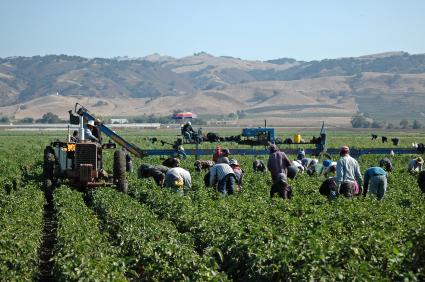
Today, migrant farmworkers are among the poorest, least-protected workers in the nation. The Department of Labor describes them as a workforce “in significant economic distress,” and leading social scientists corroborate these findings. Farmworkers toil on both conventional and organic farms, often in similarly degraded working conditions.
In Florida, the poverty and powerlessness at the heart of the agricultural industry have created fertile ground for modern-day slavery. In the last decade alone, federal prosecutors have uncovered seven cases of forced labor in Florida’s fields preying upon native-born and immigrant workers alike. These prosecuted cases are, as the U.S. Attorney’s office says, just the tip of the iceberg.
Yet there are hopeful signs amidst this dire human rights crisis, as well as important opportunities for sustainable agriculture advocates.
The Florida-based Coalition of Immokalee Workers (CIW) is leading a strategic, broadly supported reform effort. To improve tomato harvesters’ wages and working conditions, the CIW has forged innovative accords with Whole Foods Market and Bon Apetit Management Company, as well as the world’s four largest fast-food companies (Yum Brands, McDonald’s, Burger King, and Subway). The agreements harness the purchasing power of large buyers to raise the harvesting wage floor, create a structural voice for workers in the industry, and establish market consequences for growers who use forced labor. These companies deserve credit for exhibiting leadership on an issue of pressing importance.
Foodie darling Chipotle, however, steadfastly refuses the historic opportunity to partner with the CIW. The company has instead opted for a go-it-alone approach to address farmworker exploitation. This deserves scrutiny. In an industry with such an overwhelming imbalance of power between employer and employee, farmworkers are uniquely situated to identify the root cause of the problems they face and advance practical solutions. Their participation at all levels is vital to any meaningful change.
Human rights are integral to real sustainability. It is past time to bring farmworkers in from the periphery of these discussions, particularly when the abuses in question are so flagrant and systemic. Any honest reckoning with our food system – from magazine articles to supply chain purchasing policies – must treat farmworkers as indispensable partners worthy of a seat at the table.