Sweaty palms

Palm oil, healthy rainforests, and your kitchen 20

In Checkout Line, Lou Bendrick cooks up answers to reader questions about how to green their food choices and other diet-related quandaries. Lettuce know what food worries keep you up at night.
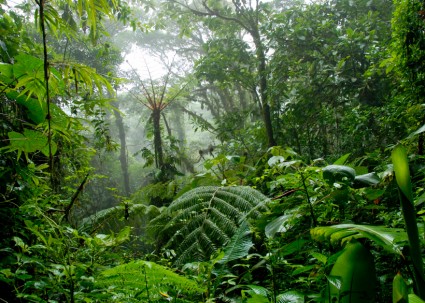
rainforestJust get rid of all this annoying rainforest stuff, and you can have all cookie shortening you want.Hi there,
I keep hearing that the increasing demand for palm oil and products with palm oil (hello, Newman-Os!) is leading to rainforest destruction in a serious way.

As a baker with a big ol’ tub of palm oil shortening in the cupboard in a quest to go au naturel and avoid trans fats, I’m starting to feel guilty and want to know more.

What if the palm oil is organic?  Does that matter?

Thanks much,
Palm Oil Perplexed Marta

Hey there, Marta,
You heard right: Palm oil (aka palmitate, palm kernel oil, and palm fruit oil) is hard on our planet’s lungs and then some. It’s a top-o-the-heap evil-doer when it comes to ubiquitous and environmentally-destructive ingredients.

Here’s a quick and unsettling lowdown: Palm oil’s bland versatility, shelf-stability and lack of trans fats make it highly desirable to those who seek processed-food ingredients to, well, make processed food. It’s in everything from chocolate to snack crackers to margarine. Remember the creamy center of Oreo cookies? Palm oil provides the famously unctuous mouthfeel. It’s also in cosmetics, soaps, detergents and some plastics. Worldwide, it’s a popular cooking oil. Last but certainly not least, it’s increasingly used for biodeisel production.

As you’ve heard, palm oil’s “moment” comes at the expense of the planet. To keep up with demand, vast monocultures of oil palm are grown in Indonesia and Malaysia, where rainforests and peat forests are razed to make way for oil palm trees. Indigenous people are uprooted and harassed, more carbon dioxide is pumped into the atmosphere and precious habitat is lost, sending species such as the orangutan on the express train toward extinction. The destruction caused by the demand for palm oil is truly unsettling at a visceral level, even for those who have seen worldwide deforestation. Chris Wille, chief of sustainable agriculture for the Rainforest Alliance, told me this:  “It’s just mind boggling. I’ve been in this business for a long time and I feel like I’m pretty tough. I feel like I’ve seen a lot of burning forests, but what’s happening in Indonesia and Malaysia - it shocks even us veterans.” If you need a visual of the rainforest being hacked into a moonscape, go here.
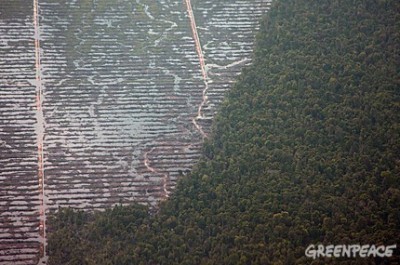
palmPalm production streamrolls rainforest in Indonesia. Photo: GreenpeaceAll of this probably puts a damper on your home-baked trans-fat-free cookies. (Ummm. Is that chocolate chip cookies I smell? No, wait. It’s the rainforest burning.)  There is no perfect choice when it comes to fats and baking, so you’ll have do some soul searching about your own values and health-related needs. Because my cholesterol levels are good and I “trust cows more than chemists,” I use organic butter when I bake. A farmer friend also supplies me with the occasional mason jar of local lard. (Nothing says “Merry Christmas” like homemade rendered pig fat.)

If these options don’t appeal, can you do right by buying organic palm oil? Sadly, in this case the organic label may not be sufficient. Organic certification bans the use of synthetic pesticides and fertilizers, but has nothing to say about rainforest management. That’s right—you could burn down pristine rainforest, plant it with a palms, and still get organic certification. Industry and green groups are trying to hammer about a certified-sustainable label that ensures responsible forest management. But right now, sustainable palm oil is both hard to find and controversial.

The Roundtable on Sustainable Palm Oil, an international organization of producers, distributors and conservationists, came up with standards to address deforestation and managed to get 1.3 million tonnes of certified sustainable palm oil onto the market last year. Critics of this “green” palm oil cried foul, alleging greenwash and weak certification standards. It was almost a moot point: Most of that oil has languished on the global market because many of the big players won’t pony up the extra money for it. (Surprisingly, Chinese buyers recently stepped up to the plate.) Hoping to spur interest with a good old-fashioned public shaming, the World Wildlife Fund will soon issue a scorecard to show which major palm oil buyers have made commitments to sustainable palm oil.

As consumers, the easiest way to avoid palm oil is to avoid highly processed food, which isn’t good for us anyway. (Palm oil, btw, may be trans-fat free, but it’s relatively high in saturated fat, the kernel oil even more so.) To banish it, read labels and prepare to do more of your own baking. Here’s a list of companies that are big palm oil users. If one of these firms makes a product that causes you to salivate, and it contains palm oil, call or email the company and implore them to use sustainable palm oil. Another school of thought says that not only palm oil is here to stay but that it’s also a vital crop for the developing world—so we’d better make damned-sure that it isn’t grown in a reprehensible way. Picking up the phone or getting online, I think, is the least we can to support the NGOs that are duking it out on our behalf.

orangPut that Oreo down, or this guy gets it. If your big ol’ tub of veggie shortening is organic and you’d like to see if it’s also sustainable, check the manufacturer’s web site. According to a somewhat apologetic Newman’s Own FAQ, the palm oil in their cream-filled cookies comes from co-ops in Colombia and is certified by Pro Forest. It’s a start. The Rainforest Alliance is also currently working with some palm plantations in Latin help them meet standards to earn sustainable certification. Wille told me that within a year consumers will be able to find language on certain food products (cookies and health bars) that will identify palm oil that came from Rain Forest Alliance-certified farms.

Right now there are no official seals or labels that you can rely on and sustainable certification for palm oil, like most things in life, is imperfect. Growers need to, at the very least, commit to ending new deforestation—and according to Wille, conserving “remnant ecosystems within the plantations.” Will this be enough to save our planet’s lungs or orangutans? Time will tell. Perhaps what we need is an orangutan-friendly label for processed foods. The pathos invoked by the sad eyes of an orphaned baby orangutan might lead more of us to pass up a box of cheap Double-Stuf (sic) Oreos for a more principled product (like, say, regular single-stuf Oreos). Even better, maybe we’ll all start baking our own cookies again.

Confession: I have a box of Hint-O-Mint Newman-O’s on my shelf right now, and, yes, I am an eat-the-creamy-center-first kind of person.

Sorry, make that the creamy, evil center.

Thanks much for the question, and keep baking!
Lou


Lou Bendrick is a former contributor to the High Country News Writers on the Range syndication service whose freelance work now appears in various publications.

Advertisement
Advertisement
  1. dexter Posted 11:08 am
    28 Aug 2009

    As an ex-health care provider I may not be as up to date as some but at what point did eating palm oil become healthier than eating lard?
    1. Dave from Canada Posted 12:36 pm
      28 Aug 2009

      Good grief - they're both very unhealthy.  Doctors have known this for decades.Use sunflower or safflower oil for frying, margarine for baking, and olive oil for unheated foods (salads etc).  
      1. dexter Posted 12:46 pm
        28 Aug 2009

        Good Grief - that was supposed to be facetious.BYW - the author's reason for using palm oil was to avoid trans fats.  Margarine is probably not the best choice.  
      2. Dave from Canada Posted 1:07 pm
        28 Aug 2009

        Got me (good one!).There are some zero-transfat margarines - they just cost a bit more.  Cheap items are rarely good...
      3. dexter Posted 1:12 pm
        28 Aug 2009

        What are the baking qualities of the zero trans fat margarines?
      4. Dave from Canada Posted 1:27 pm
        28 Aug 2009

        Seems to work OK. But I use the good stuff...
  2. redapes Posted 12:17 pm
    28 Aug 2009

    Orangutans are critically endangered in the wild because of rapid deforestation and the expansion of palm oil plantations.If nothing is done to protect orangutans, they could be extinct in just a few years.Visit the Orangutan Outreach website to learn how YOU can make a difference!www.redapes.org
    Reach out and save the orangutans!
    Adopt an orangutan today!
    Say "NO" to palm oil!
  3. ruth117 Posted 2:06 pm
    28 Aug 2009

    Make your own Oreo's!! from Smitten Kitchen http://smittenkitchen.com/2007/05/my-kingdom-for-a-glass-of-milk/ I did a while ago and they were wayyyyyy better than the original!!Homemade Oreos
    Let’s talk about the sugar for a minute, shall we? This is a sweet cookie. A good, sweet cookie. Yet, if you think of an actual Oreos, the wafers are fairly un-sweet and actually on the slightly salty side, which contrasts with the super-sweetness of the filling bringing harmony, happiness, yada yada. If you want your cookie closer to that original, you can take out a full half-cup of the sugar. If you want to make the cookie by itself (as I did a while back for ice cream sandwiches), go ahead and use the full amount.Makes 25 to 30 sandwich cookiesFor the chocolate wafers:
    1 1/4 cups all-purpose flour
    1/2 cup unsweetened Dutch process cocoa
    1 teaspoon baking soda
    1/4 teaspoon baking powder
    1/4 teaspoon salt
    1 to 1 1/2 cups sugar [see recipe note]
    1/2 cup plus 2 tablespoons (1 1/4 sticks) room-temperature, unsalted butter
    1 large eggFor the filling:
    1/4 cup (1/2 stick) room-temperature, unsalted butter
    1/4 cup vegetable shortening
    2 cups sifted confectioners’ sugar
    2 teaspoons vanilla extractSet two racks in the middle of the oven. Preheat to 375°F.In a food processor, or bowl of an electric mixer, thoroughly mix the flour, cocoa, baking soda and powder, salt, and sugar. While pulsing, or on low speed, add the butter, and then the egg. Continue processing or mixing until dough comes together in a mass.Take rounded teaspoons of batter and place on a parchment paper-lined baking sheet approximately two inches apart. With moistened hands, slightly flatten the dough. Bake for 9 minutes, rotating once for even baking. Set baking sheets on a rack to cool.To make the cream, place butter and shortening in a mixing bowl, and at low speed, gradually beat in the sugar and vanilla. Turn the mixer on high and beat for 2 to 3 minutes until filling is light and fluffy.To assemble the cookies, in a pastry bag with a 1/2 inch, round tip, pipe teaspoon-size blobs of cream into the center of one cookie. Place another cookie, equal in size to the first, on top of the cream. Lightly press, to work the filling evenly to the outsides of the cookie. Continue this process until all the cookies have been sandwiched with cream. Dunk generously in a large glass of milk.
  4. Biodiversivist's avatar

    Biodiversivist Posted 8:01 am
    29 Aug 2009

    Thanks Redapes.
  5. Matt Petryni Posted 4:17 pm
    29 Aug 2009

    Yeah, thanks a lot Redapes and Ruth. Interesting information! Perhaps I shall try the homemade Oreo's recipe with the roommates and report back on the results.

    One thing, though: does the vegetable shortening it calls for have palm oil in it? If so, how can we replace that ingredient?
    1. ruth117 Posted 11:27 am
      31 Aug 2009

      I was wondering the same thing so I looked up Crisco brand and here is the ingredient list:SOYBEAN OIL, FULLY HYDROGENATED COTTONSEED OIL, PARTIALLY HYDROGENATED COTTONSEED AND SOYBEAN OILS, MONO- AND DIGLYCERIDES, TBHQ AND CITRIC ACID (ANTIOXIDANTS)Soooo basically there is no palm oil, but lots of soybean oil (another potential ecological disaster) and lots of other things that aren't really good for you. The good thing is that you only use 1/4 cup and this is spread around 25 cookies. Plus they are really good!
  6. condegrey Posted 7:52 pm
    30 Aug 2009

    I think it's worth noting that palm oil use in Oreos and Newman-O's is but a tiny fraction of palm oil used in the world. What if a Malaysian person or Indonesian person uses palm oil in their cooking (and they do, in droves)? Are we to deny them their cultural culinary practices? European biodiesel is a bit easier to attack, because Europeans are just generally easy to attack about anything and everything.As far as trusting the cow more than the chemist----a lot of us are vegan, and I would argue that our carbon footprint, even with palm oil use, is still lower than that of people in developed nations who use animal products. That cow is a massive drain on oil, water, land (read: soy and corn plantations in the Amazon and elsewhere, to make feed so we can get milk, butter and meat) and also contributes greenhouse gases via its burps and via its manure. Is palm oil worse than that? I don't know, but it sounds like no one can be perfect.
  7. Mit Ailbu Posted 2:57 pm
    31 Aug 2009

    It is amazing to me when sites like this carry on about deforestation.  It causes you to look uneducated and diminishes all credibility.First of all, there is no more deforestation when collecting palm oil than there is in collecting olive oil.  The oil comes from the fruit of both plants.  A palm plantation operates with the same trees for at least ten years, harvesting the fruit each year to extract oil.  Corn and Soy oil has to be replanted every year.  The ground is tilled, then seeded with genetically modified seeds, then fertilized with synthetic fertilizers, then sprayed regularly with pesticides.  When it's time to harvest, the entire plant is cut and processed.  Then the chemical processing of the oils begins and the waste is fed to animals, then animal products are fed to people.  When the next year's planting season begins, the ground is tilled, the soil erodes, and the chemicals start flying again.Palm oil can very easily be pressed by hand to produce an oil far more nutritious than the trans-fat garbage peddled on our stores.The palm trees used for producing palm oil aren't even indigenous to Indonesia or Malaysia.  If they were completely killed in the harvesting process (which is ridiculous), there is no harm to the indigenous species.  If those fields were left to themselves, the jungle would reclaim the land in less than ten years.  I could find pictures on the Internet that provide the appearance of supporting my claims, just like the one above, but I would be lying too.  All you do-gooders sitting here in the US whine and complain about the dangers to the Earth, but all those people in the third world that earn there daily wage from working these sustainable farms will lose their livelihood and starve due to naivety of stupid, do-gooder Americans.  Those people who are working to provide for their families don't even belong to your Earth religion, but you are forcing it down their throats to their demise. Do good! Do good! Do good!Unbelievable! 
    1. Matt Petryni Posted 3:33 pm
      31 Aug 2009

      First off, your tone is one of an arrogant prick. I would fix that. It makes people more receptive to your message and therefore makes your argument more effective, in my opinion at least.Second, no one is saying that only palm oil causes deforestation, or that it's unequivocally worse than olive, corn or soy oil. The truth is there's not a lot of immediate, inarguably better alternatives in the realm of environmental issues. But the intent of the article is primarily to educate readers on what some of the issues are with regard to palm oil, and what rainforest conservation experts have said about it. Openly, readers are ignorant of the details of this particular issue, the article is intended to improve our understanding and offer us resources where we can learn even more.Third, there is a significant difference between rainforest deforestation and "other" deforestation. While both are bad for the environment, tropical rainforests like those lost to palm, soy, and livestock production often are more biologically diverse ecosystems that support greater ecological functions than other forests. This is not to say we should deforest one environment at the expense of another, but that palm oil has the potential to damage relatively pristine, highly sensitive ecological niches in a way previously unexperienced. The jungle indeed may be able to "reclaim the land," but may be less resilient to disaster in the short run, and more likely to suffer complete loss and niche extinctions if current practices continue. It seems prudent, therefore, to begin raising awareness about potential issues regarding the impact of human economic practices and contemplating solutions to effectively address them.Let's discuss the issue of the supposed "do-gooderism" with respect to the environment. I know that argument sounds nice on TV and in political hatchet-job paperbacks, but we need to move past unreasonably divisive language to more fully understand issues in their practical context.If the environment is degraded and biodiversity lost to such a degree that human quality of life is significantly threatened, it simply will not matter whether or not we want whoever to have jobs. The health of the environment precedes the health of the economy, and there is absolutely no way around that. If farms actually are "sustainable," despite the habitat loss, perhaps there is more value to your argument. But monocultured and artificially-fertilized food systems, like those referenced in the article, are rarely "sustainable."However, there is no reason that we should expect third-world economies to completely dry up without the production of (monoculture) palm oil, and equitable access to both economic and environmental resources is a key principle of the modern environmental movement. Environmentalists, including some of those commenting here, fully understand that environmental degradation often takes place as a result of poverty, and that using resources responsibly becomes more of pipe dream if one is merely thinking about how to survive. Therefore, it follows, that if one wishes to reduce environmental degradation, they should also work to reduce the conditions that cause it to exist: widespread and debilitating poverty. Nonetheless is incredibly important to recognize, though, that if we destroy the environment in order to create wealth, we will ultimately end up with neither wealth nor conservation.And lastly, no one is forcing anything down anyone's throats. The palm oil industry does not exist except as a result of consumer preferences, and the article provides more information for some of those consumers. If they choose not to buy palm oil products, that is a choice they're free to make. If we want to force free market consumers to continue to buy products they don't want, supposedly on behalf of "those which don't even belong to your Earth religion," then you literally would be "forcing it down their throats."
    2. dexter Posted 5:21 am
      01 Sep 2009

      Is it your understanding that the controversy is over the destruction of the palm?
      1. Matt Petryni Posted 4:54 pm
        01 Sep 2009

        No. It's my understanding, which I admit is somewhat limited, that the issue regards the destruction of rainforest ecosystems - whose biodiversity helps support a complex ecological balance - for the purpose of developing agricultural land devoted to palm cultivation.As far as I know, palm trees are not directly threatened by this activity.
    3. dexter Posted 5:17 am
      02 Sep 2009

      Sorry, I was confused by the whole collection argument.
    4. ruth117 Posted 7:16 am
      02 Sep 2009

      It is something of a paradox that North Americans seem to be so concerned about the Rainforest destruction (to the point of being choosy about the ingredients in their box of comfort cookies) when we are the ones who have destroyed our natural ecosystems on our own continent with little remorse. The native prairies which were here before european invasion were amazingly diverse with some biodiversity counts being just as high or higher than the rainforest. However native prairie has almost all been plowed up and are now vast monocultures of corn and soy and the plants and animals they once supported have been reduced to the point that almost all of them are rare or endangered or extinct. The American bison and Burrowing owl are no less magestic and "cute" than the orangutan and the ferns. It would be easy to throw up our hands and do nothing. To say that we have wrecked our earth to the point of breaking and that there is nothing we can do to change. But there is something we can do and it has to be together!! We cannot just say to the people of Indonesia and Malaysia that they have to clean up their act and do nothing about our own environmental woes. If we threw out everything in our cupboards that endangered the earth in some way there would be very little in there and we would have done almost nothing to put the native ecosystems right. First of all we need to learn how to get what we need from the land we have now without ripping up more of it. Then we need to learn how best to obtain the nesecities of life (not the excesses!!!) from less land and then the natural systems can start to restore themselves. This is not an easy task but one we (as the human popultation) must do. It can start with making your first batch of homemade cookies and end with saving the earth!
  8. Earth Child Posted 12:47 pm
    01 Sep 2009

    I'm informed enough to know not to buy products with palm oil, but it all does get confusing. As my daughter and I stood in the cookie aisle of the grocery store Sunday reading label boxes one after the other, trying to find a cookie w/out palm oil, I found the Newman cookies. Then I was confused about his organic palm oil ingredient. To be safe I didn't buy it, although I was wondering about Mr. Newman. I glad to find out now that I can buy it since all the desirable cookies did have the palm oil in them. The more informed we get about what is in our processed food the harder it is to buy processed food, but when they start killing off the rainforests and animals to put an ingredient in cookies and other products it is time to STOP!
  9. dexter Posted 7:26 am
    02 Sep 2009

    Well said!  We should first stop clearcutting our own forrests so we can build bigger and bigger houses and expecting people who earn $1 a day to pick up the slack.

Add a Comment

You are not logged in. Thus, you cannot post a comment. If you have an account, log in. If you don't have an account, well, by all means go make one! Meet you back here in five.

Hello, Visitor!    Why not register?

Advertisement