the little engine that couldn't

Persistence stops a train—and global warming slowed 6

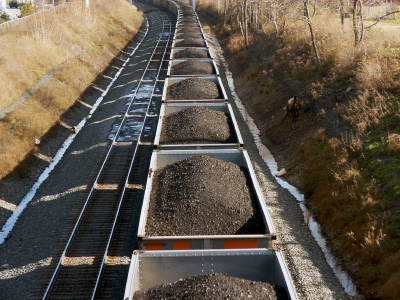
coal trainA massive new rail line planned to move millions of tons of low-grade coal from northeastern Wyoming to the Midwest has been stopped. For more than nine years Sierra Club and our allies have been battling plans by Dakota Minnesota & Eastern Railroad Corp. (DM&E) to build this new coal line, and late yesterday DM&E announced the project is “on hold.”
 
The $6 billion rail line would have carried 100 million tons of coal annually, enough to power about 50 coal plants.  If burned, the coal shipped by this rail line alone would have emitted approximately 200 million tons of carbon dioxide, the equivalent of adding about 40 million cars to our highways.  By stopping this coal line we are ever closer to averting runaway global warming and jump-starting a clean energy revolution.
 
Let’s put those numbers in perspective. Stopping this one rail line may be one of the biggest steps we have ever taken to slow global warming. For the U.S. to do its part to stop global warming, we have to reduce our carbon run-rate by upwards of 200 million tons each year.  This one victory has thus bought us a full year’s worth of progress – not that we should stop here, of course.  
 
This decision is also further evidence that coal is on its way out. The risk of financing coal ventures, future carbon regulations, the Obama Administration closing the loopholes coal enjoys in mining, burning and ash disposal, and competition from affordable and reliable clean energy options clearly spells trouble for coal.

The Sierra Club beat back this project in 2002 when we and our allies persuaded the U.S. Court of Appeals for the Eighth Circuit that the Bush Administration had failed to consider the global warming impacts of this new train line. This decision stands as one of the first global warming cases in our nation.  After the Bush Administration agreed this project might have some impact on global warming, the legal challenges continued.

Throughout the years of legal wrangling we worked with a broad coalition of landowners and public health advocates—including the Mayo Clinic in Rochester—who did not want coal trains running through their back yards.  

Stopping this ill-conceived coal line continues a welcome and recent trend. In just the past few weeks we’ve seen decisions not only to abandon plans for new coal plants, but we’ve also seen existing coal plants being retired and replaced with cleaner alternatives.
 
Last week Ohio Edison Co. announced it would slash coal burning at its R.E. Burger coal plant in Shadyside, Ohio, and replace the coal with biomass due to a pollutant-lowering agreement with the U.S. Environmental Protection Agency.
 
This past Monday, Tennessee Valley Authority (TVA) entered the twentieth century when it announced that it will study whether it should close the John Sevier coal plant in Rogersville, Tenn., and six units of its Widows Creek Fossil Plant in Stevenson, Alabama.
 
Just one day later, Progress Energy made public plans to close three coal plants in North Carolina. The coal plants would be replaced with a clean-burning natural gas power plant.  Progress Energy cited “changing emission targets and the likelihood of legislation to reduce carbon emissions” as a reason for the switch.
 
This week we also celebrated the 101st proposed coal plant being defeated.  For more than a year we, along with our allies, have been battling Santee Cooper’s planned Pee Dee coal plant in South Carolina. Apparently someone at Santee Cooper finally updated the cost of coal and realized that global warming regulation was imminent.  
 
All that, and we can see why the Energy Information Administration (EIA) announced recently that coal use in the United States has plummeted in the past year. Whereas coal provided more than 55 percent of our electricity in May 1985, in May of this year it only provided 42.5 percent of U.S. electricity. It’s a welcome downward trend for coal, and we will be doing everything we can to replace the remaining dirty coal with clean energy even faster in the future.
 

Bruce Nilles is the director of the Sierra Club’s Beyond Coal Campaign, the largest component of Sierra Club’s new Climate Recovery Partnerships. The Beyond Coal Campaign is working to reduce America’s over reliance on coal, slash coal’s contribution to global warming and other pollution woes, end destructive mining, and secure massive investments in clean energy alternatives.

Bruce joined the Sierra Club in 2002. He previously worked as a staff attorney for Earthjustice’s San Francisco office, and during the Clinton Administration as Counsel to the Assistant Attorney General for the U.S. Department of Justice’s Environment and Natural Resources Division in Washington D.C. He received his J.D. and B.S. degrees from the University of Wisconsin.

Advertisement
Advertisement
  1. elly Potter Posted 4:04 am
    28 Aug 2009

    Well done, great work :)
  2. foodprovider's avatar

    foodprovider Posted 8:23 am
    28 Aug 2009

    I am for so called green energies...bio-fuels such as ethanol, biodeisel, wind, solar, hydro and anything else that economically can be produced into energy that we can naturally replenish, but to shut down a rail line to accomplish this seems foolish.  Granted that rail currenly seems to be  curently catering to coal, it also is a very efficient transporter of grain to the markets that take that grain and process it to you food.  At the moment the burning of bio-mass is ineeficient, but that will change with improved technologies.  Lets not be negative rail,  Rail can transport passengers, that will take cars off the roads.  Rail can transport dry goods, that will take trucks off the roads.  Rail can transport energy such as bio-mass.  Rail can lengthen the life span of out highways.  What we need is to open up the rail industry to competition.  Right noe the rail industry enjoys some anti-trust laws that make it very difficult for any new ventures to happen in the rail industry.  WE NEED TO IMPROVE OUR rail systems. 
    1. Tasermons Partner Posted 1:20 pm
      29 Aug 2009

      They didn't "shut down" a rail line.  They stopped it from bein' built in the first place.And apparently, you don't know much 'bout rail systems.  It's not like any rail line can be used for any purpose.  The rail-line was built by the company, and the company gets to decide it's use.If anyone else wanted to use the line to transport any other freight, they'd need the company's permission (hence, they'd need to pay company big $$$ and make sure that the their freight didn't interfere with the delivery of the coal).Passenger trains and freight lines don't mix very well.  Passenger trains on freight lines get delayed often because usually the company specifies that the freight trains get priority on stretches of sigle-line, so the passenger trains often haveta pull over and wait at junctions for the freight trains to pass.Passenger trains work most efficently when they have their own, devoted, lines.
      And the route of the line was already determined.  From the mines to the power plants.  If anyone else wanted to use the lines, they'd haveta have facilities already nearby the planned route, and their destination would also haveta be along the planned route.Since the route was mostly rural, it's unlikely any passenger trains would do well.  And most freight these days go to factories near the cities, so once again, the route wouldn't provide many viable options for things other than coal.We DO need to improve our rail systems, as ya said, but this wouldn't be the way to do it.
  3. Coal Burner Posted 11:51 am
    28 Aug 2009

    I agree with the concepts but must admit the tone seems pretty negative.  Is middle class America really ready and willing to pay for natural gas this winter and all those to come in the next 25 yrs?  I would assume that planned railhead stopped in the PRB which would have transported a lower SO2 emission producing coal to market in the Midwest.  For a viable change to our present and future energy path we need to work together not as enemies.  Before we turn our backs on the only historical form of reliable and economical base load power, shouldn't we know what the real alternatives are going to be and who will pay for it?        CB 
  4. Bud Dingler's avatar

    Bud Dingler Posted 11:56 am
    28 Aug 2009

    Coal Burn-er

    let them burn wood if things get tough!

Add a Comment

You are not logged in. Thus, you cannot post a comment. If you have an account, log in. If you don't have an account, well, by all means go make one! Meet you back here in five.

Hello, Visitor!    Why not register?

Advertisement