So You Want Health Care Reform?

Boycotting Whole Foods won’t help 27

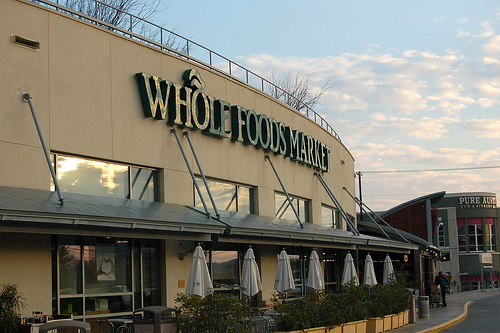
whole foods storeThe health care reform debate has provoked any number of crazy opinions, including the far-right fantasies of death panels or that Medicare isn’t a government-funded program. Two weeks ago, Whole Foods founder and CEO John Mackey added his own musings to the list with an editorial in the Wall Street Journal condemning “Obamacare” and any government health care option in the U.S.

Unfortunately for Whole Foods, Mackey’s foray into the health care debate hasn’t gone unnoticed.  Some progressives, incensed that the head of one of their preferred companies is helping pollute the debate, have expressed their ire via a boycott of Whole Foods.

While well intended, this is a bad strategy.

A boycott of Whole Foods won’t make a difference on health care, and it might actually hurt something progressives care about — organic and natural farmers.

Whole Foods Founder John Mackey Steps in It

With an audacity that borders on self-destructive, Mackey, a well-known “Libertarian,” began his op-ed on U.S. health care reform with a bizarre quote from Margaret Thatcher about socialism and other people’s money, and it went downhill from there.

Rather than see access to safe and affordable health care as a basic necessity in a civilized nation, Mackey calls any proposed government reform a “massive new health-care entitlement.”

For many progressives, Mackey’s invoking the Constitution and Declaration of Independence to deny an individual “right” to basic health care struck a powder keg of emotion. Mark Rosenthal, a playwright based in Great Barrington, Massachusetts, was one of them.

“I was disgusted,” says Rosenthal after reading the editorial. “I was nauseous at the thought of shopping at Whole Foods ever again. It made me want to vomit.”

So Rosenthal did what anybody who feels rage and indignation does today: he started a Facebook group.

In nearly two weeks, the Facebook boycott has garnered some 29,000 online fans, while Mackey’s tirade has created a cottage industry of blog posts regarding Whole Foods, its CEO and the boycott itself.

Why They Shop Elsewhere

After weeks of watching the health care debate be dominated by town hall protesters, and seeing the potential for reform slide away into a Clintonesque compromise, Internet savvy progressives jumped at the chance to focus their anger on one of their own—Whole Foods.

As someone who works in sustainable agriculture and is a progressive Democrat, I’ve seen many a “friend” who has signed the Facebook page. Many are serial joiners, others have longtime beef with Whole Foods for its perceived litany of sins, and others just like a good fight.  When a protest is just one click away – why not satisfy that urge for revenge?

Target the Real Enemies of Health Care Reform

But the fact remains that no matter how many people join the boycott or wave a protest sign outside Whole Foods, it won’t bring a single person in the country better health care.  If progressives want to achieve a public option, they need to stay focused on the true obstacles to reform.  Groups that have helped fan the flames, like United Health Care and the Republican party, the Blue Dog Democrats, and the Gang of Six, have been dragging their feet on health care reform since the beginning.

One good way to do this would be to make contributions to progressive members of Congress that stand up for health care.

Another is to target the Blue Dogs. Over at Daily Kos, Markos Moulitsas is working on holding Blue Dog Congressman Jim Cooper from Tennessee accountable; while Howard Dean is mounting a Senate whip count campaign against wayward Senators to push them in support of the public option.

The public option will only come through organizing politically against members of Congress who actually vote on health care. Everything else is political theatre. It may soothe the pain, but it won’t actually cure what ails our nation.

Beware The Unintended Consequences

While Mackey has made his company an easy target in this debate, Whole Foods is not the enemy. The small natural foods retail company that Mackey helped found in 1980 has been a national leader in many progressive causes for years, which may be why his editorial stung so much.

But for anyone who has followed Whole Foods for any period of time, Mackey’s libertarian views should not be a surprise.

And putting his politics aside, I’m far more concerned about the collateral damage that could be done to Whole Foods suppliers, mainly organic and natural farmers and some of the smaller and midsized organic companies whose products Whole Foods sells.

Despite what many critics of Whole Foods say, as a company it has done much more good than it has harm and is largely responsibly for helping popularize organic and natural foods in the U.S.  In doing so, Mackey and Whole Foods have helped create a market for thousands of farmers across America to grow food in ways that do not harm the environment, farm animals or consumers’ health.

And while Mackey may not support universal health care as a right, his life’s work and that of his company has increased Americans’ access to food that is safer to eat, more nutritious, and will contribute less to the burden of the current health care crisis than his competitors.

Unfortunately, the only responsible thing left to do is to ask John Mackey to step down as the CEO of a company that he helped build, and to ask him to go it alone, just as he believes the uninsured citizens of this country should do.  Whole Foods, and the farmers they help survive, shouldn’t suffer, but the author of that WSJ editorial should for putting America’s organic and sustainable farmers in harm’s way.


Dave Murphy is the founder and director of Food Democracy Now!, a sixth generation Iowan, and an advocate for sustainable agriculture.

Advertisement
Advertisement
  1. Bud Dingler's avatar

    Bud Dingler Posted 11:53 am
    28 Aug 2009

    Readers should also consider that in some regions WF is the man for wholesale for local producers. Boycotting WF in those areas that have few alternatives for organic and sustainable farm products is just hurting your local producer who needs year around income from wholesale. 
  2. Dave R Posted 4:47 pm
    28 Aug 2009

    There is a fallacy here.  Most, if not all, people who choose to boycott Whole Foods, will still buy organic and/or sustainable food products from another business (presumably one with more progressive ownership).  The end user demand for organic and sustainable food products should not decrease much, although there may be a shift from some producers to others.  If one has strong enough ethical disagreements with the ownership of a business, one has a perfectly valid right not to spend one's dollars there, even if it may not change the outcome in Washington.
    1. Dave Murphy Posted 6:05 pm
      31 Aug 2009

      Not sure if every one who shops at Whole Foods and those who now won't shop there are as "committed" to local and organic as you claim. A lot of people shop at WF for a variety of reasons, the main one being they can afford it and they might also be interested in buying food they believe is healthier.Whole Foods carries a lot of natural and organic labels that stores like Kroger, Safeway and others do not carry. By refusing to buy at WF, less people will buy these products and this could have a trickle down effect. The family farmers that provide food for those labels can't afford to lose any market share in a recession where family farm income is down 38% this year alone.Because of the terrible economy, farmers I've talked to believe a boycott will hurt the farmers more than it will hurt Mackey.People have a right to shop where they want for whatever reason. However, John Mackey is not Whole Foods and vice versa. Mackey is the CEO of a publicly traded company. His editorial was irresponsible. My main concern is that at the end of the day a boycott won't bring us any close to health care reform than people showing up at a townhall meeting and shouting down a member of Congress. But it could end up hurting organic and sustainable farmers - something Michael Pollan is concerned with as well. 
    2. Dave Murphy Posted 6:05 pm
      31 Aug 2009

        
    3. Dave Murphy Posted 6:06 pm
      31 Aug 2009

      Not sure if every one who shops at Whole Foods and those who now won't shop there are as "committed" to local and organic as you claim. A lot of people shop at WF for a variety of reasons, the main one being they can afford it and they might also be interested in buying food they believe is healthier.Whole Foods carries a lot of natural and organic labels that stores like Kroger, Safeway and others do not carry. By refusing to buy at WF, less people will buy these products and this could have a trickle down effect. The family farmers that provide food for those labels can't afford to lose any market share in a recession where family farm income is down 38% this year alone.Because of the terrible economy, farmers I've talked to believe a boycott will hurt the farmers more than it will hurt Mackey.People have a right to shop where they want for whatever reason. However, John Mackey is not Whole Foods and vice versa. Mackey is the CEO of a publicly traded company. His editorial was irresponsible. My main concern is that at the end of the day a boycott won't bring us any close to health care reform than people showing up at a townhall meeting and shouting down a member of Congress. But it could end up hurting organic and sustainable farmers - something Michael Pollan is concerned with as well. 
  3. josebrwn Posted 5:23 pm
    28 Aug 2009

    if the only responsible thing left to do is to
    ask John Mackey to step down as the CEO, isn't a boycott the surest way to get his and the board's attention?   
    1. Matt Petryni Posted 5:44 pm
      28 Aug 2009

      I agree. As persuasive as this argument is, there is nothing wrong with a boycott. Simply because the consumers demanding Whole Foods products (namely locally-sourced, more sustainably produced food) decide to quit buying from WF for whatever reason they choose, it doesn't mean that suddenly that consumer demand ceases to exist.Barring significant barriers to entry, other retailers would be able to more easily move into these markets and profit from this demand. Consumers would, as a result, increase their marginal utility without the whole "I'm Pro-Screwing People Out of Healthcare™" aftertaste. (An aftertaste which, it appears, lowers these consumers' marginal utility.)Libertarians love to use this whole incident as an example of how liberals love to "persecute" people for not agreeing with them. Sadly, that's just kinda how the free market works: if consumers want to buy from people who share their ideology, and not other people, then whoever shares their ideology will make more of a profit from those consumers. If we're going to buy into the free market, I guess that's something a "libertarian" like WF's manager will just have to be willing to accept. Sorry bro...
  4. tawster Posted 10:23 pm
    28 Aug 2009

    Bah. His comments actually *add* to the debate. One may disagree with him, but he is being forthright and open, unlike other opponents to the debate. I welcome this. This is the kind of discourse I hope for in debates like this.-t
  5. georgiact Posted 6:59 am
    29 Aug 2009

    Where's the tolerance?  Where's the love?  Let me get this straight. A guy that has done more for the organic movement than anyone, and who provides health insurance to all but the most part-time of his employees has to be destroyed for having an opinion different from the staunch liberals.  You'd think a CEO, who takes a very small salary comparatively, and  that has figured out a way to provide health insurance for mostly low-wage workers would be heralded, not ridiculed.  However, since you cannot refute his statements with well constructed arguments, you must attack him personally with your emotional outbursts.  Hey, maybe if you boycott WF long enough, you can force the closure of a bunch of stores and force the elimination of hundreds of jobs.  Awesome! Maybe the WF in your area will be the first to go.  Well, there's always Starbucks!
    1. Matt Petryni Posted 8:43 am
      29 Aug 2009

      This is almost exactly the kind of response I expected and was referring to in my earlier post on this topic. In a free market (which, let me note, our market expressly isn't, but that's beside the point), consumers make their purchasing decisions so that they increase their marginal utility in a cost-efficient way. What their utility consists of, though, is entirely up to them. If a consumer wants to buy only from someone they mostly or totally agree with politically, that is a choice they should be allowed and even encouraged to make. For too long consumers have assumed their consumption is disconnected with the political activities it might finance, and for the market to actually work efficiently, it's critical consumers vote with their feet.This is something conservatives point out fairly religiously: "if you don't like what these companies do, don't buy from them," but in some cases (not all) seem to be fairly annoyed when any group of consumers actually chooses to follow this policy. This sort of position is disconcerting because it suggests that one is less concerned about free consumer choice in an open market and more interested in simply allowing big business as it currently exists to get its way without consequences.All that being said, most of the criticism of the WF management has in fact been quite forgiving ("they're not Wal-Mart, that's for sure,") but a consumer is not required to "refute statements," or attack the substance of an argument. Those are the responsibilities of citizens, and many have in fact engaged in that discussion. Consumers, however, have only one responsibility: to consume such that their marginal utility is increased. When a CEO makes statements that in any way lowers the marginal utility of his products to his consumers, which is what has happened here, he should expect to see losses for it in the market - that is, if we really accept this "free market" concept.What I get to, ultimately, is the problem with the very logic Mackey uses to justify his stance on healthcare. Thus, herein, I am trying to construct a series of realizations that hopefully "refute his statements": consumers cannot and do not make fully rational purchasing decisions that serve the greater good. And when they do, it is rare for this "greater good" to be defined in a way beyond the accumulation of material wealth. Yes, if WF is boycotted, the policies they support will likely be hurt by it, and hopefully in a free market another even more liberal company would enter the market and capture this share of consumer demand for profit. But the unintended consequences of this action clearly demonstrate the problems with trying to leave non-materialistic decisions up to a marketplace: those decisions, when made, will be hasty, irrational, and often rife with externalities and unintended consequences.Unlike a consumer, a "citizen" (and I would argue, a "person") has by nature responsibilities beyond their material gains. They have social and political duties defined through their free choice in governance, a principle which is core to free democracy. I suggest it is time for people to accept and embrace a concept of personal responsibility.I argue that instances like the WF boycott show exactly why it is important for citizens to engage politically in a meaningful way to "refute statements" and "herald good behavior." To behave as consumers first and as citizens second is the exact kind of nonsense that led us to a so horribly defunct system of healthcare, for example, in the first place. This is the lesson I would hope Mackey and others too might learn from this experience: that when consumers exercise their power as consumers through a "free market," it is often horribly ineffective at achieving what they actually want, which in this case appears to be better quality and more equitable healthcare.
      1. tawster Posted 9:21 am
        29 Aug 2009

        Yes, folks are welcome to punish a company for it's leaders taking a stand they don't like. Whether it really makes sense or not. (E.g., the CEO of the company I work for hardly represents the company as a whole). I would love to see a reasoned refute of his comments. I haven't seen one yet. He is not of the "death panel" or "Medicare is not a government funded program" ilk. Whereas comments like "he should resign" are nearly as idiotic and unrepresentative of folks who care about this issue. I understand that this article is about the value of boycotting, but I would love to see a link to why one would want to be that upset? I have reread the article looking for a link to a point by point reasoned argument refuting Mackey and haven't seen one. Maybe I am missing something.Please folks, don't fall into the "knee jerk" trap. Proposals to expend government health programs are varied. Obama's is one way and there is no reason to assume it is even close to perfect or even pushing us in the right direction. Let's argue about it on the world's stage and hopefully improve our current position. I fear folks grab onto and support a position before really digging into it.-t
  6. georgiact Posted 10:05 am
    29 Aug 2009

    The health care industry or the health insurance industry is certainly not a free-market system.  This is why costs are so high.  Those high costs then become barriers to access for some.  The car insurance market is a much better example of a true free market.   Each individual can shop for a policy that fits his needs and budget.  The point of the insurance is NOT to cover flat tires, scratched paint, oil changes, air cleaners and tune-ups.  You have it to cover you financially should you have an accident and either harm someone or do severe damage to your vehicle, the repair costs of which might hurt you financially in a way that would be difficult to recover from.  You see competition at work in every Geico, Progressive, All State, or Amica ad informing you that they have the best price and service (value).  You don't see dentists advertising do you?  The premiums you pay for car insurance are a reflection of the perceived risk you represent.  If you are a young male driver, your rates will be higher than your female counterpart.  As your driving history proves that you are an excellent/safe driver, your premiums may actually go down.  If you cause accidents, your premiums will rise.  I pay less for my insurance than I did 5 years ago.By contrast, the health insurance industry is no longer about protecting you financially from low-probability, but high cost occurrences.  For the health insured, the consumer rarely even knows the cost of the service he is seeking, thus price/value does not enter the purchasing decision.  To the consumer, the cost equals his or her co-pay.  Thus, the mentality is to consume as much health care for their co-pay as possible.   Unlike car insurance, health care recipients want every single health product or service they use to be covered.  Thus, to "insure" someone against any out-of-pocket cost is extremely costly and leads to irrational spending on health products and services.The system could be changed very quickly and costs could be reduced significantly if we could return to a free-market system, where people paid out of their own pocket for their typical/anticipated health needs and left the insurance to cover the financially burdensome, but very rare conditions.  This would incentivize people to become more responsible about their health, because it would mean keeping more money in their pocket.  Doctors would be forced to lower their prices in return for immediate cash payment.  Have you ever noticed that the cash price is a  lot lower than what is billed to the insurance company?  Also, less $$ would be wasted on office staff chasing down insurance and government reimbursements.  Less defensive medicine would be practices, because consumers would demand rational explanations for why additional tests were necessary and beneficial.    If we simply returned to this approach, which is best represented by health savings accounts and catastrophic coverage, the % of GDP spent on healthcare would go down and overall health would increase.As to whether you should boycott WF to get at Mr. Mackey, that's your own choice.  Feel free to not shop there.  You can avoid shopping there for any reason you want.  But pushing for government healthcare for all takes the choice away from all of us.  That is certainly no free market.  Imagine if the federal government ran the grocery stores.  After all, isn't access to food a right just as much as healthcare?  Even if there were a government option, a government chain available to "keep the grocers honest," do you think the private stores would stay in business very long?  Let's see, the government stores would be exempt from local property taxes and local and federal income taxes.  They probably wouldn't need insurance of any kind, because you can't sue the federal government.  With these lower costs, they could charge lower prices.  They could also dictate what the other stores could sell.  NO Twinkies or sugary drinks!  That just makes people fat and causes them to consume more heathcare dollars.  NO beef, because that causes global warming.  No paper plates or diapers, they just end up in a landfill.  You see where this will end up.  And the advocates of government healthcare know this.  The question is why?  Why go down the road of so many other countries where this system has shown over and over again to fail miserably.  In Canada for example, nearly 5 million people in a population of 33 million, can't get a primary care physician.  They have to wait as much as three years to get one or be one of the lucky lottery winners in monthly drawings.  Would it be better to have equal, but lousy care for everyone?  Would it be better to have a system that limits choices and has no incentive for being responsible your ones health?  The rich and the politically connected would still opt out of the system and get much better can the greater population.  In the end, either the cost goes up even higher or care is rationed. With the huge saving that would result from returning the system to a free-market, all of the uninsured could be covered by some mechanism and a pool could be created to remimburse for pre-existing conditions.
    1. Matt Petryni Posted 12:12 pm
      29 Aug 2009

      And somehow we got off the subject of Mackey because, well, it turned out boycotting people isn't misplaced rage, but a reasonable consumer choice. Moving on to other arguments...In the car insurance market, every state requires consumers to purchase it in some form. It, therefore, is not a free market. I would suggest it is indeed a "more free" market than that of healthcare, but it is also a much less complex market: a car is much easier to price and fix than a person. I suggest that, in truth, is there is no such thing as a truly free market, never has been, and never will be. Once we realize that every market is somehow flawed in some way, we will be able to move forward with a discussion that honestly approaches how to deal with that fact.I would suggest that "moral hazard," as you mention in the fact individuals want almost everything covered, is not a feature of the lack of freedom in the health market, but the nature of the commodity itself. The idea of "insuring" against any out of pocket cost arises because their demand for most healthcare services is at some point very, very high: consumers are willing to go through immense financial catastrophe to avoid not consuming the product at the price point (and therefore the experience continued sickness, injury or death). Therefore, because of this high demand, cost increases. As a result, everything becomes very expensive, and access is limited. Then, as demand is so high, consumers figure out any way possible to get someone else to pay for the service that is abjectly beyond their budget line (herein lies the "chasing down"); and in the few cases where they cannot, they die or suffer serious long-term health consequences.The market would, however, be more efficient if we actually let people die or suffer those consequences on a more regular basis because they did not or could not pay for basic out-of-pocket services. This would create a downward pressure on price: some people would not or could not pay, and demand lower prices. Producers would then look for ways to cut costs ("demand rational explanations for tests") and capture this market share. We still seem unwilling to let this happen, though, so the time is coming for us to make up our minds. Most industrialized countries have already made up theirs.All that economics claptrap aside, of course no one is proposing only government-run anything. I would vehemently oppose such an idea if it were moving through Congress. As would I oppose "death panels," or whatever. It however, is not and never has been. Enviroperk has provided links to a few of the current proposals, which are themselves relatively diverse. They're mostly too conservative to fix the problem in my view.A decent example of one concept, very generally speaking, is water. Generally the government provides water, and therefore "dictates" (through the democratic process) what is in it. (For example, it cannot contain poison. Or sugary sweetness. "My god, who is the government to say our water cannot contain sugars!" They're the producer, sir.) But they are NOT the only producer. You may easily buy sugary water in the form of soda, juices, or perhaps bottled water, or even have large cartons of water provided to your house. These businesses in this "socialized water" world are in fact massive and successful industries who provide products efficiently to consumers. Hell, you could probably even purchase on the market some form of poisoned water, but the demand for this is fairly low. Buying these products costs you money in addition to what you pay your government for water, but you could theoretically disconnect your water service and buy only Culligan water. Some people choose to do this.This is kinda one of the ideas for healthcare. You're not required to use it, or to be subjected to the government's rules on it (rules, as a voter, you'd theoretically help decide). You may still shop around elsewhere. It will not be the best coverage, probably, and it will not cover everything. But it'll get the basic shit out of the way so we don't keep hamstringing our businesses with this infinite-demand nonsense as they try to compete on the world economic stage.
    2. plantqueenie Posted 12:45 pm
      02 Sep 2009

      GEORGIACT -
      Well said.  I know the original article focused on the fact people were boycotting the CEO... but failed to mention exactly WHAT he said.  The fact is, those that support the President and those pushing the current legislation in debate... adamantly oppose those who are offering up viable alternative ideas for how to deal with our healthcare "crisis".  And ultimately in this case has resulted in a boycott.  Just because a guy who ACTUALLY has a plan that works... offered up his plan with perhaps a side-note of criticism.  If the current administration and legislators are truly open to alternative VIABLE options for how to improve our healthcare system... they should be welcoming Mackey with open arms.
      1. amylynn1022 Posted 8:56 am
        04 Sep 2009

        Yes, but I have as yet to see an opponent of the current health insurance reform offer a viable alternative.  I will give Mackey credit for trying, but the truth is that his proposals are just the same old pro-for-profit, lets's-ignore-the-need-for fundamental-change solutions that my senior senator, the dishonorable Mitch McConnell, has been proposing.  Granted, Mackey gussies them up a bit in enlightened-business-speak, but that doesn't make them any more valid.  (I stand by my earlier request that he needs to have his employees surveyed by an independent, unbiased entity before he claims that they are thrilled with their health insurance.  I know if I was in their place I would rather have comprehensive insurance and while I would take the high-deductible plan I would describe it to any confidental source as "crap".)  All research points to the fact that people with high-deductible insurance and HSAs act much like people without insurance--they don't spend their healthcare money "wisely," whatever that means--they just don't spend it at all unless absolutely neccessary.  Even for "wise" things such as preventive care, because there is always the fear that it won't be there if they _really_ need it. The model Mackey and people like him support is wrong--people don't buy and sell healthcare like tomatoes or cars.  Trying to do so has caused many of the problems that we have with healthcare in the US--we need more regulations, not less. The health care "system" in the US is fundamentally broken and cannot be solved by calls for personal responsibly or tort reform (what is up with the calls for tort reform!  Sen McConnell has a bee in his bonnet about this, too).  
  7. enviroperk Posted 10:14 am
    29 Aug 2009

    I applaud Mr. Mackey for taking the risk to share his point of view on the subject. Though I heartily disagree with his views, I firmly believe he has a right to air those views without the new "riot batons" of threats and boycotts.  Tolerance for other ideas in a Democracy, no matter how I feel about those ideas, is critical to reaching solutions. I don't think I would boycott the bike shop down the street because the owner is a Libertarian who writes opinions I do not agree with, or my Vet, because she is a Republican or a BlueDog or an Independant.After reading the HR3200 bill as introduced ( http://www.opencongress.org/bill/111-h3200/text ), and the Senate committee version of the "Kennedy Biil" ( http://help.senate.gov/BAI09A84_xml.pdf ), neither include enough preventive measures and appear to full of measures that only enrich big pharma.  To those that say they are supporting THE "Health Reform BIll", I have to ask -- Which one? There is: The President's proposed outline of one, the Senate HELP committee proposal, and  HR3200. There are vast differences in each.We have a long way to go. I am a little surprised at the high level of support for such lukewarm, corporate pandering legislation in the bills here among Grist readers. Sometimes you have to question authority. Lobbyists work both sides of the fence, and today they are working the party in control. 
  8. Tasermons Partner Posted 12:56 pm
    29 Aug 2009

    What does healthcare reform haveta do with the environment (other than some mostly small or inadvertant side-effects on things like smoking or population numbers)?If the healthcare reformers wanna duke it out with him, then let 'em.  I care more 'bout what he does for/against the environment.
  9. flyfisherman Posted 6:37 pm
    29 Aug 2009

    What is the best way to lower costs of some commodity? Competition. What is the best way to encourage competition.... open it to everyone who wants a piece of the business. There is an absolute dearth of competition in the health care system. Hospitals, prior to expansion, must seek an endless list of approvals and also have to defend that position from their sister competitive hospitals. Ok, we need to insure that there are some hospitals in urban areas etc... but let everyone else that wants to build a hospital just do so... if they fail, that is the risk of business. Health insurance is a state by state business. Each is heavily regulated and the bar to new competitors is very high. Two things would help open health insurance: 1) open the insurance to any company in EVERY state. Right now each BC/BS company is a separate entity in a state regulated by varying sets of rules. Each has a staff which is expensive and improves health care by a factor of precisely ZERO. Then 2) List the payment codes on the net and have every provider and insurer list a0 what they charge and b) what they reimburse. Etc. Competition. By the by, I believe Massachusetts has now achieved 97.4% total enrollment of the population as having health insurance and without a government run program!! They do have much higher costs... but that will come down as the competition heats up.
    1. Matt Petryni Posted 7:23 pm
      29 Aug 2009

      Competition does work... if the producers have an incentive to lower the cost. In other words, the producers must compete for a limited consumer demand. In this case, the consumer demand appears to be relatively unlimited (evidenced by their willingness to pay prices well above their ability to afford), and so there is no incentive for a competitor to try and capture away some of that demand by lowering cost.When a producer enters the market offering products at a lower price than existing producers (to compete with them), in the case of this commodity, they quickly find they can raise they price and make more money with literally no loss of consumer interest. This continues to happen until the market finds "equilibrium," which is essentially the point at which consumer demand eventually maxes out, and lowering prices actually results in more consumer interest while raising them results in less. We're getting near this point. We're not there yet, so we can expect costs to continue to increase.For a more detailed discussion of why I feel this commodity behaves in this unique way, see my post above replying to Georgiact. I think it has less to do with regulatory barriers to market entry (which, I'll agree, do exist) and more to do with the mere nature of a commodity which is simultaneously rarely needed, fairly complex to supply, and yet vital to human life.PS. Massachusetts's program is government-mandated, subsidized, and run through the Commonwealth Health Insurance Connector Authority, a government agency. So yes, they are more or less using "a government run program!!" It's actually not much different from what is being proposed as "a public option," just FYI.
      1. flyfisherman Posted 4:24 pm
        30 Aug 2009

        The competition must be opened much much wider. Let Kansas companies compete in California or New York or any other state. Let the Chinese, Japanese and Indians compete for the health care delivery. Let Canadians compete. Do what is necessary to increase the supply of health care workers (RN's, LPN's, MD's, Physician's Assistants, Hospitals, etc... When the supply of those offering care exceeds the demand.... then the price will drop. the numbers of people are not changing very rapidly. It ought to be simple to increase the supply to that point and 'overtake' the demand. Also, we need every individual to have some skin in the game and pay for a share of the costs.   I see boycotting some company as a waste of energy.   Peace.
      2. Matt Petryni Posted 10:00 am
        01 Sep 2009

        Alright. Here's where I give up, sir. Thanks for playing.It's one thing if you disagree with me, or if you find fault with my reasoning. But if you're not even going to take the time to even marginally respond, and instead just repeat your original argument ad infinitum, well, then I'm just going to have to assume you're too stupid or too uninterested to have a serious conversation about the issue.
  10. Clare D Posted 8:50 am
    30 Aug 2009

    I'll add my voice to the disagreement of Mr. Murphy. When business
    owners do something morally reprehensible like speak out against better
    health for millions, it is our duty to voice our opposition. In the history of progressive causes, a well planned and executed boycott is one of the tactics that actually works.  A boycott
    and the negative press that goes with it might make Mr. Mackey think
    twice about opining against progressive causes. If that is the result
    of the boycott, then it is a success.

    Whole Foods has only ever pretended to be "one of our own". Only a great fool would think otherwise.

    If this is bad strategy, Mr. Murphy, then maybe you need to rethink and
    remember (if you ever knew) what a good, progressive strategy is.
    Meanwhile, I'll continue to boycott Whole Foods.
  11. amylynn1022 Posted 11:58 am
    30 Aug 2009

    A question--I keep hearing claims that Whole Foods provides health insurance to most of its employees.  But the truth is that any employer can claim to provide their employees health insurance and then provide only a crappy catastrophic insurance that doesn't actual cover anything.  Or  they can offer insurance but then make the employee cost so high that most of rank and file employees can't afford it.  So I want to know, has anyone talked to the rank and file employees of Whole Food about what they think of health insurance?  If Mr Mackey really is providing comprehensive, affordable health insurance to his rank and file employees and still turning a profit then he really needs to share the secret of his success with the rest of us.  If he is just providing crappy or unaffordable insurance and then trying to score PR and politic points for covering his employees then he needs to be called on it.  I am not going to boycott Whole  Foods, in part because I don't live near one right now.  But if Mr Mackey, CEO, is going to make political pronouncements about matters well out of his accepted areas of expertise (ie organic food and natural food policy) then he needs to produce the goods.
  12. Javaman Posted 6:02 am
    31 Aug 2009

    oh man, first of all whole foods is not sustainable. If you have ever walked through their produce isle, you will see that 90-95% of the food is transported from over seas, even the organic stuff.They are a massive greenwashed company. Very little if anything is sourced locally.And the argument about mackey's half witted screen on health care is only part of whole foods problem.he is anti union. if you want to be part of the "green" movement, it's not just paying the fruit and vegetable pickers an extra penny on a pound of tomatoes, it's also walking the walk in allowing ones own employees to form a union without fear from the corporate overlords. Or didn't you know that mackey is massively against unions?whole foods actively promotes anti union rhetoric in all of their stores.half wit libertarian mackey thinks "government shoud stay out of our lifes!!". okay fine, mr. mackey, then stop using the roads, don't drive a care with safety requirements, don't call the police or the fired dept when you have a problem, don't drink the water, etc, the list goes on and on.he's insane screed is the same as American communist rallying agianst democrasy while exercizing their free speach.So go on with your water carrying for whole foods, I will not  shop there anymore, I will not help promote green snobbery, "I am organic, but my garlic comes from china!! Weee!!".So much ignorance.An Micheal Pollen should be ashamed of himself, defending whole foods, but writes about how everyone should go local.shop at farmers markets. Know where your food comes from. Don't eat anything that comes in a package and don't eat anything with ingrediants you can pronounce.Disgraceful, simply disgraceful.
    1. enviroperk Posted 7:16 am
      31 Aug 2009

      Two thoughts:One, on the above basis, all food stores other than local farmer's markets should be boycotted. Just because they dare not express a political view in opposition to the current overlords in Washington does not make them not-guilty -- or does it?. We should especially not consume other than locally grown "java".Two, if you have been a member of a major union, you know that union bosses and corporate overlords are the same thing. If you have had a union pension or health care plan, you learn much about the definition of the phrase "robber barons". I love the idealism, but I just have to live in a world where I cannot yet grow all of my own food and work outside the financial system. Though if you do, I wish you the best and view your life with much envy.
    2. tawster Posted 12:30 pm
      08 Sep 2009

      I don't generally shop Whole Foods... because, like your other replier mentioned... there isn't much local about it, though it is higher quality... by a lot. Mostly. You can find local food there though, just look for it. But I prefer to support farmer's markets (small local business and more local food). The workers there are treated better than many places in their business (I know this from the one person I know who works there so take that for very anecdotal).
      Whole Foods has been "greenwashed" a bit.... but the current health care proposal has been "progress-washed" as well. Read it. I remain skeptical. There has been a lot of influence on that proposal that is not for the benefit of the people. A "progressive" achievement should be one that improves things. If it does not... it ain't progressive. I know there is good socialized health care out there... but so far, the US government hasn't been all that good at it (I am ex-military... lemme tell you, the quality of US government health care is excellent to atrocious... mostly leaning towards atrocious). And I hope to hell I don't spend my last days in medicare-quality nursing home.
      Similarly, unions are great... only when they are great. But, there are a lot of terrible unions. That doesn't mean we shouldn't have unions, but when a union ceases to be needed or is utterly ineffective, or worse becomes detrimental... they need to know when to end.I am hoping that someday, we'll have a great health care system, that is accessible by all, that compensates our doctors enough to encourage great doctors to shine and weeds out crappy doctors and other health care workers. I want a health care system that doesn't tax our finances to the point of hobbling achievement. I am hoping. We may build something great... but odds are we won't. Not with the proposal I have seen. At this point, what I am really hoping for is something that doesn't suck worse than what we have now. I am not going to hold my breath. Hopefully, I am wrong.I am in favor of great systems that work. Hopefully, we can achieve that.-t
  13. BB1978 Posted 7:49 am
    31 Aug 2009

    Boycotting is the most effective non-violent strategy to create change.  I don't shop at WF because my middle class salary can't afford it.  Mr. Mackey's comments has now turned me from being a future customer to no customer at all for WF.  As for buying local organic food, I would LOVE this option, if one were to exist where I live.  Sadly, I do not have that choice, so I buy organic food from my local grocer (not WF).  I am a staunch environmentalist, but I am a realist, one cannot expect to live in organic purity when one does not have such options.  We need to give people realistic, affordable, choices to go green.  Otherwise people will simply become overwhelmed and cease all action.  That is not a better alternative.  WF should certainly be applauded for the work that it has done, but why should it escape criticism in areas where it has failed?  Correct me if I am wrong, but 12 dollars an hour is hardly a living wage that can sustain a family with children.  Providing health insurance to your employees is something all large employers should do, it is something they can afford, and given the low wages of employees at many of these corporations, it is a moral obligation.  Large employers who do not provide adequate health insurance, like Wal-Mart (another store that I do not patron), simply pass on that cost to the community because their employees cannot afford insurance with the salaries they make on the private market.  Guess where these people go? Medicaid and the emergency room.  That incrases everyone's healthcare bill.  I will still buy organic food that has to purchased from growers, I will simply not buy it from WF.  Mr. Mackey's comments demonstrate that at the end of the day all corporations are pretty much equal.  He certainly showed that side during the Wild Oats takeover (that probably hasn't helped in the competition department).  Instead of giving WF and other institutions a green seal of approval we should be vigilant of ALL corporations and how they conduct business.  One way to do that is to boycott them.  It is one of the few powers left to people in an era where corporations have the upper hand.

Add a Comment

You are not logged in. Thus, you cannot post a comment. If you have an account, log in. If you don't have an account, well, by all means go make one! Meet you back here in five.

Hello, Visitor!    Why not register?

Advertisement