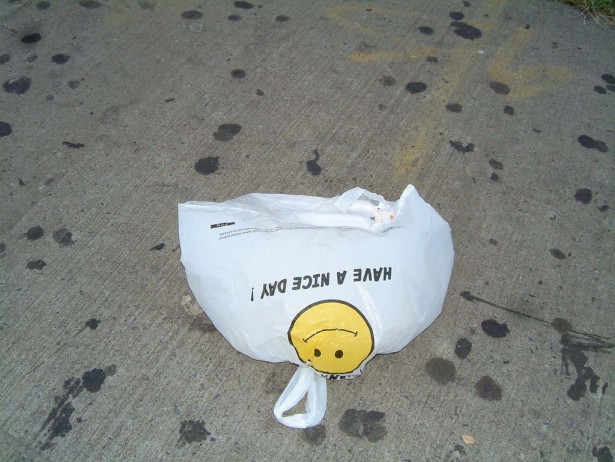
 Photo: ceegee-ceegeeAdvocates of Seattle’s Referendum 1, a proposal for a disposable-bag fee that was soundly defeated in Tuesday’s primary election, may have lost a battle. But Brady Montz, chair of the local Sierra Club chapter and leader of the effort to pass the referendum, feels confident that the war against plastic bags is going well.
“We’ve never had a vote before where 42 percent* of people decided, ‘I want to pay for my plastic bags,'” he said. “How well did the first votes on gay marriage work? How well did the first votes on drug legalization work? These things, they build.”
The American Chemistry Council dropped big bucks to fight the referendum–$1.4 million in total, compared to just $80,000 raised by the Seattle Green Bag Campaign, a coalition of environmental groups and volunteers who worked to pass the referendum. The ACC and plastic-bag manufacturers got a lot of traction with their arguments that the tax was unnecessary and would hurt low-income people, though of course their real motivation was to protect their own bottom lines. Montz said the ACC’s paid signature-gatherers misled some pro-fee voters into signing a petition to put the fee on the ballot by implying that there wouldn’t be a bag fee if there wasn’t a vote. But the fee, originally an ordinance passed by the city council and signed into law by Mayor Greg Nickels, would have automatically taken effect at the beginning of 2009 if it weren’t for the ACC’s efforts.
Montz said he sees the ACC’s aggressive fight against the bag fee as an example of how “the industrial political complex has perfected this strategy of doing deceptive astroturf campaigns.” Without the resources to make massive television and radio ad buys, he said, efforts like the Seattle Green Bag Campaign face a huge uphill battle. In this summer of “death panels” and forged letters to members of Congress, progressive groups across the country are searching for new ways to overcome the profit-protection machine. “What we’ve got to do is figure out how to use what we’ve got, which is people and the truth,” said Montz.
Voters are starting to dig for the real dirt beneath the astroturf, according to Montz. After the corporate campaign against it, many Seattleites who didn’t like the bag fee don’t like the ACC either, and that could affect similar fights in the future. “When cities can be punished by companies because we dare to make a law restricting one of their products, if people just understand that, that right there is a huge win,” Montz said. “[Voters] now know the ACC spends money to overturn laws. So next time is not going to be so easy for them.”
The ACC’s involvement also raised awareness of the issue and turned it into a hot topic, getting Seattleites to at least think and talk about plastic, even if they aren’t ready to bag it yet. “People now in Seattle know about the North Pacific [trash] gyre,” Montz said. “If you just focus on [the fact that] this particular fee lost, OK, well, that’s bad, but on the issue of how do we change how people behave, how do we make people think about their choices, that we’ve won.”
Montz said the pro–bag fee camp plans to continue to dialogue with Seattle voters and gauge what the next step in the war against plastic should be. In the meantime, environmentalists have a lot to focus on in November’s election, with Sierra Club activist Mike McGinn a potential frontrunner in the mayoral race, and fellow Sierra cohort Mike O’Brien leading his city-council race. While Montz said he doesn’t think the bag fee will be a big issue in the mayoral race, he doesn’t expect it to fall out of the public consciousness. “After this election is over, these bags are not going away,” he said. “I’m sure the conversation is going to continue.”
For now, Montz and all the other volunteers at the Seattle Green Bag Campaign have reason to get excited about being at the forefront of a growing debate over plastic’s role in our world. Even though Seattleites can still get their plastic bags for free, they might think twice before they do.
“At the party [on election] night there were so many happy volunteers, getting drunk and happy,” Montz said. “Because if you look at where we are now compared to where we were a year or two ago, it’s amazing.”
*UPDATE, 26 Aug 2009: As more ballots have been counted, the percentage of “yes” votes has gone up. The latest results have 47 percent voting in favor of Ref. 1 and 53 percent voting against.
A message from
Your support keeps our climate news free.
Grist is the only award-winning newsroom focused on exploring equitable solutions to climate change. It’s vital reporting made entirely possible by loyal readers like you.
At Grist, we don’t believe in paywalls. Instead, we rely on our readers to pitch in what they can so that we can continue bringing you our solution-based climate news. Donate today to keep our site free.