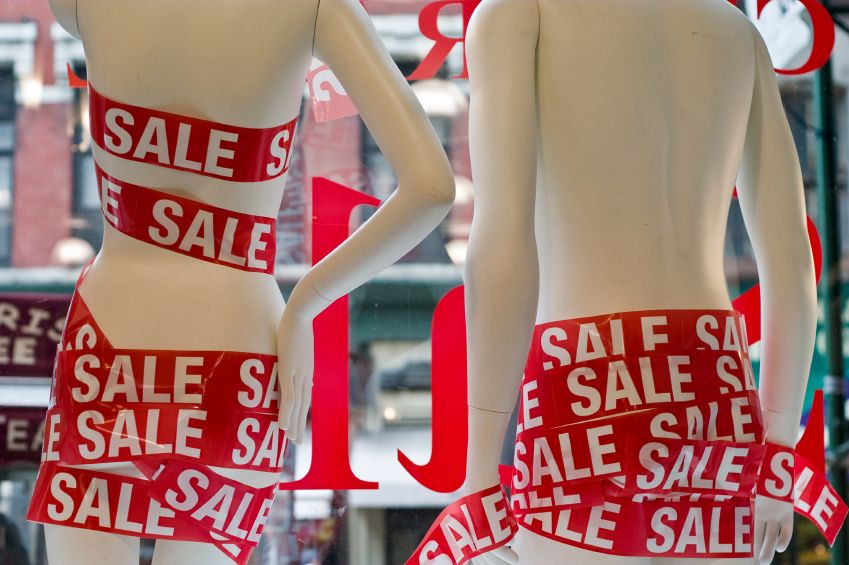
How much is that brainwashing in the window?

Our addiction to cheap stuff has become very expensive, new book argues 24

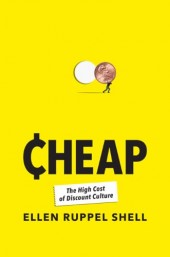
Cover of "Cheap"American retail is riddled with cheap, fall-apart merchandise. We know this. Sales are a ploy to get a shopper to spend, as opposed to a boon for penny pinchers. Right. And how much mileage do we get from that old, overused adage, “You get what you pay for”? More than we’d like to admit.

So why is Ellen Ruppel Shell’s new book, Cheap: The High Cost of Discount Culture, so shocking?

Shell deftly weaves a compelling, cautionary tale out of disparate strands: the psychology of manipulating shoppers, the environmental costs of our lust for inexpensive things, the deskilling of the retail industry, and the loss of appreciation for “quality.” Tracing the history of discount culture from the yesteryear excitement over brown paper packages to today’s ambivalence about crammed plastic bags, Shell shows us why we feel we’ve been ripped off if we pay “full price.”

She pushes readers to ponder the strange circumstances that make an item shipped from thousands of miles away less expensive than something homegrown. And how a major furniture retailer can convince a customer to get attached to a piece just enough to buy it, but not enough to keep it long. And, most disturbingly, just how expensive our bargain hunting is turning out to be.

_____

Ellen Ruppel ShellEllen Ruppel Shell

Q. What audience did you have in mind when you wrote Cheap?

A. This grew out of my own curiosity about my own behavior. Since I have a science background, and I try to be a very rational person, I was startled by my own shopping behavior. So if that was happening to me, I figured it was happening to an awful lot of people. As someone who is socially conscious, I was making purchasing decisions that didn’t reflect that social consciousness sometimes. I wondered what was behind that.

I’m trying to reach a thoughtful audience, and I’m particularly interested in reaching younger people because I think they have the spirit and the opportunity to change.  Interestingly, it seems to resonate with young people quite a bit.

Q. Why do you think your message is resonating with young people, especially considering how inclined they are to move around and not get attached to their property?

A. I don’t want to speak for all young people, but there are all sorts of ways to get value without playing into this con game of cheap.

You go to a place we have in my town [Boston], called the Garment District, which is second-hand, third-hand kind of clothes, and you can get really good stuff there for very little money. You can be creative with it—dress it up or dress it down, do what you want with it.  It’s not a cookie-cutter piece out of H&M that everybody’s wearing that week. You’re the boss of that thing, it’s not the boss of you. It’s style rather than fashion.

The idea that you can go to IKEA and get good deals—it’s really not a good deal. You can’t ever get rid of it, it’s not something you can resell. You don’t really own it; you’re kind of renting it. So that’s something that young people who are thinking about moving can think about. What you want to do is to be able to put it on craigslist, or maybe get your friends to help you move your stuff. You want your stuff to [have] resale value if you really want to save money. You’re not being cheap, you’re being smart. They’re two different things.

Q. How does the psychology of marketing inhibit the ability of consumers to see an item in terms of its entire lifespan?

A. IKEA names all its products to make stuff seem cute, but then they’re telling you, “You’re not really attached to this, are you crazy?” They’re getting you to laugh at and make a mockery out of the idea of durability. They make durability seem like an old-fashioned, passé idea. And it works. I think it’s really juvenilizing: “Oh, come on, you want a new toy. You always want a new toy.”

Particularly in the marketing of cell phones. You have a cell phone that works really well for you, and then you have a friend who has a cooler one, and you want it. That’s kind of 4-year-old behavior. When you have 3- or 4-year-olds, they want the new shiny thing. But as you get older and a little more mature—and I don’t mean 50, I mean 16 or 17—you learn that that’s not what it’s about. It’s about what works for me. Marketers obviously don’t want you to think that. In the case of the cell phone, they assume you’re going to use it for a year or less, and it’s not durable. Even if it is, they assume you’re going to junk it. I say, “Screw them!” If it works for you, hang on to it. Don’t buy into that, because basically, it’s all about them making a profit. It’s not about you and what you really want.
Mannequins and sale signsCome hither—cheap goods for sale!Q. Do you see similarities between the psychology of marketing cheap goods and of greenwashing?

A. Yes, I do. There’s a mnemonic device that’s used by marketers in terms of discounting. The mental shortcut is, “Lower price, good deal.” And those two things don’t necessarily follow. Something that’s low price triggers the impulsive side of our brains and causes us to make decisions without much thought. The same thing is true for some of this green marketing. We’re told that something is green, or it has the aura of green, and that makes it OK to buy it.

That’s actually why I [focused on] IKEA instead of Wal-Mart. Most of us think, “IKEA’s the good guy.” IKEA has taken some tiny, baby steps towards environmentalism. For example, they started charging for their plastic bags. When you charge for plastic bags, it’s reasonable to question if it’s really a green step or just a way to make profit. They use low-wattage bulbs in their stores. But those are cost-cutting measures. There’s nothing wrong with cost-cutting measures, but they don’t take environmental steps that cause them to reduce their profits. People think, “Oh, it’s a green store.” But the whole story that they tell of clean living and the outdoors is a mnemonic to get you to buy. When you look under the hood, and you look at something that is essentially being sold as a non-durable product, something that won’t last and isn’t necessarily marketed to last, that’s not an environmentally sound product.

Q. What do you say to those who believe the way discounters do business is essential to the American spirit of capitalism?

A. If you reconsider Adam Smith‘s arguments, in light of today’s realities, he would not say what a lot of people think he was saying. He was concerned about greed and morality. He was a moral philosopher. When we talk about a free market, Adam Smith could have never anticipated the free market that we have today, which is a global market of supply chain that depends on instant messaging across the globe and transportation costs being so low that they’re essentially negligible.

That’s why the invention of [shipping containers], which has severely lowered transportation costs, is so important in the story. In [Smith’s] days, if you shipped something from Japan or China, it was costly. Now, it really isn’t. It completely changes the argument about what works and what doesn’t. And when you’re talking about a global economy and you have workers who are completely out of our sight, who we use as a labor source—and the resources in those countries as well—and costs are so low because transportation costs are so low, it’s a completely different equation.

Q. Do you foresee a change in our perception of cheap if transportation costs are driven up through climate legislation?

A. There’s no question [about] that, if we actually taxed for carbon use around the globe so that we can’t just outsource our pollution—which is what we’re doing now to the developing world. In terms of pollution, it was pretty shocking to see the levels of particle pollution of areas in China. We’re talking huge amounts of carbon being burned, toxins in the air and the water, which is all to keep prices low, because when you put in environmental protection it costs money. If the price of oil went up substantially and environmental restrictions were made globally so that we couldn’t outsource our environmental costs, I definitely think this could have a big impact on cheap.

Q. So there are two ways to frame the rejection of cheap: from a personal, psychological standpoint and also an environmental standpoint.

A. And also sociopolitical impact, because as we pursue cheap goods, we also pursue lower wages, less benefits, and worse working conditions because that’s what makes things cheaper and cheaper. If wages go up in Mexico, plants close up and go to China, and if wages go up in China, the plants move on to Vietnam. We’re basically pursuing the least regulated cultures, where the rule of law is the weakest when it comes to enforcing the kinds of things we in the United States really value.

Q. Do you think the general public is shocked when they make the connection that their cheap habits are supported by deregulation?

A. Some of the critics have said the book is shocking in the sense that it kind of opened their eyes. And it was shocking to me; I didn’t know this stuff before I did the book. I think with knowledge comes power and you get to enact change in people.

Q. Is a rejection of cheap goods and food sustainable on a global scale?

A. In the book I quote World Bank economist Michael Morris because I don’t want people to think that this is going to be easy or that we’re all going to hold hands and sing Kumbaya. It is a world of many billions of people. In talking about agriculture and small farms, there’s this notion of happy peasants—which is a myth. It’s true that small farmers can flourish, but it’s also true that in many places in the world, the small farmers are the poorest of the poor. We do need to feed this world, which has so many more people than when we had these small farms. We do need to have large agricultural systems.

What I call for in the book is a middle way. I don’t think we necessarily need factory meat farms, for example. I think that’s actually a very costly system in many different regards. If that’s something that the local-food movement and the slow-food movement pushes against, it’s probably a good thing. Do we need large fields of gain? I think we do. [Fields of corn] to be fed to livestock is an unfortunate thing, but, as my background is in science, I do see the positives there, and I don’t want to sell them short. For people who are starving around the world, they need a source of readily available food.

To feed the world, we’re going to have to keep some of that in place, but we’re also going to need a lot of local farmers, and we need more diversity in what we subsidize. We subsidize the grain growers, and the corn growers, and the soybean growers—anything that has to do with the meat industry. But we don’t subsidize very much fruit and vegetable growers, which, if you’re going to have a healthy diet, that’s what you need. We need to really rethink our agricultural system, but the way to do it, I believe, isn’t just to tell everyone to shop at their local farmers market—it’s too expensive for most people, and it’s unavailable to most people. I take more of a middle ground than a lot of other folks, people who I very much respect, but who I think are looking through a very narrow lens. I think we have to be careful not to oversell or oversimplify.

Q. In Cheap, you talk about the role that corporations and politics have played in how we’ve gotten to where we are, but you also place a significant part of that burden on individual consumers. How do we get to a sustainable middle ground in the retail landscape?

A. Consumers need more information. When you go to New York City and you go to a coffee shop, they tell you the calories of what’s in the food. You can make better decisions; you change your choices.

I didn’t write this in the book and I wish I had, but some kind of labeling so that consumers know the origins of what they’re buying, and how it’s made, and what it’s made of [is important]. And eventually you should be able to go on the web and find out what company made this, where’s the supplier, and [if] are they acting responsibly. Suppliers in the developing world are notorious for labor abuses. The way you make these changes is to make the labeling at the point of purchase where the buyer can see, right then and there, what he’s buying. And that changes behavior.

Vanessa Kerr is an editorial intern at Grist.

Advertisement
Advertisement
  1. Morgan Posted 3:02 pm
    17 Aug 2009

    And for the glitterati, the addiction to expensive is even more damaging to the planet:http://ecohearth.com/eco-news/eco-op-ed/837-the-beast-of-bling-how-wearing-jewelry-harms-the-planet.html
  2. Tom Twigg's avatar

    Tom Twigg Posted 4:46 pm
    17 Aug 2009

    While agreeing with the gist of Shell's message I have to say I'm not sure about singling out IKEA as a problem; some of my oldest furniture and kitchenware was purchased at IKEA, it was made simply and sturdily and was minimally packaged. When I have moved the IKEA items were easily disassembled and transported, making them more likely to be kept in use. As a business they have made commitments to using toxin-free foam in mattresses and make recycling CFLs easy, so it is not quite accurate to ascribe all their "greenness" to cost cutting measures. It would be great to see IKEA go much further, but I think we could say the same about most all of us.
    1. JB Quercus Posted 6:20 am
      20 Aug 2009

      I kind of have to agree about the IKEA stuff.  I am sitting at a desk with bookshelves and filing cabinets right now that I boulght at IKEA at least five years ago and have moved it three times, and it is awesome. It looks great and it is sturdy, and if I needed to sell it to someone, I could. 
  3. lasmog Posted 5:17 pm
    17 Aug 2009

    Compulsive hoarding also seems to be on the rise in this country and I suspect it is related to the issues raised in "Cheap."  People can now more easily satisfy their desire to acquire more and more stuff until their living spaces are bulging at the seams. 
  4. Ellen Ruppel Shell Posted 7:25 pm
    17 Aug 2009

    Tom, I had a great time speaking with Vanessa, but I guess I didn't quite realize she was taking our conversation down as a Q & A.  So at some points in this conversation I was speaking in short hand.  I agree that IKEA has its strengths--not everything the company sells is disposable, for instance.  But enough of it is that many folks complain of the veneer peeling off coffee tables and water stains that won't come off, book cases that sag, etc.  IKEA banks heavily on its "environmentally concerned" image, but because it designs to price, and insists on the lowest possible prices from its suppliers, much of what it sells comes ready-loaded with a large environmental cost--a cost many consumers don't see.  (Such as the felling of large tracts of timber from remote forests in the Russian Far East.) As well, since much of what IKEA sells is not made to last (and some of its advertising promotes the idea of disposability) one has to question whether its business plan is sustainable.  When I say you don't own IKEA merchandise you rent it, I mean that IKEA goods are unlikely to become heirlooms--they may not break down over a year or two of careful use, but they are not built to last over time--or for resale.   Some moving companies refuse to transport IKEA furniture unless it is disassembled and reboxed, a task that many of us shudder to even consider.  (And I know from experience that IKEA stuff sometimes breaks as it's being disassembled.)All that said, IKEA is not a dominant factor in CHEAP--one chapter discusses it in the larger context of craftsmanship, and that chapter and other part of the book have generated a lot of discussion, for which I am grateful. I'm delighted that CHEAP has ignited a reconsideration of the true meaning of the word "value." Thanks for the comment.   Ellen Ruppel Shell, author of Cheap: The High Cost of Discount Culture 
    1. mmooney Posted 2:09 pm
      18 Aug 2009

      Ellen,Thanks for your comments, and I hope your book gets some serious attention.  You certainly make some compelling points, especially with regard to cheap labor.  It would be a sad irony if the primary consumers of these cheaper goods (the US middle class) are the catalyst leading corporations to chase cheap labor, unwittingly undermining themselves in the process.One point on which I am curious is the statement that "since much of what IKEA sells is not made to last (and some of its
      advertising promotes the idea of disposability) one has to question
      whether its business plan is sustainable."Do you believe this refers to resource sustainability (namely that eventually the raw materials will disappear)?  I ask because one could also make the counter arguement that "heirloom" items make less business sense; a saturated market would all but wipe out demand. I would think the ideal business case would involve design for environment principles where the materials for a disposable product could be readily (and cost effectively) captured and recycled.  That maintains the customer cycle without pillaging natural resources for a truly closed loop.Thanks again.
  5. The smart one's avatar

    The smart one Posted 7:39 am
    18 Aug 2009

    Ellen, I have not read the book, so perhaps this is addressed, but to my mind, American retailers have caused much of this reliance on sale and cheap goods on their own. In the mid-70's I was in retailing and witnessed the very beginning of massive importing of goods to sell under stores' own labels at reduced prices. It was revolutionary then; buy a shirt made overseas, for instance, at $3 or $4 less than it would have been, had it been made in the US. Then bring it into stock at a "special price", usually a dollar or two lower than the American-made equivalent, which represented a much larger profit than the typical keystone price point (twice wholesale). After selling some at this inflated price, the retailers then put them "on sale" at a lower price, but one that was still higher than keystone. Retailers got addicted to this added profit, and began having "sales" more and more often. Prior to that time it was pretty rare to have a true sale more often than quarterly for most retailers, and in some market segments once a year was the norm. Now I challenge you to find a store that does not have a "sale" going on at any given moment.I would submit that most retailers now are routinely buying cheap goods and selling in this manner, usually with store brands slapped into the goods. Macy's does it just as often as Wal-Mart does, and a store like TJ Maxx is filled with overstock from department stores that ordered too much of particular styles and couldn't move them in the ordinary way.Good luck with your book.
    1. Tom Twigg's avatar

      Tom Twigg Posted 10:12 am
      18 Aug 2009

      Smart One, I take your challenge and make you one ... find a sale going on at any Apple store. This may be one example of a company that has not tried to define itself for being as cheap as its competition, they aim to be better and don't mind being more expensive because of it (some studies have shown Macs to have a lower cost of ownership even though purchase price may be higher). While not a "green" company by real standards (movements in that direction are welcome), Apple computers do tend to be in use longer and hold their resale value better other PCs. The relentless iPod upgrade cycle may an exception to that trend.Shamefully stumping for my favorite fruit company.
  6. The smart one's avatar

    The smart one Posted 10:21 am
    18 Aug 2009

    I concede that Apple is the rare exception.  ;-)  Mostly what I referred to, though, is clothing and home goods retailers, where the preponderance of the goods is foreign-made.I also think that Apple tries really hard to position themselves as the "cool kids" in the electronics area, and being thought "cheap" is not in their marketing plan. They want to be considered more of the gold standard than the low-end of the spectrum.
  7. flatman Posted 10:58 am
    18 Aug 2009

    I agree with a lot of the above. Yes, some people have made a religion out of acquiring things. But the argument seems just a bit too biblical. Consumers are reaping what they've sown? While the enlightened companies that artificially inflate prices in an effort to seem exclusive may be in the clear (!) I think that still leaves a whole lot of manufacturers and retailers with a lot to answer for. The truth is that even when I WANT to spend more, it's hard to find quality goods. Yes, for some kinds of things you can go the artisan route. Food, clothing, furniture, and the like. But good luck finding anything that requires investment in production facilities and a skilled labor force. I waited two years for a small woodworking shop to make my bedroom furniture but that's not exactly an option when you need kitchen appliances. I'm tired of getting shoddy products products that fall apart after the first use or, worse, come out of the box already rusted, warped, broken, or missing parts. Businesses have shamelessly cut quality to squeeze out more profit, not simply to meet consumer demand for cheap goods or to stay competitive.
  8. houstondr Posted 2:25 pm
    18 Aug 2009

    One aspect of this issue which has not been discussed is the impact of cheap, disposable goods on small (often mom-and-pop) repair shops.  Cheap products are made with such shoddy materials that they will not "hold a repair" or the cost of repair is more than a new item and all incentive is lost to repair or refurbish items.  The end result is a downward spiral into more consumerism - repair shops are driven out of business because they cannot compete and consumer are forced to buy new products when anything breaks because there is no one left to make the repair. Like Flatman, I am weary of even high end products that fall apart after a short period of use and based on my own consumer research, am in full agreement that businesses appear to have cut quality to squeeze out every drop of profit.  Hence the bottom has rusted out of my microwave after 2 years of (very light) use, the back is lose on my new couch because the manufacturer used particle board in the frame instead of wood, the heel caps on my shoes fall off after I've only worn them once or twice, and the zipper in a name brand skirt I just purchased broke after just one wearing.  By contrast, I have a wooden ironing board that was made in the early 1900 and a set of Rever-wear pans that were made in the 30's.-use them every day and they are as serviceable as they day they were made. 
  9. Kiara Posted 8:13 pm
    18 Aug 2009

    I am surprised no one has mentioned the high cost of disposal of all this cheap (or not so cheap) stuff.  Both landfilling and incineration (of any kind) have tremendous repercusion on health and climate--especially when it comes to hi-tech products.  I used to think the money not spent on replacing things already owned could be spent on traveling vacations.  Turns out, flying is not such a good idea if one wants to shrink his/her carbon footprint.  What's left?  The theater perhaps?  I guess, spreading it like manure--but locally!
  10. JB Quercus Posted 6:24 am
    20 Aug 2009

    I am far more concerned about the fact that it is almost impossible to find clothes, shoes and school supplies that are not made in China. Really, have you looked for boys sneakers that are made in America? I can't find any. The closest I came across were some mocasins (sp?). I don't mind paying a little extra but for my kids I can buy a shirt at Target for five bucks that lasts as long as my made-in-the US shirt, that is 25 to 30.  In fact since I can buy five Target shirts that I only have to wash once a week versus two or three US shirts that I have to wash more, the US ones actually don't last as long. My cheap made in China Target stuff lasts long enough to be used by two boys and passed on to other cousins and freinds. If I had some other options I would buy US stuff, I would even pay twice to 3X as much, but 5 to 6x as much is a bit hard to swallow.
    1. Morgan Posted 7:39 am
      20 Aug 2009

      If the Target shirts are cheaper and don't need to be washed as often, you might consider the environmental costs. Often, these school uniform polos and pants are saturated in teflons and fire retardants that end up in your children's bodies, and in large fatty animals like polar bears and walruses when they migrate north in our environment. The best deals are had at second-hand stores. You can recycle sturdy clothing that has survived many washings and your kids are less at risk for being assauted by harmful industrial chemicals. I often find clothing from Europe, where the industrial standards are safer for humans and the environment. I'd much rather have my child in wrinkled clothes that are not harmful than looking prim in chemical-saturated clothing.Here's a back-to-school guide that helps with school supplies purchase desicions:http://ecohearth.com/eco-zine/kids-and-family/834-the-green-abcs-a-sustainable-back-to-school-guide.html
  11. JB Quercus Posted 6:36 am
    20 Aug 2009

    Hey all Look at the add at the top of the page - it is for new "green" phone - isn't this what Ellen is talking about? Particulalry with companies taking advantage of our environmental problems by offering what is supposedly a green solution, when it fact it just exacerbates the problem.
    1. Fenrir Posted 9:09 am
      20 Aug 2009

      You are absolutely right, I was also pondering on it. How green is that phone really? I mean, apart from being "green" colored, it kinda mentions having biodegradable elements, but c'mon, a simple life cycle assessment has shown many hybrid biodegradable/synthetic products to impact more than simple synthetic production (since it envolves an extra agricultural impact for the organic components). Is Grist selling out on sponsorship? I hope not. Still, you made a great point. The author would probably frown at the "green" cell phone on top of her article. Nice catch.
  12. rtl88 Posted 7:43 am
    20 Aug 2009

    I would like to comment on the agricultural issues raised by Shell.  Isn't the question of food about access?  There is enough food on this planet to feed everyone, that's not the problem..  well, the main one anyways.  In my experience farmer's markets have been cheaper than the bigger grocery stores, and then what is the difference if you tell people it's ok to buy cheap at the grocery stores?  I don't see how buying cheap clothing, furniture etc is much different than cheap food.  There are costs for both.
  13. Ellen Ruppel Shell Posted 6:27 am
    21 Aug 2009

    Some very thoughtful comments here....  The book addresses most of the issues mentioned above... I do a chapter on food starting with the Irish potato famine--there was more than enough food to feed the Irish peasantry, but unfortunately most of that food was not deemed "suitable" for poor peasants, and was exported, as much of the food in the developing world is today.  The demands of today's global marketplace and the influence of multinational corporations have made it even more difficult for farmers in the developing world to maintain what little power they once had over their own lives and futures.  For example, last year India produced 94 million metric tons of rice, an increase of more than 2 million tons from the previous year. There was no shortage of rice in India, yet thanks to agreements to export their harvest, India's own people suffered, as did citizens of Asia and Africa.  In CHEAP I trace these tragic outcomes to unsustainably low food prices in the US.CHEAP also deals in depth with the environmental costs--many of which are outsourced to consumers. IKEA, for example, makes much of its environmentally correct policies, but in fact all of these policies are directed toward cost cutting, with environmental benefit being incidental.  IKEA outsources most of its production to the developing world, where, as we all know, environmental and human rights concerns are rarely paramount.  And in its advertising and marketing it encourages wasteful overconsumption.  Yes, you can get well designed desks at IKEA, but I argue that these desks are no more sturdy--and their purchase no more socially or environmentally responsible choice--than a similar desk you might buy at Wal-Mart.The Smart One is spot-on--and yes, I deal with his points in CHEAP.  He writes that in the 1970s, stores bought cheaply made imported goods and sold them side by side with American goods--making them seem like a very good deal.  Gradually, as quality declined and concern for price grew, the well made goods became more scarce, and the cheaply made goods proliferated--at prices that were actually more than they were worth!  I argue in CHEAP that the middle ground of soundly made moderately priced goods was all but washed out in this flood of cheap goods--making it more and more difficult for consumers to find value. In Cheap I call for a return to value--where service, craftsmanship, and quality become as important to consumers as price.   This may mean that we buy less, but that we expect more of what we do purchase--and of the people who make, service and sell it to us.  Hence, these people can demand to earn more--and themselves be better able to buy quality--reversing the race to the bottom that has cost us so much.    You'll recall that in the past thirty years the household income of the vast majority of Americans remained flat or declined as the price of things we absolutely cannot live without--health care, education, drugs, housing--sky rocketed.  The "great deals" on consumer goods--electronics, toys, clothing, etc, seduced us, and had many of us into going into debt to compensate for our shrinking incomes.   Hence, when the housing and stock market went south, we found ourselves with insecure or no jobs, or jobs that paid too little to help us pull out of the mess.  We could no longer borrow on our homes, and consumer spending went south. So I think we have a wonderful opportunity here...a time to regroup and to reconsider what all those fabulous "bargains" have brought us.  And going around the country talking about CHEAP, I've found that many, many people are becoming aware of this--and reconsidering their options and their priorities.  Readers of Grist are of course ahead of the curve....  Knowing what we know, we can take the first steps in making change--and I think the time is right for that change.
  14. JB Quercus Posted 7:04 am
    21 Aug 2009

    Ellen,Thank you for your thoughtful book and your response here on Grist. My husband and I have made a committment to buy quality things made primarily in the US or Eurpoe or those items made by native people in foreign countries who are fairly compensated for these items. We have also made a commitment to shop locally to support the shops in our neighborhood - we live in Chicago so you would think this would not be too hard. But it is.  So not only do I agree with what you are saying, but we have been making changes to walk the walk so to speak. I actually think that there will be many people that agree with you - that is not the problem. I think the much bigger problem is providing alternatives to lots of cheap foreign made items.
  15. Ellen Ruppel Shell Posted 7:19 am
    21 Aug 2009

    Dear JB,
    Sounds like you have found alternatives already!  And there are others--second hand stores and thrift shops can offer good value without compromising values.  But you're right, we can't do this individually.  As I say above, I think the time is right for change...and I've been playing around with some ideas.  For example, the technology exists to put tiny bar codes on products that would allow consumers to go on-line and trace them back through the supply chain to their place of manufacture.  This is already being done with some foods, and in some speciality goods (like wool.)  I do think that consumer demand for this sort of technology might "inspire" industry to reconsider the "race to the bottom" model it is now following.  That's a start--and I'm eager to hear other ideas.
  16. Surfing Nutritionist Posted 3:57 pm
    22 Aug 2009

    I appreciate Shell's pragmatic middle-ground approach. We aren't going back to some pastoral fantasy and clearly the current Big Ag system is causing way too many unsustainable problems for all of us. I don't see enough arguments for finding the middle-ground, the balancing point between the extremes. Some would argue that's selling out but I'd argue it's like finding that perfect balance in your compost pile. Surely if each and everyone of us vote with our dollars everyday, it's the best way to alter the habits of industry. But that means changing ourselves first. Tough pill to swallow for many.Regarding the Ikea debate, I've had numerous pieces from them over the years, about 50% of which are still around, and the other half have gone "away." Particularly I've found that their dressers are nearly worthless but for some reason, probably because I thought it was "cheaper" at the time, I keep getting suckered in for another. I have a nice dresser for one of our kids (not from Ikea) that was well built by a proper wood craftsman that is still in perfect condition while I've burned through three of it's Ikea cousins. One was built with a quality and "hand me down" mentality while the others were built for becoming obsolete. In the future, I will gladly pay more up front and avoid the poor performance issues along the way, having to go through the hassle of disposing the lame version and needing the money to buy a replacement. And better yet, I'd rather build my own (I do have a coffee table I built myself that has also outlasted a number of Ikea coffee tables). We won't solve these types of massive problems until we can adopt more of a high quality, cradle-to-cradle approach to design...and purchasing.
  17. Bernadette Keenan Posted 12:50 pm
    24 Aug 2009

    They are building a trucking freeway through our neighborhood, with health concerns due to diesel particulate being major, as well as environmental, economic and other concerns.  They say it is needed to bring in goods we want to buy, which I understand may only end up being used for about 6 months, then they get put out into a landfill (often unused) and of course there are waste disposal issues, and the need to transport all the stuff not recycled back down the trucking freeway for disposal.  The point there is a great deal at stake here from the environment, to green jobs, sustainable communities - build quality locally, zero waste etc.  So looking at our buying practices is a good idea.  Find myself I am starting to question on purchases "why buy?"  and not doing so if I don't like the answer.  Also consider weekly no buy days, for example Sundays, there was a lot less of this shoddy, and even dangerous (recent problems with food, drywall, toys from China) merchandise around when we took a day a week off from shopping.Maybe we can stop a freeway, improve the economy, reconnect with our families, just make the world a better place if we are more careful and cautious about consumption. 
  18. Ellen Ruppel Shell Posted 10:44 am
    26 Aug 2009

    That last comment is so telling-yes, new roads to haul in more stuff and now Sunday is just another shopping day! Our economy is powered by the buying and selling of goods--but it need not be built around predatory pricing of ever cheaper, increasingly shoddy goods. Long lasting, quality products made with enviornmental integrity would cost more, of course, but they would also allow for stronger enforcement of environmental regulations and better paying jobs--allowing consumers to spend more on what we buy. The "race to the bottom" cycle of cheap can be broken, and in fact the breakage is already evident in some sectors. For example, one of the "boom" industries of the current downturn is seeds--consumers are planting gardens to reduce their food bills, and to some degree turning away from cheaply made but overpriced processed foods. The new interest in cooking--(Food Network anyone?) has inspired millions of young viewers to create their own meals by hand--at least some of the time--as well as reintroduced the notion of affordable quality. China may be "factory to the world" today, but as an emerging economy with a growing concern over human rights and environmental issues, it will not be "cheap source of labor and materials to the world" forever. I am extremely optimistic--and convinced that the "Age of Cheap" will in the course of history be considered just a fascinating--and blissfully fleeting--fad.

Add a Comment

You are not logged in. Thus, you cannot post a comment. If you have an account, log in. If you don't have an account, well, by all means go make one! Meet you back here in five.

Hello, Visitor!    Why not register?

Advertisement