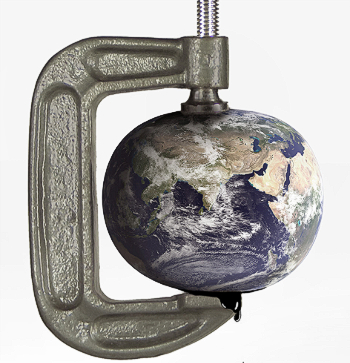
Our planet’s supply of safe drinking water is rapidly diminishing. We have reached peak oil (according to some experts). The polar ice caps are melting, causing sea levels to rise and threatening coastal areas and island nations everywhere.
The Great Squeeze, a documentary by director Christophe Fauchere (of 2007’s film Energy Crossroads), is full of such apocalyptic observations, none of which should surprise anyone even vaguely environmentally minded.
The film is polished and put-together, chock-full of interviews with various professors and experts, and features powerful footage of displaced typhoon victims and third-world children picking through trash heaps. The problem with The Great Squeeze is that its subject matter is too broad, and its format and delivery are not unique enough to reach the legions of uninformed citizens who most need to hear what it has to say. Those of us inclined to pick up a documentary with the vague subtitle “Surviving the Human Project” are probably already on board with efforts to create a sustainable future. We don’t need more swelling, ominous music, staggering world population statistics, or haunting shots of belching oil refineries to convince us.
The Great Squeeze made some brief but interesting observations that I wish had been explored more deeply. It discussed the modern concept of progress, which has only barely begun to shift away from being defined by levels of consumption and convenience — barometers that developing countries have been monitoring for decades in an effort to emulate the American lifestyle. The film also touched on the fact that Americans have lost “the tragic sense of life” — that is, that our expectation of instant gratification has wiped away the truth that life contains loss as well as consumption, hard times as well as happy times, and that often pain and sacrifice are required of us before we can move to a better place.
For those balking at the idea of transforming our economy into a clean, green one, this is the message they need to hear. But I fear that The Great Squeeze, like so much environmental advocacy journalism before it, drowns this point with too many familiar images of bleached coral reefs and paddling polar bears. It’s no surprise to learn, then, that the production company, Tiroir a Films, is working hard to market the film to the academic community, where Energy Crossroads enjoyed some success, according independent producer Joyce Johnson.
Film Notes: The Great Squeeze was released in March. It won Best Long-Form Documentary at the Festival de Cine Ecologico y de la Naturaleza de Canarias (Spain) 2009. The producers are hoping to sign a broadcast deal with an independent channel and are focusing on distributing a version of the film tailored for academic settings. You can order a copy online.
Watch the film’s trailer:
A message from
Your support keeps our climate news free.
Grist is the only award-winning newsroom focused on exploring equitable solutions to climate change. It’s vital reporting made entirely possible by loyal readers like you.
At Grist, we don’t believe in paywalls. Instead, we rely on our readers to pitch in what they can so that we can continue bringing you our solution-based climate news. Donate today to keep our site free.