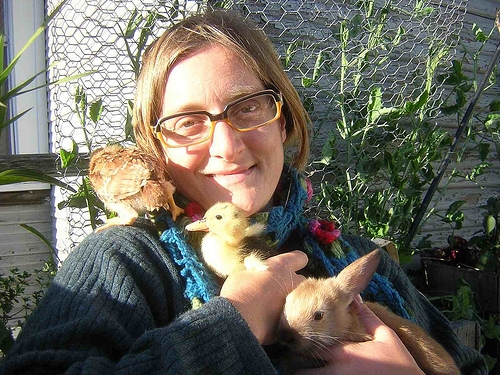
Food writer and urban farmer Novella Carpenter is everything the elitist, foodie stereotype is not: she squat-farms near downtown Oakland, Calif., dumpster-dives to feed her rabbits, and offers to show anyone who still thinks otherwise exactly “what urban farming smells like.”
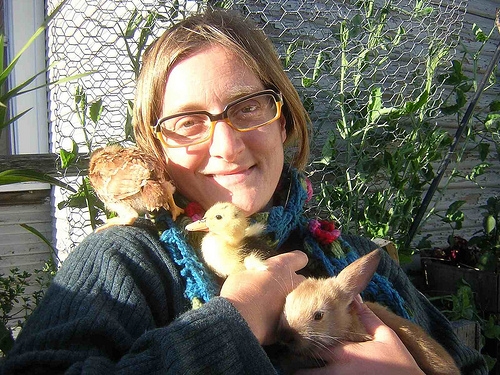 Novella Carpenter and cute baby animals today, dinner tomorrow.Photo: Courtesy of Novella CarpenterIn Seattle while touring for her new book Farm City: The Education of an Urban Farmer, Carpenter took a few minutes to give Grist the low-down-and-dirty on the up-and-coming trend of urban farming. From roof-top gardens to city chickens, an increasing number of city slickers are becoming “obsessed with their bellies right now” and getting very intimate with what goes down those gullets. Taking that hyper-personal approach to food even further, Carpenter chronicles how she became an urban farming evangelist in her memoir. (It may have had something to do with “something about the growing season in California that’s totally delicious” but which can work almost anywhere.)
So, Novella, we asked: what’s the deal with urban farming? And how is it different than your average patch of city peas and petunias? Well, Grist, she answered, there isn’t a huge difference and went on to dismiss her own Ghost Town Farm as “really just a hobby farm.” But as far as definitions go for Carpenter, urban farming usually implies raising animals or growing enough produce to trade or sell the extra. All of this taking place within your city-limits because, well, that’s where most people now live (and want to live).
When we queried Carpenter on the possibility of her setting up a bigger farm outside of the city, she was quick to retort in the negative: “I hate the country. I hate it.” She confessed that she gets her kicks from the diverse experiences and peoples of bustling metropolises rather than bucolic meadows. And she’s keen to avoid the country’s “dirty secret” — the need to drive everywhere.
Another appeal of bringing agriculture into a city is food security and fiscal savings during uncertain times. “Recession is really good for urban farming,” Carpenter said. She acknowledges that the urban farming movement likely will take a hit once the economy recovers, because — as we all know — history repeats itself. The most obvious evidence is found in the widely acclaimed 20 million victory gardens of World War II, which produced approximately 40% of the domestic food supply and then promptly slipped into oblivion as convenience foods rose to prominence in America. Carpenter admits that scenario could very well happen again, but is encouraged by First Lady Michelle Obama’s example of an organic veggie garden and by the growth of community and backyard gardens, especially in depressed urban areas like Detroit, which apparently is a hot spot for such projects.
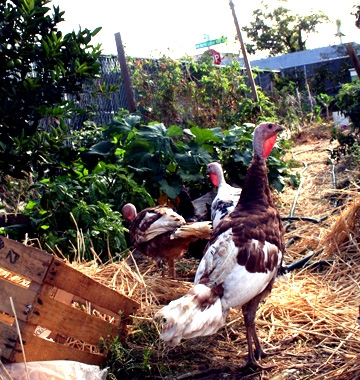 Turkeys lay claim to this street cornerPhoto: Courtesy of Novella CarpenterAnother concern Carpenter has is that greenhorns who have never grown a thing in their life will become overwhelmed and discouraged by the amount of work urban farming requires; even more so if they set out to produce bushels of veggies and simultaneously raise chickens, bees, and goats. (Trend alert! Nigerian mini goats “are hot right now. It’s stupid.”)
While growing food in a city presents its own challenges for urbanfolk — whether that’s soil contaminated by lead, a lack of water or space, changing landowners, or uncooperative neighbors — the benefits are just as numerous and unique: The nostalgia of food memories and Southern farm roots which bubble up among African Americans transplanted to Oakland. A revolution for today’s youth to set themselves apart from the expensive stigmas associated with the Slow Food movement of their parents’ generation. Organic leafy greens that keep dinner parties well-supplied for the bargain price of a few dollars per seed packet. An ownership of what you put in your body and what you do to the land no matter where you live, coupled with the satisfaction of picking fresh groceries minutes before they hit the pan.
The Grist staff certainly savored Carpenter’s irreverent, relaxed, dirt-under-her-nails demeanor, which was amplified by her stories of “just grab[bing]” swarms of runaway bees in her neighborhood. Trained by reknowned foodie author Michael Pollan and a grad of the University of Washington, Novella Carpenter is a voice as fresh as the food she grows in an expanding but humble realm which successfully rails “against the five-dollar arugula thing.” Whether you’re like me and have dozens of containers spilling with veggies in your rental’s front yard, or you’re like Carpenter and have guerilla plans to supplant (and eventually whack) city ornamental landscaping with edible fruit trees, I’d venture to call urban farming a trend worth its weight in zucchini.