You know those words you’re sick of, the little bits of lexicon used and abused so frequently that they’ve been drained of meaning: green, natural, eco-friendly? Well, now you can add the word “LEED” to the list.
That’s right, the world’s most ubiquitous green-building term is becoming a mot de greenwashing. Increasingly, companies and developers are using “LEED” to describe buildings that haven’t been certified by the program. Heck, the buildings might not even be that green (or natural or eco-friendly, for that matter).
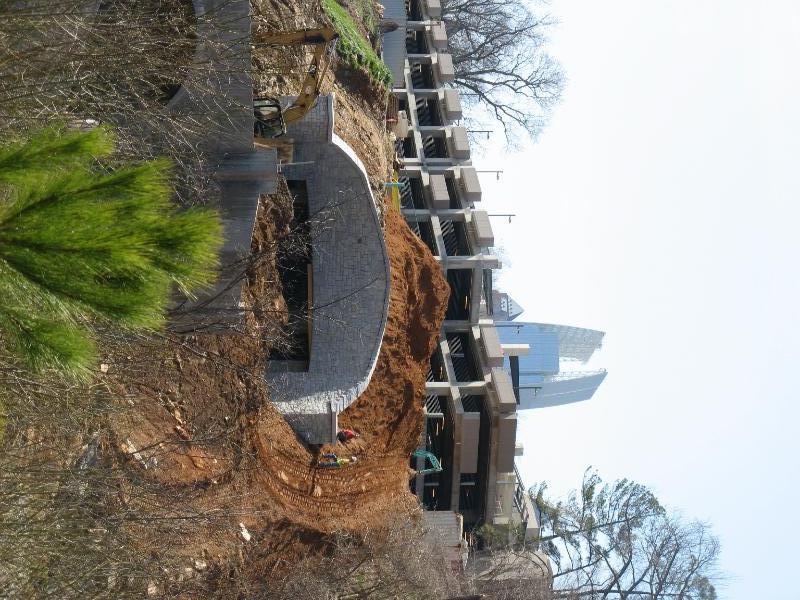
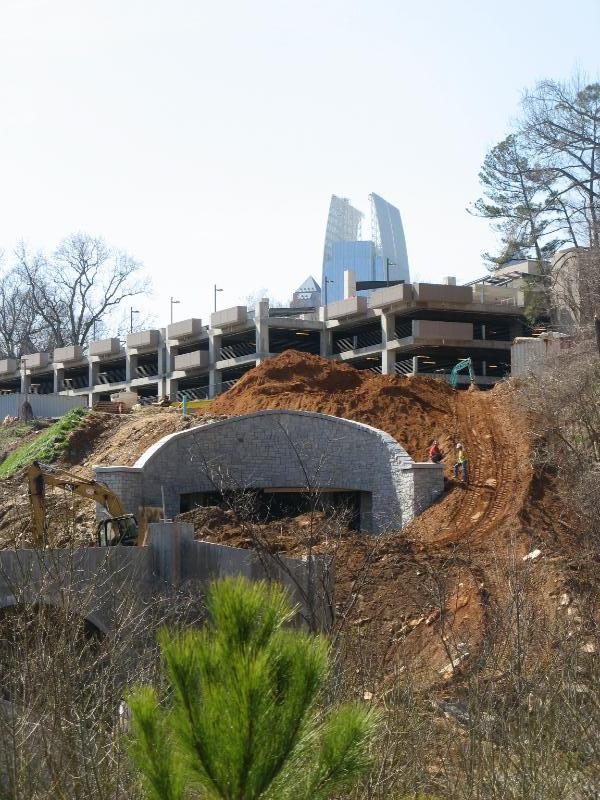 The Piedmont deck: LEED claims are the least of critics’ complaintsUrban Hiking AtlantaTake, for instance, the highly controversial parking garage plopped in the middle of Atlanta’s Piedmont Park. Conceived and championed by the Piedmont Park Conservancy and the Atlanta Botanical Garden as a way to raise funds and provide parking space for folks attending the park’s special events (like the upcoming “Green Concert” starring Sir Paul McCartney), this “built to LEED standards” structure has been largely derided by neighborhood groups, including Friends of Piedmont Park (FOPP), as being a decidedly improper use of park space.
“We’re upset about the conversion of more public green space to cement and concrete,” says Jack White, a FOPP board member. The six-and-a-half story parking deck holds 765 spaces and charges up to $15 per day, and required the creation of new roads bisecting the park. No amount of neighborhood opposition could stop it; in fact, the Conservancy and Garden are suing FOPP’s leader, Doug Abramson, for the legal fees accrued in toppling FOPP’s objections, some $273,000.
But the pro-parking deck forces point to its green attributes, and even named it “SAGE” — for Safety Access Greenspace and Expansion. Per the Conservancy’s website, the garage was built to LEED standards, with shaded areas for cars to reduce heat island effect; increased access to the park for visitors; a “virtually invisible” structure within several years, when the potted trees finally blossom; special parking spots for hybrids and such; a top-level bike rack; and rainwater capture to irrigate the gardens.
Hm. Other than the last two ingredients, pretty much none of its touted green factors are particularly green, nor are they part of the LEED system. In fact, the U.S. Green Building Council has no record of the SAGE parking facility—it was neither registered (the first step toward certification) nor certified. And a parking garage isn’t eligible for LEED certification—a building, says Scot Horst, senior vice president of LEED, must have at least one resident to even be considered.
Foes of the parking deck weren’t mollified by the LEED claims—”Putting trees in pots on a concrete monstrosity didn’t transform the essential nature of the beast,” says White—but the even more troubling thing, at least to the folks who oversee LEED, is the misuse of their carefully crafted system. LEED has endured a lot of criticism in its 13-year history—for being too complex, not accounting for regional differences, costing too much to achieve, etc.—and has responded with a user-friendlier version, dubbed LEED 3.0, this year. But, says Horst, if a project isn’t officially certified, “you have no idea what [developers] mean” when they use the term. (The Piedmont conservancy did not return email requests for comment.)
The Atlanta garage is not the only example of such LEEDwashing; take the new KFC/Taco Bell in super-crunchy Northampton, Mass. The USGBC also says it has no record of such a building being certified*, though a press release detailed its LEED elements: 30 percent energy and water use reduction, rainwater capture, solar panels. Harvested rainwater or not, the building’s function as a purveyor of industrial food does plenty of climate harm, not to mention its drive-thru window. Who knew LEED would grow to be a tool of architectural irony?
Still, says Horst, even a falsely claimed LEED building might be an improvement over business as usual; surely the Northampton KFC bests its non LEED-inspired counterparts. “At what point is being better good enough?” he asks. Horst can’t say for sure, but he does know this: “Saying I’m an Olympic athlete doesn’t make me one if I’m not in the Olympics. And no building is LEED unless we say it is.”
*CORRECTION: The USGBC contacted the reporter after publication to report that its records had not been updated when an interview for this story occurred earlier in the week, and that the Northampton KFC in fact achieved gold certification.
UPDATE: The USGBC has written to tell us that they made a mistake, and the KFC/Taco Bell is indeed certified gold. But there are plenty of projects throwing the term around incorrectly — like this Chicago high-rise, which advertised itself as LEED-certified before it was even built; here are even more examples of companies including Best Western and Chrysler jumping the LEED gun. “Overzealous marketing teams sometime claim that projects are certified when they’ve only just registered with LEED,” Horst says. “USGBC publishes detailed guidelines to help projects make the right decisions about their marketing, and we follow up on each and every report of misuse.”