Dems the breaks

Analysis of Waxman-Markey vote from around the web 3

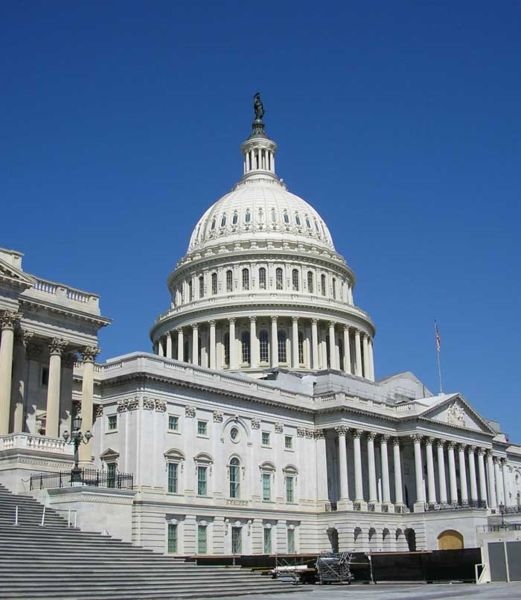
What does Friday’s close Waxman-Markey vote in the House tell us? (The 219 yes votes represented exactly one more than the minimum necessary.)

In an excellent analysis (complete with interactive map), National Journal‘s Ron Brownstein notes:

Of the 49 House Democrats who represent districts that McCain carried last year, fully 29 voted against the measure. By contrast, just 15 of the 207 Democrats from districts that Obama carried last year voted against the bill. (Florida Rep. Alcee Hastings, whose district backed Obama, did not vote, meaning “Obama Democrats” ended up splitting 191-15.) Put another way, while 59 percent of the Democrats from districts that McCain carried voted no, just 7 percent of Democrats in Obama-majority districts opposed the White House on the vote.

Similarly, seven of the eight Republicans who supported the measure represent districts that backed Obama last November. (The list included Rep. Mark Kirk of Illinois, who’s considering a bid for the president’s former Senate seat, and Mike Castle of Delaware, who may run for the seat vacated by Vice President Joe Biden.)

The Hill covers Pelosi’s full-court press to get the votes, which crucially involved persuading a small bloc of Republican moderates. A representative was pulled out of rehab; another delayed her resignation; several changed their minds in the final hour. Fascinating individual stories, like this:

Henry Cuellar (D-Texas). Obama tried, and failed to convince Cuellar. On Thursday, Pelosi approached Cuellar on the House floor as he was telling a colleague about how he was going to reject the bill.  The Speaker tapped him on the shoulder.

“Henry,” she interrupted. “Can I talk to you about your vote?”

Cuellar,  who sits on the Agriculture Committee, later said he was still leaning no. He waited late in the roll call on Friday evening to register his position, voting yes.

To Bill Scher, the narrow vote is a bad sign—Dems were looking to defect and the thing barely scraped by, even with eight Republicans votes. According to Stan Collender, it’s a good sign—many Dems were saved a risky vote:

The margin was narrow but isn’t the big story. The ultimate political value for the White House is that it was able to get the bill adopted at all but still allow 44 Democrats to vote against it. Not asking Democrats to walk a political plank will pay huge dividends later this year and in the 2010 elections because those members who needed to vote against it were able to do so. And, of course, the White House didn’t have to use up huge favors in the process.

Having voted against the administration’s climate change bill on the record means that at least some of these House Democrats will be able to vote for what emerges from a House-Senate conference later in the year. Therefore, the chances of a climate bill being enacted this year is now much greater than it was 24 hours ago.

Ezra Klein is skeptical, as am I. It assumes that whatever comes out of conference is weakened and thus that no-voting Dems have plausible cover to switch to yes. That’s a bit of a bank-shot road to political success; hard to see how its preferable simply to whipping up more votes.

One thing everyone agrees on: the Senate is a much, much tougher row to hoe.
David Roberts is staff writer for Grist. You can follow his Twitter feed at twitter.com/drgrist.

Advertisement
Advertisement
  1. Catmoves Posted 7:53 am
    30 Jun 2009

    I find it difficult to understand why Grist would put such a poor, amateurish hodge podge together other than to create enmity among the only two political  groups now capable of electing a President? This should be a time of uniting, not dividing. If a person's political stance is of such importance that shallow, personal attacks are the modus operandi of Grist, then perhaps its purpose should be more deeply inspected by those of us of the Democrat Party. In these trying times, I would suggest we all remember E Pluribus Unum.
  2. E2 Posted 9:56 am
    30 Jun 2009

    I spoke to a lobbyist who had an interesting perspective that aligns well with your analysis about Dems from McCain-carried districts voting against it. He said the vote was so close because it could be so close. The Dems knew exactly the number of votes they needed, given the number of Republicans they knew would vote for it. They didn't need 240 votes, they only needed 219, and since it is such a politically charged issue, the Dems from red districts had a lot at stake and potentially more to lose politically for voting for it than against it. So they hung back and watched how the vote went, and as soon as there were 219 votes for it, they knew it had passed and could protect themselves politically with their constituency by voting against it, while knowing their vote would not change the outcome. While we environmentalists may have prefered a more comfortable margin and a more resounding support of climate protection measures regardless of concerns for upcoming elections, politics is politics and the game must be played.
  3. crotach Posted 11:45 am
    30 Jun 2009

    My Rep (AZ CD 1) voted against it. I am not a political naif and I realize "politics is politics and the game must be played". I also realize that even though Democrats outnumber Republicans in my district, the GOP has been able to win here quite often. But we have a Democrat back in the saddle and she voted against it (even though support here for Obama was strong). What drove me into a rage was reading her press release explaining why she voted against it. Not once did she even mention the words climate change. It was all about eliminating waste, decreasing federal regulation, and saving all of us hard-working folks from even more taxes and costs. Coming as this did on the heels of her voting against the tobacco regulations for the same reason, I am seriously struggling with how things changed in my district by kicking the GOP out and voting the Dems in. I've been involved in climate change work since 1998, and back then we were bemoaning the fact that as a nation we were doing far too little, too slowly. Reading my Representative's statement that this bill did "too much too fast" chilled me to the bone.

Add a Comment

You are not logged in. Thus, you cannot post a comment. If you have an account, log in. If you don't have an account, well, by all means go make one! Meet you back here in five.

Hello, Visitor!    Why not register?

Advertisement