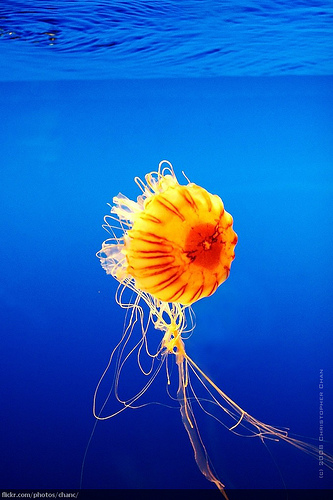
 Photo: Christopher ChanAround the world, fishermen and swimmers are running into a problem: jellyfish. The slick, stinging blobs are showing up in increasing numbers, earlier in the year, and in more places than ever before. Is there a reason for the jellyfish invasion? Unfortunately, yes—and like most reasons for ocean decline, it relates to how we are changing the environment.
Data is lacking, but it’s likely that warmer waters help jellyfish grow faster and reproduce better. Also, overfishing can mean both fewer jellyfish predators and fewer competitors, which means more peace and more food for jellies. As large predatory fish are disappearing from the world’s ocean, we are left with the cockroaches of the sea: simple filter feeders like jellyfish.
Jellyfish in the Gulf of Mexico are so numerous they have clogged nets and prevented shrimp fishermen from making their catch. And as any fisherman will tell you, a sea full of jellyfish does not make for good fishing, swimming and boating (jellies can make children cry). Their abundance can disrupt the balance of marine ecosystems, and hurt the fisheries that depend on that balance.
But let’s not blame the jellyfish themselves—they’re simply thriving in an environment that we’ve created for them. Instead, we should take simple steps in our own lives to restore the balance of our oceans, so that fish, seabirds and marine mammals can live as they lived for millions of years before we started changing things.
One way we can do that is to support efforts to create more marine protected areas. Government-supported initiatives, like California’s Marine Life Protection Act (MLPA), bring scientists, conservationists, and fishermen together to determine how to best protect our most threatened and unique ocean areas. The MLPA will create a string of underwater parks that, according to scientific studies, can be strategically placed in important spawning and nursery habitat in order to make marine habitats more diverse, healthy and bountiful.
By giving fish and wildlife a break from human impacts, marine protected areas help build strong communities of fish that keep jellyfish and other species like sea urchins in check, while also building resilience for marine ecosystems that are increasingly vulnerable to climate change.
If we don’t start building back the health of our marine ecosystems, we may need to start fishing for things that we never imagined. A jellyfish burger and fries may not seem so appetizing to your average American seafood lover, but the notion isn’t too far off. The Chinese have eaten jellyfish for over a thousand years. In Asia, these slippery snacks can fetch ten to twelve dollars a pound wholesale.
Culinary preferences aside, the increase of jellyfish in our ocean is indicative of a much larger problem. Our ocean is sick, and struggling to keep up with the ever-increasing demands for seafood.
But the ocean is more than just the food source for millions of humans. It is the lifeblood of our Earth, providing us with clean air, a regulated climate and a playground for ocean researchers, divers and surfers. By making smart seafood choices and supporting local marine protected area efforts like the MLPA, we all can work to improve our fisheries and ocean ecosystems, and in the process, keep jellyfish out of burger joints.
A message from
Your support keeps our climate news free.
Grist is the only award-winning newsroom focused on exploring equitable solutions to climate change. It’s vital reporting made entirely possible by loyal readers like you.
At Grist, we don’t believe in paywalls. Instead, we rely on our readers to pitch in what they can so that we can continue bringing you our solution-based climate news. Donate today to keep our site free.