Ah, summer. It’s here at last! Before you rush out to revel in the rays, you’ll (of course) slather on some sun protection. Since you know the problems with conventional sunscreens — which range from coral bleaching to hormone disruption — you’ll choose a brand that’s better for your body and the planet. But which ones really work?
 The living? Yeah, it’s easy.
Over the last several weeks, Grist staffers scooped up several of the readily available eco-brands — four sunscreens, which protect by absorbing ultraviolet rays, and five sunblocks, which provide a physical barrier on your skin — and tested them on our sun-deprived flesh. From the wan streets of Seattle to the blazing beaches of the Dominican Republic, we ventured out with nothing between us and the sun but some eco-promises.
Which brands held up, and which ones crapped out? Read on to find out — and add your own experiences in the comments section below. (As always, the Environmental Working Group is an amazing resource; we encourage you to check their comprehensive ratings of sunscreens, including several organic varieties not tested here, to find out the safety of your chosen product.)
Alba Botanica
Hawaiian Aloe Vera (SPF 15), Hawaiian Green Tea (SPF 30+), SUN/Sport (SPF 30+)
Price: $8.99/4 oz.
Eco-claims: 100 percent vegetarian, no animal testing, paraben free, EU Cosmetics Directive compliant
Active ingredients: octinoxate, oxybenzone; Sport also lists homosalate, octisalate, avobenzone
EWG score (out of 10): 3 (Sport), 6 (aloe vera), 7 (green tea)
This line of sunscreens has a nice smooth texture and rubs in well. To some, the scented varieties could verge on annoying — or, as one tester put it, “a bit sickly sweet.” The sport lotion, while thicker and requiring more work to rub in, has a less offensive smell. All three worked well, performing like “regular” sunscreens. Alas, they get knocks from EWG for containing the common but creepy ingredient oxybenzone (and, in the case of the smelly ones, “fragrance”). Alba offers mineral and fragrance-free sunblocks, though, that may be worth a look.
Aubrey Organics Natural Sun
Green Tea (SPF 25)
Price: $8.50/4 oz.
Eco-claims: Packed with antioxidants and herbal emollients, vegan, not tested on animals
Active ingredients: Titanium dioxide, Padimate O
EWG score: 3
While this one worked just fine, our reviewer gave it a thumbs down for its “sickly, pale, unpleasant” hue and “grainy and gritty and overly sticky” texture. It left a coating on the skin, “making you look extra pale and, given the green tinge, slightly seasick” and rubbed off too easily on clothes, bags, and her significant other. His sentiment is one you just don’t want to hear during a romantic beach getaway: “Ew! Get that clammy arm away from me!”
Burt’s Bees Chemical-Free Sunscreen
Hempseed oil (SPF 15 and 30)
Price: $12.99/3 oz.
Eco-claims: 99.11 percent natural, paraben free, phthalate free, not tested on animals
Active ingredient: Titanium dioxide
EWG score: 3
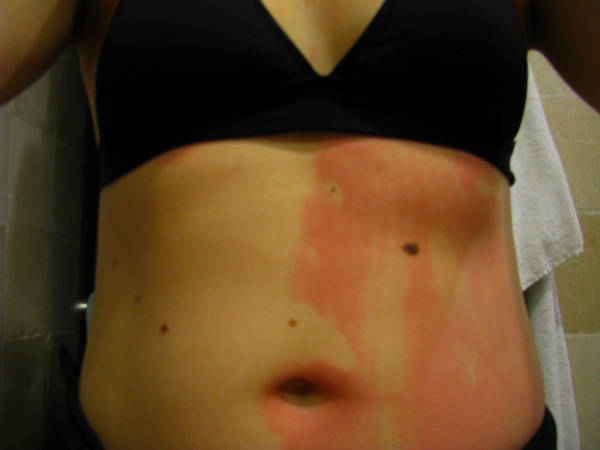 Burt, you done me wrong.We gave Burt’s a fair trial, but we came to one unavoidable conclusion: it sucks. One tester found it hard to get out of the bottle, but that was the least of her worries: when she applied it next to another brand on her belly, Burt’s left her with a terrible sunburn. “I looked like a mutant, not to mention the pain,” she says months later, still scarred by the experience. A fellow beachgoer using Burt’s also got burned, and on one of my own tests I found the Burt’s patch was the only one that showed color at the end of the day.
JASON Sunbrellas Sunscreen
SPF 30+
Price: $16.49/4 oz.
Eco-claims: paraben free, fragrance-free, not tested on animals
Active ingredients: Titanium dioxide, zinc oxide
EWG score: 1
Like most physical sunblocks, this one sits on the skin rather than disappearing quickly. But Jason may have taken things to the extreme: “When I put it on, instead of feeling like a Bain de Soleil beauty, I looked more like I’d stepped out of a vampire movie,” reported one tester. I also found that it definitely took some work to rub in, and even after that it left my skin a lighter shade than usual. It worked well, though — and gets the best EWG score of the lot.
Kiss My Face
SPF 30
Price: $16.89/4 oz.
Eco-claims: contains no animal ingredients, artificial colors, fragrance, or unnecessary chemicals, not tested on animals, 100 percent biodegradable, paraben free
Active ingredients: Ethylhexyl methoxycinnamate, ethylhexyl salicylate, titanium dioxide
EWG score: 2
The texture met with mixed reviews — one tester found it “runny” and said it gushed out of the container, while another said it was easier to apply than some of the more pasty options. Like other physical blocks, it left a white residue on the skin that, despite being touted as water resistant, did appear to come off upon contact with the water. Still, it worked well, lasted a while, and gets a nice low score from the EWG.
Desert Essence Organics Age Reversal Mineral Sunscreen
SPF 30
Price: $15.99/3 oz.
Eco-claims: 100 percent vegan, free of parabens, sodium lauryl/laureth sulfates, phthalates, and artificial fragrances, not tested on animals
Active ingredients: Zinc oxide, titanium oxide
EWG score: N/A
Meet the potion that covered the other half of the tummy pictured above. Subsequent tests of the brand yielded the same sunburn-free results. But this effectiveness comes with a few drawbacks: “The goo is extremely thick, it’s hard to spread, and it turns you ghostly white unless you spend a lot of time rubbing it in … It’s also greasy and the smell is sort of medicinal.” Other than that, Mrs. Lincoln, you’ll love your sunscreen.
Aveeno Active Naturals Continuous Protection Sunblock
SPF 55
Price: $10.49/3 oz.
Eco-claims: Specially formulated with select “active naturals” ingredients such as soy and antioxidants like vitamin E
Active ingredient: Oxybenzone
EWG score: 7
Perhaps not surprisingly, the entry from this eco-poser brand comes the closest to feeling like regular sunscreen, says one tester: It smells pleasant, rubs in easily, and doesn’t leave a greasy film behind. It also works well, even during a full day in full sun. The big drawback, however: a high score from the Environmental Working Group, due to the inclusion of oxybenzone and fragrance.
The Bottom Line: In general, mineral sunblocks (those containing titanium oxide, zinc oxide, or both) are considered a safer eco-bet than chemical sunscreens (most of which contain oxybenzone). We found Kiss My Face, Desert Essence, and Jason to be the most effective (and have high hopes for Alba’s sunblock, given the effectiveness of its sunscreens). Whatever you do, steer clear of Burt’s Bees — it’ll leave you seeing red.